Navigation
Install the app
How to install the app on iOS
Follow along with the video below to see how to install our site as a web app on your home screen.
Note: This feature may not be available in some browsers.
More options
Style variation
You are using an out of date browser. It may not display this or other websites correctly.
You should upgrade or use an alternative browser.
You should upgrade or use an alternative browser.
IFX Indonesian Fighter Experiment (KF21/IFX program)
- Thread starter Indos
- Start date
More options
Who Replied?

Indos
INT'L MOD
- Thread starter
- #122
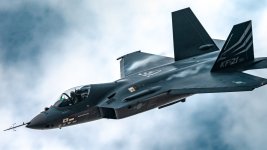
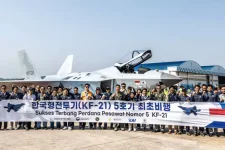
If Indonesia participate in phase 2 of KF21/IFX program then it can use KF21/IFX fifth prototype for test flight of phase 2 development inside Indonesian Aerospace complex.
With this development, it is likely Indonesian AirForce will get first KF21/IFX from its block 2 variants
Indonesian engineers can speed up its learning curve with this phase 2 development with system integration work shares and research.
At the mean time Rafale F4 will keep coming until 42 planes, F16 keep being upgraded and refurbished, Su30 is also being upgraded and maintained. I would say Air Force should focus more on acquiring SAM system, AWACS, transports, trainers, and air refueling while fighters is likely already in a better situation with KF21 and Rafale (42) that should be our future backbone while older planes will be retired gradually.
With this development, it is likely Indonesian AirForce will get first KF21/IFX from its block 2 variants
Indonesian engineers can speed up its learning curve with this phase 2 development with system integration work shares and research.
At the mean time Rafale F4 will keep coming until 42 planes, F16 keep being upgraded and refurbished, Su30 is also being upgraded and maintained. I would say Air Force should focus more on acquiring SAM system, AWACS, transports, trainers, and air refueling while fighters is likely already in a better situation with KF21 and Rafale (42) that should be our future backbone while older planes will be retired gradually.
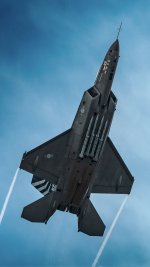
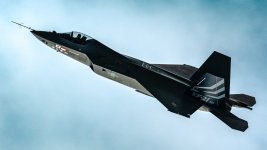
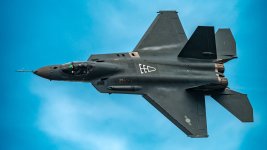
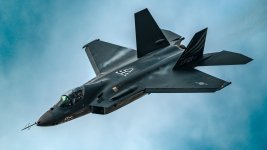
Indos
INT'L MOD
- Thread starter
- #125
[2025 New Year's Plan] A Thousand Test Flights... The Real KF-21 Is Coming
Reporter Ahn Du-won
2024-12-25 17:47:19
KAI 'Yangsang 1st' production site report
Wings, 80-layer carbon fiber pressurized
Assembly work begins with the central fuselage
Prototype overcomes 10 years of trial and error
Scheduled for delivery to the Air Force in September 2026
First press release of the assembly site of the 'KF-21' mass-produced 1st
2025 New Year Plan: K-Defense Industry Leaping Forward
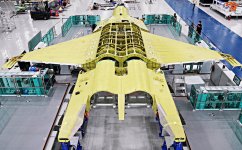
KF-21 Boramae mass production unit 1.
The first combination of the central fuselage and main wing took place at the Korea Aerospace Industries (KAI) plant in Sacheon, Gyeongnam Province, on the 28th of last month.
This is the biggest hurdle in the production of cutting-edge domestic fighter jets. In the future, numerous avionics equipment will be installed on this foundation to complete it.
Maeil Kyungjae was the first domestic media outlet to cover the production process of the KF-21 Boramae mass production unit 1 at the KAI plant. The KF-21 Boramae is the result of the Korea Fighter (KFX) project, the largest arms import since Dangun.
It is a supersonic fighter jet that will replace the aging fighter jets (F-4 Phantom and F-5 Jeogho) of the Korean Air Force, and is a 4.5-generation fighter jet that is closely following the 5th-generation stealth fighter jet (F-35) manufactured by Lockheed Martin.
The investment budget alone exceeds 8 trillion won. If it is completed as scheduled in September 2026 and delivered to the Air Force, it will become a key force in airspace defense.
The advanced fighter jet manufacturing capability is the springboard for K-Defense's leap forward. It hints at K-Defense's potential for exporting advanced fighter jets to the global defense industry market worth 1 trillion dollars.
The first mass-produced KF-21 Boramae aircraft has taken shape thanks to the trial and error of numerous prototypes (airframes for test and evaluation) over the past 10 years and test flights that pushed human limits.
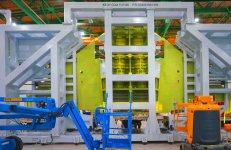
The first mass-produced Korean fighter jet KF-21, which is being assembled at Korea Aerospace Industries (KAI) in Sacheon, Gyeongnam, was erected on the 12th with the central fuselage and main wings attached, and hole drilling work is underway. This is the first time that the first mass-produced aircraft for the Air Force, not the test and evaluation aircraft, has been revealed to the press (small photo below). After this work, the front, center, and rear fuselage will be attached to take the shape of a fighter jet, and then the engine and various avionics equipment will be installed to complete it. The large photo shows the assembled test and evaluation aircraft, and it has been included for the reader's understanding. KAI
When I visited the plant on the 12th, KAI was in the middle of a test flight of the KF-21 prototype with the soldiers of the Air Force 3rd Training Squadron adjacent to the Sacheon plant. The 1,000th test flight sortie (the number of flights) was completed without any accidents at the end of last month.
Noh Ji-man, head of the Korea Fighter Program at the Defense Acquisition Program Administration, said, “Test flights require pushing the aircraft to its limits, so we cannot let our guard down as unexpected situations may arise,” adding, “The final result of the 2,000 test flight sorties planned for next year will be the first mass-produced aircraft.” The fuselage of the first mass-produced KF-21 was standing on a workbench.
Lee Sang-hui, head of KAI’s aircraft production division, explained, “We had to lie down and work in an uncomfortable position if the fuselage was on the floor, so we put it upright.” He added, “The work of drilling holes for rivets and bolts is automated, but the speed and strength of the drill must be set extremely sensitively for accurate work.”
The wing attached to the fuselage was made by compressing 80 layers of carbon fiber. Two prototypes were placed together on the production line. Orange lines were hanging from the fuselage. These were the lines that connected the sensors that measured the pressure and vibration generated by the fuselage during the test flight.
"We made six prototypes, but their appearances are slightly different," said Director Lee. "The first mass-produced aircraft will be designed and manufactured through the test flight."

 m.mk.co.kr
Reporter Ahn Du-won
2024-12-25 17:47:19
KAI 'Yangsang 1st' production site report
Wings, 80-layer carbon fiber pressurized
Assembly work begins with the central fuselage
Prototype overcomes 10 years of trial and error
Scheduled for delivery to the Air Force in September 2026
First press release of the assembly site of the 'KF-21' mass-produced 1st
2025 New Year Plan: K-Defense Industry Leaping Forward
KF-21 Boramae mass production unit 1.
The first combination of the central fuselage and main wing took place at the Korea Aerospace Industries (KAI) plant in Sacheon, Gyeongnam Province, on the 28th of last month.
This is the biggest hurdle in the production of cutting-edge domestic fighter jets. In the future, numerous avionics equipment will be installed on this foundation to complete it.
Maeil Kyungjae was the first domestic media outlet to cover the production process of the KF-21 Boramae mass production unit 1 at the KAI plant. The KF-21 Boramae is the result of the Korea Fighter (KFX) project, the largest arms import since Dangun.
It is a supersonic fighter jet that will replace the aging fighter jets (F-4 Phantom and F-5 Jeogho) of the Korean Air Force, and is a 4.5-generation fighter jet that is closely following the 5th-generation stealth fighter jet (F-35) manufactured by Lockheed Martin.
The investment budget alone exceeds 8 trillion won. If it is completed as scheduled in September 2026 and delivered to the Air Force, it will become a key force in airspace defense.
The advanced fighter jet manufacturing capability is the springboard for K-Defense's leap forward. It hints at K-Defense's potential for exporting advanced fighter jets to the global defense industry market worth 1 trillion dollars.
The first mass-produced KF-21 Boramae aircraft has taken shape thanks to the trial and error of numerous prototypes (airframes for test and evaluation) over the past 10 years and test flights that pushed human limits.
The first mass-produced Korean fighter jet KF-21, which is being assembled at Korea Aerospace Industries (KAI) in Sacheon, Gyeongnam, was erected on the 12th with the central fuselage and main wings attached, and hole drilling work is underway. This is the first time that the first mass-produced aircraft for the Air Force, not the test and evaluation aircraft, has been revealed to the press (small photo below). After this work, the front, center, and rear fuselage will be attached to take the shape of a fighter jet, and then the engine and various avionics equipment will be installed to complete it. The large photo shows the assembled test and evaluation aircraft, and it has been included for the reader's understanding. KAI
When I visited the plant on the 12th, KAI was in the middle of a test flight of the KF-21 prototype with the soldiers of the Air Force 3rd Training Squadron adjacent to the Sacheon plant. The 1,000th test flight sortie (the number of flights) was completed without any accidents at the end of last month.
Noh Ji-man, head of the Korea Fighter Program at the Defense Acquisition Program Administration, said, “Test flights require pushing the aircraft to its limits, so we cannot let our guard down as unexpected situations may arise,” adding, “The final result of the 2,000 test flight sorties planned for next year will be the first mass-produced aircraft.” The fuselage of the first mass-produced KF-21 was standing on a workbench.
Lee Sang-hui, head of KAI’s aircraft production division, explained, “We had to lie down and work in an uncomfortable position if the fuselage was on the floor, so we put it upright.” He added, “The work of drilling holes for rivets and bolts is automated, but the speed and strength of the drill must be set extremely sensitively for accurate work.”
The wing attached to the fuselage was made by compressing 80 layers of carbon fiber. Two prototypes were placed together on the production line. Orange lines were hanging from the fuselage. These were the lines that connected the sensors that measured the pressure and vibration generated by the fuselage during the test flight.
"We made six prototypes, but their appearances are slightly different," said Director Lee. "The first mass-produced aircraft will be designed and manufactured through the test flight."
[2025 신년기획] 천번의 시험 비행 … KF-21 진짜가 온다 - 매일경제
KAI '양산 1호기' 제작 현장 르포날개, 80겹 탄소섬유로 압착중앙 동체와 조립작업 돌입시제機 10년 시행착오 딛고2026년 9월 공군 인도 예정'KF-21' 양산 1호기 조립현장 언론 첫 공개
m.mk.co.kr
Indos
INT'L MOD
- Thread starter
- #127
Farnborough 2024: Hanwha seeks to match F414 engine size, beat it on performance
By Tom Barton & Akhil Kadidal & Prasobh Narayanan 26 July 2024
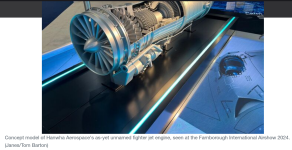
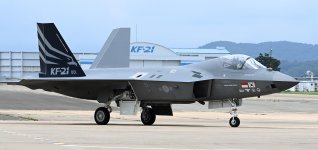
Hanwha Aerospace has told Janes that it wants its indigenous jet engine, destined for the Republic of Korea's (RoK's) KF-21 fighter, to have the same dimensions as General Electric's (GE's) F414 engine, but to better it on performance.
Speaking to Janes at the Farnborough International Airshow 2024 held from 22 to 26 July, Won-Wook Kim, head of the advanced aero engine business unit at Hanwha Aerospace, said that they want the engine to fit inside the same aircraft as GE's F414, which they are currently helping to build for the KF-21 fighter under licence.
“So our engine has to have the same dimensions [as the F414]. It will just have better performance,” Kim said.
The previously discussed thrust of 15,000 lb only came from the RoK Air Force's (RoKAF's) design requirement, Kim said. “In reality ... our tests show it can generate 15,000–18,000 lb of thrust, and with afterburner 24,000–26,000 lb. What it ends up getting will depend on user requirements,” he added.
The engine could be produced with 100% indigenous components, but Kim added that if a partner was brought in, Hanwha Aerospace would want at least 50% role, and to be systems integrator.

Farnborough 2024: Hanwha seeks to match F414 engine size, beat it on performance
Hanwha Aerospace has told Janes that it wants its indigenous jet engine, destined for the Republic of Korea's (RoK's) KF-21 fighter, to have the same dimensions as...
 www.janes.com

That_Guy
THINK TANK: CONSULTANT


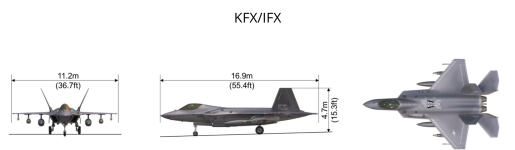
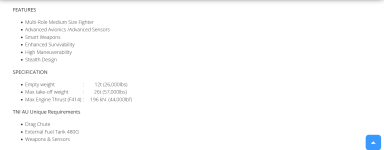
Really is one of the coolest fighters ever made.


Indos
INT'L MOD
- Thread starter
- #130
South Korea invests 3.35 trillion won for advanced fighter jet engine development
ByKim Ji-hwan
Published 2025.01.21. 11:16Updated 2025.01.21. 11:23
The government will develop an advanced aircraft engine with a thrust of 16,000 lbf (pound-force), aimed at localizing fighter jet engines.
On the 21st, the Defense Acquisition Program Administration (DAPA) held the 25th-1 Advanced Technology Business Management Committee at the government complex in Gwacheon, Gyeonggi Province, and stated that it reviewed a 'basic plan for advanced aircraft engine development' that includes the target performance, business method, and timeline for engines needed for next-generation weapons systems. If successful, it could achieve higher performance than the U.S. General Electric (GE) engine (17,770 lbf) used in the domestically produced supersonic fighter jet KF-21.
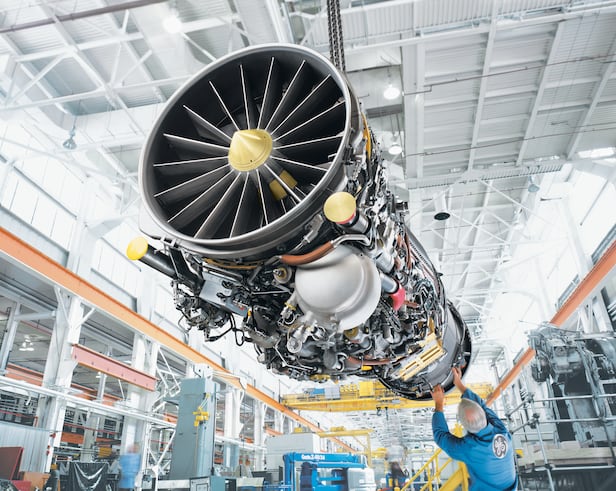
The F414 engine from GE Aerospace, mounted on the Korean Fighter KF-21. /Courtesy of GE Aerospace
DAPA predicted that it would take about 14 years until the advanced engine is flight-ready, with a budget of 3.35 trillion won expected to be invested. DAPA plans to promote a feasibility study considering the project timeline and budget scale after discussions and reviews with related agencies.
On the same day, DAPA confirmed the 2025 Future Challenge Defense Technology Project Promotion Plan. According to the plan, it decided to expand planning and investment in areas such as artificial intelligence (AI), manned and unmanned complex systems, quantum technology, advanced materials, and energy.
The projects selected by DAPA at this committee include a 'vertical multi-purpose unmanned underwater vehicle' that can be mounted on submarines, a display for the fighter jet canopy (a clear covering for the cockpit), and 'advanced aircraft engine high-temperature base technology' for next-generation weapons systems. The military authorities plan to initiate development within this year.
Han Kyung-ho, head of DAPA's Future Power Business Division, noted, 'We will actively support the Future Challenge Defense Technology Project to secure technological dominance in future battlefields,' adding that 'it will lead to the strengthening of South Korea's defense industry's global competitiveness in the future.'

South Korea invests 3.35 trillion won for advanced fighter jet engine development
South Korea invests 3.35 trillion won for advanced fighter jet engine development
 biz.chosun.com
Indos
INT'L MOD
- Thread starter
- #133
IFX program in my opinion will get boosted by the creation of Danantara that is planned to be superholding of all Indonesian SOE with asset around 1 trillion USD
The changing of SOE law will also make capital injection from parent company much easier because dont need to be approved by parliament like what is happening in here for decades
----------------------------
“According to our initial evaluations, Danantara’s assets under management will exceed $900 billion. … This fund will invest our natural resources and state assets into sustainable, high-impact projects,” Prabowo told the conference.

 jakartaglobe.id
The changing of SOE law will also make capital injection from parent company much easier because dont need to be approved by parliament like what is happening in here for decades
----------------------------
“According to our initial evaluations, Danantara’s assets under management will exceed $900 billion. … This fund will invest our natural resources and state assets into sustainable, high-impact projects,” Prabowo told the conference.
Danantara Set for Launch on Feb. 24 with $20 Billion Initial Capital
President Prabowo Subianto will launch the much-awaited investment superholding Danantara on Feb. 24.
Last edited:
Users who are viewing this thread
Total: 1 (members: 0, guests: 1)


