Indonesia Economy and Industry

ID Food Seeks to Finish Stunting Aid Program This November​


Monique Handa Shafira
July 2, 2024 | 2:18 pm


Jakarta. ID Food, the state-owned food holding, is planning to finish distributing the government's anti-stunting assistance in all 7 targeted provinces by this November.

Indonesia is seeking to lower the national stunting rate to 14 percent in 2024. To this end, ID Food --in partnership with the National Food Agency (Bapanas)-- is distributing food assistance for families at risk of stunting in hopes that they can have better access to more nutritious meals. Each food package also consists of chicken meat and eggs. ID Food also works alongside the state-run postal service Pos Indonesia to deliver the packages to the 7 targeted provinces, which include the populous West Java.


“We are aiming to close the year by distributing [food assistance] to 1.4 million families. But we will try to speed up the distribution,” ID Food’s president director Sis Apik Wijayanto said on the sidelines of the Investor Daily Roundtable at Hutan Kota by Plataran in Jakarta on Tuesday.


“We hope that we can finish the distribution in the 7 of the targeted provinces by November,” Apik said.

As of Monday, ID Food has distributed 243,240 meal assistance packages.

The assistance will go to 403,593 families in West Java and 374,197 others in East Java. ID Food will also roll out aid for 345,514 families in Central Java, 92,654 households in Banten, and 20,633 others in West Sulawesi. The beneficiaries in North Sumatra total 132,360 families. As many as 73,068 families at risk of stunting in East Nusa Tenggara will get the chicken meat-egg package.


No Longer Stuck: Lotte Chemical’s Cilegon Plant to Start Production Next March​


Jayanty Nada Shofa

July 3, 2024 | 7:12 pm

To view this content we will need your consent to set third party cookies.
For more detailed information, see our cookies page.


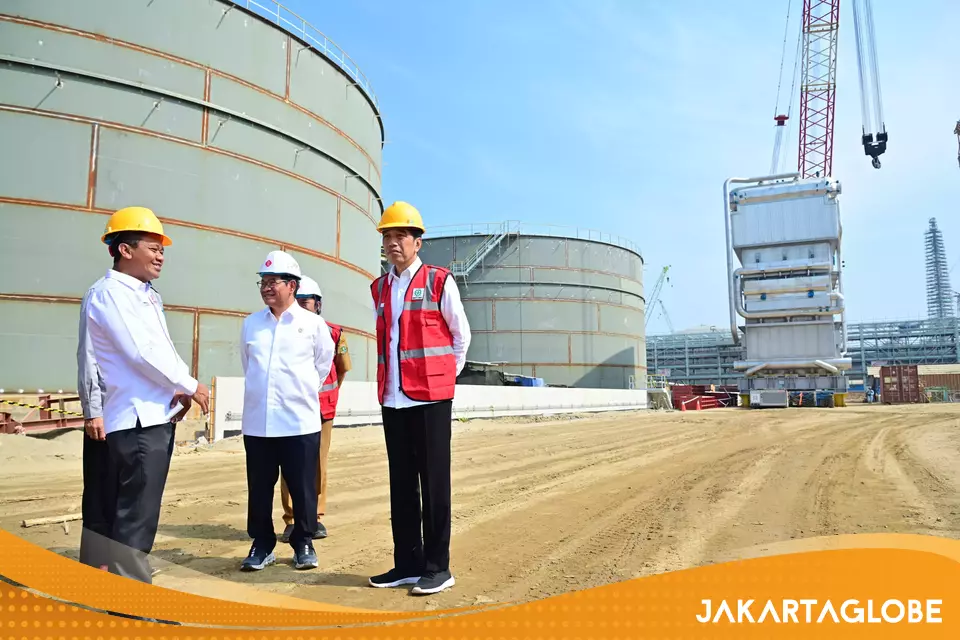
Jakarta. Investment Minister Bahlil Lahadalia announced Wednesday that the Cilegon petrochemical project by South Korean giant Lotte Chemical will start production next year after a long delay.

Lotte Chemical is investing billions of dollars to build a petrochemical complex in the Banten city of Cilegon. The project got stuck for years due to overlapping land issues with the state-owned steelmaker Krakatau Steel. Lotte Chemical held the groundbreaking ceremony for the plant in 2018. Fast forward to now, the plant -- which will likely help Indonesia cut its chemical imports -- is about to finish construction.

“Lotte Chemical has invested [almost] $4 billion in the Cilegon plant. We all know how the project once stalled in 2016, but now the [construction] is nearing completion,” Bahlil said in Karawang on Wednesday.

“So I expect the [Lotte Chemical] plant to start producing by March 2025,” Bahlil said.

In 2019, Lotte Chemical signed a memorandum of understanding to settle the overlapping land problem with Krakatau Steel. Lotte Chemical was building the factory on land belonging to the steel producer.

Data shown during Bahlil’s remarks showed that the actual construction works began in 2022. The $3.9 billion project is now 90 percent complete. As of the first quarter of 2024, the project has used up 79.6 percent of the investment. The plant will produce a total of 17 products.

Last September, Jokowi visited the Lotte Chemical Indonesia plant in person. Jokowi said at the time that 70 percent of what the plant produces would go into meeting the domestic demand, while the remaining 30 percent would go into exports.

According to Chief Economic Minister Airlangga Hartarto earlier this year, the Lotte Chemical Indonesia plant will produce 1 million tons of ethylenes in 2025. The annual output will also include 520,000 tons of propylenes and 250,000 tons of polypropylene. The project is expected to create job opportunities for up to 15,000 people during the construction, and will likely hire around 1,300 people once it starts commercial operations.


Top spender Indonesia accounted for over half of online purchases in S-E Asia in 2022: Study​


1720040485426.png

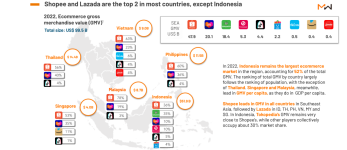
Indonesia topped online spending for Southeast Asia in 2022, accounting for more than half of the region’s purchases on digital platforms, according to a report by Singapore-based venture firm Momentum Works.

The report analysed spendings across Indonesia, Malaysia, the Philippines, Singapore, Thailand and Vietnam. Total Gross Merchandise Value (GMV) in the region, which refers to the value of goods sold via e-commerce platforms, hit US$99.5 billion, up from US$87.1 billion in 2021 and US$54.8 billion in 2020. Southeast Asia’s total GMV is projected to increase to US$175 billion in 2028.

Indonesia accounted for 52 percent of the figure in 2022, with GMV totalling US$51.9 billion.

Shopee is the most commonly used e-commerce platform in the region, with total GMV in 2022 at US$47.9 billion. TikTok, meanwhile, has been gaining ground in the region through TikTok Shop. It reportedly aims to more than triple its GMV in the region.

Going forward, online spending could be impacted by various factors such as the resumption of retail shopping, inflation, rising interest rates and the rise in commodity prices, the report states.


Description​

  • Total ecommerce platform GMV in Southeast Asia grew 1.8 times from 2020 to 2022, totalling ~ US$ 100B;
  • Shopee and Lazada are the top 2 ecommerce platforms in most countries, except Indonesia
  • Indonesia contributes 52% of the region’s GMV; while Singapore and Malaysia lead in GMV per capita;
  • Southeast Asia’s total GMV is projected to be US$175 billion in 2028, under a normal scenario with the potential of upside to US$232 billion under the best case scenario.
Southeast Asia’s ecommerce sector endured strong headwinds in 2022. Despite all these, growth and competition continue, with the total GMV of Southeast Asia’s 9 leading ecommerce platforms reaching US$ 99.5 billion in 2022, 1.8 times that of 2020 – the first year of the pandemic.

Purchase Momentum Works’ Ecommerce in Southeast Asia 2023 report for the breakdown of these numbers, and more importantly the insights connecting the dots behind.


From 'superblocks' to waterfront homes: How developer reshapes urban living as Indonesians dream bigger​


To view this content we will need your consent to set third party cookies.
For more detailed information, see our cookies page.

Sentul, Greater Jakarta

Besides affordable housing, Agung Podomoro Land is building greener, smarter homes for the upwardly mobile, while remaining anchored by robust commercial developments​

1720395696392.png
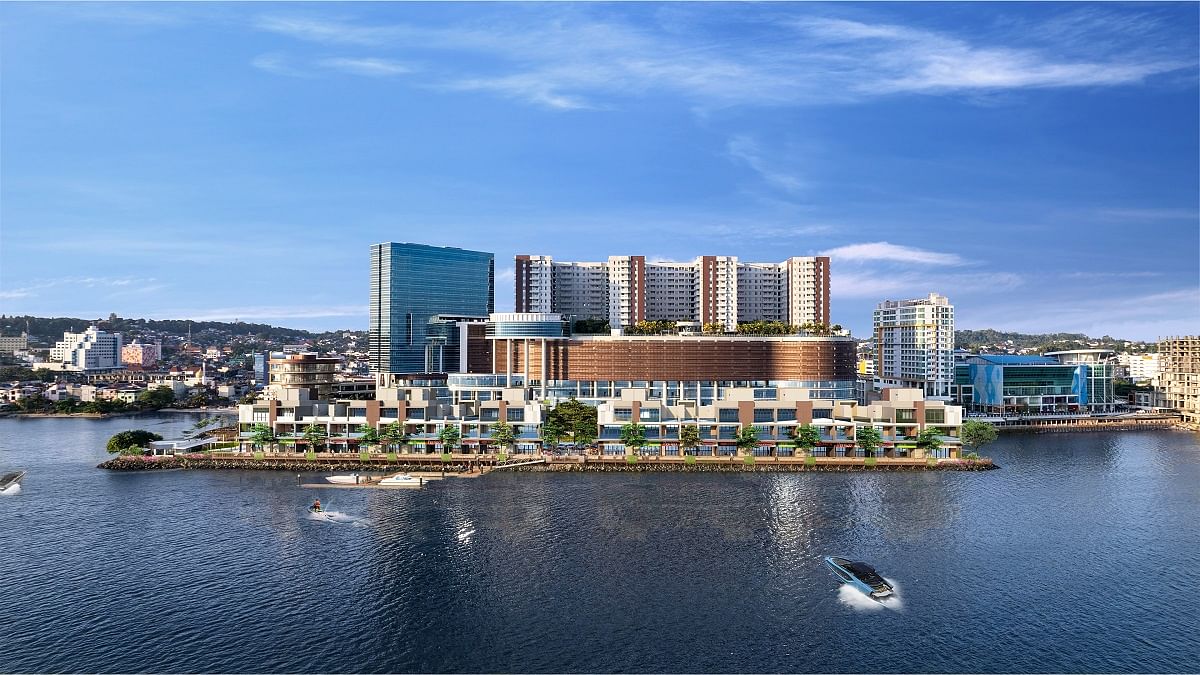
One of Agung Podomoro Land's projects, Borneo Bay City in Balikpapan, targets Indonesia's growing middle class with premium waterfront apartments. The developer is expanding its offerings with diverse housing options. PHOTO: AGUNG PODOMORO LAND


Updated
Jul 08, 2024, 04:00 AM

In the heart of Indonesia's bustling cities and emerging suburbs, a quiet transformation is unfolding. PT Agung Podomoro Land Tbk (APLN), one of the country's leading property developers, is refocusing its efforts to cater to a rapidly growing middle class that is reshaping the nation's real estate landscape.


Indonesia's economic growth since independence has given rise to a robust middle class, now 52 million strong and representing one in every five citizens, according to World Bank data. This group's economic muscle is flexing, with consumption growing at 12 per cent annually since 2002 and now accounting for nearly half of all household spending in the country.


Recognising this trend, APLN is adapting its strategy to meet the evolving needs of this dynamic market segment. The company, known for its large-scale "superblock" mixed-use urban developments – which combine residential, commercial and recreational spaces within a single integrated complex – is now placing increased emphasis on housing projects tailored to the middle class.

“Today's Indonesian homebuyers are looking for more than just four walls and a roof,” says Mr Bacelius Ruru, President Director of APLN. “They want homes that complement their lifestyles. At Agung Podomoro, we're meeting this demand by creating residences with comprehensive amenities and infrastructure. Our goal is to deliver not just houses but modern, elegant living spaces that truly satisfy our customers and add value to their lives.”


Building suburban dreams​


APLN is addressing this need by offering a diverse portfolio of properties that reflects the preferences and requirements of Indonesia's middle class, ranging from affordable first homes to luxury retreats, from Java to Sumatra to Kalimantan.


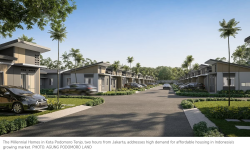
Recent launches such as The Millennial Homes and Edelweiss Garden House in Kota Podomoro Tenjo, approximately two hours by car from Jakarta, are designed to meet the high demand for affordable housing. Since its 2020 launch, Kota Podomoro Tenjo has sold 5,800 housing units, targeting 6,600 by year's end.
1720395801202.png

While focusing on affordable housing, APLN has not lost sight of the more affluent segments of the rising middle class. The Bukit Podomoro development in East Jakarta offers a luxury urban retreat with smart home technologies and premium facilities, appealing to those with higher spending power.

In Sumatra, Podomoro City Deli Medan brings the luxury superblock concept to a 5.2-ha development with premium apartments, condominium and an office tower as well as a shopping mall and a five-star hotel, the first such development in the area.


A good eye for capturing property market opportunities​


While expanding its presence across Indonesia’s cities, APLN recognised the great potential of East Kalimantan, particularly in Balikpapan and Samarinda, even before the Indonesian government’s development of Nusantara Capital City.


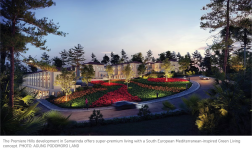
The Borneo Bay City development in Balikpapan, the closest city to Nusantara, offers premium waterfront apartments. Meanwhile, the Premiere Hills project in Samarinda, located two hours away by car from Balikpapan, stands as a new icon with its super-premium area featuring a Green Living concept inspired by South European Mediterranean style.
1720395887955.png

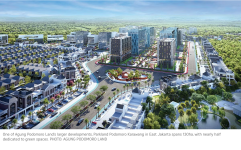
These projects highlight APLN's foresight in recognising East Kalimantan's potential and its commitment to seizing property market opportunities. By investing in these gateway cities, Agung Podomoro is positioning itself at the forefront of real estate development in the new capital region. Environmental consciousness is another key theme in APLN's new developments. The company's latest project, Parkland Podomoro Karawang in East Jakarta, dedicates nearly half of its 130ha area – which is equivalent to 182 football fields – to green spaces, including a 1ha Botanical Garden. This approach resonates with the growing desire for sustainable, balanced lifestyles among Indonesia's middle class.
1720395959594.png

Strengthening its financial position​

While expanding its residential footprint, APLN has also focused on strengthening its financial position. Within a decade, the Jakarta-based developer has completed more than 50 property projects.

To reduce its financial costs, APLN in 2023 implemented a strategic debt management plan. The company repurchased part of the US$300 million (S$408 million) seven-year senior notes issued in 2017 by its Singapore subsidiary, APL Realty Holdings Pte Ltd. The final step came on June 2, 2024, when APLN fully repaid and settled the remaining US$132 million using a rupiah-denominated loan from PT Bank Danamon Indonesia. This move allowed APLN to convert its US dollar debt into Indonesian rupiah, shielding the company from hedging costs, such as currency conversion costs and risks associated with foreign exchange fluctuations.
1720396035796.png

In addition to restructuring its debt, APLN continues to optimise its property portfolio, as evidenced by the recent sale of its Neo Soho Jakarta Mall for 1.44 trillion rupiah (US$88 million) to a subsidiary of Japan's Hankyu Hanshin Properties Corp. This divestment aligns with APLN's strategy to focus on its core strengths while maintaining a diverse revenue stream.


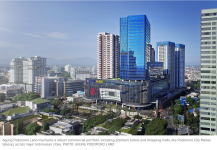
Despite its shift towards residential projects, APLN continues to invest in the commercial real estate sector to maintain a steady, ongoing income stream. As part of its commercial portfolio, the company owns and manages several premium hotels such as Pullman Vimala Hills Ciawi in West Java, Pullman Grand Central Bandung and Indigo Seminyak Bali as well as malls in Jakarta and other major Indonesian cities.


As Indonesia's urban landscape continues to evolve, driven by the aspirations and purchasing power of its expanding middle class, APLN continues to play a significant role in shaping the country's real estate sector. The company's ability to balance large-scale developments with new, targeted residential projects positions it well to navigate Indonesia's dynamic and competitive property market.

 
Last edited:

Indonesia's Foreign Exchange Reserves Rise to $140.2 Billion in June​


Indah Handayani

July 5, 2024 | 5:18 pm


An employee arranges US dollar bills at a currency exchange outlet in Jakarta (ANTARA FOTO/Indrianto Eko Suwarso).

An employee arranges US dollar bills at a currency exchange outlet in Jakarta (ANTARA FOTO/Indrianto Eko Suwarso).


Jakarta. Bank Indonesia reported that the country’s foreign exchange reserves rose to $140.2 billion at the end of June, up from $139 billion at the end of May.
Erwin Haryono, the central bank's spokesman, said the increase was driven by tax and service revenues, as well as the government's foreign loan withdrawals, amid efforts to stabilize the Rupiah's exchange rate in response to ongoing global financial market uncertainties.

The reserve position at the end of June is equivalent to financing 6.3 months of imports or 6.1 months of imports and government foreign debt payments, surpassing the international adequacy standard of around three months of imports, Erwin said in a press release on Friday. “BI assesses that these reserves are sufficient to support external sector resilience and maintain macroeconomic and financial system stability,” he said.

Looking ahead, Erwin said BI views the foreign exchange reserves as adequate to continue supporting external sector resilience. Positive export prospects and a projected surplus in the capital and financial accounts, reflecting positive investor perceptions of the national economic outlook and attractive investment returns, support the maintenance of external resilience.

 
1720397591973.png
 

Indonesian Economy Grows 5.05 Pct in Q2 2024​


Jayanty Nada Shofa

August 5, 2024 | 2:35 pm


Jakarta. The Indonesian economy grew 5.05 percent year-on-year (yoy) in the second quarter of 2024, according to the Central Statistics Agency (BPS).

“But this shows that our economy is expanding at a slower pace versus the same period last year, during which the country saw a 5.17 percent yoy growth,” Moh Edy Mahmud, a deputy at BPS, told the press on Monday.

The recent announcement also marked a slower rate of expansion compared to the 5.11 percent yoy growth seen in Q1 2024. BPS data revealed that this was the slowest Q2 growth since April-June 2021, during which the economy soared 7.08 percent yoy.

Indonesia posted a 3.79 percent quarter-to-quarter (q-to-q) growth after contracting 0.83 percent in Q1 2024. BPS revealed that the q-to-q expansion came as no surprise, as history had shown that second quarters tend to see an increase in economic activity after a contracted first quarter.

BPS reported that the Indonesian economy expanded by 5.08 percent in the first half of 2024.

From a production standpoint, businesses in the Indonesian processing industry were Indonesia’s largest growth driver in the second quarter of this year, making up 0.79 percent of the 5.05 percent growth. The Eid celebrations, among others, had skyrocketed the food and beverage industry in Muslim-majority Indonesia to advance by 5.53 percent. Overseas demand for iron and steel also prompted an 18.07 percent growth in the country’s basic metal industry, according to Edy.

“Our chemical, pharmaceutical, and traditional medicine industries also rose 8.01 percent thanks to rising domestic and overseas demand,” Edy said.

Household consumption became the largest expenditure component contributor as it accounts for 2.62 percent of the Q2 2024 yoy expansion rate.

The Indonesian government is seeking to book a 5.2 percent growth for 2024.


Indonesia to produce 90% of Japan's Iseki farm machines for export​

Japanese tractor maker shifts production as domestic demand wanes

ANNA SATO, Nikkei staff writer
August 15, 2024 01:36 JST


TOKYO -- Japanese farm equipment maker Iseki & Co. plans to have Indonesia manufacture 90% of products bound for overseas markets by 2030, shifting capacity away from Japan where labor and demand have shrunk steeply in the agricultural sector.

Iseki's plant in Indonesia performs final assembly of tractors and lawnmowers destined for Western countries. Last year, the company expanded the plant's annual capacity 20% to 22,000 units.

 
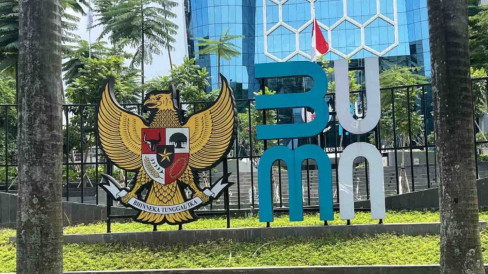
19 State Owned Enterprise included in 100 biggest local companies in Indonesia

Despite only 19 enter 100 biggest local companies list over around 65 total state owned companies in Indonesia, but this 19 SOE companies revenues are equivalent to half of total revenues of 100 biggest local companies in Indonesia


----------------

It doesnt include foreign companies, foreign companies is significant as for decades foreign companies total investment (FDI-Foreign Direct Investment) is around half (50%) of total investment in Indonesia every year
 

President Prabowo Announces 6.5% Increase in 2025 Minimum Wage​


Ichsan Ali

November 29, 2024 | 5:55 pm

Jakarta. President Prabowo Subianto officially announced a 6.5 percent increase in the 2025 Provincial Minimum Wage (UMP) during a press conference at the Presidential Palace in Jakarta on Friday.


“Manpower Minister [Yassierli] initially proposed a 6 percent increase in the minimum wage. After discussions and meetings with labor leaders, we decided to raise the national average minimum wage by 6.5 percent for 2025,” Prabowo said during the briefing.


The president emphasized that the UMP serves as an essential social safety net for workers, particularly those employed for less than 12 months, taking into account their basic living needs.


“The purpose of setting the minimum wage is to improve workers' purchasing power while also considering the competitiveness of businesses,” he added.

In addition to the national UMP increase, Prabowo noted that sectoral minimum wages (UMS) will be set by provincial and district wage councils. Further details on the UMP implementation will be regulated by the Manpower Ministry's regulations.


“Workers' welfare is incredibly important, and we will continue to fight for improvements in their well-being,” Prabowo said.


President Prabowo said he held a meeting recently with labor union leaders, where he discussed government programs, including the provision of free nutritious meals for children and pregnant women.


“Nutritious meals for children and pregnant women are a vital part of worker welfare,” Prabowo explained.


The government plans to allocate a daily minimum of Rp 10,000 ($0.63) per child or pregnant woman for this nutrition program, with hopes to eventually increase it to Rp 15,000, depending on the fiscal condition. According to Prabowo, the Rp 10,000 per person will be sufficient in most regions, ensuring both quality and nutritional value.


Kadin Leadership Dispute Ends with Anindya Bakrie’s Inauguration​


Hendro Dahlan Situmorang

January 15, 2025 | 2:26 pm


Jakarta. Anindya Novyan Bakrie, elected as Chairman of the Indonesian Chamber of Commerce and Industry (Kadin) during a congress on Sept. 14, is set to be officially inaugurated for the 2024-2029 term, ending a leadership dispute with rival Arsjad Rasjid.


The inauguration will take place on Thursday at The Ritz-Carlton Hotel, Mega Kuningan, Jakarta. President Prabowo Subianto is expected to attend the ceremony, during which Arsjad will also be formally appointed as Chairman of the Advisory Board for the same term.


The leadership dispute began when Anindya was elected chairman during the September congress, creating tensions with Arsjad, who was elected Kadin chairman in 2021 with a term set to run until 2026. Anindya's supporters accused Arsjad of breaching Kadin's principle of impartiality after Arsjad assumed a role in leading Ganjar Pranowo’s presidential campaign, which ended in defeat during the February election.


Energy and Mineral Resources Minister Bahlil Lahadalia mediated the conflict, facilitating a meeting between the two on Sept. 27. During the meeting, both leaders agreed to collaborate in resolving the division within Kadin, paving the way for unity within the organization.


“I aim to bring together all Kadin Indonesia members to remain united, solid, and harmonious,” Anindya stated in September 2024.


Since his election, Anindya, widely known as Anin, has positioned Kadin Indonesia as an active government partner. He has led initiatives to respond to policies, provide recommendations, and support national programs, with a focus on strengthening Kadin's role in driving economic growth.


Prabowo hike royalty of mining export = more money will be given to the state

To view this content we will need your consent to set third party cookies.
For more detailed information, see our cookies page.
 
Tiny Singapore with 1/3 economy of Indonesia has more bilionaires than Indonesia

-----------------


1745764631799.jpeg

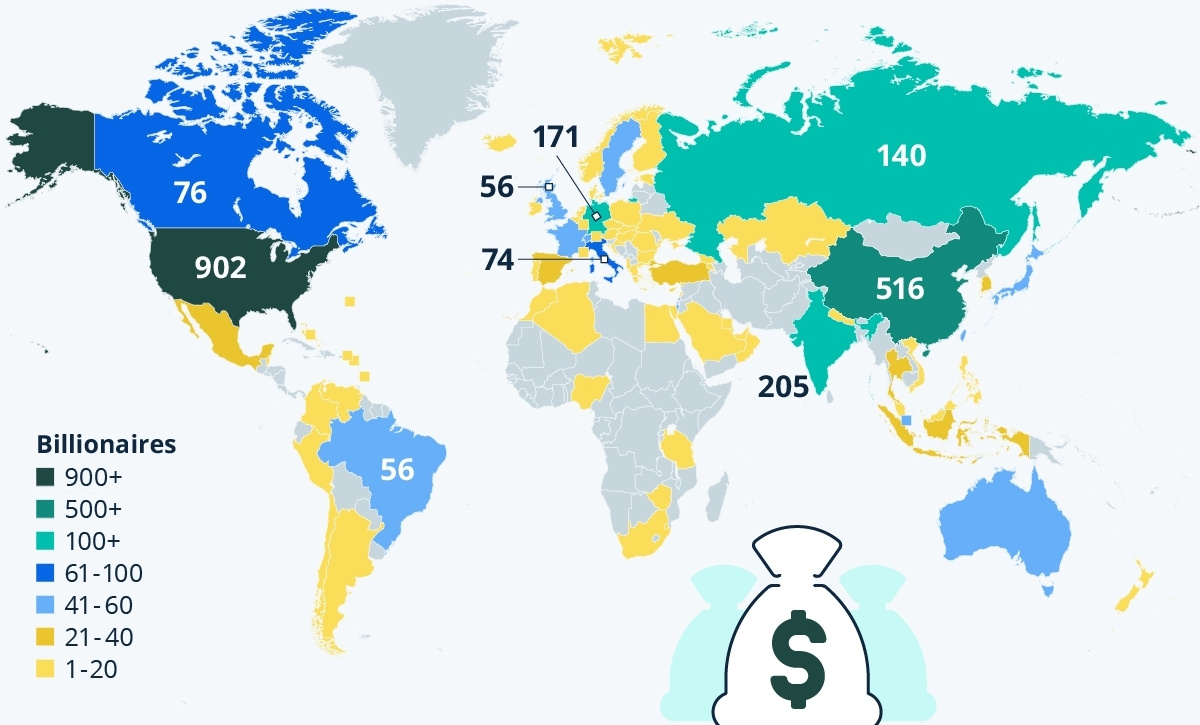
Mapped: Billionaires by Country of Citizenship in 2025​


In 2025, there are over 3,000 billionaires globally.

While you can find billionaires from Albania to Zimbabwe, the vast majority of them live in a few select countries and hubs.

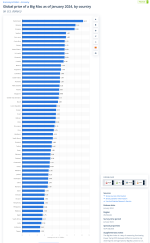
In fact, about 73% of them live in just the nine countries on this map from Statista, which pulls data from the Forbes World Billionaires List.


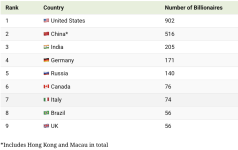
The below table breaks down billionaires in the top nine countries globally.

1745764683907.png

The United States and China combine for 1,416 billionaires, which is just short of half of the global total.

In the next tier, there are three other countries with 100+ billionaires: India (205), Germany (171), and Russia (141).

Perhaps surprisingly, Canada comes in sixth place with 76 billionaires. This puts the Great White North ahead of countries like Italy, Brazil, the UK, France, Switzerland, Singapore, or Australia.

With virtually unlimited resources at their disposal, the world’s ultra-wealthy can relocate with ease—often doing so to optimize for business, lifestyle, or legacy planning.

Amid rising geopolitical tensions, trade wars, and market volatility, high-net-worth individuals (HNWIs) are increasingly reassessing their home bases. Some seek stable jurisdictions with favorable tax regimes, while others prioritize countries offering investor visas, asset protection, or stronger rule of law.

Tariffs and capital controls can also influence where the wealthy choose to live or operate. As global uncertainty grows, strategic migration could become a hedge—allowing billionaires to future-proof both their wealth and personal security.


Ranked: Billionaire Wealth by Country​


1745764749053.jpeg

As of April 2024, Forbes estimates there are over 2,700 billionaires worldwide, with a combined net worth of $14.2 trillion.

But even among the ultra-rich, wealth is far from evenly distributed, with a significant concentration in just a few countries and among a small group of individuals.

This graphic visualizes the total wealth held by billionaires in the top 11 countries with the greatest billionaire wealth.

American billionaires hold the lion’s share of global billionaire wealth, collectively controlling $5.7 trillion—more than the combined wealth of their counterparts in the next 10 countries ($5.5 trillion).

According to Knight Frank, the U.S. is home to 30% of the world’s billionaires and accounts for 40% of total billionaire wealth, the highest share in a decade.


Sri Mulyani vows State Budget deficit below three percent​


June 20, 2025 19:09 GMT+700


1750478729615.webp
Finance Minister Sri Mulyani. (ANTARA/HO-Ministry of Finance)

Jakarta (ANTARA) - Indonesia’s State Budget deficit will be maintained below three percent, Finance Minister Sri Mulyani stated.

“Indonesia is committed to keeping the deficit under control according to the limits set by the State Budget Constitution,” Mulyani remarked in a meeting with First Deputy Managing Director of the IMF Gita Gopinath in Jakarta on Friday, as she posted in her Instagram post.

Mulyani explained that Indonesia continues to manage the State Budget carefully and wisely while also safeguarding the community's purchasing power through various stimuli to encourage household consumption.

Such efforts are being made to anticipate the impact of global economic turmoil on the national economy.

The minister drew attention to global risks such as supply chain disruptions, higher-for-longer interest rate policies still in place, high risk of inflation, as well as the weakening of the global economy.

“Thus, these are the efforts we are making so that Indonesia's development can continue, even amid difficult challenges,” Mulyani noted.

“We are optimistic but remain vigilant,” she remarked.

She expressed hope that synergy between the government and all elements of society would help keep Indonesia’s growth sustainable.

Under President Prabowo Subianto's leadership, Indonesia is advancing with the ambition of Asta Cita—eight visions focusing on national sovereignty and economic self-sufficiency—where the State Budget plays a role in supporting the government priority programs.

As various development programs continue to run, the Budget is prepared to act as a countercyclical tool to alleviate pressures from both domestic and international sources.

For reference, Indonesia’s State Budget experienced a deficit of Rp21 trillion, or 0.09 percent of the GDP in May 2025. State revenue was recorded at Rp995.3 trillion, while state spending amounted to Rp1,016.3 trillion.

However, the deficit value is still far from the target set in the Constitution of Rp616.2 trillion, or 2.53 percent of the GDP.


Users who are viewing this thread

Back
Top