List of 20 Trains Produced by PT INKA: From Commuter Trains to LRT
Metrotvnews.com
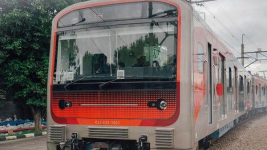
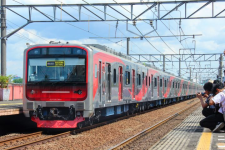 An iE305-series electric multiple unit undergoing testing on the Jakarta–Bogor line. (TyewongX/Wikimedia Commons)
Jakarta
An iE305-series electric multiple unit undergoing testing on the Jakarta–Bogor line. (TyewongX/Wikimedia Commons)
Jakarta – Indonesians will soon commemorate
National Railway Day, observed every September 28. The historic commemoration marks the courage of Indonesian railway workers who took control of railway companies from the Japanese authorities on September 28, 1945.
On September 28, 2026, PT Kereta Api Indonesia (Persero), or
KAI, will celebrate its
81st anniversary.
The development of Indonesia’s railway industry is supported not only by reliable operators such as KAI, but also by the growing capabilities of domestic manufacturers. One of its main pillars is
PT Industri Kereta Api (Persero), or PT INKA, the state-owned rolling-stock manufacturer headquartered in Madiun, East Java.
Established in 1981, INKA has strengthened its position as
Southeast Asia’s first integrated railway manufacturing company. Its products are used not only on Indonesia’s railway network but have also entered international markets, including
Bangladesh, the Philippines, Malaysia, Thailand, Singapore, and Australia.
INKA has a broad manufacturing portfolio covering passenger coaches, electric multiple units (KRL), diesel multiple units (KRD), light rail transit (LRT) vehicles, locomotives, freight wagons, and various special-purpose railway vehicles.
Here Are 20 Major Railway Products Manufactured by PT INKA
1. iE305 Jabodetabek KRL
PT INKA developed its latest-generation
iE305 electric multiple unit (KRL) to strengthen KAI Commuter services across the Jabodetabek metropolitan area. KAI Commuter ordered
16 trainsets, each consisting of 12 cars.
Before entering passenger service in Jabodetabek, the first trainset underwent intensive testing on railway lines around Solo in March 2025.
The iE305 represents INKA’s continued innovation in domestically manufacturing electric trains. The train was also one of the main products showcased at
RailwayTech Indonesia 2025, alongside the Stainless Steel New Generation passenger coach.
Jabodebek KRL/Commuter Line Station
2. Soekarno-Hatta Airport KRL
To support transportation access to Indonesia’s main international airport, INKA manufactured the
Soekarno-Hatta Airport KRL. The train uses a six-car configuration (Tc1-M1-M2-M2"-M1"-Tc2) and is designed to reach a maximum speed of
100 km/h, with a total capacity of
272 seats.
To improve comfort for urban passengers and travelers, its interior is equipped with modern facilities, including USB charging ports at every seat and accessibility features for passengers with disabilities.
3. KfW KRL
Another electric train in INKA’s product portfolio is the
KfW KRL. The train uses electricity as its primary source of propulsion and can therefore operate independently without a locomotive. According to its official catalog, the train has been widely used to provide connectivity on the strategic
Yogyakarta–Solo route.
The KfW KRL operates on Indonesia’s
1,067-mm track gauge, with operating speeds of between 80 and 100 km/h. Each car can accommodate up to
242 passengers, comprising 64 seated and 178 standing passengers.
4. Jabodebek LRT
In the Jakarta metropolitan area, the
Jabodebek LRT demonstrates INKA’s contribution to the modernization of mass transportation. The company manufactured
31 trainsets, comprising 186 cars, with each trainset consisting of six integrated cars.
One of the Jabodebek LRT’s main technological features is its
Communication-Based Train Control (CBTC) system. The technology enables automated train operations without a driver inside the cab, at operating speeds of up to
80 km/h.
Greater Jakarta LRT
5. South Sumatra LRT
Before producing the Jabodebek LRT, INKA developed the
South Sumatra LRT, which operates in Palembang. In 2018, INKA delivered
eight trainsets totaling 24 cars ahead of an international sporting event, while also providing a connection between central Palembang and Sultan Mahmud Badaruddin II International Airport.
Each South Sumatra LRT trainset consists of three cars in an Mc1-T-Mc2 configuration. The train has a maximum design speed of
100 km/h and operates at speeds of up to
85 km/h.
6. Indonesian Diesel Multiple Unit (KRDI)
The
Indonesian Diesel Multiple Unit (KRDI) provides an integrated transportation solution for railway lines that have not yet been electrified. Unlike conventional locomotive-hauled trains, the KRDI has its own diesel propulsion system installed directly within the trainset.
Using an MeC-T-T-MeC configuration, INKA’s KRDI has a design speed of
120 km/h and an operating speed of up to
100 km/h. A single trainset can accommodate approximately
178 passengers.
7. Minangkabau Ekspres Diesel-Electric Multiple Unit
To support access to air transportation in West Sumatra, INKA manufactured the
Minangkabau Ekspres diesel-electric multiple unit (KRDE). The train serves the important route connecting Pulau Aie Station in central Padang with Minangkabau International Airport.
The KRDE uses a diesel-electric propulsion system with a TeC1-M-T-TeC2 configuration and can operate at speeds of up to
100 km/h.
8. South Sulawesi KRDE
The development of railways outside Java has also been supported by the
South Sulawesi KRDE. Unlike trains operating in Java and Sumatra, this passenger train uses the international
1,435-mm standard gauge.
The South Sulawesi KRDE has a design speed of
90 km/h and an operating speed of
80 km/h. A trainset can carry approximately
250 passengers, including 176 seated passengers and additional standing passengers.
9. Railbus
INKA also manufactures the
Railbus, a compact self-propelled railway vehicle designed for short-distance routes and urban feeder services. It uses a diesel-electric propulsion system.
With a three-car TeC-T-TC configuration and a track gauge of 1,067 mm, INKA’s Railbus has a design speed of up to
120 km/h and an operating speed of
100 km/h.
10. Stainless Steel New Generation Executive Coach
For commercial long-distance passenger services, INKA manufactures the
Stainless Steel New Generation Executive Coach. Its stainless-steel body is designed for a maximum operating speed of
120 km/h.
With capacity for approximately
50 passengers per coach, the New Generation variant features several modern upgrades, including automatic electric sliding doors, a
Passenger Information Display System (PIDS), double-glazed windows for improved noise reduction, integrated air conditioning, and accessibility features for passengers with disabilities.
11. Stainless Steel New Generation Economy Coach
Complementing the executive version, INKA also produces the
Stainless Steel New Generation Economy Coach, representing a major improvement in economy-class passenger comfort. While previous economy coaches accommodated 106 seats in an upright 3-2 configuration, the New Generation version reduces capacity to
72 seats in a more spacious 2-2 configuration.
The coaches feature individual reclining and reversible seats that can be rotated to face the direction of travel. Automatic sliding doors and modern PIDS displays are also included.
Capable of operating at up to
120 km/h, the coach forms part of a major procurement contract for
612 intercity passenger coaches between KAI and INKA covering 2023–2026.
12. Premium Economy Coach
Before the Stainless Steel New Generation era, INKA introduced the
Premium Economy Coach as an intermediate product between conventional economy and executive classes.
The coach is designed for a maximum speed of
120 km/h on 1,067-mm-gauge tracks.
It features a responsive air-braking system and uses
TB-1014 bogies. The model remains an important part of INKA’s passenger rolling-stock portfolio.
13. Philippine National Railways Diesel Multiple Unit
INKA’s manufacturing capabilities have also entered international markets, including through the supply of
diesel multiple units (DMUs) to Philippine National Railways (PNR).
INKA manufactured three- to four-car DMU trainsets to strengthen commuter passenger services in Manila and surrounding areas.
These exported DMUs operate on
1,067-mm-gauge tracks and have a maximum speed of
100 km/h. INKA’s partnership with PNR has also included deliveries of diesel-hydraulic locomotives and conventional passenger trainsets.
14. Bangladesh Railway Passenger Coaches
Bangladesh represents another important export market for INKA. The company has supplied
Bangladesh Railway with various types of passenger coaches for both
meter-gauge (1,000 mm) and
broad-gauge (1,676 mm) networks.
Products exported to Bangladesh include air-conditioned and non-air-conditioned passenger coaches, sleeper cars, dining cars, and power cars. One of its major broad-gauge variants uses a stainless-steel body and can reach speeds of up to
120 km/h.
15. CC300 Diesel-Hydraulic Locomotive
PT INKA also has the capability to independently design and manufacture locomotives. The
CC300 is a diesel-hydraulic locomotive manufactured in Madiun, featuring hydrodynamic transmission, a
15-ton axle load, and a maximum speed of
120 km/h.
One of the CC300’s notable features is its advanced control system and ability to operate through flood-affected areas. The locomotive has an engine output of
1,700 kW at 1,800 rpm and tractive effort of
270 kN. It has also been exported to the Philippines.
16. Diesel-Electric Locomotive
In addition to diesel-hydraulic locomotives, INKA manufactures
diesel-electric locomotives for hauling heavy freight and passenger trains.
The locomotive has a body length of
14.13 meters, a maximum empty weight of approximately
88 tons, and is designed to reach speeds of up to
120 km/h on 1,067-mm-gauge tracks.
INKA has also exported this type of diesel-electric locomotive to the Philippines. The export variant is powered by a
2,150 HP engine, a GE SGT581C11 main generator, and six SGE761A19 traction motors.
17. Inspection Train (KAIS)
To help ensure railway safety, INKA manufactures the
Inspection Train (KAIS). This specialized diagnostic vehicle is equipped with technologies including ultrasonic sensors, ground-penetrating radar, and high-resolution cameras to detect defects in rails, sleepers, and other infrastructure components in real time.
Powered by a diesel engine with hydromechanical transmission, the Inspection Train has an operating speed of
100 km/h and a design speed of
120 km/h.
INKA has also designed a special
Sulawesi KAIS version for 1,435-mm-gauge tracks, with a maximum operating speed of
150 km/h.
18. Track Measurement Car
Similar to the Inspection Train, INKA’s
Track Measurement Car is a specialized railway vehicle designed to periodically measure track geometry and technical conditions.
Precise data collected by its cameras and sensors are essential for railway maintenance teams.
The vehicle is self-propelled using a diesel engine with hydromechanical transmission. Measuring
20 meters long with a
14-ton axle load, it can operate at speeds of up to
100 km/h on 1,067-mm-gauge tracks.
19. Rescue Car
For emergency response to railway accidents, INKA manufactures the
Rescue Car. This specialized stainless-steel vehicle serves as a rapid-response unit equipped with medical evacuation equipment, heavy mechanical equipment, and emergency communications facilities.
The Rescue Car is designed for operating speeds of up to
100 km/h. One example was manufactured by INKA for the Directorate General of Railways (DJKA) and stationed in Aceh, equipped with a meeting room, medical evacuation room, crew compartment, internal generator, and rescue-equipment storage area.
20. Track Motor Car (TMC)
Another specialized vehicle manufactured by INKA is the
Track Motor Car (TMC). This compact rail vehicle is used by technical personnel for routine maintenance, railway network repairs, and transporting work materials along railway lines.
INKA’s TMC uses a diesel engine with hydromechanical transmission and a pneumatic braking system. At approximately
6.6 meters long with an empty weight of
22 tons, it can reach speeds of up to
50 km/h.
The TMC complements INKA’s range of specialized railway vehicles, which also includes Track Measurement Cars, Inspection Trains, official-service railway vehicles, and Rescue Cars.
20 produk perkeretaapian buatan PT INKA, mulai dari KRL, LRT, hingga lokomotif dan kereta khusus untuk pasar domestik maupun ekspor.

www.metrotvnews.com