Indonesian Defense Industry

Here’s the latest publicly available update on the progress of the 163-meter LPD (Landing Platform Dock) ship ordered by the United Arab Emirates (UAE) and being built by PT PAL Indonesia (also known as the Al Maryah project):
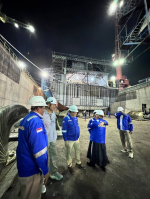
1768823780173.png

🛠️

✔️ First steel cutting:
PT PAL Indonesia carried out the first steel cutting for the LPD 163 m project in late February 2024, marking the official start of fabrication work on the hull and structural components. (Naval News)

✔️ Keel laid:
The keel laying ceremony—a key milestone in shipbuilding that signifies the transition from fabrication to assembly—was held on 24 April 2024 at PT PAL’s shipyard in Surabaya. (Naval News)

📍

According to reports from the NAVDEX 2025 exhibition in Abu Dhabi:

  • PT PAL Indonesia is progressing the construction of the LPD 163 m (“Al Maryah”) on schedule. (Naval News)
  • Shipyard officials present at the event confirmed the vessel is being built actively and remains on track for delivery. (Naval News)

📦

  • The project contract was signed in 2023, and construction began in early 2024. (Naval News)
  • Delivery to the UAE Navy is planned before the end of 2027. (Naval News)

⚙️

  • Length: ~163 meters (much larger than previous LPD designs PT PAL built for Indonesia and the Philippines). (Naval News)
  • Role: Multi-mission Landing Platform Dock capable of amphibious operations, troop and vehicle transport, and support tasks. (Naval News)
  • It follows on from PT PAL’s earlier success with LPDs for other navies, leveraging design experience. (Naval News)

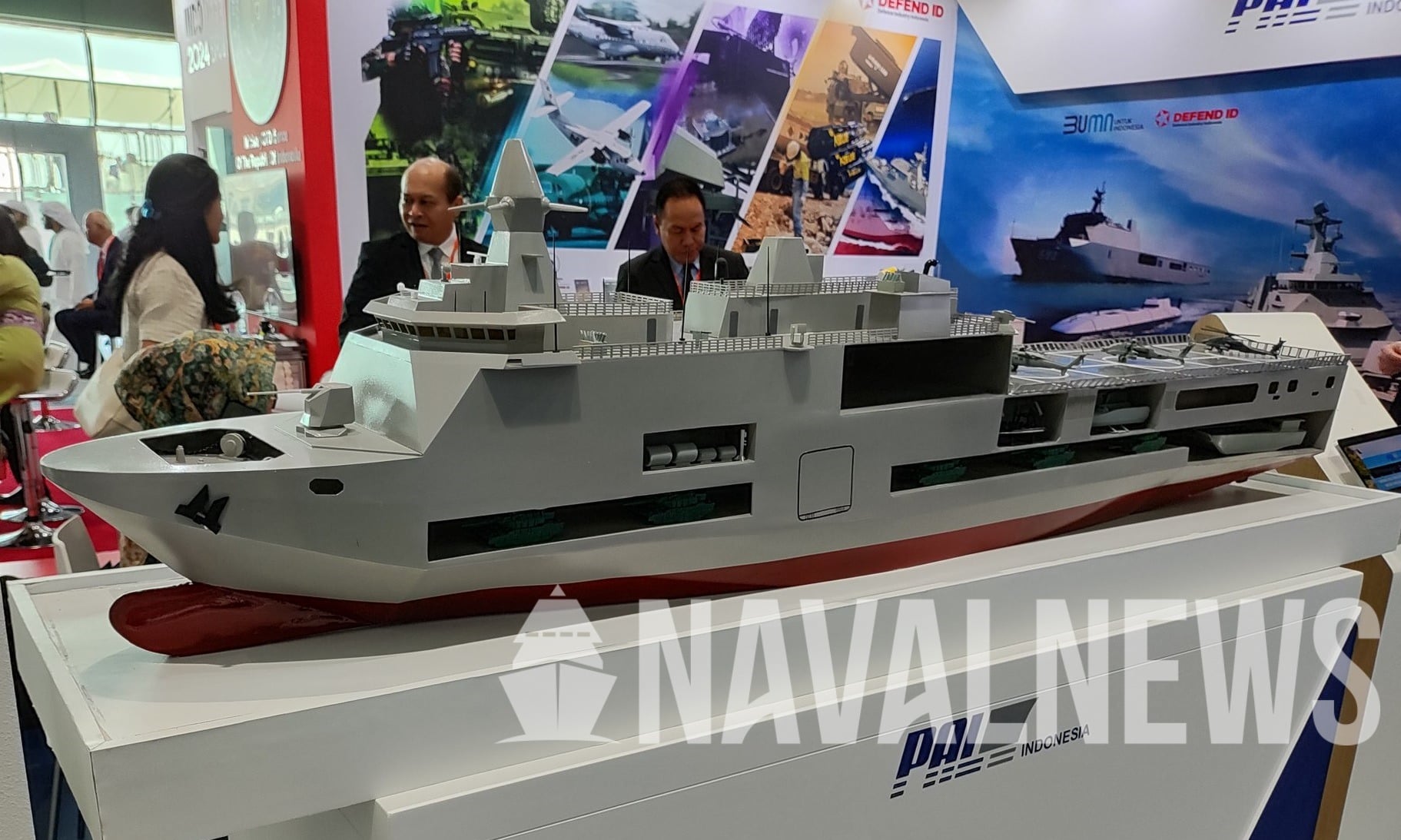
Below is a clean, structured overview of the LPD 163-meter class being built by PT PAL Indonesia for the UAE Navy.
This is compiled from public disclosures, defense exhibitions, and shipbuilding norms for this class.
Image


Image


Image


🚢 LPD 163M (UAE) – Key Specifications & Capabilities​

📐

  • Type: Landing Platform Dock (LPD) / Amphibious Assault Ship
  • Length: ~163 meters
  • Beam: ~24–26 meters
  • Draft: ~6–7 meters
  • Estimated Displacement: ~14,000–16,000 tons (full load)
  • Shipyard: PT PAL Indonesia (Surabaya)
  • Project Name (export): Al Maryah class (commonly referenced)

⚙️

  • Propulsion: Diesel engines (CODAD configuration – typical for LPDs)
  • Speed: ~16–18 knots
  • Range: ~6,000 nautical miles (economic speed)
  • Endurance: 30–45 days (mission-dependent)

👥

  • Embarked Troops:
    • ~500–700 troops (short-term surge capacity)
    • ~300–400 troops (long-term deployment)
  • Vehicle Deck:
    • Main battle tanks
    • Armored vehicles
    • Logistics trucks
  • Landing Craft:
    • 2–4 LCM / LCU (well deck launch & recovery)

🚁

  • Flight Deck:
    • Up to 2 medium helicopters simultaneously
  • Hangar:
    • 2–3 helicopters (e.g. utility / ASW / transport types)
  • Roles:
    • Troop insertion
    • Humanitarian assistance
    • Maritime security operations

🏥

  • Fully equipped hospital facilities, typically including:
    • Operating rooms
    • ICU beds
    • Medical wards
  • Designed for HADR missions (Humanitarian Assistance & Disaster Relief)

🛡️

Weapons & sensors depend on UAE Navy requirements
Typical configuration options:

  • Main Gun: 76 mm naval gun
  • CIWS: 20–30 mm remote weapon systems
  • Missile Systems: Optional (point defense)
  • Sensors:
    • 3D surveillance radar
    • Navigation radar
    • EO/IR systems
  • CMS: NATO-compatible combat management system

🌍

  • Largest and most complex warship export ever built by Indonesia
  • Elevates PT PAL into global-tier amphibious shipbuilders
  • Positions Indonesia as a credible defense exporter beyond ASEAN
  • Strengthens Indonesia–UAE defense-industrial cooperation

🗓️

  • Contract signed: 2023
  • First steel cut: Feb 2024
  • Keel laid: Apr 2024
  • Current phase: Hull assembly & block integration
  • Target delivery: Before end-2027
 
Defend ID Targets Rp132 Trillion (≈ USD 8.25 Billion) in Contracts Across Asia–Africa Markets in 2026


By Ricky Prayoga
Senin, 12 Januari 2026


To view this content we will need your consent to set third party cookies.
For more detailed information, see our cookies page.


Main Points

  • Contract target: Rp132.05 trillion (≈ USD 8.25 billion) in 2026, driven by a new operational strategy.
  • Market focus: Asia-Pacific and Africa, alongside cross-ministerial projects in Indonesia.
  • Revenue goal: Rp35.47 trillion (≈ USD 2.22 billion).
  • Execution levers: Subsidiary streamlining, production capacity upgrades, digitalization, and talent development.
  • Growth balance: Aggressive expansion paired with prudent financial fundamentals.
USD conversion uses an indicative exchange rate of Rp16,000 per USD.


Bandung (ANTARA) — Indonesia’s state-owned defense industry holding Defend ID is targeting total contracts worth Rp132.05 trillion (≈ USD 8.25 billion) in 2026, following the adoption of a new operational strategy aimed at expanding into markets across the Asia-Pacific and Africa.

The aggressive move is outlined in the company’s 2026 corporate roadmap, designed to ensure national defense-industry self-reliance while strengthening competitiveness amid global economic uncertainty.


To view this content we will need your consent to set third party cookies.
For more detailed information, see our cookies page.

Indonesian Aerospace is part of KF21/IFX program developers


Defend ID President Director Joga Dharma Setiawan said in Bandung, West Java, on Monday that the roadmap is intended not merely to help the company endure challenges, but to compete regionally and globally.

“Our 2026 strategy is formulated into a Corporate Strategic Scenario (CSS) and translated into seven main pillars—ranging from business strengthening and product and service innovation to the transformation of business processes, human resources, and information technology as the main business drivers,” said Joga, who also serves as President Director of PT LEN Industri.


To view this content we will need your consent to set third party cookies.
For more detailed information, see our cookies page.

Indonesian Aerospace MALE UCAV, Elang Hitam, maiden flight in 2025


Beyond the large contract target, the strategic plan also sets a revenue goal of Rp35.47 trillion (≈ USD 2.22 billion) and aims to increase the operational burn rate to 26.86 percent.

To view this content we will need your consent to set third party cookies.
For more detailed information, see our cookies page.

PT PAL Indonesia launched 141 meters Red and White Frigate


To reach these targets, Defend ID is undertaking fundamental restructuring, including the streamlining of subsidiaries. This step is considered crucial to creating a more efficient and bankable business structure, enabling faster production scaling and digital transformation.

“We are also focusing on strengthening production capacity, digitalizing business processes, and improving workforce competencies so that all company units can move more agilely and productively,” Joga added.

1768886551962.png

To view this content we will need your consent to set third party cookies.
For more detailed information, see our cookies page.


Looking ahead to 2026, Defend ID is placing strong emphasis on market diversification. In addition to reinforcing the domestic market through cross-ministerial projects—covering defense, transportation, energy, and communications—the holding is now seriously targeting specific international markets.


Joga explained that the company has mapped out opportunities for new defense contracts in regions experiencing rapid growth in defense needs.

“The Asia-Pacific and African markets are our focus, in line with opportunities for new defense contracts and cross-ministerial projects,” he said.

Management is also mindful of external risks, including interest-rate volatility and global supply-chain disruptions. As a result, Defend ID is balancing its aggressive growth agenda with careful financial strengthening.


“We balance growth strategies with solid financial fundamentals. At the same time, rising global defense budgets and increasing demand for modern defense technology are the main drivers for export expansion and mastery of key technologies,” Joga noted.

In addition to defense, the state-owned holding will also push commercial sectors aligned with its core competencies, including energy, transportation, and integrated electronic systems.

Strategic alliances with global partners are positioned not merely as partnerships, but as gateways into global supply chains, aimed at boosting local content levels (TKDN).

“Through product and service innovation, system quality improvements, cost efficiency, and sustainable financial performance, we are optimistic about delivering greater value to both customers and shareholders,” Joga concluded.

 
F-16 TS-1603 Indonesian Air Force: From Overrun to a Successful Falcon STAR-eMLU Upgrade


Indomiliter

To view this content we will need your consent to set third party cookies.
For more detailed information, see our cookies page.


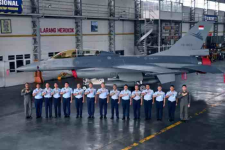
Commemorating the 52nd anniversary of the F-16 Fighting Falcon’s first flight on January 20, 2026, many major achievements have been recorded by the “Fighting Falcon.” From Indonesia, one particularly interesting topic is the success of the Indonesian Air Force (TNI AU), which not only managed to repair a severely damaged fighter jet, but also successfully upgraded an F-16 that was initially suspected to be a total loss through the Falcon STAR-eMLU (Enhanced Mid-Life Update) Program.

Read also: After the Overrun, Is It Possible for F-16 TS-1603 to Fly Again?

1768997940209.png

The fighter aircraft in question is an F-16B (tandem-seat) Fighting Falcon with tail number TS-1603, which on March 14, 2017, suffered an overrun accident due to a brake malfunction on Runway 36 at Roesmin Nurjadin Air Base, Pekanbaru. Although there were no fatalities among the two pilots (Major Pnb Andri and First Lieutenant Pnb Marko), the aircraft—an important jet that had contributed to training dozens of Indonesian Air Force fighter pilots—sustained serious damage.

At the time, the Indonesian Air Force Public Affairs Office (Dispen TNI AU) explained that inspections were being conducted on the airframe, fuselage, and other components to determine the extent of the damage, which would then decide whether the F-16 TS-1603 could be repaired and flown again. Squadron technicians initially concluded that the aircraft could still be used, as the damage appeared to be concentrated mainly on the nose section (radome) and the broken vertical stabilizer.

Eight years later, on October 20, 2025, the Indonesian Air Force announced in a press release that F-16 TS-1603, the ninth aircraft, had successfully completed its upgrade under the Falcon STAR (Structural Augmentation Roadmap)-eMLU (Enhanced Mid-Life Update) program at Technical Squadron 042.

 
To view this content we will need your consent to set third party cookies.
For more detailed information, see our cookies page.
 
Indonesian made MLRS evolution

From this released 6 years ago by Dahana (SOE)

To view this content we will need your consent to set third party cookies.
For more detailed information, see our cookies page.


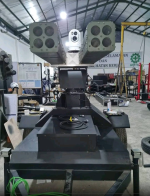
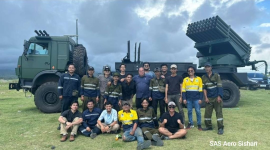
Into this (MLRS Arjuna - PT Aero Sishan)

1769214089537.png

This is 4 years ago, hoping bigger caliber rocket can be tested maybe in 2027.

To view this content we will need your consent to set third party cookies.
For more detailed information, see our cookies page.
 
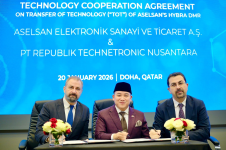
Republikorp (private sector) and ASELSAN Strengthen Defense Cooperation through Technology Transfer Agreement for the HYBRA DMR Secure Communications System


1769480905325.png


This agreement initiates a comprehensive framework for phased technology transfer, technical knowledge sharing, and advanced training. These measures are designed to support the local production of tactical communication systems in Indonesia that meet stringent international quality standards.

Norman Joesoef, Founder of Republikorp, highlighted two key strategic implications of this agreement: strengthening diplomatic-industrial relations and enhancing national intelligence capabilities (including the need for secure communications and encryption).

"This collaboration with ASELSAN is a continuation of Indonesia's long-standing technology cooperation with Turkey, but also marks a new era with a higher level of localization and more substantial technology transfer," said Norman Joesoef.

"We specifically prioritized the HYBRA DMR because modern challenges require modern solutions. As a highly portable and secure communications system, the HYBRA DMR will provide our military intelligence community with operational agility and crucial encryption to operate effectively in complex environments."

This collaboration is a direct follow-up to the launch of PT Republik-Aselsan Indonesia, a joint venture announced on September 9, 2025, at the DSEI in London. The founding agreement was signed by Norman Joesoef and Ahmet Akyol, President & CEO of ASELSAN, laying the foundation for deeper industry integration.


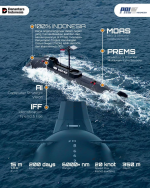
PT PAL to Conduct Crucial Sea Trials for KSOT Autonomous Submarine in 2026

1770019477659.png

Key Points / Important Takeaways

  • ⚓ PT PAL Indonesia plans to conduct KSOT sea trials in 2026, marking a critical milestone in underwater defense technology.
  • 🤖 The trials will focus on AI-driven autonomous navigation and underwater acoustic communication systems.
  • 🌊 Indonesia’s tropical marine environment (warm waters, high salinity) will be used as a stress test for sonar and AI reliability.
  • 🧠 KSOT is expected to prove its ability to detect obstacles and operate independently under signal interference.
  • 🛡️ The project supports national defense self-reliance and reduces risk to human personnel.
  • 🕵️ Designed missions include ISR (Intelligence, Surveillance, Reconnaissance) with up to 6 months of endurance.
  • 🇮🇩 The program reinforces Indonesia’s commitment to maritime sovereignty and advanced indigenous defense systems.
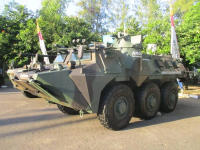
1770019406583.png

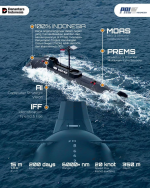
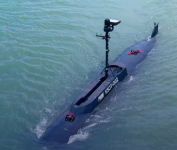
PT PAL Indonesia is preparing to carry out a critical development phase in underwater defense technology by scheduling sea trials for its Autonomous Submarine (Kapal Selam Otonom / KSOT) in 2026.

The sea trials aim to verify the reliability of the unmanned submarine’s technology, particularly its Artificial Intelligence (AI)-based autonomous algorithms and underwater communication systems.

The decision to conduct the trials in 2026 is driven by the need to test KSOT’s resilience in Indonesia’s challenging tropical waters. Marine conditions characterized by warm temperatures and high salinity are known to interfere with sonar signals and acoustic communication. As such, the trials will serve as a crucial test of whether the AI-based navigation system can effectively detect obstacles and operate independently amid such disturbances.

The successful development of KSOT is projected to represent a major leap forward in Indonesia’s defense self-reliance. The autonomous submarine is designed to conduct high-risk missions, such as Intelligence, Surveillance, and Reconnaissance (ISR), with an operational endurance of up to six months, comparable to the standards of autonomous submarines deployed by advanced nations.

This initiative underscores PT PAL’s commitment to delivering modern defense solutions capable of safeguarding the maritime sovereignty of the Republic of Indonesia without endangering the lives of military personnel.


Pindad

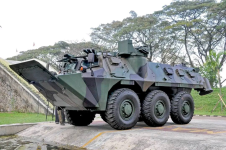
Anoa Amphibious


1770297277267.png
1770297350073.png
 

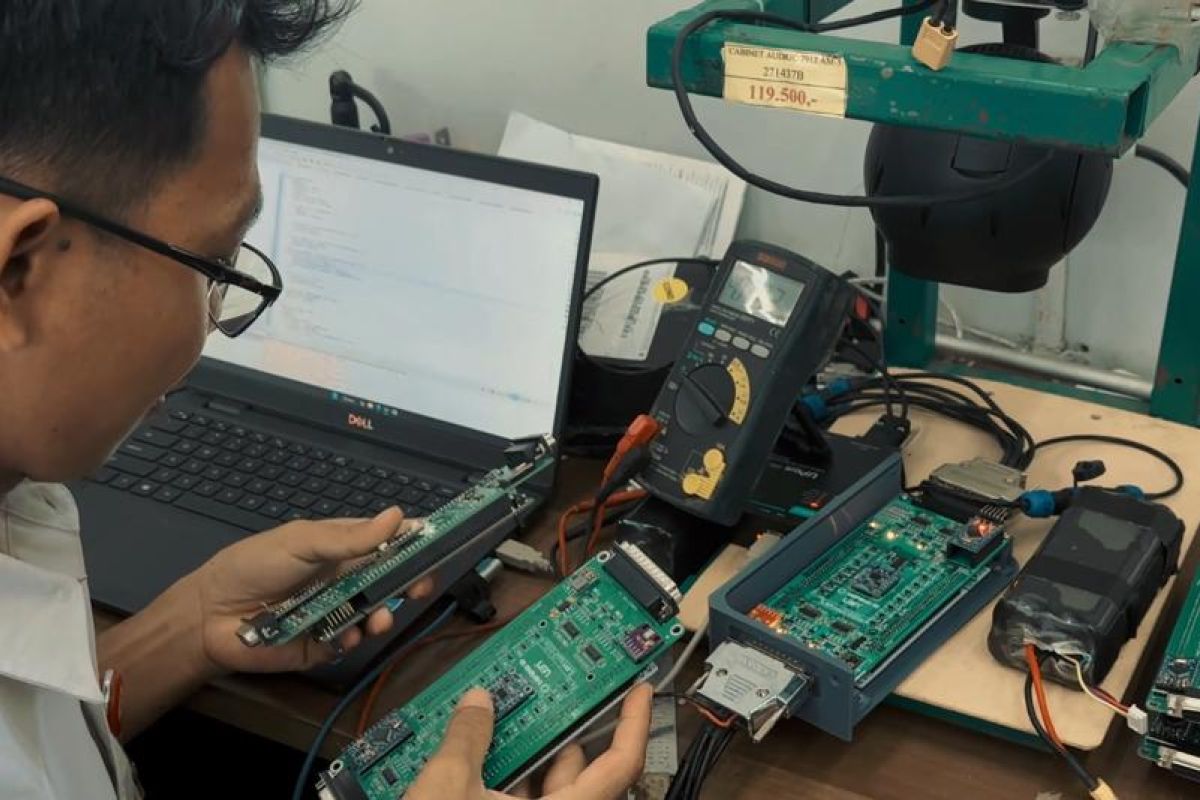
“Night Vision” Technology Strengthens Indonesia’s Defense

1770740244448.png
BRIN
and PT LEN jointly develop NVG and Thermal Imaging technology.
Monday, 09-02-2026

TSM-BRIN is working to accelerate research, development, and downstream commercialization of technology so that it can be utilized by Indonesia’s national strategic industries.

One key focus is Night Vision Goggle (NVG) and Thermal Imaging technology, which are considered critical components in defense, security, and the protection of Indonesia’s strategic territories.

To support this goal, PT LEN and BRIN have introduced Indonesia’s national defense “night vision” technology through the signing of a Cooperation Agreement (PKS) for the development of Night Vision Goggles and Thermal Imaging Devices.

The collaboration between PT LEN and BRIN is considered important because it unites national research capabilities with the industrial strength of a strategic defense company within an integrated innovation ecosystem.

BRIN serves as a national center of excellence for research and mastery of core technologies, while PT LEN contributes its experience and capacity in systems engineering, industrialization, and defense technology integration.

This synergy ensures that research outcomes do not stop at the laboratory stage, but can be transformed into practical, ready-to-use products that meet domestic user needs.

Through this partnership, it is expected that reliable, competitive, and deployable defense innovations will be produced to support Indonesia’s domestic requirements. The collaboration reinforces a shared commitment to building technological self-reliance, strengthening national resilience, and safeguarding Indonesia’s sovereignty amid global geopolitical dynamics.

(PT LEN Industri)


Key Points / Important Takeaways

  • 🌙 Indonesia is developing defense “night vision” capability through NVG and thermal imaging technology.
  • 🤝 BRIN and PT LEN have signed a formal cooperation agreement (PKS) to jointly develop the technology.
  • 🧠 BRIN provides core research and technological mastery, while PT LEN contributes engineering, industrialization, and defense integration capability.
  • 🏭 The goal is to ensure the technology is commercialized and ready for operational use, not stuck at the research stage.
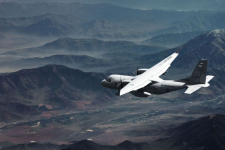
  • 🛡️ NVG and thermal imaging are crucial for defense operations, security missions, and territorial protection, especially in low-visibility environments.
  • 🇮🇩 The project supports domestic defense technology independence, national resilience, and sovereignty.
  • 🌍 The initiative is positioned as a strategic response to increasing global uncertainty and defense challenges.
 
PTDI Showcases CN235-220 Anti-Submarine Warfare

1770810070264.png

The CN235-220M ASW aircraft displayed by PTDI is a maritime patrol platform designed to support maritime surveillance and enhance maritime domain awareness. The aircraft is equipped with the Airborne Mission Integration and Management System (MIMS), a collaboration between PTDI and Scytalys, a Greek-based software development and systems integration company.

The CN235-220M ASW is equipped with various sensors, including a maritime surveillance radar, an integrated mission management system, and a self-defense system consisting of chaff and flares. Data from all these sensors is processed to produce a Common Tactical Picture (CTP) that is displayed to mission crews and pilots to support operational decision-making.

At the same exhibition, PTDI also displayed the N219 MSA as a maritime surveillance solution for strategic waters. In this configuration, the N219 MSA is equipped with an ultra-light maritime surveillance radar with a range of up to 160 nautical miles, Track While Scan (TWS) capability for more than 200 targets, as well as an Electro-Optical/Infrared (EO/IR) system, Automatic Identification System (AIS), and tactical datalink.

In terms of performance, the N219 MSA is designed to have an operational radius of up to 200 nautical miles, endurance in the operational area of more than two hours, and a total mission time of more than 5.5 hours, thus supporting maritime patrol and Search and Rescue (SAR) missions.

 
1770983641341.png
1770983674123.png


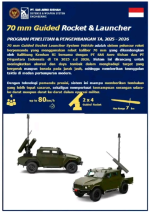
Progress Update on the Development of the 70 mm Guided Rocket & Launcher Project

The development progress of the 70 mm guided rocket and launcher project is being carried out through a collaboration between Batekhan (Ministry of Defense / Kemhan), PT SAS Aero Sishan, and **PT Dirgantara Indonesia (PTDI).

As additional information, PT SAS Aero Sishan is currently developing multiple national defense equipment (alutsista) projects. This is part of an effort to accelerate Indonesia’s defense self-reliance, under mandates entrusted by the Ministry of Defense to PT SAS Aero Sishan.


1771006327642.jpegPindad SPR-2
with a combo thermal sight on top
Absolutely massive beast firing a 12.7x99mm/50BMG round weighing in at 17.86kgs empty!!!
They are claiming this tuned version can reach upto 2,000m range, although the optic doesn't seem to the be right one for that.
Gun length- 1.78m
 
To view this content we will need your consent to set third party cookies.
For more detailed information, see our cookies page.


To view this content we will need your consent to set third party cookies.
For more detailed information, see our cookies page.


To view this content we will need your consent to set third party cookies.
For more detailed information, see our cookies page.
 
Do you have any videos of the SPR2 or SPR3?
I want to see it in action it looks amazing
 
To view this content we will need your consent to set third party cookies.
For more detailed information, see our cookies page.


To view this content we will need your consent to set third party cookies.
For more detailed information, see our cookies page.
 

Users who are viewing this thread

Pakistan Defence Latest

Back
Top