Indonesian Defense Industry

I wonder which “UAE partners” they were, looks like nothing I’ve seen before.

Wouldn’t doubt if EDGE was involved somehow.
This is from Kompas (one of credible and mainstream Indonesian media)

This Smart Bomb Made by Local Industry is Ready to be Tested by the Indonesian Air Force, Can be Shot from a Distance of 70 Km

PT Sari Bahari officially introduced its newest smart bomb, called the Smart Bomb B250ST at the Indo Defense 2025 event from June 11-14 at the JI Expo Kemayoran, Jakarta.

This bomb is said to be the result of a technological leap from the domestic defense industry and is currently being prepared to be tested by the Indonesian Air Force (AU). This smart bomb is an upgraded version of the conventional BNT-250 bomb, a 250-kilogram bomb that has been used by the Indonesian Air Force (AU).

With the addition of a guidance system or guidance kit, the bomb now has the ability to launch precisely towards the target without the need to bring the aircraft close to the target.

"If a regular bomb has to be carried by the aircraft close to the target, it means the aircraft enters the enemy's air defense envelope. But with this smart kit, the aircraft can launch from outside the enemy's defense area," said Vice President Director of PT Sari Bahari, Putra Prathama, met on the sidelines of the exhibition, Friday (6/13/2025).

One of the advantages of this smart bomb is its flexibility. This bomb is designed to be compatible with various types of fighter aircraft, both those using NATO and Russian standards. This is possible because the design of the suspension lock or bomb hanger can be adjusted. This bomb is indeed designed to be used in both standards. So the lock system can be suitable for NATO and non-NATO," Putra explained.

This smart bomb made by Sari Bahari relies on the INS (Inertial Navigation System) navigation system supported by GNSS (Global Navigation Satellite System), such as GPS, to increase accuracy. After the target coordinates are entered, this bomb can be launched towards the target accurately even from a distance of up to 70 kilometers, depending on the launch height and other technical configurations.

For its explosive power, this bomb still uses the conventional BNT-250 bomb. The kill area radius or destructive power is claimed to reach 100 meters. In terms of design, this bomb uses wings like a mini plane. The main function of these wings is to extend the combat range. Based on computerized simulations, the normal range of this bomb can reach 50 kilometers, and a maximum of up to 70 kilometers, depending on the height when released.

Although it has not been used operationally by the Indonesian Air Force, PT Sari Bahari has conveyed their readiness to submit the test and certification process to the Indonesian Air Force. "We have conveyed our intention that this bomb is ready to be tested by the Indonesian Air Force and certified for the interests of the Indonesian Air Force AU," said Putra.

The testing and certification process is estimated to take a certain amount of time, and will be carried out according to internal procedures within the Indonesian Air Force and the Ministry of Defense. This smart bomb was developed through technological cooperation with the United Arab Emirates (UAE).

PT Sari Bahari acquired the blueprint from a multinational group of scientists in the UAE to then be produced locally in Indonesia. The target is for full domestic production to begin in 2030.
 
This is from Kompas (one of credible and mainstream Indonesian media)

This Smart Bomb Made by Local Industry is Ready to be Tested by the Indonesian Air Force, Can be Shot from a Distance of 70 Km

PT Sari Bahari officially introduced its newest smart bomb, called the Smart Bomb B250ST at the Indo Defense 2025 event from June 11-14 at the JI Expo Kemayoran, Jakarta.

This bomb is said to be the result of a technological leap from the domestic defense industry and is currently being prepared to be tested by the Indonesian Air Force (AU). This smart bomb is an upgraded version of the conventional BNT-250 bomb, a 250-kilogram bomb that has been used by the Indonesian Air Force (AU).

With the addition of a guidance system or guidance kit, the bomb now has the ability to launch precisely towards the target without the need to bring the aircraft close to the target.

"If a regular bomb has to be carried by the aircraft close to the target, it means the aircraft enters the enemy's air defense envelope. But with this smart kit, the aircraft can launch from outside the enemy's defense area," said Vice President Director of PT Sari Bahari, Putra Prathama, met on the sidelines of the exhibition, Friday (6/13/2025).

One of the advantages of this smart bomb is its flexibility. This bomb is designed to be compatible with various types of fighter aircraft, both those using NATO and Russian standards. This is possible because the design of the suspension lock or bomb hanger can be adjusted. This bomb is indeed designed to be used in both standards. So the lock system can be suitable for NATO and non-NATO," Putra explained.

This smart bomb made by Sari Bahari relies on the INS (Inertial Navigation System) navigation system supported by GNSS (Global Navigation Satellite System), such as GPS, to increase accuracy. After the target coordinates are entered, this bomb can be launched towards the target accurately even from a distance of up to 70 kilometers, depending on the launch height and other technical configurations.

For its explosive power, this bomb still uses the conventional BNT-250 bomb. The kill area radius or destructive power is claimed to reach 100 meters. In terms of design, this bomb uses wings like a mini plane. The main function of these wings is to extend the combat range. Based on computerized simulations, the normal range of this bomb can reach 50 kilometers, and a maximum of up to 70 kilometers, depending on the height when released.

Although it has not been used operationally by the Indonesian Air Force, PT Sari Bahari has conveyed their readiness to submit the test and certification process to the Indonesian Air Force. "We have conveyed our intention that this bomb is ready to be tested by the Indonesian Air Force and certified for the interests of the Indonesian Air Force AU," said Putra.

The testing and certification process is estimated to take a certain amount of time, and will be carried out according to internal procedures within the Indonesian Air Force and the Ministry of Defense. This smart bomb was developed through technological cooperation with the United Arab Emirates (UAE).

PT Sari Bahari acquired the blueprint from a multinational group of scientists in the UAE to then be produced locally in Indonesia. The target is for full domestic production to begin in 2030.
Yeah, in my opinion it’s EDGE, but they’ve always been open to these arrangements first with Serbia on drones and now Indonesia.

Of course, I could be completely wrong but I really don’t think so. It’s likely fairly cheap to produce and quite effective in GPS jam free environment. Hope to see more cooperation soon!


Unrelated:
It might be news to you but a bunch of ex Indonesian aerospace employees are working on the EDGE UCAV program currently.
 
PT Lundin

The founder married Indonesian lady and stay in East Java. The shipyard is in Banyuwangi, East Java.

1750231123501.jpeg
1750231401167.jpeg

Lundin X33 KSR.

To view this content we will need your consent to set third party cookies.
For more detailed information, see our cookies page.


To view this content we will need your consent to set third party cookies.
For more detailed information, see our cookies page.


To view this content we will need your consent to set third party cookies.
For more detailed information, see our cookies page.


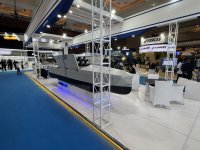
PT Lundin's new ship designs at Indodefence​

 
Indonesia’s defense industry: Between self-reliance and the illusion of imported strength

Real military power is not measured by the quantity of imported hardware, but by the ability to sustain and reproduce that capability independently.


To view this content we will need your consent to set third party cookies.
For more detailed information, see our cookies page.

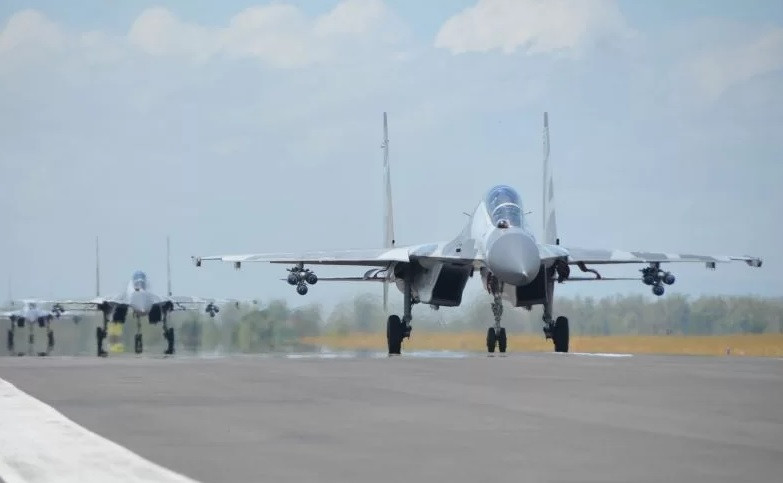
KF21/IFX demonstrated its capability, video from Indonesian Air Force


Chappy Hakim
(The Jakarta Post)
Jakarta
Thu, June 19, 2025


More than seven decades
since Indonesia’s independence, the pursuit of a self-reliant national defense industry remains an elusive goal.

Every time a regional conflict escalates, be it the Russia-Ukraine war or the recent air battles between Iran and Israel, we are starkly reminded that true national defense is not about showcasing fleets of modern jet fighters or tanks, but about mastering the full cycle of weapons systems: Design, production, operation and maintenance. In today’s strategic reality, sovereignty belongs to those who control the technology.

This is the paradox Indonesia is facing. On one hand, we proclaim the aspiration of a robust domestic defense industry. On the other hand, we continue to depend heavily on imported weaponry.Over the past two decades, Indonesia has purchased Sukhoi fighter jets from Russia, submarines from South Korea, radars from France, missiles from Norway and drones from Turkey.

Alarmingly, even basic aircraft maintenance often requires sending parts overseas. Instead of manufacturing our own systems, we remain dependent on others just to keep them functional.The root of this issue goes beyond funding or political will. It lies in the structural immaturity of our defense industrial ecosystem.

State-owned defense enterprises such as PT Pindad, PT PAL and PT Dirgantara Indonesia (PTDI) have made notable progress, producing, among other military equipment, the Harimau medium tank, SIGMA-class warships and CN-235 and N-219 transport aircraft. However, their output capacity, global certifications and international competitiveness lag far behind peers in countries like South Korea, Turkey, or even Iran, which has operated under international sanctions for decades.

Why have we not reached self-reliance or autarky? The answer is complex.

First, our defense policy lacks continuity. When the administration changes, strategic priorities often shift.

Second, technology transfer from foreign suppliers remains superficial. Many procurement contracts lack meaningful offset agreements or merely offer token knowledge-sharing, not genuine manufacturing capability.

Third, research and development remain underfunded and fragmented. Government R&D agencies under the Defense Ministry and the military face persistent constraints, financial, institutional and human capital.

In Asia, military research and development (R&D) spending is on the rise, particularly in East Asia.
The annual Asia-Pacific Regional Security Assessment released by the London-based International Institute for Strategic Studies (IISS) late last month found Southeast Asia's key nations of Indonesia, Malaysia, the Philippines, Singapore, Thailand and Vietnam increased spending on defense procurement and research and development by US$2.7 billion to $10.5 billion from 2022 to 2024. However, they still heavily rely on imports when it comes to advanced military equipment.

To be fair, importing defense systems is not inherently wrong, especially when faced with imminent threats. Buying off-the-shelf hardware can be the fastest solution to immediate operational needs, such as patrolling the Natuna Sea or safeguarding the airspace over the Malacca Strait.But when imports become a long-term strategy, we are indulging in an illusion of strength.

Real military power is not measured by the quantity of imported hardware, but by the ability to sustain and reproduce that capability independently.

History offers painful lessons. Indonesia once suffered under arms embargoes during the New Order era. Iran, despite prolonged sanctions, responded by developing its own missiles and drones. Turkey, after being disappointed by NATO allies, emerged as a rising exporter of unmanned combat systems. The takeaway is clear: Embargoes can be either a curse or a catalyst—depending on how a nation responds.


This is why Indonesia must urgently rethink its approach to defense development. The cornerstone should be the establishment of a long-term, strategic, and institutionalized framework. True synergy must emerge between the government, the armed forces, state-owned enterprises, private defense firms, universities, and international partners.

Technology transfer must be structural, not superficial. Research must be properly funded and integrated. Human capital must be nurtured with a national vision, not just technical competence.Self-reliance does not mean isolation. It means standing tall when foreign help is no longer available. Importing sophisticated weaponry may boost morale, but building domestic arms factories restores national dignity.

As President Sukarno once said, “A great nation stands on its own feet.” In defense terms, this means producing, maintaining and mastering our own military power. Without this, sovereignty remains a hollow phrase.Unfortunately, none of this will be achievable without a comprehensive national doctrine.

Indonesia has yet to produce a White Paper on National Defense and Security, a vital strategic document outlining the country’s threat landscape, long-term defense vision, and force development scenarios over a 20–30-year horizon.

Without this compass, all efforts to build a sustainable domestic defense industry will drift aimlessly, like a ship caught in fog without navigation.Absent such a strategic plan, weapons procurement becomes reactive, political and short-sighted.

Administrations come and go, each launching their own pet projects. Domestic industry, meanwhile, is fed sporadically with orders too few to sustain production or innovation. Instead of becoming centers of military excellence, defense factories risk turning into mere repair shops.

Even worse, despite the patriotic calls to "buy local", procurement contracts are often awarded to foreign vendors, disregarding the improving quality of our local products.


Without a long-term roadmap and an official state doctrine to anchor it, all the programs amount to little more than hollow rhetoric, noisy in seminars, silent on the ground. Building a national defense industry is not just about budgets or technology; it is about national vision and strategic resolve. The government must treat defense industry development as an integral component of national resilience, not as a symbolic side project or rent-seeking venture.

Indonesia must move swiftly to draft and publish a White Paper on Defense and Security, one that not only addresses current needs but articulates a long-term, coherent, and credible strategic blueprint. Only then can our domestic defense industry evolve into a true pillar of sovereignty, rather than a showroom of superficial nationalism.***

The writer is a former Indonesian Air Force chief of staff and founder and chair of the Indonesian Center for Air Power Studies. The views expressed are personal.


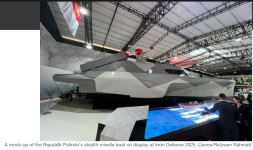
Indo Defence 2025: Indonesian Navy in talks to evaluate Palindo's stealth missile boat​


By Ridzwan Rahmat |
16 June 2025

1750352955729.png

Indonesia's Republik Palindo has entered negotiations to supply the Indonesian Navy with an evaluation prototype of the company's stealth missile boat, which has been developed with assistance from Turkish weapons manufacturer Roketsan.

Speaking to Janes at the Indo Defence 2025 exhibition in Jakarta, a representative from the company said that the negotiations for this contract are expected to conclude by the end of 2025.

Under the contract, Republik Palindo, which was previously known as PT Palindo Marine, would supply the Indonesian Navy with an initial prototype that will be used to evaluate the vessel's seakeeping and manoeuvring capabilities.

Eventually, the service is also expected to procure other prototype units that will be used to evaluate the stealth missile boat's combat capabilities, including one that will deploy and launch Roketsan's surface-launched variant of the Çakır cruise missile, said the representative.

However, this milestone would require a separate contract with Roketsan for the weapon system, he added.

The surface-launched variant of the Çakır cruise missile has a maximum range of about 100 km and it can be equipped with several payload types including high-explosive, semi-armour-piercing, blast-fragmentation, and thermobaric warheads.

The stealth missile boat will feature a composite fibre trimaran hull and superstructure, which reduces its radar signature, said the Republik Palindo representative.

It has an overall length of 20 m and a width of 7.9 m. Powered by diesel engines driving a single propeller, the boat has a top speed of about 60 kt.

The vessel can accommodate a crew complement of two, but there are plans to eventually equip the boat with the ability to operate autonomously.


To view this content we will need your consent to set third party cookies.
For more detailed information, see our cookies page.


Day 2 Indodefence 2025 PAL Indonesia and Republikorp shape the future of Indonesia’s maritime power​


--------------

Indonesian companies made defense products

Pindad
: Harimau Medium tank, Harimau IFV, Badak Fire Support Vehicle, Anoa APC, vehicles( Maung, Pandu, etc), guns (rifles, machine gun, sniper rifle etc)

LEN Industry (electric motor bike, etc)
Indonesian Aerospace (drone),
and other local company products like J Force (private sector)

To view this content we will need your consent to set third party cookies.
For more detailed information, see our cookies page.


IndoDefence 2025: Live Demonstration Focus on Indonesian Electric Solutions for Tactical Silence​

 
To view this content we will need your consent to set third party cookies.
For more detailed information, see our cookies page.


Noahtu Shipyard's new OPV and Disaster Relief ship​


Look like Noahtu Shipyard and Batamex Shipyard are united

Here is Batamex shipyard where the owner is actually a woman

To view this content we will need your consent to set third party cookies.
For more detailed information, see our cookies page.


To view this content we will need your consent to set third party cookies.
For more detailed information, see our cookies page.


Maya Miranda Ambarsari, a distinguished business woman in Indonesia, strikes a balance between entrepreneurship and philanthropy

Entrepreneur, lawyer, and philanthropist Maya Miranda Ambarsari may be known for her expansive business portfolio, but she is also one to share her blessings to underserved communities.

She currently sits as the co-founder and shareholder of PT Merdeka Copper and Gold Tbk, a gold mining company she founded with her husband, Andreas Reza Nazaruddin. The company engages in exploration and production of gold, silver, copper, and other related minerals.

While Ambarsari got her start in business via telecommunications, her entrepreneurial career soon expanded to oil refinery PT Tawu Inti Bati, real estate Elliotti Residence, beauty venture Gorjes Hair Salon & Lounge, e-commerce firm JD.ID, and recently, Batamec Shipyard.


PT PAL Indonesia Unveils Its Latest Autonomous Submarine Design​


By Fauzan Malufti
Published on 23/06/2025

1750905909237.jpeg
1750907413257.jpeg
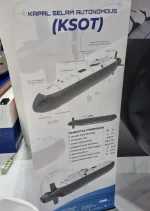
KSOT design displayed at Indo Defence 2025. Naval News picture.


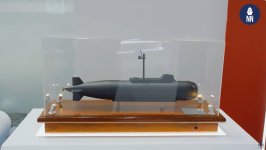
According to PT PAL’s General Manager for Design, Chabibi Nur Tahlil, the autonomous submarine, dubbed Kapal Selam Otonom (KSOT)—adopting the Indonesian term for “autonomous submarine”—is developed in response to operational requirements set by the Indonesian Ministry of Defence and Navy.


The KSOT will be produced in three distinct configurations: surveillance, one way attack (OWA or kamikaze-style), and torpedo-launch variants. The torpedo variant will be capable of carrying two heavyweight torpedoes. Chabibi added that the submarines are intended to be produced in large numbers and will be controlled through satellite and/or radio communication links.


The submarine weighs 37.28 tons and features an overall length of 15 meters, a breadth of 2.2 meters, and a draught of 1.85 meters. It is capable of cruising at 5 knots and reaching a maximum speed of 8 knots. Once fully developed, the KSOT is set to have an operational range of up to 6,000 nautical miles and can dive to depths of 350 meters. With an endurance of up to six months, it can be used for long-duration missions and integrates an onboard artificial intelligence system.

1750905940384.webp
KSOT design displayed at Indo Defence 2022. Naval News picture.


The KSOT design displayed during this year’s Indo Defence shows a substantial departure from the original concept first revealed in 2022. The new design features a more compact and streamlined hull, along with a mast system.

This marks a sharp contrast with the initial design from 2022, which was significantly larger, measuring 25 meters in length and having a displacement range of 228 to 262 tons. The earlier version was also specified with a higher maximum speed of 12 knots.


PT PAL stated that given the complexity of the project, the company is working with undisclosed partner(s). Despite this, the company claims the KSOT maintains a domestic content level of over 50%. sea trials are expected to begin in the coming months.


For the record, when the project was first introduced to the public during Indo Defence 2022, PT PAL stated that it was developing the platform with support from the German defense firm Diehl Defence, particularly in relation to its armament systems. The collaboration also includes plans for the joint production of underwater or submarine-launched missiles.

Fauzan Malufti​

1750906064458.png
Fauzan Malufti is a defence analyst based in Jakarta, Indonesia. With a strong interest in military affairs, modernisation, and diplomacy, Fauzan has written extensively on Indonesia's defence landscape. He also runs an English-speaking Twitter account that focuses on discussing defence-related matters concerning Indonesia.


To view this content we will need your consent to set third party cookies.
For more detailed information, see our cookies page.


PT PAL Indonesia's past and current shipbuilding programs​

 
Some of private sectors in IndoDefense 2025, InfoGlobal, Republikorp, and others

To view this content we will need your consent to set third party cookies.
For more detailed information, see our cookies page.


To view this content we will need your consent to set third party cookies.
For more detailed information, see our cookies page.


Republikorp in last video, this company has many JV with Turkish companies, so many Turkish products seen in their boot

To view this content we will need your consent to set third party cookies.
For more detailed information, see our cookies page.
 

Terafulk Shows Indonesian Navy-Approved New 120-Meter LST​


Published on 29/06/2025
By Fauzan Malufti
1751360129296.jpeg
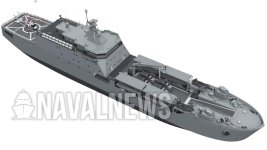
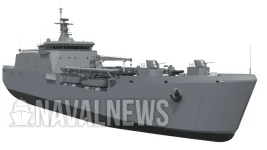
An Indonesian private ship design company, Terafulk Megantara Design, showcased a new 120-metre Landing Ship Tank (LST) design to meet the Indonesian Navy’s (TNI AL) modernization requirements during Indo Defence 2025. The company shared computer renderings of the new LST exclusively with Naval News.


According to details shared with Naval News, the design is based on the Bintuni-class LST, which was built domestically and has been in service since 2015, and the older Semangka-class LSTs constructed in the 1980s by Korea-Tacoma Shipyard (now Hanjin Heavy Industries) for TNI AL. Terafulk emphasized that the new LST offers improved capabilities and is heavily influenced by direct inputs from TNI AL, with operational feedback and mission-specific requirements playing a central role throughout the design process.


At 120 meters long, the LST is 300 tonnes heavier than the Bintuni-class, with an overall larger storage space and a more compact superstructure. Notably, it includes a dedicated hangar that can accommodate one medium-sized helicopter, a capability absent in the Bintuni-class.


1751360199561.webp
1751448446676.jpeg
Terafulk’s new 120-Meter LST design for Indonesian Navy. Terafulk picture.

The vessel is designed to accommodate up to 15 BMP-3F infantry fighting vehicles, four trucks, and 474 personnel (114 crew members, 350 troops, and 10 aviation personnel). Terafulk also stated that the ship could technically transport heavier combat vehicles, including the Indonesian Army’s Leopard 2 main battle tanks.


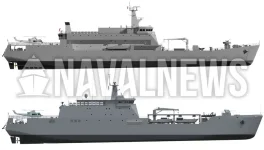
The ship could carry four 12-meter Landing Craft Vehicle and Personnel (LCVPs), each of which can transport around 25 fully equipped soldiers. The LCVPs are positioned on the forward mission deck ahead of the bridge rather than placed along the sides of the superstructure, as seen in the Bintuni-class. This configuration provides more internal space, allows for unobstructed access to the stern well and helicopter deck, and is supposedly designed to simplify the operation of the LCVPs.


1751360260538.webp
Design comparison between Bintuni-class LST and the new 120-meter LST. Terafulk picture.


Propulsion is provided by twin diesel engines, delivering a top speed of 16 knots and a range of approximately 6,200 nautical miles, with an endurance of up to 20 days at sea. For self-defense, the LST is equipped with two 40mm cannons, which can also be used for naval gunfire support, as well as two 12.7mm machine guns and decoy systems.


According to Terafulk, the company has acquired approval in principle for the new LST design. Once production begins, Terafulk plans not only to provide the design to participating shipyards but also to offer shipbuilding-related recommendations on how to construct the vessels most effectively.

1751360311007.webp
Two Bintuni-class LSTs Being Commissioned in October 2021. Indonesian MoD picture.


Naval News understands that one of the key aspects of the new LST program is standardization. This comes after the Bintuni-class experience, where nine ships currently in service—though built under the same class—were produced by different shipyards and show variations in characteristics and dimensions.


At this time, there is no confirmed timeline for when construction will start and the number of vessels the Navy plans to acquire. To note, TNI AL is still operating 15 old LSTs, including 11 ex-East German Navy Frosch-class LSTs built in the 1970s.

New Design and Export Targets

Terafulk shared with Naval News that it will design a new 28-metre coastal and riverine armored assault boat, as well as a 60-metre fast patrol ship, for the Indonesian Navy. Terafulk also stated that it had entered discussions with at least two undisclosed Southeast Asian customers for a replenishment oiler and a 90-metre offshore patrol vessel (OPV).


Fauzan Malufti​

1751360429464.png
Fauzan Malufti is a defence analyst based in Jakarta, Indonesia. With a strong interest in military affairs, modernisation, and diplomacy, Fauzan has written extensively on Indonesia's defence landscape. He also runs an English-speaking Twitter account that focuses on discussing defence-related matters concerning Indonesia.

 
Test trial of the P8 Light Tank made by PT SSE

To view this content we will need your consent to set third party cookies.
For more detailed information, see our cookies page.
 
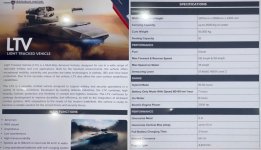
Republikorp's LTV (Light Tracked Vehicle), originally made by concept artist Erry Yanuar Ananda for Republikorp Holding. Hybrid propulsion (diesel and electric motor).

With about 10 ton weight, it would be comparable to P8 Light tank, but it has hybrid propulsion hence it theoretically can go to 142 km/h forward and 50 km/h reverse (from the spec sheet). Though the list under the description stated 90 km/h land speed and 40 km/h water speed..

To view this content we will need your consent to set third party cookies.
For more detailed information, see our cookies page.


1752121141154.jpeg
1752121158782.jpeg
1752121176823.jpeg
 
To view this content we will need your consent to set third party cookies.
For more detailed information, see our cookies page.


To view this content we will need your consent to set third party cookies.
For more detailed information, see our cookies page.
 
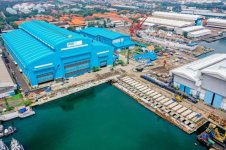
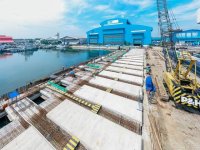
Construction of Submarine Shiplift Dock Boosts Defense Industry Self-Reliance

1752126803921.jpeg

Jakarta: The construction project of the Submarine Shiplift Dock Block A-B is believed to support the self-reliance of the national defense industry. The project is being carried out by state-owned construction company PT PP (Persero) Tbk, or PTPP.

Valued at IDR 275 billion, the project has shown significant progress, with realization reaching 62.52 percent, surpassing the target plan of 57.28 percent. This dock is not just infrastructure, but a new milestone in the national defense industry.

"Built within a period of 600 calendar days, this facility serves as a main foundation for supporting the Whole Local Production (WLP) program for submarines, which has been initiated by the government as a strategic step toward the self-reliance of defense equipment," said PTPP Corporate Secretary Joko Raharjo, as quoted from a written statement on Tuesday, July 8, 2025.

Joko added that this project sets a new standard in the construction world, such as the use of environmentally friendly materials—namely, reusable steel-based precast concrete formwork, thus reducing waste and carbon emissions. Other innovations include construction digitalization by implementing IoT, BIM, and even 9D technology. "In the field, technologies such as automatic bucket pouring, automatic concrete curing, and rebar rolling machines ensure precise and efficient work, while also reducing the risk of work accidents," explained Joko.

1752126833342.jpeg

Building a strong and sovereign maritime industry

Joko revealed the uniqueness of this project lies in its status as the first shiplift in Indonesia specifically designed for submarines. With a dock capacity of up to 15 tons per square meter and a structural thickness of up to 2.5 meters, this facility is designed to safely and precisely handle the extreme loads of submarines.

Furthermore, Joko said, this project is the result of a strategic collaboration between PTPP and global partner Syncrolift AS, the world's leading shiplift technology provider. This synergy not only guarantees quality and reliability but also strengthens the competitiveness of the national construction industry through technology transfer and the development of local human resources.

The construction of the Submarine Shiplift Dock is a tangible manifestation of the spirit of self-reliance and innovation in the defense industry. "PTPP is not only building infrastructure but also laying the foundation for a strong and sovereign future for Indonesia's maritime industry," he said. (Metro TV)


PT PAL showcases indigenous CMS and counter-drone prototypes​


Published on 10/07/2025

1752319968232.webp
PT PAL CMS being diplayed during Indo Defence 2025. Naval News picture.

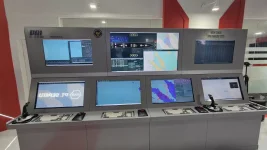
Indonesian shipbuilder PT PAL Indonesia showcased its in-house developed Combat Management System (CMS) and three models of counter-drone systems during Indo Defence 2025. The CMS will soon be installed on Indonesian Warships.

PT PAL’s General Manager for Sensor, Weapon, and Command (SEWACO), Enjud Darojat, told Naval News that the CMS has been in development for the past three years with support from an undisclosed “external strategic partner(s)”. He added that the CMS will first be installed and tested on Indonesian Navy’s (TNI AL) existing small surface combatants, such as the 57-metre Fast Patrol Boats (FPB-57).

To note, the FPB-57 was originally designed by German shipbuilder Lürssen Werft and produced under license by PT PAL for TNI AL.

1752320076206.webp
PT PAL CMS. Naval News picture.

Enjud, who previously served in the Indonesian Navy, emphasized that the CMS is fully developed in-house and that PT PAL has complete access to its source code, enabling full customization to meet various operational requirements and customer needs.

In parallel with the CMS, PT PAL also revealed three models of counter-drone systems: a high-energy laser system, a handheld laser gun, and a high-power microwave emitter.

1752320011261.webpC-UAS prototypes at PT PAL’s booth during Indo Defence 2025. Naval News picture.


Enjud said that the containerized microwave emitter is powerful enough to damage electronic components; therefore, it could also target enemy communication equipment and missiles.


According to PT PAL, the development of the CMS and counter-drone systems aligns with the government’s directive for Indonesian defence companies to broaden their portfolios. For PT PAL, this means moving beyond traditional shipbuilding into higher-value domains, such as sensors and weapons, which can offer a greater profit margin than hull construction alone.


Naval News Comments​


This is not the first instance of Indonesia developing an indigenous CMS. Another state-owned defence company, PT LEN Indonesia, has been producing its own CMS, known as ‘Mandhala’, which has been in service since at least 2014 and installed on several TNI AL’s warships, including a 57-metre Patrol Craft-Torpedo (PCT) KRI Ajak (653) and two Van Speijk/Leander-class frigates KRI Yos Sudarso (353) and KRI Oswald Siahaan (354).

1752320155652.webp
Mandhala CMS on KRI Oswald Siahaan. TNI AL picture.​


PT LEN has also supplied the CMS for TNI AL’s Naval Gunnery Firing Range in Probolinggo, East Java, where it is integrated with OTO Melara 76 mm and Leonardo Twin 40L70 Compact guns.

1752320208121.webp
PT LEN-made CMS at TNI AL’s Gunnery Firing Range in Probolinggo, East Java. PT LEN picture.


In a press release issued a week after the expo, PT PAL CEO Kaharuddin Djenod stated that the company’s newly developed CMS can be ‘combined’ with PT LEN’s Mandhala system and could be employed not only by TNI AL but also adapted for use by the Indonesian Army and Air Force.


Users who are viewing this thread

Pakistan Defence Latest

Latest Posts

Back
Top