Internal Security Review

He highlighted the extreme difficulty of managing the Pak-Afghan border, which is highly challenging and comprises difficult terrain, especially the 1,229 km stretch in Khyber-Pakhtunkhwa featuring 20 crossing points.

DG ISPR’s briefing focused on exposing a “very strong political–terror–crime nexus” operating in the border areas. He stated that this nexus is being facilitated by the “Fitna al-Khawarij” and uses millions of non-custom-paid vehicles allegedly in circulation to carry out suicide attacks inside Pakistan.

The crackdown on Iranian diesel smuggling has seen the daily volume drop from 20.5 million litres to 2.7 million litres, with proceeds previously funding groups like the Balochistan Liberation Army (BLA) and Balochistan Youth Council (BYC).
 
DG ISPR reaffirmed Pakistan's clear stance regarding the Doha Agreement, demanding that the Afghan Taliban regime cease facilitating terrorists whose leadership and infrastructure, including al-Qaeda and Daesh, exist in Afghanistan and receive arms and funding for use against Pakistan.

Pakistan is calling on the Afghan regime to agree on a “verifiable mechanism,” stating that Pakistan would have no objection if this mechanism were established by a third party.

He dismissed the Taliban regime's claim that militants are Pakistani citizens who migrated and are “guests,” challenging them to hand over any Pakistani national to be dealt with under Pakistani law.

Lt Gen Chaudhry reiterated that the Afghan regime is currently harbouring “Non-State Actors” who pose a threat to various countries in the region, noting the Taliban’s failure to establish an inclusive state and government post-2021.

He stressed that Pakistan's issue is with the Afghan Taliban regime, not the Afghan people, criticising the lack of representation for all ethnicities and the exclusion of 50 per cent of women.
 

Security forces kill 14 terrorists in operations across K-P, Balochistan: ISPR​


PM praises security forces for successful operations against terrorists, says nation stands firmly behind armed forces

Khalid Mehmood
December 06, 2025


photo file


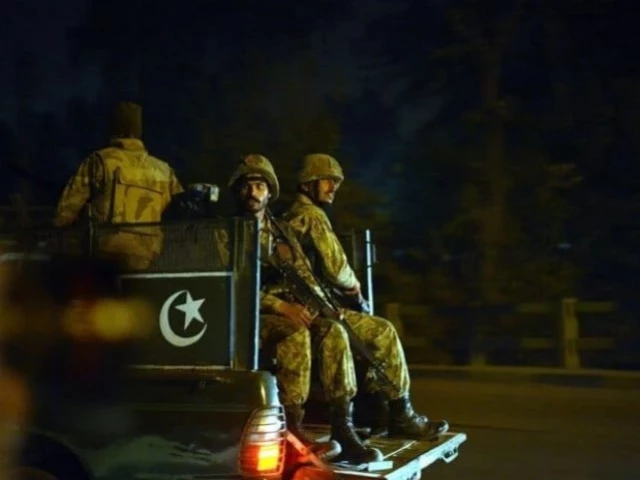
Security forces killed 14 Indian-backed terrorists in separate operations in Khyber-Pakhtunkhwa and Balochistan, the military’s media wing said in a statement.

According to the Inter-Services Public Relations (ISPR), following reports of the presence of terrorists belonging to the Indian proxy group Fitna al-Hindustan on December 5, security forces conducted an intelligence-based operation in Dera Bugti district of Balochistan.

During the operation, security forces effectively engaged the terrorists’ location. After an intense exchange of fire, five Indian-sponsored terrorists were killed.

The statement added that weapons, ammunition, and explosives were recovered from the terrorists, who had been actively involved in numerous terrorist activities in the area.

The ISPR said sanitisation operations are ongoing to eliminate any other Indian-sponsored terrorists in the region, as part of the relentless counter-terrorism campaign under the vision “Azm-e-Istehkam.”

“Security forces and law enforcement agencies of Pakistan will continue at full pace to wipe out the menace of foreign-sponsored and supported terrorism from the country,” the statement added.
 

K-P sees 50% surge in terror attacks in 2025​


Over 1,500 incidents reported in 2025; 420 terrorists killed as police deploy advanced technology

Ahtesham Khan
December 08, 2025

photo file


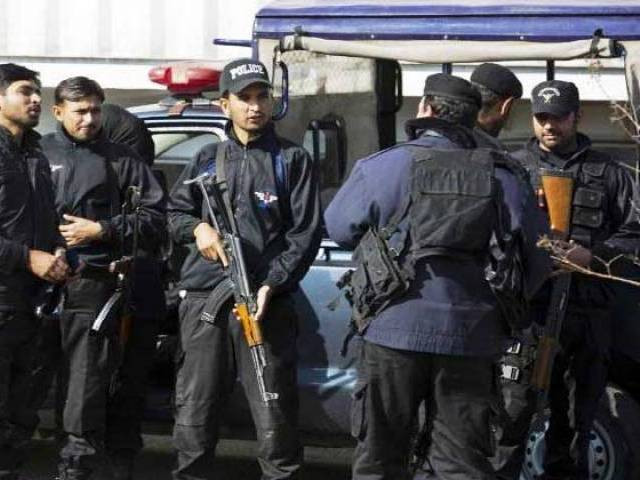
PESHAWAR: Khyber-Pakhtunkhwa experienced a significant surge in terrorism during 2025, with over 500 attacks reported, marking a 50 per cent increase compared to the previous year.

According to a detailed security assessment obtained by The Express Tribune, the province faced 1,588 terrorism-related incidents, reflecting a rapidly escalating militant threat across both settled and tribal regions. Despite the rise in attacks, security forces managed to prevent 320 major strikes, while 137 police officers and personnel laid down their lives in the line of duty.

The Counter Terrorism Department (CTD) report highlights that joint operations carried out by K-P police, CTD, and security agencies led to the arrest of 1,244 suspected terrorists, while 420 high-profile militants were neutralized in intelligence-based operations.

Districts such as Bannu, Dera Ismail Khan, Lakki Marwat, Hangu, and Peshawar remained the most frequently targeted, with a noticeable pattern of attacks planned and executed from across the Afghan border.

Inspector General of Police Zulfiqar Hameed, in an interview with The Express Tribune, acknowledged the increase in attacks on police but noted that the number of police casualties had decreased compared to last year. He emphasized that advanced technologies, including anti-drone systems and thermal imaging, enabled counterterrorism teams to stay ahead of militants' shifting tactics.

According to the IGP, weapons that were once used by NATO forces in Afghanistan are now being found in the possession of terrorists operating in K-P's tribal belt and southern districts. Yet, he stressed, police remained firmly on the frontline, setting new benchmarks in counterterrorism efforts.
 
In a significant development, the federal government approved a historic Rs1 billion package for policing in the merged tribal districts. This funding will support the construction of police lines, new police stations, and the procurement of bulletproof vehicles and jackets, marking the first substantial investment in the region's security apparatus.

IGP said this upgraded infrastructure will strengthen policing capacity in areas adjacent to the Afghan border, where militant infiltration remains a persistent challenge. He added that militants attempted to establish illegal checkpoints on highways in DI Khan and parts of Bannu earlier this year, but state authority has since been fully restored.

The CTD report also points to a 56 per cent increase in attacks targeting police personnel, rising from 327 in 2024 to 510 in 2025.

Throughout the year, security agencies conducted 2,791 search-and-strike operations and uncovered 25 high-value foreign terrorist operatives linked to global militant networks. Meanwhile, extortion rackets operating in Peshawar and other districts were systematically dismantled.

Peshawar Capital City Police Officer Dr Mian Saeed confirmed that the notorious Lali Group, which was wanted in nearly 30 criminal cases, had been eliminated in a recent police operation.
 
To view this content we will need your consent to set third party cookies.
For more detailed information, see our cookies page.
 

Security gaps, lack of services expose governance failures in Tirah Valley​


Frontier Corps says fencing and cameras installed to curb infiltration along Afghan border

Web Desk
December 13, 2025

KHYBER PAKHTUNKHWA: The deteriorating situation in Tirah Valley has highlighted deep-rooted governance failures, with security officials pointing to the absence of basic services, weak administration and limited law enforcement as key challenges in the remote region of Khyber Pakhtunkhwa.

Officials of the Frontier Corps said the vacuum created by poor governance has been exploited by extremist and criminal groups, including Fitna-al-Khawarij, which they accused of promoting instability and financing activities through drug trafficking and extortion.

Inspector General Frontier Corps Khyber Pakhtunkhwa North said the province shares a 1,224-kilometre-long border with Afghanistan, of which around 717 kilometres fall under the responsibility of the FC. He said the terrain includes snow-covered and rugged mountains, high peaks and narrow passes, making border management a complex task.

The IG said cameras have been installed at various points to counter infiltration, adding that the border can only be fully sealed if it is respected from both sides. He noted that fencing between Pakistan and Afghanistan has been completed for the first time, turning it into what can now be termed an international border and creating a barrier against unchecked movement and infiltration.


Referring to security challenges, the IG said that last year in Bagh Maidan, 64 FC personnel were martyred and 198 were injured, adding that no other institution had suffered such a high number of casualties in the area. He said there are locations such as Duatoi where a narrow passage exists but effective checking cannot be carried out due to lack of legal authority.

He further pointed out that only three police personnel are currently deployed to monitor the entire local population, underscoring the severe shortage of law enforcement resources.

Wing Commander Colonel Waqas said the absence of civil administration was stark, noting that for a stretch of up to 60 kilometres in Tirah Valley there is no district administration, police presence or hospital. He said there are no government schools in the area and no appointed teachers, which has deprived children of education.

“When children do not go to school and are denied education, awareness does not develop and they are pushed towards illegal activities,” he said.

Colonel Waqas said the FC is running 16 schools in the valley and has recruited teachers on its own to provide basic education. He added that there is no hospital in the area and residents often approach the FC even for basic medical needs such as injections. The FC, he said, also organises free medical camps for the local population.

He described drug trafficking as a major problem in Tirah Valley, alleging the involvement of Fitna-al-Khawarij. He said funds generated through narcotics and extortion are used against security forces and civilians.

Officials warned that continued mismanagement and the failure of local governance structures are allowing militant and criminal elements to entrench themselves further in the region, aggravating both security and humanitarian challenges for the local population.
 
To view this content we will need your consent to set third party cookies.
For more detailed information, see our cookies page.
 
‼️Following a meeting of scholars from all schools of thought in Karachi, a joint declaration has been issued condemning armed struggle in Pakistan.

‼️The declaration also demands from the Islamic Emirate of Afghanistan that it should not allow its territory to become a hub for corrupt groups and factions who are taking advantage of the available facilities in Afghanistan to carry out acts of sabotage and terrorism in Pakistan.

‼️The ten-point statement says that any armed struggle, whether in the name of Islam or nationalism, can only benefit the enemies of the country.

To view this content we will need your consent to set third party cookies.
For more detailed information, see our cookies page.
 

27 cops martyred in 134 terrorist attacks in 2025, says Bannu DIG

Muhammad Waseem Khan
December 24, 2025

1766579642118.png

Bannu Deputy Inspector General (DIG) Sajjad Khan speaks to the media on Wednesday. — Photo provided by author

BANNU: Bannu Deputy Inspector General (DIG) Sajjad Khan said on Wednesday that 27 cops were martyred in 134 terrorist attacks targeting personnel in the district in 2025.

He made the remarks while addressing a press briefing at his office, where he gave a detailed breakdown of the overall law and order situation in the district and operations carried out against terrorist elements.

According to the DIG, Bannu police conducted comprehensive, well-organised and result-oriented operations against militants.

He said the data showed that during 2025, a total of 134 terrorist attacks targeted police stations, police posts, checkpoints, police mobiles and police parties.

In these attacks, 27 police personnel were martyred, while 79 sustained injuries. In retaliatory action by police, 53 terrorists were killed and 163 were injured, he said.

The DIG said that Bannu police carried out 168 intelligence-based operations across the district, resulting in the arrest of 105 terrorists and the elimination of 65 terrorists. Overall, successful action was taken against 170 terrorists, he said.

He further stated that police and security forces jointly conducted successful operations in the areas of Miryan, Haved, Daud Shah, Mamand Khel and Domel. During these joint operations, one police constable was martyred while 11 police personnel and five civilians were injured, he said.

As a result of these operations, 22 terrorists were killed and four were arrested, and several terrorist hideouts and houses were also demolished.

He also said that terrorists had carried out 20 drone attacks targeting police installations and civilian populations, in which 19 police personnel were injured. Further, nine civilians were martyred and 33 were injured, he said.

However, following the installation of an anti-drone system on July 18, a significant improvement was observed, with over 300 drone attacks thwarted and four drones neutralised.
 
DIG Khan said that despite limited resources, various security measures were implemented to protect police installations, including the installation of barriers, bunkers, double boundary walls, bullet-proof gates and CCTV cameras.

He said that work had also begun on the Safe City Project to further enhance the safety of both police personnel and the general public.

He added that for coordinated action against terrorists, jirgas were held with local elders in different areas, yielding positive results, and peace committees were formed.

With public cooperation, militant attacks on several police stations and checkposts were successfully thwarted, while effective operations were carried out in Kakki, Bharath, Khojri, Bargantu, Sheikh Landak, and other areas, he said.

According to the DIG, in order to align Bannu police with modern requirements, the force had been equipped with drones, anti-drone guns, sniper rifles, armoured personnel carriers (APCs), thermal imaging systems, tactical helmets and bullet-proof vehicles.

He reaffirmed his commitment that Bannu police would continue its struggle to maintain law and order in the district, efforts to eliminate terrorism, and ensure the protection of the lives and property of the public.
 

10 terrorists, including high-value target, eliminated in DI Khan, Balochistan operations: ISPR


News Desk
December 25, 2025

Security forces neutralised 10 terrorists, including a high-value target, in separate intelligence-based operations (IBO) in Khyber Pakhtunkhwa’s Dera Ismail Khan district and Balochistan‘s Kalat district, the military’s media affairs wing said in separate statements on Thursday.

On December 24, (yesterday) two khawarij were killed in an IBO in DI Khan‘s Kulachi area, the Inter-Services Public Relations (ISPR) said in Thursday’s statement, using the term designating members of the Tehreek-i-Taliban Pakistan.

“During the conduct of [the] operation, own troops effectively engaged the khawarij location. Resultantly, two khawarij, including kharji ring leader Dilawar, were sent to hell,” the statement read.

According to the ISPR, Dilawar was wanted by law enforcement agencies due to his involvement in terrorist activity and the government had put an Rs4 million bounty on him.

The statement added that weapons and ammunition were recovered from the dead terrorists, who remained actively involved in terrorist activities against the security forces and civilians.

In a separate statement, the ISPR said security forces conducted an IBO in Kalat on December 24 (yesterday) on the reported presence of terrorists belonging to Indian proxy Fitna al Hindustan.

The state has designated Balochistan-based terrorist groups as Fitna-al-Hindustan to highlight India’s alleged role in terrorism and destabilisation across Pakistan.
 

PICSS terms 2025 ‘deadliest’ for militants in Pakistan with 2,115 fatalities

News Desk
December 28, 2025

The year 2025 was found to be “deadliest” for terrorists in Pakistan, with 2,115 terrorist fatalities, while 664 security personnel and 580 civilians were slain, according to a report released by Pakistan Institute for Conflict and Security Studies (PICSS).

PICSS said that Pakistan saw a “marked escalation” in 2025, with violence intensifying in both “tempo and lethality”, pushing several security indicators to their highest levels in years.

As per the report, the year 2025 has not only delivered a steep rise in overall combat-related deaths, but also became the deadliest year for terrorists since 2015, the most lethal for security forces since 2011, and the worst for civilian casualties in a decade.

“Militant attacks climbed to their highest annual total since 2014, and the use of suicide bombings and small drones showed a clear upward trend,” said the report.

According to statistics released by PICSS, combat-related deaths in 2025 rose by 73 per cent to 3,387, compared to 1,950 in 2024. Fatalities included 2,115 terrorists, 664 security forces personnel, 580 civilians and 28 members of pro-government peace committees (combatants).

The report added that terrorists accounted for about 62pc of total combat-related deaths, and their 2,115 fatalities represented the highest annual terrorist death toll since 2015, when 2,322 militants were killed. Compared to 2024, terrorist deaths increased by 122pc, as 951 militants were killed in 2024.

PICSS also recorded 664 fatalities among security personnel in 2025, a 26pc rise from 528 in 2024 and the highest annual figure since 2011, when 677 personnel lost their lives.

Civilian deaths also increased by 24pc to 580 in 2025, compared to 468 in 2024, marking the highest annual civilian toll since 2015, when 642 civilians were killed.

Injuries also rose sharply, with the think tank recording that 2,263 were injured in 2025, including 1,025 security forces personnel, 982 civilians, 228 terrorists and 28 members of pro-government peace committees.

“This represents a 53pc increase over 2024 and was the highest annual number of injuries since 2014, when 3,829 people were injured,” said PICSS.

Compared with 2024, PICSS said that injuries among security forces increased by 62pc (1,025 compared to 631), civilian injuries rose by 40pc (982 compared to 701), and terrorist injuries increased by 61pc (228 compared to 142).

The Islamabad-based think tank also reported an 83pc rise in arrests of suspected terrorists, with 497 suspects held in 2025 compared to 272 in 2024. According to the report, the 2025 figure was the highest annual total since 2017, when 1,781 terrorists were either arrested or laid down their weapons.

The report further indicated that kidnappings rose even more sharply in 2025, with terrorists abducting 215 people compared to 82 in 2024; an increase of 162pc. PICSS said the 2025 kidnapping figure was the highest in a single year since 2012, based on its militancy database.
 
On the operational front, PICSS recorded at least 1,063 terrorist attacks in 2025, a 17pc increase compared with 908 in 2024 and the highest annual total since 2014, when 1,609 terrorist attacks were recorded.

It further reported that the suicide attacks increased by 53pc, with 26 such incidents reported in 2025 compared with 17 in 2024.

PICSS noted an expanding trend in the use of small drones, including quadcopters, with 33 such incidents recorded during 2025, alongside increased use of unmanned aerial vehicles by security forces.

The report stated that the most violence remained concentrated in Khyber Pakhtunkhwa, including the tribal districts, and Balochistan.

Bannu Deputy Inspector General (DIG) Sajjad Khan said on Wednesday that 27 cops were martyred in 134 terrorist attacks targeting personnel in the district in 2025.

He said the data showed that during 2025, a total of 134 terrorist attacks targeted police stations, police posts, checkpoints, police mobiles and police parties. In these attacks, 27 police personnel were martyred, while 79 sustained injuries. In retaliatory action by police, 53 terrorists were killed, and 163 were injured, he said.

The DIG said that Bannu police carried out 168 intelligence-based operations across the district, resulting in the arrest of 105 terrorists and the elimination of 65 terrorists. Overall, successful action was taken against 170 terrorists, he said.

Earlier this year, Pakistan ranked second in the Global Terrorism Index 2025, with the number of deaths in terrorist attacks rising by 45 per cent as compared to the previous year. The Global Terrorism Index 2025, published by the Institute for Economics and Peace (IEP), provides a comprehensive summary of the key trends and patterns in terrorism over the last 17 years.

Pakistan’s bilateral relations with Afghanistan have come under strain in recent times as the banned Tehreek-i-Taliban Pakistan (TTP) remains the main point of contention between the two countries.

Pakistan has demanded that the rulers in Kabul take action to stop cross-border terrorism and stop providing sanctuary to the TTP, but the Afghan Taliban deny Islamabad’s allegations of terrorists being allowed to use Afghan soil to carry out attacks in Pakistan.
 

Users who are viewing this thread

Pakistan Defence Latest

Country Watch Latest

Back
Top