Internal Security Review

Afghan border closure brings down terrorist violence in Pakistan


The Newspaper's Staff Reporter
January 1, 2026
1767268974223.png

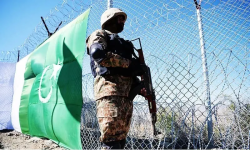
A Pakistani soldier keeps vigil next to a newly fenced border along Afghanistan. — AFP

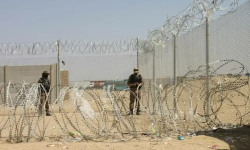
ISLAMABAD: Pakistan has recorded a significant drop in cross-border terrorist attacks and violence-linked fatalities after it closed down the border to Afghanistan on October 11.

Terrorist attacks went down by almost 17 per cent in December, preceded by 9pc decline in November. Terrorist violence-linked fatalities among civilians and security officials also fell in the last quarter of 2025, by nearly 4pc and 19pc each in November and December, shows data collected by the Centre for Research and Security Studies (CRSS) as part of its annual security report 2025.

With an almost 34pc surge in overall violence, the year 2025 went by as the most violent year for Pakistan in a decade, says the report. The country has suffered a sustained escalation in violence for five consecutive years since 2021, coinciding with the Taliban’s return to power in Afghanistan; with almost 38pc in 2021, over 15pc in 2022, 56pc in 2023, nearly 67pc in 2024, and 34pc in 2025.

The comparative data for 2024 and 2025 reveals a sharp escalation in terrorism and counter-terrorism linked violence nationwide, with fatalities rising from 2555 in 2024 to 3417 in 2025, marking an increase of 862 deaths, or a roughly 34pc year-on-year surge in violence.

CRSS report says most significant surge in violence recorded in KP

The most significant surge in violence was recorded in Khyber Pakhtunkhwa, where the fatalities rose from 1620 in 2024 to 2331 in 2025, an absolute increase of 711 deaths, accounting for over 82pc of the net national rise and marking almost a 44pc year-on-year surge in violence in the province.

Balochistan also had an upward trend, with fatalities increasing from 787 to 956; an additional 169 deaths, which are nearly 22pc higher than the previous year’s figures.
 
Regional impact of violence

Violence remained heavily concentrated in the country’s northwestern KP and southwestern Balochistan provinces, with both accounting for over 96pc of all fatalities and almost 93pc of violent incidents recorded during the entire 2025.

KP was the worst-hit region, suffering over 68pc (2331) of the total violence-linked fatalities, and around 63pc (795) of the incidents of violence, followed by Balochistan, accounting for 28pc (956) of the fatalities and over 30pc (386) of the incidents of violence.

In contrast, Punjab and Sindh experienced comparatively lower levels of violence. The former recorded 25 incidents of violence resulting in 40 fatalities and 24 injuries, representing just 1.15pc of total casualties, while the latter saw 51 incidents causing 56 fatalities and 40 injuries; 1.73pc of the total.

In Azad Jammu and Kashmir and the Islamabad Capital Territory though incidents numbers remained minimal, the injury figures were relatively high, with the former recording 103 injuries, and the latter registering 38, from just five incidents at each location.

Gilgit-Baltistan remained the least affected region. Compared to last year, though small in absolute numbers, the region recorded a four-fold increase from one to four fatalities.
 

by almost 17%: report

  • CRSS says 2025 was the most violent year for Pakistan in a decade
Baseer Ahmed P
January 1, 2026

1767301140163.png

A significant drop in cross-border terrorist attacks and violence-linked fatalities has been recorded in Pakistan since it closed down the border with Afghanistan, a Centre for Research and Security Studies (CRSS) annual security report revealed.

“Terrorist attacks went down by almost 17% in December, preceded by 9% decline in November. Terrorist violence-linked fatalities among civilians and security officials also fell in the last quarter of 2025, by nearly 4% and 19% each in November and December, respectively, as per the data collected by the CRSS.

The Pak-Afghan border was shut down for all kinds of trade and other activities on October 11, following the cross-border attacks by terrorists and Afghan forces which resulted in heavy casualties on both sides.

The border closure also brought trade activities and pedestrian movement to a standstill. Islamabad says closures curb militant movement; Kabul denies providing safe haven to the militants.

At least 23 Pakistan armed forces personnel were martyred and more than 200 Afghan Taliban members and terrorists killed in exchange of heavy cross-border firing on the night of October 11, the military’s media wing said on October 12.
 

Decade’s most violent year​

The CRSS report said with an almost 34% surge in overall violence, 2025 went by as the most violent year for Pakistan in a decade. “The country has suffered a sustained escalation in violence for five consecutive years since 2021, coinciding with the Taliban’s return to power in Afghanistan; with almost 38% in 2021, over 15% in 2022, 56% in 2023, nearly 67% in 2024, and 34% in 2025,” it said.

2025 marked another grim year for Pakistan’s security landscape, it said, adding that as many as 3417 violence-linked fatalities and 2134 injuries among civilians, security personnel, and outlaws resulted from 1272 incidents of violence — terrorist attacks and counter-terrorism operations.

The comparative data for 2024 and 2025 reveals a sharp escalation in terrorism and counter-terrorism linked violence nationwide, with fatalities rising from 2555 in 2024 to 3417 in 2025, marking an increase of 862 deaths, or a roughly 34% year-on-year surge in violence.
 

Khyber Pakhtunkhwa, Balochistan suffer the most​

The most significant surge in violence was recorded in Khyber Pakhtunkhwa, where the fatalities rose from 1620 in 2024 to 2331 in 2025, an absolute increase of 711 deaths, accounting for over 82% of the net national rise and marking almost a 44% year-on-year surge in violence in the province.

Balochistan also had an upward trend, with fatalities increasing from 787 to 956; an additional 169 deaths, which are nearly 22% higher than the previous year’s figures.

In contrast, the CRSS said, Punjab and Sindh experienced comparatively lower levels of violence. The former recorded 25 incidents of violence resulting in 40 fatalities and 24 injuries, representing just 1.15% of total casualties, while the latter saw 51 incidents causing 56 fatalities and 40 injuries; 1.73 percent of the total. These figures suggest relative containment of violence despite the provinces’ large populations, likely reflecting stronger policing and intelligence-led counter-terrorism efforts.
 
To view this content we will need your consent to set third party cookies.
For more detailed information, see our cookies page.
 
To view this content we will need your consent to set third party cookies.
For more detailed information, see our cookies page.
 
Despite record militant deaths, Pakistan saw a sharp escalation in militant violence in 2025, with terrorist attacks rising by 34 per cent and terrorism-related fatalities increasing by 21pc year on year, according to data released by the Islamabad-based Pak Institute for Peace Studies. As many as 699 terrorist attacks were recorded countrywide during the year.

This violence claimed at least 1,034 lives and left 1,366 injured, underscoring a rising trajectory of militancy that has persisted since the Taliban’s takeover of Afghanistan in 2021.
 

DG ISPR says Afghans involved in major terrorist incidents in Pakistan in 2025

News Desk
January 6, 2026

1767699230407.png


ISPR Director General (DG) Lieutenant General Ahmed Sharif Chaudhry speaks during a press conference on January 6. — DawnNewsTV

Inter-Services Public Relations (ISPR) Director General (DG) Lieutenant General Ahmed Sharif Chaudhry is currently addressing a press conference.

At the outset of the press conference, the military’s spokesperson said that the purpose of the briefing was to give a comprehensive overview of counter-terrorism measures taken in the past year.

This “is the only purpose of this press conference, and I would request that we remain focused on counterterrorism as terrorism is the biggest threat that is being faced by the state of Pakistan right now,” he added.

The DG ISPR said 2025 was a “landmark and consequential year in our fight against terrorism”, adding there were four reasons behind this conclusion.

Saying that the fight against terrorism was the entire nation’s and was being fought for more than two decades, the DG ISPR further stated that the past year witnessed “unprecedented intensity in counter-terrorism efforts”.
 
1767699699609.png

.A screengrab from the presentation played at the DG ISPR’s press conference on January 6.
 
5,397 terror incidents took place in Pakistan during the last year, of which 3,811 were reported from KP (71pc), 1,557 from Balochistan (29pc) and 29 from other areas.

Lieutenant General Chaudhry also said that Afghans were involved in major terrorist incidents in Pakistan in 2025.

Moreover, 2,597 terrorists were killed in Pakistan in 2025, the DG ISPR said. Among them, 1,800 were killed in KP, 784 in Balochistan and 10 in other areas.

Last year, he continued, 1,235 law enforcement personnel and civilians were martyred in the fight against terrorism during 2025.

Sharing data about incidents of suicide bombing, he said a total of 27 had taken place in 2025. Of them, 16 took place in KP, 10 in Balochistan and one in Islamabad, at the judicial complex.

“Out of them, two [involved] female suicide bombers.”

In light of these facts and figures, he said, the question that came to mind was why the majority of terror incidents took place in KP.
 
The DG ISPR highlighted that data show that terrorism began rising from 2021. And a total of 193 terrorists were killed in comparison to 592 law enforcement personnel being martyred that year, he said, adding that it was a ratio of 1:3.

Moving to 2025, he pointed out that 2,597 terrorists were killed during last year and 1,235 law enforcement personnel were martyred. This would reduce to a ratio of 2:1, he added.

“But, more importantly, what happened in 2021 that terrorism rose?” he questioned, and went on to elaborate on the reason behind this development.

The DG ISPR explained that there was a change in Afghanistan in 2021 following the Doha Agreement.

“An armed group, the Afghan Taliban, sat down with the US and international partners and enter an agreement. Under the agreement, they made three commitments — that they will form an inclusive government in Afghanistan, use of Afghan soil for terrorism will not be allowed and women will be given rights [in Afghanistan],” the DG ISPR recalled.

But were the commitments fulfilled, the military spokesperson questioned.

“They were not. Is there a government there? There is no government there. They [just] call themselves interim Afghan government […] Is there an inclusive government there? No, there is not.

“Has terrorism been eradicated [from Afghanistan]? Contrarily, Afghanistan becomes a hub of terrorists and non-state actors. Terrorists of different creeds operate from there. So that is what started happening in 2021.”

Naming various terror outfits that the DG ISPR said were operating from Afghanistan, he said it had become a “centre point where terrorists of all kinds are being nurtured”.

He said recently, around 2,500 terrorists, who were neither Afghans nor Pakistanis, had reached Afghanistan from Syria.
 
The military spokesperson further said that modern US equipment worth $7.2bn was left behind in Afghanistan. It included night-vision devices, long-range sniper rifles, bulletproof jackets, protection equipment, M-4 and M-16 — “the best of weapons and ammunition”.

This equipment was “available to the Afghan Taliban, in the black market, to all these terrorist organisations”.

Moreover, the political party in power in Pakistan in 2021 began “internally facilitating [terrorists]” and decided to hold talks with them while a “great game was being played there (Afghanistan)“.

This seemingly was a reference to talks held between the then-Pakistan government and the TTP.

The DG ISPR went on to say that “once you give them (terrorists) so much space and so much wherewithal, you see a [rise] in terror incidents”.
 
The military’s spokesperson acknowledged that questions were also raised on the large number of terror incidents — 5,397 in 2025.

“Yes, this is a big number. Why? Because we are engaging them everywhere. We are doing 75,000 IBOs, 206 every day, and we are taking them on.

“By we, I mean myself, you and everyone in Pakistan. We have absolute clarity that we have to win this fight, not by appeasement, but by force and strength. Because there are a few things in life fighting for which is not just justified but also necessary, and there is no option other than that.”

He said when terrorism had reared its head in other countries, it had destroyed states. “But your state, your law enforcement agencies and your army are fighting on a daily basis.”

Referring to a chart, he said it could be deduced from the data that after Pakistan defeated India during a four-day conflict in May 2025, a surge was seen in terrorism. After its defeat, “Indians immediately put in efforts into non-state actors”.
 
To view this content we will need your consent to set third party cookies.
For more detailed information, see our cookies page.
 

Users who are viewing this thread

Latest Posts

Back
Top