Navigation
Install the app
How to install the app on iOS
Follow along with the video below to see how to install our site as a web app on your home screen.
Note: This feature may not be available in some browsers.
More options
Style variation
You are using an out of date browser. It may not display this or other websites correctly.
You should upgrade or use an alternative browser.
You should upgrade or use an alternative browser.
Internal Security Review
- Thread starter ghazi52
- Start date
More options
Who Replied?


Fatman17
Moderator

"The recent standoff with India in May has suddenly recalibrated Pakistan’s global image, offering it a rare moment of diplomatic and strategic ascendancy. Once struggling on the geo-economic front, Islamabad has found renewed space in the geopolitical theatre, not just as a reactive player, but as one redefining its regional and global bearings."
Read the full opinion piece here: https://www.dawn.com/news/1923867

ghazi52
THINK TANK: CONSULTANT
- Thread starter
- #169
The President of Pakistan has issued an ordinance converting Frontier Constabulary into Federal Constabulary, now authorized to operate across all provinces, GB, and AJK.
After more than a century (100 Years) of service, a historic reform initiative has redefined the Frontier Constabulary as the Federal Constabulary, marking a significant transition toward a more modern, structured, and nationally integrated security force.
Originally established to maintain law and order in the buffer zones between the erstwhile FATA and Pakistan’s settled areas, the Frontier Constabulary functioned under a three-tier structure comprising command, district officer, and platoon levels.
Under the newly approved framework, this structure has been upgraded to include platoons, companies, and wings, bringing operational efficiency and command clarity.
These newly formed wings will operate under the supervision of Deputy Inspectors General (DIGs), with overarching command remaining with the Inspector General (IG).
As part of this comprehensive restructuring, 41 new wings will be raised — 36 of which will serve as active security units — staffed by existing personnel and new recruits under the platoon-based model.
A notable feature of this reform is the establishment of a Federal Reserve Division, comprising six specialized wings, including:
 Five Riot Support Wings, designed to assist federal agencies during major national operations such as polio eradication campaigns and religious processions like Muharram;
After more than a century (100 Years) of service, a historic reform initiative has redefined the Frontier Constabulary as the Federal Constabulary, marking a significant transition toward a more modern, structured, and nationally integrated security force.
Originally established to maintain law and order in the buffer zones between the erstwhile FATA and Pakistan’s settled areas, the Frontier Constabulary functioned under a three-tier structure comprising command, district officer, and platoon levels.
Under the newly approved framework, this structure has been upgraded to include platoons, companies, and wings, bringing operational efficiency and command clarity.
These newly formed wings will operate under the supervision of Deputy Inspectors General (DIGs), with overarching command remaining with the Inspector General (IG).
As part of this comprehensive restructuring, 41 new wings will be raised — 36 of which will serve as active security units — staffed by existing personnel and new recruits under the platoon-based model.
A notable feature of this reform is the establishment of a Federal Reserve Division, comprising six specialized wings, including:
Five Riot Support Wings, designed to assist federal agencies during major national operations such as polio eradication campaigns and religious processions like Muharram;
ghazi52
THINK TANK: CONSULTANT
- Thread starter
- #170
the primary objectives of this overhaul are to strengthen the command structure, enhance operational capacity, boost morale, and create a dedicated internal security framework that remains under direct federal oversight.
At a press briefing, State Minister for Interior Talal Chaudhry emphasized the careful planning behind this transformation.
“This ordinance has been introduced with great caution. The name has been changed, and a comprehensive restructuring plan has been implemented,” he stated.
“The force is designed to serve both internal and national security purposes, and its entire budget will be borne by the federal government, ensuring no financial burden on the provinces.”
He further clarified that while the Federal Constabulary will resemble other law enforcement bodies in function, it should not be mistaken for a federal police force.
“It will operate under the federal government in the same manner the Frontier Constabulary previously did,” he added.
This reform initiative signals a renewed focus on internal stability, national cohesion, and a forward-looking approach to security and law enforcement.
The Federal Constabulary will draw strength from a diverse national recruitment base, with federal resources ensuring its sustained development and operational readiness.
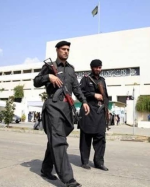
At a press briefing, State Minister for Interior Talal Chaudhry emphasized the careful planning behind this transformation.
“This ordinance has been introduced with great caution. The name has been changed, and a comprehensive restructuring plan has been implemented,” he stated.
“The force is designed to serve both internal and national security purposes, and its entire budget will be borne by the federal government, ensuring no financial burden on the provinces.”
He further clarified that while the Federal Constabulary will resemble other law enforcement bodies in function, it should not be mistaken for a federal police force.
“It will operate under the federal government in the same manner the Frontier Constabulary previously did,” he added.
This reform initiative signals a renewed focus on internal stability, national cohesion, and a forward-looking approach to security and law enforcement.
The Federal Constabulary will draw strength from a diverse national recruitment base, with federal resources ensuring its sustained development and operational readiness.
ghazi52
THINK TANK: CONSULTANT
- Thread starter
- #171
Pakistan has witnessed an uptick in terror activities over the past year, especially in KP and Balochistan, after the proscribed Tehreek-i-Taliban Pakistan (TTP) ended its ceasefire with the government in November 2022.
KP has seen an increasing trend of terrorism-related incidents, with a series of attacks across Peshawar, Karak, Bannu, Lakki Marwat, and Bajaur in the past few months.
On June 21, KP Police killed a terrorist and injured two others belonging to the TTP group in Dera Ismail Khan as they attempted to attack the police.
On June 3, terrorist attacks on two police stations in KP’s Bajaur and Bannu districts injured four police personnel. In May, two policemen were martyred and two were injured in a suicide attack in Peshawar, while in a separate incident, two cops lost their lives as a result of an attack on a police checkpoint in Bannu.
Faced with increasing attacks by militants, security forces have also intensified counterterrorism operations in KP and Balochistan.
On July 5, three suspected terrorists belonging to the TTP’s Tipu Gul group were killed in a joint operation by the CTD.
Pakistan ranked second in the Global Terrorism Index 2025, with the number of deaths in terrorist attacks rising by 45 per cent over the past year to 1,081.
KP has seen an increasing trend of terrorism-related incidents, with a series of attacks across Peshawar, Karak, Bannu, Lakki Marwat, and Bajaur in the past few months.
On June 21, KP Police killed a terrorist and injured two others belonging to the TTP group in Dera Ismail Khan as they attempted to attack the police.
On June 3, terrorist attacks on two police stations in KP’s Bajaur and Bannu districts injured four police personnel. In May, two policemen were martyred and two were injured in a suicide attack in Peshawar, while in a separate incident, two cops lost their lives as a result of an attack on a police checkpoint in Bannu.
Faced with increasing attacks by militants, security forces have also intensified counterterrorism operations in KP and Balochistan.
On July 5, three suspected terrorists belonging to the TTP’s Tipu Gul group were killed in a joint operation by the CTD.
Pakistan ranked second in the Global Terrorism Index 2025, with the number of deaths in terrorist attacks rising by 45 per cent over the past year to 1,081.



ghazi52
THINK TANK: CONSULTANT
- Thread starter
- #175
Militant attacks see slight rise in July, says think tank
Abdullah Momand
August 1, 2025
Pakistan witnessed a slight uptick in militant violence in July after a brief decline last month, according to the latest monthly security report released by the Islamabad-based think tank Pakistan Institute for Conflict and Security Studies (Picss) on Friday.
In June, there were a total of 78 militant attacks across the country, resulting in at least 100 fatalities, including 53 security personnel, 39 civilians, six militants, and two members of peace committees, the organisation said in a press statement.
These attacks injured 189 people, comprising 126 security personnel and 63 civilians — marking an eight per cent decrease in attacks, a 12pc drop in fatalities, and 4pc increase in injuries compared to May 2025.
Friday’s report documented 82 militant attacks across the country during July, resulting in 101 fatalities and 150 injuries. According to a Picss statement, those killed in militant attacks included 47 civilians, 36 security personnel, and 18 militants. Among the injured were 90 civilians, 52 security personnel, seven militants, and a member of a peace committee.
“Security forces intensified their counter-militancy operations, killing 106 militants and arresting 69 suspected operatives during the same period,” the statement read, noting that these operations also claimed the lives of seven civilians.
Picss noted that the country saw the lowest monthly toll in actions initiated by security forces, with only one of them losing their life. However, 36 security personnel were killed in militant attacks in July.
“In total, militant attacks and subsequent security operations accounted for 215 deaths in July, comprising 124 militants, 54 civilians, and 37 security personnel, while 199 people were injured, including 107 civilians, 56 security personnel, 35 militants, and one peace committee member,” the think tank said.
“The militants also kidnapped at least 14 individuals during the month.”
A comparative analysis by Picss showed a 5pc rise in militant attacks compared to June 2025. However, fatalities among security forces dropped by 32pc, while civilian deaths increased by 21pc. Militant casualties surged by 49pc.
The report highlighted that Khyber Pakhtunkhwa, including its tribal districts, remained the epicentre of militancy, accounting for 53 of the 82 attacks recorded nationwide.
Balochistan followed with 28 attacks, while no militant incidents were reported from Punjab, Sindh, Azad Kashmir or the Islamabad Capital Territory. However, one attack was recorded in the Diamer district of Gilgit-Baltistan.
Pakistan has seen a surge in terrorism since the banned Tehreek-i-Taliban Pakistan (TTP) ended its ceasefire deal with the government in November 2022, vowing to increase attacks.
The government labelled the TTP as Fitna-al-Khawarij and directed the use of the term khariji for attackers. It later designated Balochistan-based groups as Fitna-al-Hindustan to highlight India’s alleged role in terrorism and destabilisation across Pakistan.
In March, Pakistan ranked second in the Global Terrorism Index 2025, with the number of deaths in terrorist attacks rising by 45pc from 2024 to 1,081.
ghazi52
THINK TANK: CONSULTANT
- Thread starter
- #176
Local counterterrorism responses should ensure thorough actions so KP doesn’t suffer endlessly
TTP footholds
EditorialAugust 2, 2025
SINCE the Musharraf era — that is, for over two decades now — KP, particularly the ex-Fata region, has been a war zone, suffering from terrorist attacks, as well as the effects of repeated military campaigns.
Yet despite these operations, terrorist groups, particularly the banned TTP, have yet to be completely defeated. For example, in Tirah, local tribes have apparently asked TTP fighters to leave the region. As per reports, the militants said they would ‘consult’ their leadership in Afghanistan regarding their withdrawal from the area.
This shows how entrenched the terrorists are in parts of KP, besides highlighting the fact that the TTP command structure remains intact in Afghanistan. It is because of the continued militant presence in parts of KP that the military has yet again launched an operation in parts of Bajaur tribal district.
With the launch of Operation Sarbakaf, the local people once again find themselves caught in the crossfire between the terrorists and the military. Bajaur’s people had staged protests against the latest military campaign, with the tribal population saying they were not given advance warning of the operation and the related curfew. Fear of more death and displacement haunts them.
The PTI government in KP had initially criticised the campaign, but the chief minister, in an apparent U-turn, backed the action. However, the PTI continues to oppose military action in KP’s affected areas. The tribal people’s reservations about repeated operations are understandable, and there have been large demonstrations against both militancy and military campaigns after terrorism resurfaced in KP following the Taliban’s return to power in Afghanistan in 2021. They rightly ask why terrorism has still not been eliminated after decades of counter-insurgency campaigns.
Perhaps the main issue with counterterrorism operations in KP is that while security forces have fought hard and given sacrifices — succeeding in the ‘clear and hold’ phases — the ‘build’ phase of CT campaigns has failed to deliver. For this, both the civilian and security leaderships are responsible; the former for not building the capacity of civilian LEAs, and the latter for not completely stopping infiltration attempts from Afghanistan.
However, during a meeting of the ‘Harden the State’ committee on Thursday, the PM discussed a multipronged strategy involving operations, legislation and public outreach to combat extremism. While the issue of terrorism must be taken up with Afghanistan, local responses should ensure that this time, CT actions are thorough, so that KP’s people do not suffer endlessly.
The state must establish its writ across the country, and there can be no fiefdoms where terrorists dominate. All points highlighted in the revised NAP need to be implemented, as kinetic action alone is not enough. Moreover, CT operations should ensure that there is minimum collateral damage and that terrorist groups such as the TTP are uprooted permanently.
Published in Dawn, Aug 2nd, 2025
ghazi52
THINK TANK: CONSULTANT
- Thread starter
- #178
Urgent action is needed to address the problem of terrorist groups in Afghanistan
Kabul must do much more to neutralise the militant threat in Afghanistan.Terror potpourri
EditorialAugust 4, 2025
DESPITE persistent denials by the Afghan Taliban that terrorist groups are using their country as a safe haven, the global consensus — backed by evidence — is that Afghanistan indeed continues to be a base for militants and violent extremists.
For example, the latest edition of the relevant UN Security Council monitoring report on IS and Al Qaeda reveals that both the banned TTP and IS-K continue to operate in Afghanistan with relative freedom.
In fact, where the latter group is concerned, the report says that IS-K poses a major threat regionally and internationally. The UN document again validates what Pakistan has long been arguing — that the Afghan Taliban are not doing enough to address the presence of terrorist groups on their soil, and that these outfits pose a significant challenge to regional security.
With regard to the TTP, which has been carrying out terrorist attacks in Pakistan with regularity, the report states that the outfit has some 6,000 fighters, and that it “continued to receive … logistical and operational support” from the Afghan Taliban.
This is despite the fact that some within the Afghan Taliban were of the view that Afghanistan’s de facto rulers should distance themselves from the TTP. The document also observes that the TTP maintains ties with IS-K, Al Qaeda as well as Baloch militants.
Interestingly, the TTP seems to be ‘diversifying’ its options, as it has links with both the Afghan Taliban and IS-K, which oppose one another. The UN report points out that IS-K “is the most serious threat” regionally and internationally. For this country, it should be a matter of great concern that this dangerous group is reportedly operating “close to the Pakistani” border, where it is training suicide bombers, who include minors.
These findings should prompt the Pakistani state, regional countries as well as the international community to address the problem of militancy in Afghanistan with alacrity. Though the Foreign Office has said there has been “better receptivity” to Pakistan’s concerns in Kabul, concrete action is needed from the Afghan Taliban regime to ensure that the potpourri of terrorist groups operating from Afghan soil do not transform into a global security nightmare.
While Pakistan needs to secure its borders and ensure that TTP and IS-K terrorists are not able to enter the country and find a foothold here, on its part, Kabul must do much more to neutralise the militant threat in Afghanistan. The prospect of the TTP and IS-K joining forces is a frightening one, and this budding terrorist alliance must be nipped in the bud.
The TTP has spilt innocent blood for years in this country, while the world has witnessed the horrors that the IS is capable of inflicting in the Middle East. Therefore, urgent action is needed to address the problem of terrorist groups in Afghanistan.
Published in Dawn, August 4th, 2025
ghazi52
THINK TANK: CONSULTANT
- Thread starter
- #179
TTP agrees not to use civilians as human shield in Tirah
Ibrahim Shinwari
August 6, 2025
KHYBER: The leaders of banned Tehreek-i-Taliban Pakistan (TTP) agreed on Tuesday that they would not use civilians as a human shield in their armed struggle against security forces, nor would they extort money from anyone in the name of Zakat and Ushr in the restive Tirah valley of Khyber tribal district.
Written in Pastho on the letterhead of TTP and duly stamped by its ‘supreme council’ (Rahbari Shura), a Bar Qambarkhel elder read out the five-point agreement in front of a gathering of local tribesmen in response to their demand for ending hostilities against ordinary tribesmen and a pullout from Tirah to restore peace.
There was, however, no mention of a pullout from Tirah in the agreement inked between local elders and TTP. The leaders banned TTP vowed to continue their armed resistance against security forces and also punish those, who supported forces or found guilty of spying against them.
“Our sole purpose is an armed struggle (jihad) against anti-Islam forces and their collaborators for which we desperately need sympathies and assistance of Muslim population. We consider our involvement in internal and personal affairs of local people as inappropriate and have thus strongly refrained our volunteers from doing so,” said the agreement.
Agreement inked between local jirga and banned outfit
The agreement made it clear that TTP members would not take shelter in private houses or use it as a bunker against security forces, but they would resist any effort by forces to either capture or eliminate them at any such private building.
It claimed that none of TTP members was allowed to demand any type of money from locals in the name of Ushr and Zakat and would take strict action against those, who were found guilty of doing so if locals registered any complaint against them.
The TTP leaders, through the agreement, also agreed that no one would be abducted or tortured by them as they consider it an irresponsible act, which was harming their ‘sacred armed struggle’
It was also agreed that TTP would investigate in accordance with Sharia the killing of innocent locals and abduction or torture by unidentified armed men for which its members were blamed and local elders would be required to provide evidence of such incidents.
Users who are viewing this thread
Total: 1 (members: 0, guests: 1)
Pakistan Defence Latest
Country Watch Latest
-
 TF-X / KAAN / Hürjet Turkish Fighter & Trainer Aircrafts News & Discussions (15 Viewers)
- Latest: MMM-E
-

-
Iran - Israel/US War: Israel-US declare war on Iran, Iran responds (156 Viewers)
- Latest: Pakistan First
-

-

Latest Posts
-
TF-X / KAAN / Hürjet Turkish Fighter & Trainer Aircrafts News & Discussions (15 Viewers)
- Latest: MMM-E
-

-
-

-
