Iranian Air Force (IRIAF/IRGC-ASF) | News and Discussions

If I recall correctly, the problem with the IrAn-140 was a failure of the engine and the electronic engine control system, or EEC, which in the 2014 crash did not automatically feather the propeller during the engine failure.
In any case, there were other contributing factors to that crash, including human error before and during the technical problem that led to the aircraft's crash.
According to recent reports, the engines have been upgraded to eliminate the defects and faults.

I attach the video file of the interview during the test launch ceremony, produced by IRIBNEWS.
View attachment 156856
it is using a Western engine and needs upgraded avionics
 
it is using a Western engine and needs upgraded avionics
Does Simorgh use a Western engine?
Which model?
Do they say so in the video I attached?

I don't understand Farsi, can you tell me what the interviewees are saying? Thank you.
 
Does Simorgh use a Western engine?
Which model?
Do they say so in the video I attached?

I don't understand Farsi, can you tell me what the interviewees are saying? Thank you.
I think It was using TV117 engine which is a derivative of turboshaft of the Mi28/Ka52.
 
Perhaps an AWAC platform similar to the Saab GlobalEye, Boeing E 7, Embraer R 99?

We can develop that technology no?
by design its more suitable of a transport than passenger or AWACS an its small as a Tanker airplane,for that it better to redesign tail again to to a little improve its aerodynamic
 
I think It was using TV117 engine which is a derivative of turboshaft of the Mi28/Ka52.
They said they modified the engine to fix old problem related to hot environment
interestingly Klimov have the variant called VK-2500M that answer that problem, Antonov also call it TV3-117VMA-SBM3.
i wonders if Iran received some help about that
 
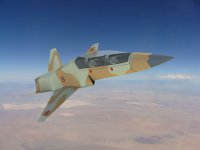
I came upon this, and it appears to be a logical evolution of F5. A similar design isn't too outside the scope of Iran's r&d capabilities.


What do you think?
 

Attachments

  • images (4).jpeg
    images (4).jpeg
    16.2 KB · Views: 12
  • EG0QnI8U4AAvYfU.jpg
    EG0QnI8U4AAvYfU.jpg
    88.4 KB · Views: 13
I came upon this, and it appears to be a logical evolution of F5. A similar design isn't too outside the scope of Iran's r&d capabilities.


What do you think?

That design would require a FBW for an aerodynamically unstable plane. Very few countries in the world have those technical capabilities. It can be done by new entrants, eg Türkiye has successfully done this with Kaan ( and Hurjet ) but it is a significant undertaking for sure.

Iran would have needed to have started the core R&D on this a few years to a decade ago, to have a chance to field anything within the next decade for such a design etc.

Engines remain an engine for Iran(and everyone else trying their own programmes), but Iran has mastered core metallurgy, and airframe design already with some of its designs to date ( unlike Pakistan which is even further back on that front than Iran is right now ) which is a start.
 
That design would require a FBW for an aerodynamically unstable plane. Very few countries in the world have those technical capabilities. It can be done by new entrants, eg Türkiye has successfully done this with Kaan ( and Hurjet ) but it is a significant undertaking for sure.

Iran would have needed to have started the core R&D on this a few years to a decade ago, to have a chance to field anything within the next decade for such a design etc.

Engines remain an engine for Iran(and everyone else trying their own programmes), but Iran has mastered core metallurgy, and airframe design already with some of its designs to date ( unlike Pakistan which is even further back on that front than Iran is right now ) which is a start.
I'm not sure about the situation of the Hurjet. However, the aerodynamic design of the KAAN is definitely from BAE Systems
 
I came upon this, and it appears to be a logical evolution of F5. A similar design isn't too outside the scope of Iran's r&d capabilities.


What do you think?
1. Virtually nothing is beyond the scope of Iranian capabilities, provided these capabilities are backed by technological cooperation with Russia and/or China. The window of opportunity in this regard is now wide open; all that is missing is the political will.
2. An aircraft in the weight class of the F-5, even if stealth, is useless in modern air combat. You need kinetic energy to give BVR missiles their range, you need significant electrical power generation for a powerful radar and sufficient computational capabilities, you need payload capacity and ideally a large surface area to deploy a self-defense system, and of course, you need payload capacity and range. And so on.
The optimal solution in terms of cost-effectiveness is the KF-21, which also has significant growth potential.
Iran has the capability, in cooperation with Russia, for example, to develop unrealized "dormant" Mikoyan stealth concepts based on upgraded versions of the RD-33 (RD-33MK/RD-33MK-35/RD-33MKM) and the avionics and weapon system of the MiG-35, and gradually "domesticate" them.
 
1. Virtually nothing is beyond the scope of Iranian capabilities, provided these capabilities are backed by technological cooperation with Russia and/or China. The window of opportunity in this regard is now wide open; all that is missing is the political will.
2. An aircraft in the weight class of the F-5, even if stealth, is useless in modern air combat. You need kinetic energy to give BVR missiles their range, you need significant electrical power generation for a powerful radar and sufficient computational capabilities, you need payload capacity and ideally a large surface area to deploy a self-defense system, and of course, you need payload capacity and range. And so on.
The optimal solution in terms of cost-effectiveness is the KF-21, which also has significant growth potential.
Iran has the capability, in cooperation with Russia, for example, to develop unrealized "dormant" Mikoyan stealth concepts based on upgraded versions of the RD-33 (RD-33MK/RD-33MK-35/RD-33MKM) and the avionics and weapon system of the MiG-35, and gradually "domesticate" them.
The engine of the KF-21 is the F414 from the US. So there is no possibility for Iran to obtain it.
 
I'm not sure about the situation of the Hurjet. However, the aerodynamic design of the KAAN is definitely from BAE Systems

Yes - Türkiye did get some consultancy work from BAe at the outset. I don't know if any BAe engineers are still involved, or not.
 
I came upon this, and it appears to be a logical evolution of F5. A similar design isn't too outside the scope of Iran's r&d capabilities.


What do you think?
Very nice.

Thank you for posting & the 'I came upon this' link, furthermore is choc-a-block with useful info.

This vehicle definitely warrant's some scrutiny.

Piet
 
I came upon this, and it appears to be a logical evolution of F5. A similar design isn't too outside the scope of Iran's r&d capabilities.


What do you think?
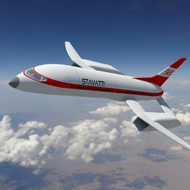
i would ignore anything from stavatti.

its just a bunch of reddit kids larping as defence contractors

i.e
 

Users who are viewing this thread

Back
Top