RajaBaja
Trusted Member

You are already doing it.......wasting time. Mine and everyone else's! A wise Chinese person once told me, if you can't productively engage in a topic, don't speak!
Follow along with the video below to see how to install our site as a web app on your home screen.
Note: This feature may not be available in some browsers.

Bro your airforce is shit every time you cry su30 first then rafale now meteor next time we Need f35 or su57I'm quite sure there will be a return match.
It will be interesting.... This time you can be sure Rafale will be fitted with Meteor.


I'm quite sure there will be a return match.
It will be interesting.... This time you can be sure Rafale will be fitted with Meteor.
 , talk big and always chest thumping but when it comes to actual results in battle u know very well what happened in 2019 and on an even bigger scale in 2025. In 2019, it was ‘if you only had Ra-fail’ in 2025 it is ‘if you only had Meteor’ same story, same book, just a different chapter


wondering why he told you that....You are already doing it.......wasting time. Mine and everyone else's! A wise Chinese person once told me, if you can't productively engage in a topic, don't speak!

wondering why he told you that....

Your "itch" is understandable.I'm quite sure there will be a return match.
It will be interesting.... This time you can be sure Rafale will be fitted with Meteor.

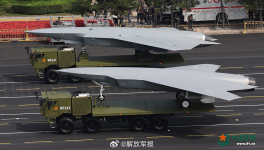
View attachment 144495
The two UAV featured in today's parade are roughly the same size as the JF-17 fighter jet.
If the PAF wishes to continue developing the JF-17 program, perhaps these two state-of-the-art UAV could provide some insights into the JF-17's future development.
Absolutely spot onView attachment 144495
The two UAV featured in today's parade are roughly the same size as the JF-17 fighter jet.
If the PAF wishes to continue developing the JF-17 program, perhaps these two state-of-the-art UAV could provide some insights into the JF-17's future development.
 .
.
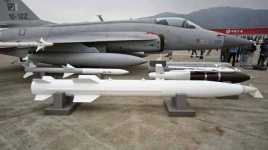
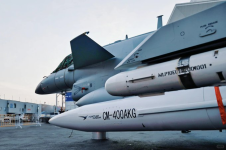
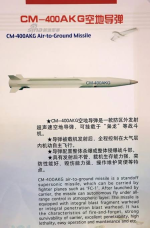

Like I had said earlier, 400AKG is a hypersonic missile as it achives hypersonic speed in its terminal phase."......
The S-400 Triumf system is centered around the 91N6E “Cheese Board” radar, a large S-band phased-array operating between 2 and 4 GHz. With a detection range claimed at 570–600 km for large aerial targets, the radar is the central node that allows the system to track multiple aircraft and guide interceptors simultaneously.
However, this strength is also a weakness. Continuous high-power emissions in the S-band make the radar highly visible to anti-radiation seekers, effectively turning it into a beacon for specialized strike weapons.
The CM-400AKG, a high-supersonic air-launched precision missile, was employed to exploit this vulnerability.
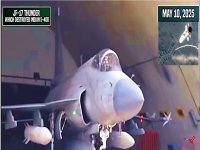
Fired from a JF-17 Thunder, the missile began its mission under inertial navigation and satellite correction using GPS and Beidou. This midcourse flight profile is entirely passive, meaning the missile remained invisible to electronic surveillance systems.
Unlike older anti-radiation missiles that immediately lock on to radar emissions, the CM-400AKG deliberately delayed seeker activation, denying the S-400 any advance warning.
A key feature of the CM-400AKG is its modular seeker architecture. Depending on the mission profile, the missile can be fitted with different seekers: a passive radar seeker for tracking air defense radars, an active radar seeker for autonomous engagement of ships or static ground structures, and an imaging infrared seeker for use against thermal sources such as hardened facilities or maritime vessels operating under radar silence.
In the SEAD strike against the S-400, the passive radar seeker was chosen, exploiting the continuous emissions of the Cheese Board radar.Once the missile closed to within tens of kilometers of its target, the passive seeker was activated. At this point, the seeker began “listening” for the radar’s emissions and quickly acquired a lock.
Because the seeker remained inactive during the majority of the flight, the radar crew had no indication that they were being targeted until the missile was already in its terminal dive. Attempts to shut down the radar at this stage would have been futile, as the missile’s guidance algorithms can continue along the last known emission vector for final impact.
The terminal phase is where the CM-400AKG becomes most lethal. The missile executed a steep dive profile, reaching speeds of Mach 5. At such hypersonic velocities, the engagement envelope for interception narrows dramatically. Even advanced interceptors like the 48N6 or 40N6 missiles of the S-400 system would have had difficulty acquiring and intercepting the inbound strike due to its compressed timeline, small radar cross-section, and rapid descent angle. With only seconds available for reaction, interception was practically impossible.Upon impact, the CM-400AKG delivered a 200–250 kg warhead optimized for hardened or high-value targets.
The combined effect of kinetic energy and explosive yield destroyed the Cheese Board radar array outright, eliminating the “eyes” of the S-400 battery. Without this radar, the launchers were blinded, leaving them unable to track targets or guide missiles. This collapse of the sensor-to-shooter chain rendered the entire defensive node ineffective.The operation demonstrated how the CM-400AKG integrates multiple layers of survivability and lethality: long-range INS/GPS navigation that avoids early detection, modular seeker options adaptable to mission needs, passive radar homing that exploits the vulnerabilities of emitting radars, and hypersonic terminal performance that defeats interception attempts.
By targeting the Achilles’ heel of the S-400, the CM-400AKG successfully neutralized one of the world’s most advanced air defense systems in a single precision strike."
View attachment 144949View attachment 144950
View attachment 144951
View attachment 144952

"......
The S-400 Triumf system is centered around the 91N6E “Cheese Board” radar, a large S-band phased-array operating between 2 and 4 GHz. With a detection range claimed at 570–600 km for large aerial targets, the radar is the central node that allows the system to track multiple aircraft and guide interceptors simultaneously.
However, this strength is also a weakness. Continuous high-power emissions in the S-band make the radar highly visible to anti-radiation seekers, effectively turning it into a beacon for specialized strike weapons.
The CM-400AKG, a high-supersonic air-launched precision missile, was employed to exploit this vulnerability.
Fired from a JF-17 Thunder, the missile began its mission under inertial navigation and satellite correction using GPS and Beidou. This midcourse flight profile is entirely passive, meaning the missile remained invisible to electronic surveillance systems.
Unlike older anti-radiation missiles that immediately lock on to radar emissions, the CM-400AKG deliberately delayed seeker activation, denying the S-400 any advance warning.
A key feature of the CM-400AKG is its modular seeker architecture. Depending on the mission profile, the missile can be fitted with different seekers: a passive radar seeker for tracking air defense radars, an active radar seeker for autonomous engagement of ships or static ground structures, and an imaging infrared seeker for use against thermal sources such as hardened facilities or maritime vessels operating under radar silence.
In the SEAD strike against the S-400, the passive radar seeker was chosen, exploiting the continuous emissions of the Cheese Board radar.Once the missile closed to within tens of kilometers of its target, the passive seeker was activated. At this point, the seeker began “listening” for the radar’s emissions and quickly acquired a lock.
Because the seeker remained inactive during the majority of the flight, the radar crew had no indication that they were being targeted until the missile was already in its terminal dive. Attempts to shut down the radar at this stage would have been futile, as the missile’s guidance algorithms can continue along the last known emission vector for final impact.
The terminal phase is where the CM-400AKG becomes most lethal. The missile executed a steep dive profile, reaching speeds of Mach 5. At such hypersonic velocities, the engagement envelope for interception narrows dramatically. Even advanced interceptors like the 48N6 or 40N6 missiles of the S-400 system would have had difficulty acquiring and intercepting the inbound strike due to its compressed timeline, small radar cross-section, and rapid descent angle. With only seconds available for reaction, interception was practically impossible.Upon impact, the CM-400AKG delivered a 200–250 kg warhead optimized for hardened or high-value targets.
The combined effect of kinetic energy and explosive yield destroyed the Cheese Board radar array outright, eliminating the “eyes” of the S-400 battery. Without this radar, the launchers were blinded, leaving them unable to track targets or guide missiles. This collapse of the sensor-to-shooter chain rendered the entire defensive node ineffective.The operation demonstrated how the CM-400AKG integrates multiple layers of survivability and lethality: long-range INS/GPS navigation that avoids early detection, modular seeker options adaptable to mission needs, passive radar homing that exploits the vulnerabilities of emitting radars, and hypersonic terminal performance that defeats interception attempts.
By targeting the Achilles’ heel of the S-400, the CM-400AKG successfully neutralized one of the world’s most advanced air defense systems in a single precision strike."
View attachment 144949View attachment 144950
View attachment 144951
View attachment 144952
It would be cool if the CM-400AKG could transmit the target co-ordinates it is targeting back to command, so that a follow up "area wide" Fatah strike could be done on those same co-ordinates, potentially targeting the launchers as well.
Effectively, a double tap.