
AeronautIR
HemlockKhalid

I was talking about current situation... can't have more JF within a monthBack up plane should be additional JF-17s.
4 JF-17Cs can have the same effect as 16 PGs....
Follow along with the video below to see how to install our site as a web app on your home screen.
Note: This feature may not be available in some browsers.
I was talking about current situation... can't have more JF within a monthBack up plane should be additional JF-17s.
4 JF-17Cs can have the same effect as 16 PGs....

I was talking about current situation... can't have more JF within a month

Sir, what about J-10? Are we getting the additional 16 anytime near? Also will we stop at 36? Or two squadrons only? What about older F-16 A/B adf or mlu ones?Let's wait and see then... I think we will see the induction ceremony of few aircraft by end 2027, based on current PAF plans and statements by CAS...
Like JF-17 project, it will continue to evolve and final block and total 36 aircraft order will be completed hopefully by 2028-29.
if the PAF learnt anything from sindoor, its that dispersal ops need to be given far greater consideration and we need to emulate the swedishVery interesting point, as most PAF HAS shelters are small and designed to only accommodate single tail fin fighters. J-35A will need new HAS to be created, and it would need to take into account the larger size of KAAN as well for new HAS shelters.

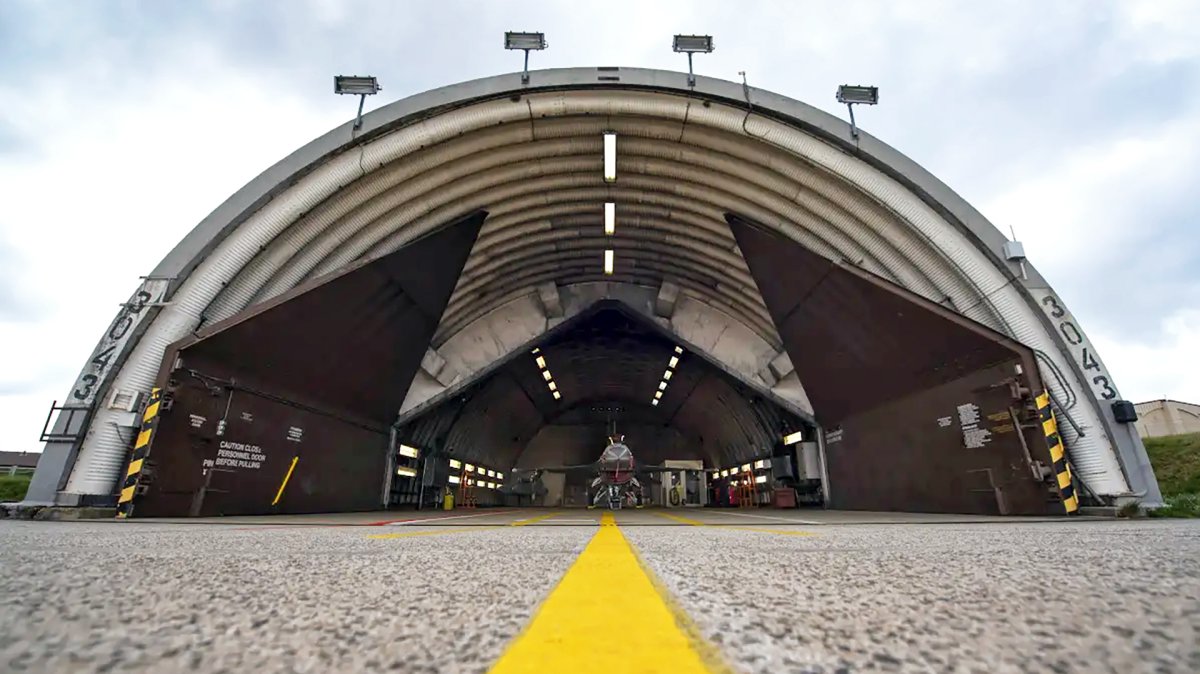
 www.twz.com

As a Chinese military enthusiast, I certainly hope these wishes will come true soon.
However, so far, we have not seen any official and precise timeline statements from either China or Pakistan.
Acquiring 36 FC-31/J-35 fighter jets would be a significant challenge for the PAF. CATIC would also certainly be unable to bear such a huge financial burden (referencing the PAF's contract to purchase J-10CE aircraft). This would require the involvement of the banking system, which in turn depends on more trade and economic cooperation agreements between China and Pakistan. However, we have not yet seen any signs of this.
I don't know about the timeline but it is definitely on cards... 2 sqn of J-10 and 2 of J-35 are planned by PAF to be acquired in near future... F-16s are a separate issue as USA's political decisions make the upgrade very complicated...Sir, what about J-10? Are we getting the additional 16 anytime near? Also will we stop at 36? Or two squadrons only? What about older F-16 A/B adf or mlu ones?

1. Relying on arms exports to generate massive profits has never been China's national policy, nor is it a core principle of Chinese values. Providing necessary defensive capabilities to friendly countries on a limited basis is China's national policy. This is completely different from the national policies of major Western arms-exporting countries.If CATIC is serious about becoming an effective arms exporter and wants to compete against the Russians/Europe/USA for arms exports, then it is going have to get its finger out and actually put in place the overall package that allows customers to purchase its platforms.
It is utterly absurd, and I truly mean that, for CATIC to say it is "financially unable to bear such a burden" to make a sale, crazy. No country buys weapons with upfront cash(not even the Saudi's), they all involve the financial industry of the host or selling country. CATIC needs to get its collective finger out of its bum, if it says it "financially unable to bear such a burden" to fix that problem for itself. That is not a problem for the customer, that is a CATIC problem that CATIC needs to fix. Customers who intend to look at purchasing Chinese platforms will not be the cash rich type, and that is a problem for China's export industry to fix.

The paf has demonstrated landing on motorways and highways earlier...is building newer airbases(medium size) in balochistan and kpk a good idea?if the PAF learnt anything from sindoor, its that dispersal ops need to be given far greater consideration and we need to emulate the swedish
Bas 90 - Wikipedia
en.wikipedia.org
though, im not sure why we were not paying attention to the israelis when they destroyed like 500 egyptian aircraft on the ground. The PAF can buy whatever, heck, f35's, 22's etc, but until the PAF is able to get them in the air, they'll be ineffective. HAS we're useful once upon a time, but i wonder how useful they will be in an era of precision weapons. Dont forget, half of Iraqi HAS were destroyed during the invasion.
though, this article provides some good for vs against
Does The U.S. Need To Be Building Hardened Aircraft Shelters For Its Combat Aircraft?
The US military and Congress are increasingly butting heads over aircraft shelters even as threats, especially from drones, grow.
Yes, but, this was in VERY limited capacity and on just Mirages and F-7's.The paf has demonstrated landing on motorways and highways earlier...
its all in reach, build roads, with space for temporary hangar raising etc, so we can disperse assets all over, very quicklyis building newer airbases(medium size) in balochistan and kpk a good idea?
1. Relying on arms exports to generate massive profits has never been China's national policy, nor is it a core principle of Chinese values. Providing necessary defensive capabilities to friendly countries on a limited basis is China's national policy. This is completely different from the national policies of major Western arms-exporting countries.
2. In general international arms trade, full payment is usually due upon delivery of the goods, or as soon as possible thereafter. However, when CATIC sold J-10CE fighter jets to the PAF, it offered unusually lenient payment terms. This is very rare in the arms trade market.
When CATIC provides such long-term payment terms to the PAF, it must bear most of the financial pressure itself.
Since it is a subsidiary of AVIC, it can distribute some of the financial pressure to other AVIC subsidiaries, meaning it can also pay them in installments. However, it cannot extend these favorable terms to other non-AVIC companies, such as related companies like CETC and AECC. It must pay these suppliers in full.
The ultra-long-term installment payments for 20 J-10CEs are still manageable for CATIC. However, 36 FC-31/J-35s are completely beyond its capacity. This will inevitably require the involvement of financial institutions/banks.
You need to understand more about the payment rules of international arms trade. See if you can find any other arms deals that offer such ultra-long-term installment payment terms.
Back up plane should be additional JF-17s.
4 JF-17Cs can have the same effect as 16 PGs....
Can the h4 sow be used by jeff after the mirages are retired? or does the jeff only gets the raad/taimoore capabiility we saw...and except the cm400 akg which standoff munition we got from china? cuz im always jealous of indian airforces standoff munitions stockpile
Chinese air shows have a certain element of arms sales promotion, but they are primarily a showcase of the country's military industrial development. Many of the weapons displayed at the air shows are not for export. It is not simply a weapons trade fair.China has hosted and attended enough air shows with its platforms to clearly indicate it is interested in becoming an arms exporter competitor. So the evidence of China's intent runs counter to what you are claiming.
1. Again, China does not rely on the high profits from arms trade for its development. This is not China's current national policy. Otherwise, you can imagine what the world would be like if China sold 1300km "YKJ-1000" hypersonic missiles at a price of $1 million per unit without any restrictions on their use. Even at $1 million per unit, we would still have approximately seven times the profit margin.Payments are made on an agreed schedule as agreed in the contact. Other that the unit price of the J10CE, please explain how it was lenient? The price seems in the expected range for the J10CE. The interest rate on the loan was also within the expected rate. What is lenient here ?
This is illogical. CATIC bears no financial pressure if the client maintains the agreed payment schedule. The client is responsible for the foreign exchange risk of the transactions. CATIC will have insured the contract to remove financial risk to itself, and the insurance for that insurance , will be part of the contract price with the client. The cashflows between selling a product between and it needing to pay it suppliers and then getting payment from the client is basic normal business cash flows between selling, manufacturing, delivering and getting paid. What is complicated about it, what is the "abnormal" financial risk here that every single other business organisation does so well ?
The payments that the client will make, are in line with the delivery schedule. If you are selling a product, then you pay the suppliers to manufacture the product, then when you deliver the product, the client will pay you. This is how all financial transactions for the manufacturing of all products work, from a tooth brush to a car, to a fighter jet. Why would CATIC struggle with such basic cashflows ? Is it not a commercially competent run organisation?
Then CATIC should stop trying to "market" the J-35A as an export plane if it cannot organise itself with very very basic cashflows for selling military products, it should get out of the pretence of wanting to do exports and it should stop blaming customers for "not being able to afford its products" to cover up the fact it is not a well run organisation.
Maybe this is the reason why Chinese exports for military products are so low? ie it has not organised itself to handle very basic cashflows for sales of its products ? Maybe CATIC is too addicted to the "state run model" where it gets paid upfront, and cannot make the "mental" leap into selling products on international commercial basis ? It does seem to be a CATIC problem, and not a rest of the world problem.
It is normal, and how all military sales work. I understand miliary sales well enough. Your understanding of how you think it works or "should work" is wrong. It is now obvious that CATIC is an inefficiently run state organisation that is struggling to adopt conventional market practices for weapons sales. CATIC needs to be re-organised and fixed if it wants to be an arms exporter. If not, then they shouldn't bother or complain about "how difficult it is to do" such basic cashflows. As I have said before, and will say again, this seems to be a CATIC problem as it is not efficiently setup.
The stockpile should be in good or enough number as i think it was built in Pak....also except the raad/taimoor and the h4 we dont have any standoff munitions....except few variants of glide kits for dumb bombsIt is an interesting idea, and imho if there is sufficient life left in the H4, there is value in integrating them as not every target needs a Ra'ad or Taimor, sometimes a H4 will be "good enough". PAF will have a fairly decent stockpile of H4s in stocks. This only works if they can integrate onto 1 JF17C aircraft with some form of automated targetting from the same plane (or a JF17B with a WSO ). It would be an interesting project for someone at PAC/Kamra/NATSP I reckon. H4 takes up 2 weapons hardpoints, one for the missile and the other for the transmit/receive unit.


