Moroccan
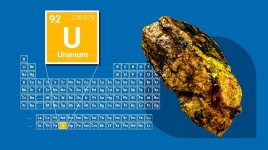
uranium appears as a lifeline for global supplies, in the midst of geopolitical events and conflicts that affect supply chains and energy resources.
According to what was followed by the Specialized Energy Platform (based in Washington), Rabat is adopting a five-year plan to develop nuclear resources and water management, and has supported its plan within a framework of cooperation with the International Atomic Energy Agency.
Morocco is a world leader in phosphate production. What qualifies him to engage in the production of uranium metal in abundance, in conjunction with doubts about the supplies of the metal from Russia and Niger.
The importance of uranium metal to the global electricity sector is highlighted by the fact that it is a fuel for nuclear reactors and plants that produce clean electric current, and is in line with the paths of energy transition and the transition away from fossil fuels.
Metal and price challenges
For many years, uranium supplies from Russia and Niger remained a major source for operating reactors in America and Europe. With the imposition of sanctions on Moscow and the escalation of the conflict inside Niger, the prices of raw materials rose due to the shortage of supplies.
With high demand versus short supply, average uranium prices over the past year recorded a record jump between $57 and $61 per pound, up from $33 in 2021 and before the outbreak of geopolitical tensions.
Morocco opportunities
In light of the aforementioned reading, Moroccan uranium emerges as a new giant joining the map of producers, thanks to its global leadership in phosphate reserves.
The latest estimates indicate that Morocco has phosphate reserves estimated at about 73% of global reserves, and these estimates are subject to increase, especially since Rabat produces 40 million tons of rock phosphate annually.
Phosphate is a major source of uranium production, among other derivatives used in the manufacture of agricultural fertilizers, phosphoric acid, and others.
Historically, Morocco produced more than 7 million tons of phosphoric acid over the 40 years from 1980 to 2020, and in the 1980s the technology for producing uranium with phosphoric acid was developed.
Over time, Moroccan uranium reserves exceeded 6.9 million tons; This enhanced its chances among the largest producers in the world, according to information seen by the Specialized Energy Platform (based in Washington) in an article published on the website of the Middle East Institute (MEI).
This path appears to be supported by desalination plans, to provide the necessary flows for the reverse osmosis process and uranium metal extraction.
The infographic below - prepared by the specialized energy platform - reveals the 10 largest uranium-producing mines in the world:
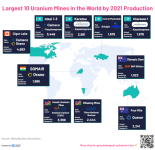
Rabat plans to seize the opportunity to change the map of metal production and export globally, and has used American and Russian expertise to enhance the production of uranium from phosphate, while supporting this by establishing a nuclear plant and water treatment facilities.
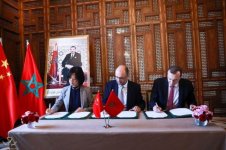
Specialized bodies in Morocco cooperated with the Russian group Rosatom, which is not included in the scope of US and European sanctions on Moscow, to develop nuclear plants in the African country in accordance with the requirements of the International Atomic Energy Agency.
Unlike Russia, Moroccan-American cooperation is progressing to develop techniques for extracting uranium from phosphate and enhancing the seawater desalination process.
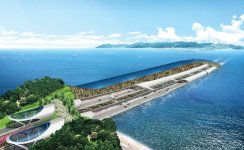
The city of Dakhla provides an ideal model for meeting Moroccan uranium development ambitions, as America has pumped investments of about two billion dollars into it to transform it into a port suitable for connecting with the American state of Florida.
In addition to these investments, American companies have the opportunity to engage in the African market through Morocco and allocate investments amounting to $40 billion until 2050 in water desalination.
https://attaqa.net/2024/06/09/اليورانيوم-المغربي-قد-يحسم-تداعيات-ال/





 must invest in our gas pipeline project to bring Nigerian gas - the largest reserves in Africa - via Morocco, to Europe”