Morocco strategic Projects: news, discussions & updates

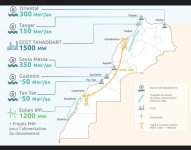
The Moroccan Energy Company has activated a strategic partnership with Moroccan public and private actors to launch a large -scale investment program aimed at keeping pace with the national road map for sustainable development. This program includes:. Developing a targeted desalination capacity of 900 million cubic meters of water, in addition to 800 million cubic meters of water transport through the water road project project .. 1500 megawatts of CCGT projects .. 3000 megawatts of the power transmission capacity between southern and central Morocco, and 1200 megawatts of green energy projects..

To view this content we will need your consent to set third party cookies.
For more detailed information, see our cookies page.


1747680485647.jpeg
 

Morocco, TAQA, Nareva team up to develop energy, desalination projects​


RABAT, May 19 (Reuters) - Moroccan electricity and water utility ONEE has signed deals for projects from desalination to renewable energy and transmission lines with a consortium comprising the Mohammed VI Investment Fund and energy groups TAQA Morocco (TQM.CS), and Nareva, it said on Monday.

TAQA Morocco, a unit of Abu Dhabi's TAQA Group, said the deals represented a total investment of 130 billion dirhams ($14.05 billion). TAQA Morocco shares were earlier suspended from trading on the Casablanca stock exchange pending the announcement.

The projects, to be completed by 2030, include the construction of a 1,400 km high-voltage transmission line with a capacity of 3,000 megawatts linking Western Sahara to central Morocco, ONEE said in a statement.

The consortium also plans to build desalination plants across the country with a combined annual capacity of 900 million cubic meters, and a waterway connecting the Sebou River in the northeast to the drought-hit Oum Rabia River in the south.

In addition, it will develop 1,200 megawatts of new renewable energy capacity and construct a combined-cycle gas power plant at the Tahaddart site in northwestern Morocco, with a capacity of nearly 1,500 megawatts.

The projects will be equally owned by TAQA Morocco and Nareva, with a 15% stake held by the Mohammed VI Investment Fund and other public entities, TAQA Morocco said in a statement.

ONEE said the consortium would seek both domestic and international financing for the projects, but did not provide a timeline for securing funds.
The agreements follow commitments made during King Mohammed VI's 2023 visit to the United Arab Emirates aimed at deepening Moroccan-Emirati cooperation.

Morocco is seeking to reduce its reliance on coal by boosting natural gas use and accelerating its renewable energy strategy, which is targeting 52% of installed capacity to come from renewables by 2030, up from 45% currently.
Renewable capacity currently stands at 5.5 GW.

($1 = 9.2497 Moroccan dirham)


https://www.reuters.com/sustainabil...elop-energy-desalination-projects-2025-05-19/
 
Shame on Morocco!

Shame on the phony King!

To view this content we will need your consent to set third party cookies.
For more detailed information, see our cookies page.


To view this content we will need your consent to set third party cookies.
For more detailed information, see our cookies page.
 
To view this content we will need your consent to set third party cookies.
For more detailed information, see our cookies page.
 
To view this content we will need your consent to set third party cookies.
For more detailed information, see our cookies page.

These are American-Moroccan exercises with more than 20 other countries.. it is like when Israeli IAF trains all over the world with a lot of countries with pilots that have bombarded Gaza and killed children, women and the elderly.. it is a shame indeed..

It is well known that the Moroccan population doesn't like the Israeli government..and no one in this world does anyway.. but the Moroccans like their Moroccan Jews _about one million in Israel_ now..they are the ones transferring advanced military and civilian technologies to morocco from their own companies..
 
Morocco is investing 100 billion dollars in its infrastructure during the next five years.

To view this content we will need your consent to set third party cookies.
For more detailed information, see our cookies page.


The advantage is the investments will be a vehicle between the public sector and the private sector and foreign investments, which will contribute to reducing the situation on the state and not falling into a financial predicament after the World Cup.

40 cities will benefit from this investment and not only the cities of the World Cup.

Morocco is expected to invest about 5 to 6 billion US dollars in sports and organizational infrastructure in preparation for hosting the 2030 FIFA World Cup.. The remaining will go to roads and airports, the high -speed train and railways, ..........
 
The United Kingdom officially announces its recognition of the Moroccan Sahara and the Moroccan autonomy proposal and will move diplomatically to support the Moroccan proposal at all levels, according to the British Foreign Minister who is currently visiting Morocco

To view this content we will need your consent to set third party cookies.
For more detailed information, see our cookies page.
 
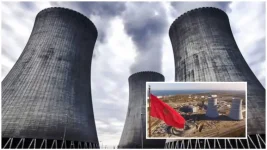
For the first time, Morocco gets the highest level of warranty from the International Atomic Energy Agency

1749585848343.webp

The International Atomic Energy Agency confirmed that all nuclear materials in Morocco are used for purely peaceful purposes, giving the Kingdom the highest level of guarantee regarding its compliance with the nuclear guarantees system.
 
South Korea and the UAE launches with Morocco the largest artificial intelligence project in Africa: a 500 -megawatt data center for the export of computing towards Europe

A group of international companies led by the South Korean giant Naver Corporation, in partnership with the American processor NVIDIA, the AI Nexus Core Systems, and the Global Investment Company LLOYDS CAPITAL (Dubai -based), announced the launch of a huge project to create a database of artificial intelligence in Morocco, with a total capacity of 500 megawatts,

It works entirely with renewable energy with a strategic agreement with Taqa Morocco to ensure the center is provided with a stable renewable card, ensuring the continuity of work and low operating costs compared to its European counterparts.

The project aims to provide the services of the "sovereign cloud" to the countries of Europe, the Middle East, and Africa, by exploiting Morocco's strategic location, which is only 15 kilometers from Europe, and connects directly through marine optical fiber cables, ensuring a low response time and a competitive operation cost.

Building start at the end of 2025

The works of the first stage begin in the fourth quarter of the year 2025, with 40 megawatts of computer capacity using new Blackwell GB200 processors.

The implementation of this stage is expected to be completed by the end of 2025, with the project gradually expanding to reach 500 megawatts
The center will adopt a fully Moroccan sovereign structure, ensuring that data and processing remains within the national borders, while compliance with European data protection laws (GDPR) and new artificial intelligence governance frameworks, which enhances the confidence of international partners.

Estimates indicate that a center of this size and advanced technologies cost between 8 and 11 billion dollars

https://www.middleeastainews.com/p/naver-nvidia-morocco-data-centre

1750003346209.jpeg

To view this content we will need your consent to set third party cookies.
For more detailed information, see our cookies page.
 
Establishing a factory specialized in the production of yellow cake in Morocco

According to LEDESK JL, a factory specialized in the production of yellow cake in Morocco is created by the Uranext company of the honorary office of phosphate with a capital of $ 100 million

1750050788269.jpeg

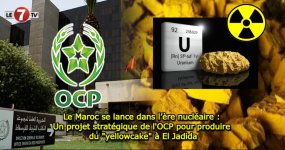
UraNEXT: a "Yellowcake" uranium concentrate of $ 100 million in El Jadida​


Driven by Uranext, a start-up backed by the UM6P innovx ecosystem, under the OCP group, the first Moroccan "Yellowcake" production factory, concentrated uranium from phosphoric acid, is in the regulatory launch phase. With an initial investment of $ 100 million. Exclusive details

A strategic milestone has just been crossed in the emerging nuclear sector in Morocco. According to our information, Uranext is preparing to build its first extraction and refining unit of "Yellowcake" (U₃o₈) from phosphoric acid, in the commune of Moulay Abdellah in El Jadida. The regulatory procedure for this unprecedented industrial project was launched on May 29.

https://mobile.ledesk.ma/2025/06/11...tre-duranium-yellowcake-de-100-m-a-el-jadida/

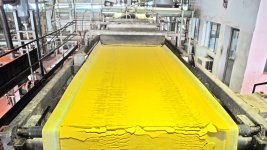
U3O8 yellow cake is filtered for the uranium dioxide UO2, which is used in Fuel Rods at the heavy water reactors pressurized heavy water reactors .

1750050683156.jpeg

The good thing is that there is a very huge reserve of phosphate in Morocco, and the yellow cake is extracted after several stages, the first of which is the creation of phosphoric acid by adding sulforic acid to phosphate.(Wet-PROCESS Phosphoric Acid)

The tremendous amount of production, specifically from phosphoric acid, as well as the quality of Moroccan raw phosphate, which is the best globally rich PPM in this substance, definitely will add financial returns with hundreds of millions of dollars to the stote annually if the yellow cake material is sold as it is without fertilization, but if the enrichment process is locally in 3-5 % (required to operate the nuclear stations to generate electricity), then the profits will be Many times doubled ... Morocco will be one of the top fuel suppliers for the nuclear stations in the world (an alternative to Russia)

1750050355425.png

As for the environmental aspect, the percentage of radioactive materials will diminish with the waste resulting from the treatment of phosphate, specifically the "worry" gypsum material, will reduce a large degree, which contributes to its re -use, i.e. gypsum safely, whether by agriculture or the construction industry and more, and from another side also reduces its radiological percentage with phosphoric acid, which will be used later by several industries and the most important production TSP and DAP phosphate.

1750050884520.jpeg

Nuclear stations are among the most valuable sources of electricity, the carbon emission and the productive quantity will provide fuel for no less than 50 GW at the lowest estimate ... the percentage of uranium with the yellow cake is high not less than 80%, thus a few fertilization you will get the 3-5 percent as fuel for the stations .... You have many customers around the world that are ready to purchase the LEU as a substitute for Russia, in which France is one of the major nuclear fuel suppliers and its users at the same time and possibly Arab countries who are building nuclear stations that need fuel ....

Currently Morocco produce 3 to 3.8 million tons annually of commercial phosphoric acid (MGA)

On the horizon of 2028 after entering Mzinda and Meskala production projects, the total capacity will reach about 8 million tons/year

But pure phosphoric acid (PPA) from which the yellow cake is extracted
Current power: very low 20 thousand tons

In 2028 it will become 380 thousand tons annually and in 2030, 3 million tons

As for Jordan, it produces currently about 865 thousand tons of PPA
 
How does Morocco, in cooperation with the company, lead the company of the manufacture of semiconductors and artificial intelligence in Africa?

To view this content we will need your consent to set third party cookies.
For more detailed information, see our cookies page.


Morocco manufactures the future of the African continent by entering the advanced electronic chips industry and artificial intelligence, in a strategic partnership with giants such as Invidia and China, which speeds up the pace of technological progress in an unprecedented way and raises widespread attention. Morocco recently joined this vital technological race through its alliance with the American company Invidia, the world leader in the production of artificial intelligence chips, as well as with "Casava Technologies", which intends to publish Inviteia software and invest up to 720 million dollars in the first artificial intelligence factory in Africa, which will be established by Invidia. This achievement comes after the success of Rabat in attracting billions of dollars in investments from China in this strategic sector, which raises questions about the characteristics of this deal and how Morocco managed to change its industrial scene to become a pioneering center. Electronic chips are described today as the "new oil" that drives modern civilization, where economic power is measured by the ability to produce these chips and control its technologies, which gives Morocco a unique strategic advantage in the continent. Morocco, consciously of this importance, launched an ambitious strategy for electronic and digital industries, with huge investment incentives and legislative reforms to enhance infrastructure and develop specialized human competencies. In the culmination of these efforts, the year 2024 witnessed the announcement of the establishment of the first huge factory for the manufacture of electronic chips in the Tangier Tech region in a global partnership, with an initial investment exceeding $ 1.2 billion, with a focus on electric cars chips, renewable energy, and medical devices, which enhances Morocco's exports and provides hundreds of specialized jobs. In addition, Morocco seeks to develop local capabilities in the design of electronic chips, with the support of universities and specialized research centers, which confirms its ambition to become a regional center for innovation. In parallel, Morocco pours major investments in the field of artificial intelligence, with the aim of becoming a pioneering regional and African center in this field, through a strategy that focuses on scientific research, accelerating the adoption of technologies in the vital sectors, and creating a supportive regulatory environment, which enhances its position as a favorite investment destination due to its political stability, geostrategic location and advanced digital infrastructure.

In terms of research and development, recent years have witnessed the establishment of concession centers in artificial intelligence. The forefront is the "AI MOVEMENT Center", which is a partnership between the public and private sectors, and is one of the largest applied research centers in artificial intelligence in Africa. The center focuses on vital areas in line with Morocco's priorities, such as artificial intelligence for fine agriculture (crop improvement, water consumption), artificial intelligence in the field of renewable energy (production predictions, network management), health care (assistant diagnosis, drug discovery), and smart logistics. According to a report issued by the center itself in April 2025, Moroccan researchers in the center and their view of universities succeeded in publishing more than 120 tight research papers in advanced areas of artificial intelligence during the year 2024 only, which is a record number that attests to the accelerated maturity of scientific research in this field in the Kingdom.

It was not limited to research centers. The startups sector specialized in artificial intelligence has witnessed remarkable growth. Digital Morocco Agency data indicate that the number of startups working in developing or merging artificial intelligence solutions in their services has exceeded 180 companies by the end of 2024, an increase of approximately 85% compared to 2021. These companies offer various innovative solutions, ranging from artificial intelligence platforms to analyze financial data and evaluate risk risk in the banking sector, and vision systems systems Computation for quality control in industrial production lines, applications for simultaneous automatic translation between Arabic and local languages (Amazigh) and international languages, and adaptive educational platforms that use artificial intelligence to provide personal learning experiences. This dynamic attracted important investments. In 2024 alone, Moroccan artificial intelligence companies attracted investments estimated at more than $ 85 million, according to the "Empiric Capital" center specializing in monitoring technology investments in the Middle East and Africa.
 
What is behind China's opening of its giant commercial market to Moroccan products without customs duties now?

To view this content we will need your consent to set third party cookies.
For more detailed information, see our cookies page.
 

Morocco and China break trade records in 2025​

Trade flows between the two nations reached 59.81 billion dollars in the first seven months of this year

Trade between Morocco and China reached a record 59.81 billion dollars in the first seven months of 2025, a record figure in terms of economic cooperation between the North African and Asian countries.

This level of trade represents a 19.1% increase over the same period last year. It is an exponential increase that reflects the boom in economic cooperation between the two nations, which are considered allies.

These data come from the latest report presented by the General Administration of Customs of China (GACC).

China is establishing itself as a very important trading partner for Morocco at a crucial moment on the international stage, which is being rapidly reconfigured with the rise in power of nations such as China itself. This situation is redrawing the international map, which in previous years was marked by the political and economic dominance of the United States.

The increase in trade between China and Morocco was mainly driven by Chinese exports to the Moroccan market, reaching 52.9 billion dollars in the first seven months of 2025, 20.4% more than in the same period in 2024.

The main products that have reached the Moroccan market from China are those related to high technology, such as mobile phones and vehicles, which highlights Morocco's dependence on Chinese production in this area. It is worth noting that the supply of spare parts from China for the automotive sector alone reached 1.16 billion dollars.

Moroccan exports to China are significantly lower, but they also grew. They reached 6.91 billion dollars in the first seven months of 2025, which is 10.1% more than in the same period in 2024. These figures show a trade balance in favour of China in relation to Morocco of 45.99 billion dollars.


China invests $5.6 billion in Morocco to build Africa’s first of its kind​

By Greta Taubert
September 14, 2025

Morocco is making history with a massive $5.6 billion investment from China to build Africa’s first-ever battery gigafactory. This project isn’t just about construction; it’s a symbol of a new era where Africa and China are joining forces to transform the continent’s role in the global energy and automotive sectors.

This huge step forward signals Morocco’s strategic rise as a key player in the worldwide clean energy race. With the gigafactory set to deliver cutting-edge technology, it’s a win for both innovation and economic development. What does this partnership mean for Morocco, China, and Africa’s future?

How Morocco positions itself in the global energy revolution​


After previously partnering with France, Morocco is now deepening its ties with China through an ambitious project to build the continent’s first battery gigafactory. Located in Kenitra, in northwest Morocco, this facility marks a major milestone for Africa’s role in the energy transition.

The Chinese company Gotion High-Tech will lead the effort, with production starting as early as the third quarter of 2026. The first phase aims for a capacity of 20 gigawatt-hours (GWh) per year, enough to supply thousands of electric vehicles, and the final goal is to ramp up to an astonishing 100 GWh.

With a total projected investment of around $6.5 billion (equivalent to $5.6 billion in euros), this is one of the largest industrial projects ever seen on the continent. The initial phase alone involves a $1.3 billion investment and is expected to generate approximately 17,000 jobs, both direct and indirect. This huge economic boost can hardly be overstated in a country eager to diversify its industry.

What makes the project unique beyond battery assembly​

The gigafactory isn’t just about putting cells together. It will also produce critical electrode materials such as cathodes and anodes, which adds a powerful layer of security over the supply chain. This integration means Morocco won’t have to rely entirely on imports, giving it a leg up in cost competitiveness and regional autonomy.

Approximately 85% of the batteries made here will be exported to the European Union, helping cut down the reliance on Asian markets and shortening supply lines for the auto industry. Morocco’s role is evolving from a simple assembly hub to a major manufacturing powerhouse, servicing one of the world’s largest markets.

The project’s roadmap lays out a modular growth plan, starting with the first stage in 2026 and expanding as new contracts are secured and financing is finalized. This flexibility is important in the fast-changing energy sector, allowing for adaptation while maintaining ambitious long-term goals.

The economic and geopolitical significance for Morocco​


For Morocco, this is more than an industrial project; it’s a statement of geopolitical strategy. Sitting at the crossroads of Africa and Europe, Morocco is leveraging its strategic location and existing trade agreements to position itself as a foothold for innovation and manufacturing.

This gigafactory aligns perfectly with Morocco’s goal to retain skilled talent and enhance its expertise in a high-tech industry that already leads its export market. By developing this facility, the nation reduces its economic dependence on agriculture and textiles, diversifying into more sustainable, future-proof industries.

This move also strengthens Morocco’s commercial ties with the EU and opens doors for closer economic interactions with the U.S., promoting the country as a reliable partner in the green transition.

How China is deepening its presence in Moroccan industry​

China isn’t new to Morocco’s industrial landscape, but this $5.6 billion project represents a big leap. Several other Chinese companies, including BTR, CNGR, Hailiang, and Shinzoom, are also investing heavily in battery production in Morocco.

The timing couldn’t be better, with Europe preparing to shift to zero-emission vehicles by 2035. Morocco’s ambitions to attract more large-scale projects are clear, especially as the battery market booms globally. This partnership highlights how African countries can become pivotal players in the new clean energy economy with the right international cooperation.

From a personal perspective, I find it exciting how this gigafactory symbolizes a real global partnership rooted in tangible benefits like jobs, technology transfer, and industrial diversification. It’s a reminder that progress is often built on collaboration, vision, and seizing historic opportunities.

What do you think about this growing relationship between Africa and China? Could Morocco become a model for other African countries aiming to harness their resources for sustainable development? Share your thoughts and let’s get the conversation started!
 
#Morocco and #Russia sign a strategic agreement today in Moscow that guarantees the territorial integrity of both countries..

To view this content we will need your consent to set third party cookies.
For more detailed information, see our cookies page.


To view this content we will need your consent to set third party cookies.
For more detailed information, see our cookies page.
 
Morocco: $83 billion in 2026 budget, half of which is for investment Growth of 4.6% | Ideal deficit at 3%

Budget 2026

$83 billion, half of which is for investment

The investment budget will increase by 11.8%.

Growth of 4.6%

Army budget: $16 billion, an increase of 17.77%.

Health and education budget: $15 billion, an increase of 22.8%

36,895 jobs created by the government in 2026, an increase of 27%

The wage block is only a quarter of the budget

An ideal deficit is expected at 3%, a strong decline of 23% from the current year

https://asharqbusiness.com/amp/econ...خفاض-العجز-في-ميزانية-2026-رغم-زيادة-الإنفاق/
 

Users who are viewing this thread

Back
Top