Old Peshawar

1785531746534.png

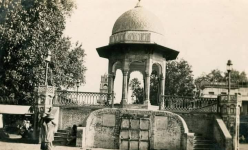
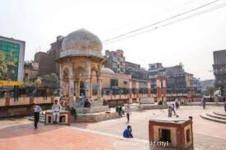
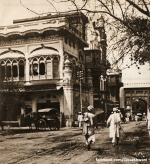
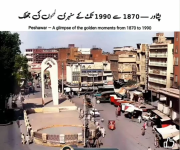
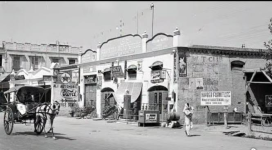
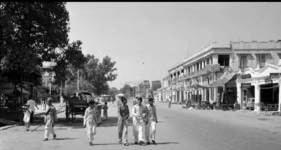
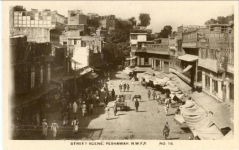
𝐏𝐞𝐬𝐑𝐚𝐰𝐚𝐫'𝐬 𝐂𝐑𝐨𝐰𝐀 𝐘𝐚𝐚𝐝𝐠𝐚𝐫: This view shows a tonga in front of a building at πΆβ„Žπ‘œπ‘€π‘˜ π‘Œπ‘Žπ‘Žπ‘‘π‘”π‘Žπ‘Ÿ. The white relief work, with its twin minarets and arched design, formed a decorative faΓ§ade on the northern and southern approaches to the Remembrance Square (πΆβ„Žπ‘œπ‘€π‘˜ π‘Œπ‘Žπ‘Žπ‘‘π‘”π‘Žπ‘Ÿ).

These architectural details were created in the same style and incorporated the same design elements as the ornate platform of the Hastings Memorial with which they formed a unified commemorative ensemble.

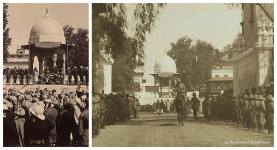
In the distance stand the 𝐓𝐨𝐰𝐧 π‡πšπ₯π₯ and the 𝐊𝐚𝐜𝐑𝐞𝐫𝐒 π†πšπ­πž at the northern end of Chowk Yaadgar
 
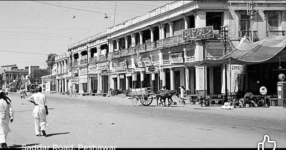
Saddar

1785864540783.png


1785864574852.png
 
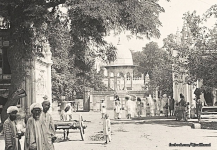
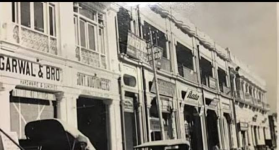
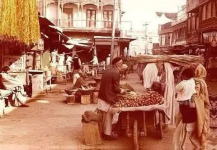
An old picture of Peshawar's Hast Nagri Bazaar, now there are also people sitting here with ice cream and barbeque.


1786217363516.png
 
1787602026927.png


1787602048371.png
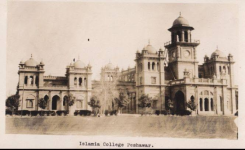
Complete History of Islamia College Peshawar

1. Why was the idea of establishing this institution born?


In 1901, when the present Khyber Pakhtunkhwa was formed as a separate province from Punjab under the name of North-West Frontier Province (NWFP), there were very few opportunities for higher education in the entire province. Edwards College was present in Peshawar, but there was no such institution for Muslims that would bring Islamic civilization and values along with modern Western education.

In this environment, the idea of a large educational institution arose in the minds of Sir Sahibzada Abdul Qayyum Khan and the then Chief Commissioner of the province, Sir George Roos-Keppel. In 1909, both of them visited Aligarh, which further strengthened the project. οΏ½
ICP Educational Institute +1

That is, it was not just the idea of establishing a college; the main objective was that the Muslim youth of the NWFP should find a center of higher education in their area that would prepare them for modern education, character and leadership.
 
2. Who played the biggest role?

Sir Sahibzada Abdul Qayyum Khan

The most prominent name in the foundation and movement of Islamia College is Sir Sahibzada Abdul Qayyum Khan. The official history of Islamia College itself also calls him the fundamental founder and he is called "Sir Syed of the Frontier".

ICP Educational Institute
He:
Presented the concept of the college.
Mobilized people to donate.
Contacted tribal elders, khans and local people.
Played a role in acquiring land.
Obtained cooperation from the government.
Collected donations from different areas.
Practically struggled for the management and establishment of the educational institution.

On 12 April 1911, an important meeting was held in Peshawar in which Sahibzada Abdul Qayyum, Ghulam Haider Khan of Tangi, Habibullah Khan, Khushal Khan, Sethi Karim Bakhsh and other prominent people participated. In this regard, a regular donation campaign was carried out.
 
3. What was the role of Sir George Russcaple?

It would not be correct to say that Roos-Keppel was just a government official and had no practical role.

Sir George Roos-Keppel was the Chief Commissioner of the Frontier Province at that time. He facilitated the project at the official level and, together with Sahibzada Abdul Qayyum, played an important role in the selection of the site and the establishment of the institution.

After a visit to Aligarh in 1909, the idea of an educational institution was further strengthened by both of them.

But it is also a historical fact that Roos-Keppel’s objectives also included the political and administrative interests of the British government. Therefore, calling the history of Islamia College only one-sided β€œBritish patronage” or only β€œMuslim movement” does not give a complete picture.

4. Where did the donation come from?

This project was not built with government money alone. Local Muslims, khans, nawabs and other philanthropists contributed large sums.

According to historical records:
Abdul Karim Khan gave Rs. 10,000.
Sethi Karim Bakhsh gave Rs. 50,000.
The Nawab of Dir promised to give Rs 100,000.
Large amounts were also collected from different areas of Hashtnagar.

According to some historical references, about Rs 1,50,000 was collected from Hashtnagar.

A large amount was also used in the purchase of land.

A donation/aid of about Rs 1,50,000 is recorded from the Nizam of Hyderabad for the land.

An amount of Rs 1,00,000 was given by the Nawab of Amb for the construction.

This is why Islamia College is also called an institution based on the concept of public donations and endowments/property from the very beginning.

5. Where did the land come from?


Sahibzada Abdul Qayyum and Russ Kapil also played a role in the selection of land for the college.

Initially, the proposal to build the college at Wazir Bagh came up, but Russ Kapil rejected it because he wanted to preserve Wazir Bagh as a recreational place.
Later, the present location was chosen, which was then owned by the Khalil tribe/arbabs in the Tehkal and Safid Dheri areas.

There are historical records of about 916 kanals 17 marlas of land, while various later references also state that the total land of the college is around 300 acres.
 
6. Who laid the foundation stone?

This is a very interesting incident in the history of Islamia College.
Haji Sahib Tarangzai was invited to lay the foundation stone.

The problem was that Haji Sahib was a wanted person in the eyes of the British government and his entry into British territory was prohibited.

Sahibzada Abdul Qayyum obtained special permission from Rus Kapil that Haji Sahib could come to British territory only for the foundation laying ceremony.
After the British permission, Haji Sahib Tarangzai came and laid the foundation stone at the foundation ceremony of Islamia College/Darul Uloom. After that, he went back to the tribal area.

This incident is a beautiful example of the religious, national and political aspects in the history of this institution.

7. Why was the mosque built first?

The Muslims wanted the mosque to be the first to be built on the new campus.
The foundation of the mosque was laid on 21 March 1912. Haji Sahib Turangzai and other religious leaders of the area were present on this occasion.
Scribd
This makes it clear that the concept of the institution was not limited to building a Western-style college but also to establish it with an Islamic environment.
 
8. When did the actual construction of the college begin?

The construction of the college and school buildings began in 1912.
The construction progressed at an amazing pace and in 1913 the main building, school and initial hostels were ready. According to historical records, the construction work began in October 1912.

9. When did the college officially start?

Islamia College began its educational activities on 1 October 1913.
ICP Educational Institute
Earlier, Islamia Collegiate School started functioning in March 1913.
 

Users who are viewing this thread

Back
Top