Pradotlc
Trusted Member


You do realise that Pakistan-India relations always take a nosedive when PMLN forms the federal government?
you do realize Nawj never condemns Modi ?
Follow along with the video below to see how to install our site as a web app on your home screen.
Note: This feature may not be available in some browsers.
You do realise that Pakistan-India relations always take a nosedive when PMLN forms the federal government?

you do realize Nawj never condemns Modi ?
Actions speak louder than words.
 www.bbc.com
and what actions did he do ?...
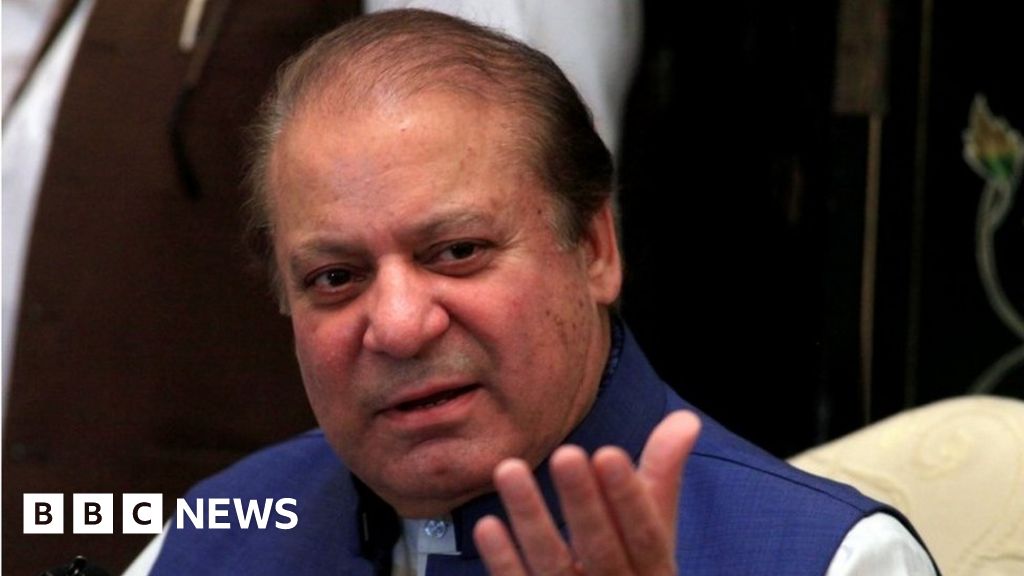
The action against Dawn comes in the wake of a Nawaz Sharif interview it published earlier in May, in which he questioned the wisdom of "allowing" Pakistani militants to cross the border and kill 150 people in Mumbai.
A war of nerves between Pakistan's military and Sharif
A media crackdown suggests a war of nerves between the deposed PM and the military.
 tribune.com.pk
My point was clear: As I previously mentioned, the Quad that came about during Trump’s term has no written agreement or formal declaration; it was just a forum that remained dormant until the Pivot to Asia during Obama's term, and Trump gave it life, and India has never been officially declared a formal U.S. ally.
Just because the West wanted a coalition in its mindset doesn't mean others would buy into it. The U.S. opened itself to India for its interests during Clinton's term. There was no Quad then, but that doesn't mean India had to follow through, as India has its interests in economic development. Instead, the U.S. gambled on its intent to build up India. Is there any official policy India had to follow through? No.
I hope you know that Quad started as a relief organization. Later, Japan wanted to give it a strategic focus during Bush Jr.'s term. Australia also left the Quad early in 2008. It was given life again in 2017. Thus, its origins were different to begin with.
While this was a candid discussion exploited politically, but this
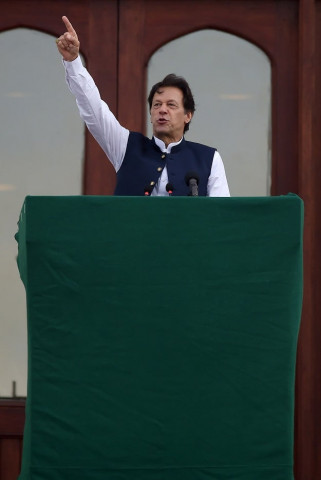
PM Imran warns against crossing LoC for Kashmir jihad | The Express Tribune
Imran Khan says he will seek US-Taliban talks resumption during US visit

If you don't have command over an issue, don't continue to write about it with complete authority and act stubborn that you must be right, all others are idiots.
The QUAD is an anti-China alliance. A child in 10th grade knows it who reads up on foreign relations. Even NATO calls itself a "security alliance" or North American Treaty Organization. Is it a security alliance? Ask the Russians and see it's behavior, its now at Russia's doorsteps and tackling Russia is its only objective. But it also does trade, research, economic growth between EU and Eastern European nations and the US. Go back to my first post where I told you, in diplomatic language, UNLESS you are in a state of war, like India - Pakistan or Ukraine-Russia, you don't call the other party an official enemy. That's diplomatic norms. We all know who the US, Australia, Japan are getting ready to go to war with. But they will first outline "trade, cooperation, medicine research, etc". Just the way the world works in diplomatic terms.
Now this is a long read for you. But it's a US Congress official link. Read up and enjoy. If you still can't understand what I'm saying the third time, you should find some books written on global diplomacy and alliance building. I can recommend some I read years ago. These will educate you.
Overview
The Biden Administration has boosted the profile of the Quadrilateral Security Dialogue, aka "the Quad," as a centerpiece of its Indo-Pacific strategy aimed at strengthening the United States' commitment to the region. The four-country coalition, comprised of the United States, Japan, India, and Australia, claims a common platform of standing for a rules-based order, protecting freedom of navigation, and promoting democratic values in the region. The leaders have held three summits, with plans for a fourth in Sydney in 2023. The activities of the Quad may be of interest to Congress given its oversight responsibilities, attention to security alliances, and concern about China's power and influence in the region.
Since President Biden took office, the Quad has focused on areas beyond traditional security, but concerns about China's growing influence and military assertiveness appear to undergird the group's motives. Without explicitly referencing China, the most recent (May 2022) joint statement reiterates the Quad's commitment "to uphold the international rules-based order where countries are free from all forms of military, economic and political coercion." When the partners first held a series of Quad meetings in 2007, China denounced them as an attempt to encircle it. The effort dissipated amid member leadership transitions, concerns about economic repercussions from China, and attention to other national interests. Revitalization of the group began in 2017 and has accelerated since 2020, bringing similar accusations from Beijing, and crystallizing the geopolitical and economic risks for Quad members. China is among the top three trading partners for all four Quad countries, and each is reliant on China for stable supply chains.
Questions remain about how the Quad defines itself and its goals. Critics point to the Quad's inability to speak with one voice on regional issues, the absence of collaborative democracy promotion efforts, a dearth of joint military operations, and a lack of institutional structure as limits on its effectiveness. Does it compete with or complement other regional groupings? Will it remain limited to the four founders or open its membership to others? Is it durable in the face of leadership changes in member countries? Can it be effective without a strong economic pillar to counter China's dominance in regional trade arrangements? In many observers' view, India's participation in the group is particularly precarious given its traditional reluctance to join regional or ideological blocs.
Quad Activities
A September 2021 Quad Leaders' Summit produced a statement outlining four broad areas of cooperation: vaccine production and distribution; climate change mitigation efforts and clean energy development; the promotion of transparency and high-standard governance in the field of critical and emerging technologies; and the development of a regional infrastructure partnership.
With several other mechanisms available to distribute vaccine doses, the Quad has re-oriented itself to other priorities. Climate change mitigation remains a focus, with the four countries announcing a Quad Climate Change and Mitigation Package (Q-CHAMP) to address mitigation and resilience in the Indo-Pacific region. One area of cooperation is green shipping and clean energy supply chains. Although the Quad has working groups on humanitarian assistance and disaster relief (HADR) and infrastructure, no specific efforts have been announced.
At the May 2022 summit, the leaders announced the establishment of a new Indo-Pacific Partnership for Maritime Domain Awareness, with an emphasis on tracking vessels involved in illegal fishing. Some advocates point to this initiative as a strong example of how the Quad can deliver public goods to the region, particularly if the program expanded to include training of regional forces to enhance enforcement. Further global health cooperation, building on the initial effort to distribute vaccine doses, could also burnish the reputation of the Quad among Indo-Pacific countries.
Growing Security Cooperation
Although the Quad has emphasized non-security areas in joint statements, military cooperation has expanded among the four countries. Annual Malabar joint naval exercises, originally bilateral between the United States and India, later added Japan as a permanent member in 2015, and since 2020 have included Australia. U.S. Defense officials say Malabar could be a potent war-fighting exercise that deepens trust and interoperability among the four militaries in the air and sea domains. All four militaries operate compatible anti-submarine warfare systems, making this a particularly promising area of cooperation.
In addition to Malabar, Quad countries are increasing bilateral, trilateral, and multilateral exercises with one another that may accelerate the building of integrated capabilities. Examples of these exercises include the India-Australia biennial AUSINDEX naval exercise, the Japan-India JIMEX exercise in the North Arabian Sea, and the large multilateral biennial Rim of the Pacific (RIMPAC) maritime exercise, which includes all four countries. In 2023, Japan and India held their first-ever joint fighter air drills. As U.S. treaty allies, Australia and Japan regularly hold large-scale exercises with the U.S. military.
Japan's Role
Japan led efforts to invigorate the Quad; former Prime Minister Shinzo Abe, who was assassinated in July 2022, was a leading champion of the concept. Japan's eagerness to pursue the Quad appears driven above all by its concern over China's increasing power, influence, and assertiveness in the Indo-Pacific region, as well as its own territorial disputes and history of conflict with China. Japan is anxious to establish a regional order that is not defined by China's economic, geographic, and strategic dominance.
While the U.S. alliance remains fundamental to its security, Japan has worked steadily to build closer security ties with both Australia and India. For the past decade Japan has deepened defense relations with Australia, and the two concluded a Reciprocal Access Agreement (similar to a Status of Forces Agreement) to define rules and procedures for visiting troops. Australia uses practices and equipment similar to those of Japan, which may make cooperation relatively more accessible. Japan has inked an Acquisition and Cross-servicing Agreement with India, along with agreements concerning the protection of classified military information and transfer of defense equipment and technology. Bilateral exercises with both countries have grown in number and sophistication.
In late 2022, Japan released updated security documents that could transform its approach to security and significantly enhance its deterrent capabilities. In addition to advancing its own capabilities, Japan is deepening its defense relationships with other like-minded countries in the region, particularly those in the Quad.
Australia's Evolving Strategic Posture
Prime Minister Anthony Albanese demonstrated the importance of the Quad to Australia by attending the May 2022 meeting in Tokyo only hours after being sworn in. The Australian government describes the Quad as a pillar of its Indo-Pacific agenda supporting a free and open region free from coercion. The Quad is also a key diplomatic network that complements Australia's other bilateral, regional, and multilateral relationships. Australia is updating its national security posture, including its relations with allies and partners, in large part because of rising concerns with China's increasing power and influence.
The United States and Australia are allies under the 1951 ANZUS alliance. Since September 2021, Australia's effort to promote military capability development collaboration has increasingly focused on the AUKUS agreement between Australia, the United Kingdom, and the United States. The AUKUS pact will give Australia access to U.S. and U.K. nuclear propulsion technology for its new fleet of submarines, as well as access to other weapons systems and military capabilities. Decisions about Australia's future submarine program and a new Defence Strategic Review are due to be released in March 2023.
Australia is concerned about China's recent security pact with the Solomon Islands, which largely focuses on domestic security threats, and which some fear will open the way for a PRC military presence in the South Pacific. Australia has responded to growing geopolitical uncertainty by passing foreign interference legislation, expanding diplomatic ties, and increasing its defense budget, with plans to expand the size of its military.
Australia and Japan have solidified security and economic ties with a series of bilateral agreements. In June 2020, Australia and India signed a Mutual Logistics Sharing Agreement and announced the elevation of their bilateral ties to a Comprehensive Strategic Partnership. Australia is scheduled to host the next Quad meeting in mid-2023.
India's Motivations
Delhi's pursuit of "strategic autonomy" in foreign affairs has led to an aversion to international alliances and wariness toward formalized multilateral engagements. India is the only Quad member that is not a U.S. alliance partner and the only to share a land border (and conflict) with China. Beijing has no maritime disputes in the Indian Ocean region (IOR). Delhi's skepticism about U.S. strategic intent in Asia lingers, and some analysts doubt that India can be a net-provider of security in the Indo-Pacific. India's neutrality on the war in Ukraine—Russia is a decades-old "strategic partner" to India—makes it an outlier among Quad members, leading to questions about Delhi's commitment to core Quad values. These factors lead some observers call India the "weak link" of the Quad.
2020 was a watershed year in the hardening of India's posture toward China, which Delhi's leaders identify as their primary security challenge. Relations became more acrimonious after Indian and Chinese troops clashed along their disputed frontier in spring 2020 and the military standoff continues today. Delhi has become more welcoming of ties with external actors—Quad members, France, the United Kingdom, and others—that may help to balance against Chinese "transgressions." Chinese economic and military support for India's traditional rival, Pakistan, increased Chinese naval deployments to India's region, and major Chinese infrastructure investments along India's periphery undergird Delhi's concerns. India has rejected participation in both Beijing's Belt and Road Initiative and the Regional Comprehensive Economic Partnership in apparent resistance to a China-led Asia order.
However, many Indians remain uncertain about how the Quad mechanism fits into India's longer-term regional strategy. India has extensive interests in the Persian Gulf and the western Indian Ocean, regions beyond the defined purview of both the Quad and of the Pentagon's Indo-Pacific Command. Delhi is likely to continue moderating the pace at which the grouping operationalizes its initiatives, particularly in security goals.
First, you can't compare NATO and Quad; when the former has an agreement and formal declaration. Lol
Again, what you posted aligns with what I've said about Indias multi-dimensional foreign policy; which your neglecting to read.
Thus, your thought of India being committed falls flat. As it has laid its intentions out clearly since the beginning. And the congressional report calls India a weak link.
You should focus on issues you have better grasp rather than being all over various topics you have no mastery over.
Hence, you're not bringing anything new but regurgitating the same recycled material.
From my previous post:
I believe, as a Pakistani, what's hurting you more is that India refuses to act as a proxy, as opposed to Pakistan's history of acting as a willing proxy.
Suppose I were thinking as a regular Pakistani. In that case, I'm sure what I'm about to say might be the general thought here: The egging of India to fight China in hopes it weakens for Pakistan to get a fighting chance, as if it did any better in the 1960s.
Why don't you change your flags? Apparently its hurting you a lot that India's been put to shame.
You think 30 years ago, Clinton was stupid to sign an agreement with the Indians saying "America is going to be your daddy, we'll give you millions of our jobs and do trillions of investments, if you agree to be our ally like the British and NATO is to fight the Chinese and stand with us no matter what"?
Can you show me ANY example of contract like this? You are acting like that little child who continues to talk about a toy because in his mind its the best thing, when reality is much different. No nation does contracts like that. The proof is in the pudding, the US could've given that IT business worth trillions and nearly 10 million jobs to AMERICANS. It's own residents. When you give favors to a nation at this level, its common sense you want something back. I can guarantee you, you personally won't give someone your money. If you do, then its dumb. No body does. And trillions and millions of jobs being given to a foreign nation without any benefits........seriously?
Stop acting like a silly Indian, ONLY trying to make India look good and hiding it's barbaric, inhumane and fraud face to the world. Change your flags.
There was never any “Clinton contract” with India—stop repeating myths. Outsourcing wasn’t a favor; it was U.S. corporations chasing profit. That’s capitalism, not handouts. India started liberalizing their economy in 1991, post-Cold War, and Clinton wanted to recalibrate by removing the 1998 nuclear test sanctions. And your numbers are nonsense: the entire U.S. IT workforce isn’t even 10 million.
Try brining actual facts to the table or read some better books. If you had real facts, you wouldn’t need to rely on childish insults; but that’s expected of individuals of your caliber.
nope what Dawn exposed reflection what Nawj is truly from inside. now you being a noonie cant see that
Yet Khan ordered operation Swift retort which resulted in India losing 2 jets will the "lion" nawj kept quiet when india did "surgical" strikes under his watch.
but thank you for posting this article... Khan believes in using unformed armed forces like PAF against india... not elements that labeled Pakistan as a "sponsor of cross border Terrorism"...and gave it bad name
you really need use your brains before posting.
so tell me what actions Nawj did to condemn India?
I am still waiting..

Nawj would prefer to be Hasina to Modi - or rather have Maryum be Hasina to Modi.you do realize Nawj never condemns Modi ?