PAF SAM based Air Defense System - News, Discussion & Updates

To view this content we will need your consent to set third party cookies.
For more detailed information, see our cookies page.

To view this content we will need your consent to set third party cookies.
For more detailed information, see our cookies page.


1730127597935.png
 
How many units we have total of this system .
1730165357805.png
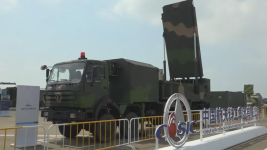
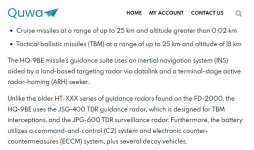
"PAF specifically highlighted counter-TBM and counter-cruise missile capabilities. While this was likely in reference to the HQ-9BE, it may indicate that the PAF is interested in the idea of building anti-ballistic missile (ABM) capabilities in the long-term. The HQ-9BE could be the starting point."

1730165940880.png
1730166020009.png

Janes : Upgraded HQ-9B system equips eight smaller missiles in addition to the four larger missiles integrated with the old system. According to Global Times, the larger missiles are used to intercept targets farther away, and if the remaining targets come closer, the smaller missiles can be used.

The smaller missiles have the same length as the larger ones, but they have a smaller diameter, the Global Times report said. “The eight new-type missiles can be carried by the same transporter erector launcher (TEL) that can carry four previous.

The new HQ-9 "B"variant is the result of rigorous testing conducted by the PLA Air Force (PLAAF). Notably, during a May 2021 exercise, an upgraded version of the HQ-9 was deployed by a missile brigade to a location 500 kilometers away in unfamiliar terrain. The exercise, carried out under challenging conditions including darkness, low temperatures, and sandstorms, demonstrated the system’s precision and reliability, successfully intercepting four unmanned aerial vehicles with four shots"

The exact number of Batteries / units are not disclosed publically. The most common number discussed is 4 Batteries as done by other Buyers.
 
The Medium Ranged Piece of Puzzle in Layered Defense HQ-16FE

"Chinese SAST revealed HQ-16FE in Zuhai 2022 wih statement that The flight envelope has been greatly expanded while the size of the container seems to remain unchanged.

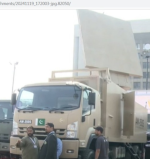
In recently published promotional videos , PAF revealed that it acquired Chinese HQ-16FE, which is also designated as the LY-80B.
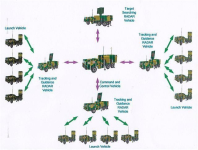

1730251325713.png

It all began a decade ago - During IDEAS 2014, Pakistan announced that it had ordered three HQ-16AE/LY-80 systems and eight IBIS-150 radars for US$225.77 million and $40 million, respectively. In 2014–2015, Pakistan followed up with a $373.23 million order for six additional HQ-16AE systems. On 12 March 2017, Pakistan announced that it had fully inducted the LY-80 into service. During the 2-week long Al-Bayza military exercise in 2019, Pakistan test-fired the LY-80 missile. Pakistan Army has deployed the HQ-16 battery in Azad Kashmir
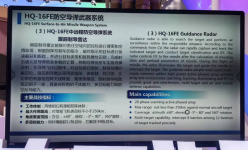
1730251941030.png

HQ-16FE is claimed to be a vastly improved variant of the LY-80 already in service with the Pakistan Army and the Pakistan Navy. The HQ-16FE seems to form the PAF’s medium-to-long-range air defence layer.

HQ-16FE medium and long-range air defense missile (code name: HQ-16FE), is the fourth generation of advanced air defense weapons and equipment developed by China. The middle part of the HQ-16FE missile seems to be divided into two sections. This special design is the fourth generation of air defense The killer feature of missiles can strike advanced fighters
1730251350863.png

The HQ-19FE offers a range of 25 km to 160 km with a minimum/maximum intercept altitude of 15 m to 27 km against fighter-sized targets.

It leverages a datalink-aided INS guidance system as well as a dual-mode semi-active and active-radar homing (SARH/ARH) seeker.

The HQ-16FE’s main guidance radar is a 2D active-scanning phased-array system with a range of 250 km against “normal” fighter-sized targets, likely in reference to a radar cross-section (RCS) of 5m2. It can simultaneously track 12 targets and engage 8 at once…
1730251107422.png
 
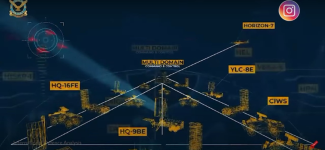
@Quwa what are they calling the CIWS in this layered system?
 
@Quwa what are they calling the CIWS in this layered system?
It could be one or several things, namely:

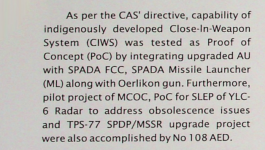
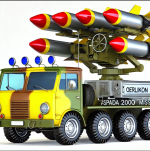
  • Upgraded Spada 2000 Plus paired with an anti-air gun (AAG) system. The 'Spada CIWS' combo was showcased at one point at NASTP.

  • A NASTP system with Pakistani sensors and an off-the-shelf AAG.

  • A package pairing the Saab RBS-70 (or equivalent Chinese or Turkish SAM) with Pakistani-made sensor (radar or EO/IR).
 
On a cursory look one could be forgiven to think its a vulnerable BRDM with bunch of strelas mounted on top
 
It could be one or several things, namely:

  • Upgraded Spada 2000 Plus paired with an anti-air gun (AAG) system. The 'Spada CIWS' combo was showcased at one point at NASTP.

  • A NASTP system with Pakistani sensors and an off-the-shelf AAG.

  • A package pairing the Saab RBS-70 (or equivalent Chinese or Turkish SAM) with Pakistani-made sensor (radar or EO/IR).
I think similar to Point 3, a combined Gun Missile SPAAG with Off the shelf missiles with Pakistani sensors.
 
It could be one or several things, namely:

  • Upgraded Spada 2000 Plus paired with an anti-air gun (AAG) system. The 'Spada CIWS' combo was showcased at one point at NASTP.

  • A NASTP system with Pakistani sensors and an off-the-shelf AAG.

  • A package pairing the Saab RBS-70 (or equivalent Chinese or Turkish SAM) with Pakistani-made sensor (radar or EO/IR).
Screenshot_20241030-211800.png
 
I have difficulty imagining what that looks like in relation to the image used in the video.

View attachment 75870
They've really stepped up on SAMs. Besides the big-ticket imports from China (HQ-16FE and HQ-9BE), they also got one the bureaus represented by GIDS to develop LoMADS (7-100 km).

tbh at this point, I'd expect the roadmap to eventually include an indigenous long-range SAM (150+ km). I just hope the PN pushes the bureaus represented by GIDS to also develop a VLS.
 
Last edited:
They've really stepped up on SAMs. Besides the big-ticket imports from China (HQ-16FE and HQ-9BE), they also got one the bureaus represented by GIDS to develop LoMADS (7-100 km).

tbh at this point, I'd expect the roadmap to eventually include an indigenous long-range SAM (150+ km). I just hope the PN pushes GIDS to also develop a VLS.
GIDS has a lot of potential if they let private sector run it more freely
 
Given the success that Iran has had with its Bavar-373 series, there is every possibility that Pakistan can replicate the same with a homegrown solution. This process is iterative, so they need to stay the course, accept there maybe some failures along the road, but there will be successes to.

Radars, shot to long, and OTH, aswell as SAMs are area'a that Pakistan should be able to bring in house quite alot. Egypt has been quite succesful in its radar programmes recently for example.

Hopefully Pakistan also learns to keep an eye on manufacturing processes and procedures once it has a good design, as that seems to be the flaw in the Iranian approach. Make something good, but end up only making 1 or 2 of them ..
 
They've really stepped up on SAMs. Besides the big-ticket imports from China (HQ-16FE and HQ-9BE), they also got one the bureaus represented by GIDS to develop LoMADS (7-100 km).

tbh at this point, I'd expect the roadmap to eventually include an indigenous long-range SAM (150+ km). I just hope the PN pushes GIDS to also develop a VLS.
They can build on the local AAM(like FAAZ) type of missiles and go the NASAMS route. This could cover short to medium ranges.
 
GIDS has a lot of potential if they let private sector run it more freely
GIDS is the sales and marketing arm of the state-owned entities (SOE) under NESCOM. But it does seem like GIDS is getting a handle of commercial work, so there's potential there for them to co-market with foreign OEMs. I'm thinking of smaller players around the world.
 

Users who are viewing this thread

Back
Top