ghazi52
THINK TANK: CONSULTANT


- Thread starter
- #61
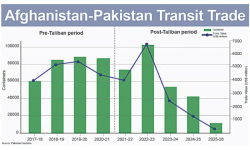
Strategically, the cost extends beyond lost revenue. Pakistan’s diminished presence in Afghanistan’s marketplace creates openings for other actors to expand their influence. Chinese goods, already prominent in Afghan bazaars, are likely to fill the vacuum left by Pakistan’s withdrawal. Central Asian republics, too, may reorient trade away from Pakistan toward Iran or alternative corridors supported by Russia or China.
In essence, a vacuum created by non-interdependence is rarely empty; it is occupied — often in ways that weaken Pakistan’s regional leverage, and its strategic “Vision Central Asia” policy framework.
Complicating matters is the nature of Afghanistan’s interim government. The Islamic Emirate, lacking democratic legitimacy and broad public consent, is ill-positioned to negotiate on core issues such as refugee repatriation and formalized trade agreements.
This political void has left Pakistani policymakers with a paradox: demanding cooperation from a regime that neither commands strong internal control nor faces accountability to its populace. This mismatch in expectations has produced strategic misalignments that weaken diplomatic responses rather than strengthen them.
In essence, a vacuum created by non-interdependence is rarely empty; it is occupied — often in ways that weaken Pakistan’s regional leverage, and its strategic “Vision Central Asia” policy framework.
Complicating matters is the nature of Afghanistan’s interim government. The Islamic Emirate, lacking democratic legitimacy and broad public consent, is ill-positioned to negotiate on core issues such as refugee repatriation and formalized trade agreements.
This political void has left Pakistani policymakers with a paradox: demanding cooperation from a regime that neither commands strong internal control nor faces accountability to its populace. This mismatch in expectations has produced strategic misalignments that weaken diplomatic responses rather than strengthen them.