Pakistan Major Dams News and Discussions

One more security force for money. Pathetic.
AI
"Pakistan’s federal pension bill exceeds Rs1 trillion, with approximately 66% (Rs662 billion) allocated to the armed forces and 34% (Rs276 billion) allocated to civil servants"
 
• Chinese workers, engineers to get enhanced security
• Force to guard dams, plants, project sites
• Bill sent to parliament for approval
• Move follows attacks on Dasu hydel workers

ISLAMABAD: The government has decided to create a new “Wapda Security Force” to provide dedicated security to major water sector infrastructure projects across the country and associated workers, particularly those from China.


The force is being created through the Wapda Security Force Act, 2026, which has already been forwarded to parliament.

“The Wapda Security Force is being constituted to ensure the protection and security of critical infrastructure managed by the Water and Power Development Authority,” reads the statement of objects and reasons.

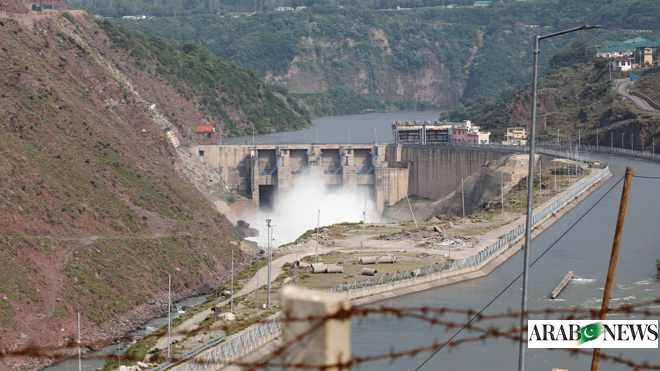
The decision to create a standalone force follows two terrorist attacks on engineers and workers of the over $6 billion Dasu Hydropower Project in November 2021 and March 2024, in which several Chinese and Pakistani workers were killed.

Initially, CPEC-related security was extended to the Dasu project.

An official explained that two special security divisions of the Pakistan Army (North and South) provided security to CPEC projects in Balochistan and along the route up to Gilgit-Baltistan, but Wapda projects did not fall under the CPEC security arrangement.

He said a special arrangement was therefore needed, adding that Wapda’s entire security system was being revamped.

The official recalled that an attack on Dasu project staff and the resultant loss of lives led to the suspension of the project by the Chinese side for well over a year. Work later resumed after top-level government engagement and payment of compensation, despite cost escalations and delays.


A CPEC-like security arrangement was later extended to other projects involving Chinese workers through a major outer security cover provided by the Pakistan Army, in addition to Wapda’s internal security, local police and Rangers or Frontier Constabulary in other provinces.

Following consultations with the Chinese side, the prime minister directed that CPEC-level security cover should be available to all projects, particularly those involving Chinese nationals and generally to other water sector projects of national importance.

The Wapda Security Force, to be led by a director general, most likely from the armed forces, will be responsible for the security of critical infrastructure, including dams and power plants essential for the country’s economic stability and security.

The new force, with its own uniform, insignia and stamp, will operate in notified areas across the country with specific responsibility for the security of water projects.

For example, it will provide security to the K-4 Greater Water Supply Scheme in Sindh in addition to Rangers and local police, and work alongside FC forces in Khyber Pakhtunkhwa and Balochistan.


The force will ensure the safety and security of installations, dams, powerhouses, machinery, equipment, offices, personnel and residences of personnel and prevent offences related to them.

The superintendence of the Wapda Security Force will vest in the federal government, while its control will remain with Wapda.

The force will ensure adequate security arrangements in notified areas and provide protection to Wapda personnel and persons working on Wapda projects, including while travelling to and from notified areas, through coordination with law enforcement and intelligence agencies.

It will also coordinate with and assist other law enforcement and intelligence agencies, if ordered by the government, in protecting notified areas from encroachment and trespassing after notification in the official gazette.

The strength of the force will depend on security requirements from time to time.

The staff and officers of the force will be governed under the Essential Services Act and will not be allowed to engage in any other employment while serving in the force.

The draft law also states that the Industrial Relations Act, 2012, and the Industrial and Commercial Employment (Standing Orders) Ordinance, 1968, will not apply to any officer or staff member of the Wapda Security Force.

To provide legal indemnity, the draft law says no suit, prosecution or other proceedings will lie against the government, Wapda, the director general, any officer or staff member of the force, or any other person exercising powers or performing functions under the law in good faith.

“In particular and without prejudice to the generality of the provisions of the act, an officer or staff of the force shall not be subject to any criminal or civil liability for actions taken in exercise of powers and functions under this Wapda Security Force Act,” it says.

Published in Dawn, May 25th, 2026
Posted already
 

Tarbela Dam supplied 586 billion electricity units, released 419 million acre-feet water in 50 years: Wapda​


Wapda says hydro power project generated economic benefits worth $460 billion since 1974 as work continues on 1,530MW fifth extension project
By
Monitoring Desk


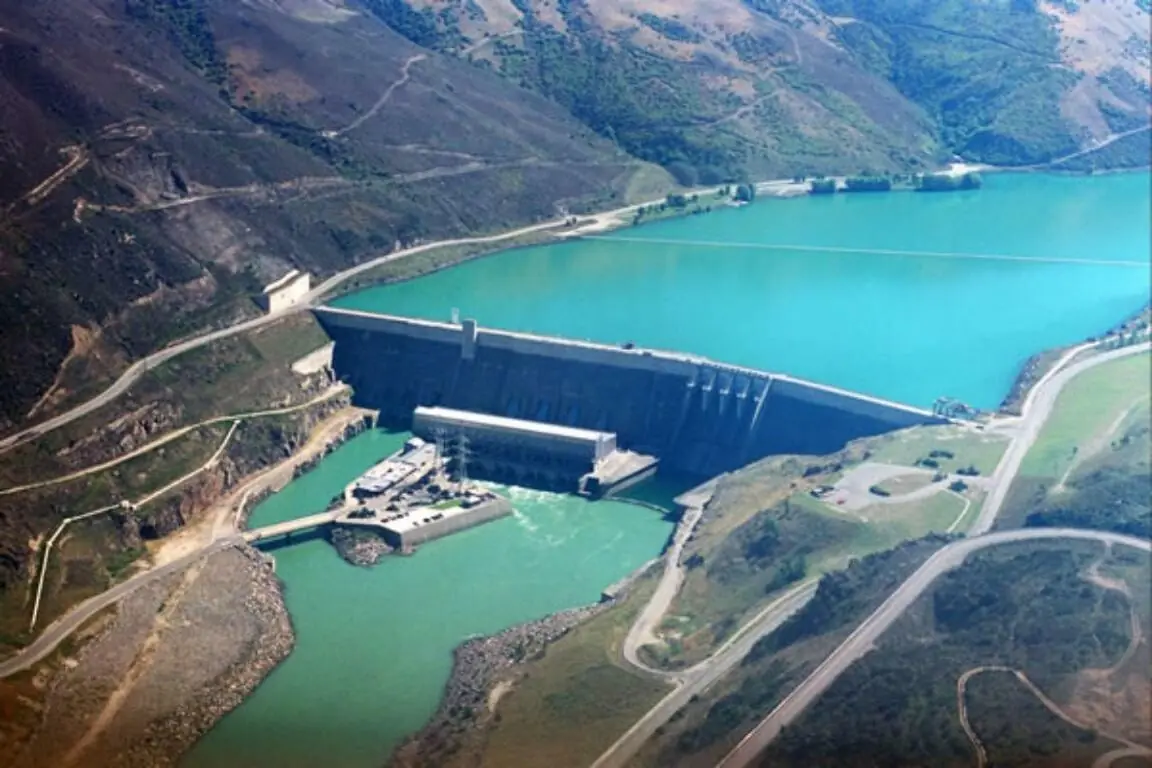
The Water and Power Development Authority said Tarbela Dam had released more than 419 million acre-feet of stored water for irrigation and supplied 586 billion units of low-cost hydropower to the national grid over the past 50 years, generating economic benefits estimated at around $460 billion for Pakistan since 1974.


The details were shared during a briefing to Wapda Chairman Muhammad Saeed during his visit to the Tarbela Dam and Khanpur Dam fourth and fifth extension projects.

The chairman reviewed progress on the under-construction Tarbela Fifth Extension Hydropower Project and also witnessed testing and commissioning of the low-level outlet at the Tarbela Fourth Extension Hydropower Project.

Indus River System Authority Chairman Amjad Saeed, members of Irsa’s technical committee and Wapda officials accompanied him during the visit.

At the fifth extension project, officials briefed the chairman on progress related to the intake structure, connecting tunnel, penstock and low-level outlet, powerhouse, tailrace culvert, tailrace canal and switchyard.


Officials said work was underway to complete all project components within the planned timelines.

The chairman directed the project team, consultants and contractors to expedite construction while maintaining quality and safety standards.

The Tarbela Fifth Extension Project has an installed generation capacity of 1,530MW.

The World Bank and the Asian Infrastructure Investment Bank are financing the project with contributions of $390 million and $300 million respectively.

Once completed, Tarbela’s total installed generation capacity will increase from 4,888MW to 6,418MW.


During the visit to the fourth extension project, officials informed the chairman that the facility, completed with World Bank assistance, started electricity generation in March 2018 and has so far supplied 33.254 billion units of electricity to the national grid.

Officials added that testing and commissioning of the low-level outlet was conducted to ensure the project could meet Irsa’s water release requirements for the kharif season.
 
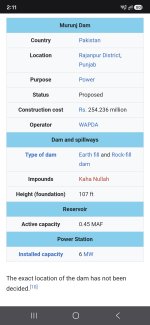
After the completion of Mohamand dam, emphasis should switch to Murunj dam. That dam will store water roughly 45% to 50% of Mohamand dam and with under 10watts power generation but it wud single handedly prevent floods in south punjab and north western sindh. Every few years we face flash floods in rajanpur, Dera ghazi khan, kashmore, Dera bughti districts and once or twice a decade, these floods lead to massive flood all across river indus path downstream.

We can save alot of money by 2 projects, Murunj dam and Sindh barrage.
 
To view this content we will need your consent to set third party cookies.
For more detailed information, see our cookies page.


Testing of Low Level Outlet (LLO) of Tarbela 4th Extension Hydropower Project:
Commissioned in March 2018 with financial support of World Bank, the Project has an installed generation capacity of 1410 MW - having three generating units of 470 MW each. It has so far provided 33.27 billion units of low-cost, green and clean electricity to the National Grid.
 
1779979719837.png


Chairman WAPDA Visits Tarbela Dam; Reviews Progress on T5, Witnesses T4 LLO Testing

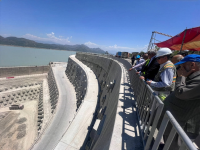
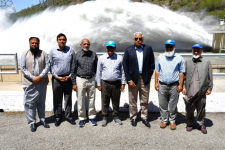
May 25, 2026: Chairman WAPDA Lt Gen Muhammad Saeed (Retd) was briefed about the progress about the Projects during his visit to Tarbela Dam.

The day-long visit was aimed at reviewing progress on the under-construction Tarbela 5th Extension Hydropower Project (T5 HPP) and witness testing and commissioning of Low Level Outlet (LLO) of Tarbela 4th Extension Hydropower Project (T4 HPP). Chairman IRSA Amjad Saeed, Members of IRSA Technical Committee and WAPDA's Member Water and Member Power also accompanied him during the visit.
At T5 HPP, the Chairman was briefed about the component-wise progress achieved so far. These included Intake Structure, Connecting Tunnel, Penstock and LLO, Power House, Tailrace Culvert, Tailrace Canal and Switchyard. Concerted efforts are underway to meet the timelines for each component.

The Chairman appreciated the efforts and directed the Project Team, the Consultants and the Contractors to take all requisite measures for expeditious execution of work while ensuring quality standards and safety parameters.

T5 HPP has an installed generation capacity of 1530 MW. World Bank and Asian Infrastructure Investment Bank are providing US$ 390 million and US$ 300 million respectively for construction of the Project. With completion of T5 HPP, the installed power generation capacity at Tarbela will increase from 4888 MW to 6418 MW.

Earlier at T4 HPP, the Chairman witnessed testing and commissioning of LLO to ensure availability of the outlet to meet IRSA's demands for water releases in Kharif season. During the visit of T4 HPP Machine Hall and Control Room, the Chairman was briefed that the Project, completed with the World Bank's financial assistance, started electricity generation in March 2018 and it has so far provided 33.254 billion units of electricity to the National Grid.

Later, the Chairman had a briefing about the Operation and Maintenance (O&M) of Tarbela Dam and Khanpur Dam. Tarbela Dam has so far released more than 419 Million Acre Feet (MAF) of stored water for the agriculture sector, in addition to contributing 586 billion green, clean and low-cost electricity to the National Grid. Tarbela Dam has provided economic benefits to the tune of US$ 460 billion to Pakistan since 1974.

GM TDP, GM Power Tarbela, GM/PD T5 HPP, Advisor Projects WAPDA, Advisor T4 and T5 HPP and PD T4 HPP were also present during the Chairman's visit to Tarbela Dam.

1779979823492.png
 
After the completion of Mohamand dam, emphasis should switch to Murunj dam. That dam will store water roughly 45% to 50% of Mohamand dam and with under 10watts power generation but it wud single handedly prevent floods in south punjab and north western sindh. Every few years we face flash floods in rajanpur, Dera ghazi khan, kashmore, Dera bughti districts and once or twice a decade, these floods lead to massive flood all across river indus path downstream.

We can save alot of money by 2 projects, Murunj dam and Sindh barrage.
Wow. If that assessment is true then its criminal negligence these two structures have not been constructed yet. Most likely due to lack of trust between the Punjab and other provinces on sharing water.
 
Wow. If that assessment is true then its criminal negligence these two structures have not been constructed yet. Most likely due to lack of trust between the Punjab and other provinces on sharing water.
Murunj dam is a victim of politics ans chest thumping. A dam that stores water only without substantial production of electricity is a tough sell to the masses. There is no immediate relief or benefit year in and year out. secondly, the story of murunj dam is the same as that of mirani dam on kech river. You need to build small dams upstream to reduce sediment flowing into the dam and increase its overall lifespan.

Sindh barrage is all parties especially a PPP negligence, nothing more. They have been in complete and partial power for more than 1.5 decades now but this is not in their preference. Their preferences are also on projects that can be a show piece and Sindha barrage will serve contested localities which is exactly why Nai Ganj dam fell out of favor and supreme Court had to intervene to start the construction. God knows where is that project now.
 

Users who are viewing this thread

Country Watch Latest

Back
Top