Pakistan Rocket Force Command News and Discussions

deliver saturation attack and thwart saturation attack!

very binary 'forced' choice for all or nothing!

importantly, currently missing bunker buster ability.

with our budget it will be difficult to finance and will take years to build sufficient deterrence (in longer term more severe shorter-term problem will arise)

rocket forces' nature is of like false positive, sole purpose of which is only to deny reality!
 
This is a known fact .... as previously we were not supposed to have missiles in thousands of number due the previous strategy as you mentioned but now needs are changed so is the strategy. This will obviously force the circles to increase the production capacity.

My only fear is that they will prefer the SOEs for enhanced production which in short term might seems logical but would fail in longer run the only solution which could address our needs is to involve private sectors with assistance of state particularly in matters related to outsourcing of already available technologies and security issues

@JamD ....
You are spot on IMHO.

Let me discuss further in the context of the following post:
At the moment, the only options are the SOEs.

Increasing the involvement of the private sector would be a step in the right direction but the results would be severely limited by the fact that the bulk (yes, the bulk) of critical technologies are still imported/smuggled through complex channels/work arounds.

What good it is if we ask a private setup to produce outer structures for lets say 200 missiles, but the main components, electronics modules, fuel/pneumatic systems, guidance systems, control systems, etc all have to be smuggled through complex channels which we can do for lets say just 30 odd missiles in that period/fiscal year? Bcz all this secret smuggling/importing can't be done by a private business owner, the state must be involved. So our production rates are capped again.

We could have much easily transferred production to private entities had we achieved indigenization of core technologies in house. We are still ancient when it comes to that. 'China say mangwa lo' culture has proven a doubled edged sword. We were never forced to make things in-house (like Iran was) and now we're super dependent on the Chinese for everything.

So there are multiple layers of headaches to be had before we can think of real improvements and significant capacity enhancement.

On the other hand, raising a new 'Rocket Force Command', employing new generals and their entourages, and doing other cosmetic steps is quite easier and has more PR points.
Actually I have a more optimistic outlook. I think this is an opportunity. Yes, many things are smuggled but even offloading the construction of the aerostructure to a private company is a good step because this creates at least one factory with 200 jobs maybe. Once this factory is up and running and sees that the actuator that it uses is $5000 to smuggle it'll spend some of its profits to do R&D to develop a local line for the actuator. At first this actuator will barely meet spec but eventually be good enough to replace the import. This isn't fantasy, I know that this has happened several times at Millat tractors. So the reason that it doesn't happen in defense production is because of the stifled environment.

There is a certain level of government protectionism of local private sector in what I'm proposing. Again, this is not unprecedented as Pakistan does this for sugar mills for example. Slightly better examples are the Chaebols of South Korea and Space X, whose initial growth was only possible through government help.

This is essentially how you build industries IMHO. @Quwa can speak on this much better than I can.
 
You are spot on IMHO.

Let me discuss further in the context of the following post:

Actually I have a more optimistic outlook. I think this is an opportunity. Yes, many things are smuggled but even offloading the construction of the aerostructure to a private company is a good step because this creates at least one factory with 200 jobs maybe. Once this factory is up and running and sees that the actuator that it uses is $5000 to smuggle it'll spend some of its profits to do R&D to develop a local line for the actuator. At first this actuator will barely meet spec but eventually be good enough to replace the import. This isn't fantasy, I know that this has happened several times at Millat tractors. So the reason that it doesn't happen in defense production is because of the stifled environment.

There is a certain level of government protectionism of local private sector in what I'm proposing. Again, this is not unprecedented as Pakistan does this for sugar mills for example. Slightly better examples are the Chaebols of South Korea and Space X, whose initial growth was only possible through government help.

This is essentially how you build industries IMHO. @Quwa can speak on this much better than I can.
Nobody likes pessimism so I'll reframe what I said.

It's not that 'we can't do'.
It's about policy makers waking up and steering the ship in the right direction. Once the course is correct, the ship reaches the destination, no matter how slowly.

There are tens if not hundreds of items used in our missile systems that can be localized just by assiging the design and analysis work to Nust, PIEAS, IST, GIKI, etc. You've got workable expertise in local industries to then manufacture/assemble those. That would atleast help us to move from 10% to 30~40% indigenization.

But when the prevailing culture is to just import from China (bcz it saves times, helps meet deadlines) no matter what the costs are, then those at the top are not steering the ship in the right direction.
 
Nobody likes pessimism so I'll reframe what I said.

It's not that 'we can't do'.
It's about policy makers waking up and steering the ship in the right direction. Once the course is correct, the ship reaches the destination, no matter how slowly.

There are tens if not hundreds of items used in our missile systems that can be localized just by assiging the design and analysis work to Nust, PIEAS, IST, GIKI, etc. You've got workable expertise in local industries to then manufacture/assemble those. That would atleast help us to move from 10% to 30~40% indigenization.

But when the prevailing culture is to just import from China (bcz it saves times, helps meet deadlines) no matter what the costs are, then those at the top are not steering the ship in the right direction.
Oh I agree with all of that. There needs to be a smart policy rethink. I said it was an opportunity because of the potential large numbers that need to be produced, which can give scale to start many private ventures. I'm not implying that that's what they'll do. In fact it is quite unlikely that they'll do this lol. Opportunity, not a prediction.
 
Oh I agree with all of that. There needs to be a smart policy rethink. I said it was an opportunity because of the potential large numbers that need to be produced, which can give scale to start many private ventures. I'm not implying that that's what they'll do. In fact it is quite unlikely that they'll do this lol. Opportunity, not a prediction.
Let me just say that there is one factor pushing for a solution, which may be what we're proposing. That push is the inevitable demand for numbers that our SOEs will be unable to meet. They could be smart and do what we said. But likely they will double down on what they are doing, do a Qaswa or two.
 
Closer integration with PLA Joint Operations Command Center (JOCC).
PA officers are embedded with PLA JOCC for a long time per Prawin Sawhney.

Close integration with PLA doctrine and access to PLA EW, Detection, navigation, BEIDOU BDS for precision land and land to sea attacks.

Land based conventional and non-conventional missile under one integrated command for deterrence and offensive punishment, and close integration with PAF, PN, nuclear triad.
SPD can easily work with new PARF.

To achieve Anti-Access/Area Denial (A2/AD).

Multi-Domain Precision Warfare (MDPW) capabilities alongside PLA, and development at formal level for PA.

It is a strategic move by PA.

Well Asim Munir was in China recently and he Clearly said that Pakistan will further enhance strategic integration with Chinese Military. People just don't get this that Military is very seriously in doing this.
 
You are spot on IMHO.

Let me discuss further in the context of the following post:

Actually I have a more optimistic outlook. I think this is an opportunity. Yes, many things are smuggled but even offloading the construction of the aerostructure to a private company is a good step because this creates at least one factory with 200 jobs maybe. Once this factory is up and running and sees that the actuator that it uses is $5000 to smuggle it'll spend some of its profits to do R&D to develop a local line for the actuator. At first this actuator will barely meet spec but eventually be good enough to replace the import. This isn't fantasy, I know that this has happened several times at Millat tractors. So the reason that it doesn't happen in defense production is because of the stifled environment.

There is a certain level of government protectionism of local private sector in what I'm proposing. Again, this is not unprecedented as Pakistan does this for sugar mills for example. Slightly better examples are the Chaebols of South Korea and Space X, whose initial growth was only possible through government help.

This is essentially how you build industries IMHO. @Quwa can speak on this much better than I can.
Exactly.... Previous level of Demand was not large enough which dictates the need to have large scale investment in creation of eco system therefore few manufacturing facilities which were dependent on import / smuggle items were enough.

Now the demand would increase which will force new investment to fulfill the increase in demand but as we know all the demand could not be fulfilled by the SOE therefore entrance of new market actors is the only solution.

This one step if manage properly could open the defence sectors of Pakistan for private business.
 
Nobody likes pessimism so I'll reframe what I said.

It's not that 'we can't do'.
It's about policy makers waking up and steering the ship in the right direction. Once the course is correct, the ship reaches the destination, no matter how slowly.

There are tens if not hundreds of items used in our missile systems that can be localized just by assiging the design and analysis work to Nust, PIEAS, IST, GIKI, etc. You've got workable expertise in local industries to then manufacture/assemble those. That would atleast help us to move from 10% to 30~40% indigenization.

But when the prevailing culture is to just import from China (bcz it saves times, helps meet deadlines) no matter what the costs are, then those at the top are not steering the ship in the right direction.

There are many inherent flaws in your argument. I'll try to address some key areas.

Pakistan does have local industry and support. Without revealing too much, even our Tanks since the 80's and our nuclear program had components built in forgeries in Gujr**** as its an industrial region with most metal related industry, just as one example that I know too well. Can we expand more? Yes, absolutely. The private sector has to come forward. But they rather put money into where it doubles quickly, standard investments? Either export products or import products.

Today, we make plenty of parts and missile tech internally. Majority of our older systems, from Hataf series, Shaheen, and Abdali, all are either fully made in Pakistan at this point, or, have only 25% foreign dependence on certain parts that work with significant heat and computing. That's also because China's experience in metallurgy and computing is far ahead of the globe. Their weapons are now proven more capable than Europeans and at par with the US in most cases.

So when you have the world's most advanced industry connected with road, you'll take advantage of it. We can do TOT and indigenize near 80-90%, that's a great target and we are operating on that. But future upgrades, advancements in tech will keep that near 20% dependency on China. Include aviation and submarine engines, as we are about 10 year away due to heavy investments required, labor training and education and tech transfers in these areas. But we will get there.

Even the US gets components from Europe, Turkey and Canada in its majority military systems, and interestingly, builds the most advance tech on materials (rare earth's) coming from China over 90%. That's their enemy running their military industrial R&D and building advanced systems and innovation. F-35B's entire STOVL/VTOL is a Russian tech, YAK derivative.
 
Last edited:
Oh I am not at all suggesting that industrialization for Pakistan means making everything indigenously. I am quite aware of our limitations and no one can hope to match China's industry. What I mean by industrial capacity is the ability to produce let's say 30 cruise missiles per year. I really don't care where the inputs are coming from as long as they are reliable enough for the line to keep running. And from what I know of our capacity we are design heavy and production light. Our SOEs have very limited ability to mass produce advanced munitions. Places like Qaswa are half measures to try to fix this deficiency in fact.
Correct point again.

Under the existing structures, the production rates just can't be increased. There are limitations upon limitations.

The whole ecosystem of SPD is suited to produce very few missiles that are nuke tipped and grant an assured capacity to nuke India. That, SPD has achieved through Nescom, NDC, etc. From the day one, the ecosystem never had the capacities for mass production.

I keep on saying 'ecosystem' so that our friends here understand that this took years if not decades to establish (bcz of all sorts of constraints). And a new ecosystem for mass production just can't be propped up out of thin air. (Say, in say 2-4 years).

This will take a complete strategy shift, a huge allocation of resources, and quite a lot of time.
I think the change will come with the doctrinal change. I clearly remember in the 2000s many retired uncles were espousing that with nuclear weapons, conventional war is a thing of the past and we can relax on that front.

So since the need wasn’t perceived, the capacities were just a reflection of that thought process.
 
Exactly.... Previous level of Demand was not large enough which dictates the need to have large scale investment in creation of eco system therefore few manufacturing facilities which were dependent on import / smuggle items were enough.

Now the demand would increase which will force new investment to fulfill the increase in demand but as we know all the demand could not be fulfilled by the SOE therefore entrance of new market actors is the only solution.

This one step if manage properly could open the defence sectors of Pakistan for private business.
Bro! I wrote a response and then I read your posts and it’s basically same line of thought 😂
 
  • Like
Reactions: HRK
It is now more possible to build a local industrial base for the manufacturing of weapons in Pakistan than any time in the past. Finally, all the ingredients are starting to mature. Pakistan seems to have gained the confidence to produce designs in Pakistan, certify and support them with some ( inefficient ) manufacturing in Pakistan. That is by far the most significant barrier to overcome as this is a "chicken and egg situation that needs solving".

Having the ability to design and deliver systems, even using the manufacturing capabilities of other countries like Turkieye and China, and as well using commoditised off the shelf items that are easily available to do assembly and manufacturing in Pakistan is the correct first step. There is a focus on the manufacturing part because it is more tangible, but the hardest part is developing the intellectual property for the designs, the software and the institutions. Manufacturing is capital intensive which is a different type of problem to solve. The focus on the design capabilities as the first step is the most important because it is the one that the most time intensive with long lead times.

Then, Pakistan needs to work on the strategic items within each weapon system for local substitution for really sensitive items it wants done in Pakistan while retaining the redesign and certification capabilities in Pakistan. For the local substitution work, rather than just treating it as some random outsourcing for the cheapest quote, it is to work with select companies where those companies can grow and become specialists in high end manufacturing and capable in their own right. That way those organisations can build long lived expertise that can be used on even more complicated projects in the long run, and those organisations can the confidence to then make their own large scale capital investments in new manufacturing tooling and processes to serve the needs of these design houses. Additionally these organisations will become "large" enough for companies in other countries to take seriously and incorporate them into their weapons manufacturing pipelines as well.
 
Last edited:
I think the change will come with the doctrinal change. I clearly remember in the 2000s many retired uncles were espousing that with nuclear weapons, conventional war is a thing of the past and we can relax on that front.

So since the need wasn’t perceived, the capacities were just a reflection of that thought process.
It was a common thought even among elites of Pakistan from varying sectors....even the so called intelligencia too was a proponent.
 
20250816_195501.jpg
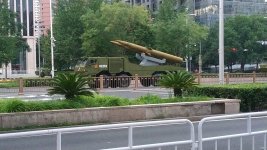
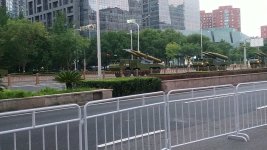
@Michael what is this people are saying its new hypersonic missile of PLA will be showcased on sep 3 in parade what are specs any idea??
 

Attachments

  • 20250816_195510.jpg
    20250816_195510.jpg
    283.9 KB · Views: 9
  • 20250816_195511.jpg
    20250816_195511.jpg
    307 KB · Views: 8
  • 20250816_195512.jpg
    20250816_195512.jpg
    272.5 KB · Views: 7

Users who are viewing this thread

Back
Top