Pakistan Solar Power: News & Updates

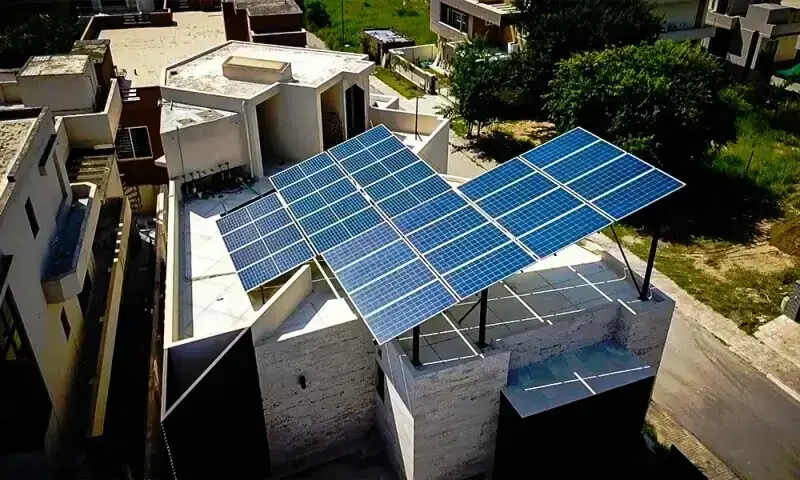
Rooftop solar systems, together with battery storage, have reduced pressure on the national grid by allowing households to generate electricity during daylight hours. This has enabled many consumers to maintain power supply while reducing reliance on expensive grid electricity.

As a result, public sentiment has increasingly shifted in favour of solar energy as a cost-effective and reliable long-term investment, particularly when compared with the recurring cost and uncertainty of conventional power supply.

With tensions in the Middle East threatening key energy transit routes such as the Strait of Hormuz, analysts say Pakistan’s rapid solar expansion, largely driven by Chinese technology, has helped shield the country from the worst effects of global energy disruption.
 
The growing role of solar power has also reduced Pakistan’s reliance on gas-fired power generation, especially during daytime hours. Even before the latest escalation in regional conflict, declining domestic demand had already led Pakistan to divert LNG cargoes originally secured under long-term agreements with Qatar.

Although LNG still accounts for roughly 20% of Pakistan’s electricity mix, its role is now largely limited to meeting peak demand in the evening.

According to studies by Renewables First and the Centre for Research on Energy and Clean Air, Pakistan’s surge in solar adoption had saved the country about $12 billion in oil and gas import costs by February 2026.
 
Government officials have acknowledged that the combination of China-backed solar expansion and domestic energy policy adjustments has significantly reduced Pakistan’s vulnerability to swings in global LNG supplies.

However, they have also cautioned that prolonged geopolitical instability could still create challenges during periods of peak summer demand.
 
To view this content we will need your consent to set third party cookies.
For more detailed information, see our cookies page.
 
To view this content we will need your consent to set third party cookies.
For more detailed information, see our cookies page.
 

Rooftop solar adoption saves Pakistan $12bn in LNG imports, says study

  • Demand for other fossil fuels has also been reduced by at least 37%
Ali Ahmed
March 31, 2026
1774974178686.png

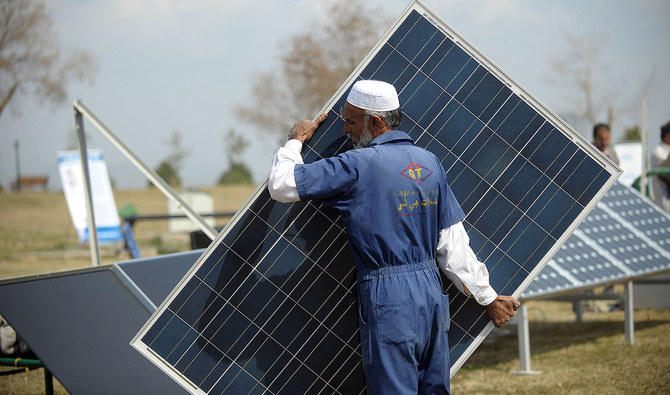
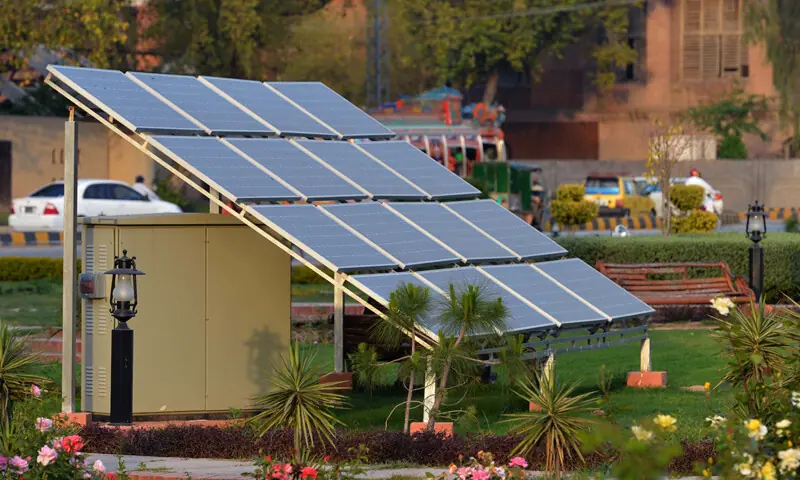
Pakistan’s rapid adoption of solar technology has yielded a major economic dividend, allowing the cash-strapped country to save an estimated $12 billion in liquefied natural gas (LNG) imports in recent years, according to a report by Ember, an energy think tank in the UK.

Solar generation in Pakistan has increased dramatically, rising from 7.7 TWh in 2022 to 36.6 TWh in 2025, equivalent to an average annual growth rate of about 68%, said Ember.

The think tank shared that Pakistan’s solar generation now sits with hydropower and gas, the largest sources of generation in the country.

“As a result, gas generation fell by roughly 9% over the same period, with coal stable,” it said.

Moreover, the demand for other fossil fuels has also been reduced by at least 37%.

“In reality, it could have fallen further; behind-the-meter diesel generation is not measured, but is likely to have fallen,” it said.

The report noted that had fossil fuels instead met the solar increase, “gas could have risen by 15%, meaning that solar deployment saved an estimated $12 billion in LNG imports”.

Ember shared that Pakistan’s rapid adoption of rooftop solar came against the backdrop of deeper power sector and financial challenges since 2020.

“When IMF-linked reforms pushed electricity tariffs higher, many consumers turned to rooftop solar,” it said.

Meanwhile, net metering regulations and the availability of low-cost Chinese solar panels further accelerated rooftop installations.

“This shift has reduced imported fuel dependence at a time when global gas and oil prices remain volatile.

“However, declining grid demand could also push grid tariffs higher, as fixed system costs are spread across fewer consumers,” it said.
 
The report urged power sector authorities to maintain a financially healthy grid to sustain further rooftop solar growth, particularly in the absence of battery storage.

Earlier, Pakistan’s power minister Awais Leghari shared that about 55% of electricity generation at present comes from ⁠clean sources, which the government aims to raise above 90% by 2034.

“Pakistan has been steadily increasing its reliance on indigenous energy resources, and about 74% of our electricity generation now comes from local sources,” Leghari told Reuters, adding the government aims to raise that above 96% by 2034.
 
It would be good if all these reports provided figures for "installed solar capacity" rather the percentage increases, as well as how much of their solar energy is being used by the Government Vs commercial industry Vs residential use.
 

Solar panel manufacturing: Chinese cos officials meet CM, ink agreements

Recorder Report Published April 8, 2026 Updated about 3 hours ago

LAHORE: A delegation of leading Chinese companies, Kunlun Group and Sunder Green Group called on Chief Minister Punjab Maryam Nawaz Sharif on Tuesday and agreements were reached to begin solar panel manufacturing in Lahore through joint collaboration.

It was also agreed to send 50,000 students to China for advanced vocational and industrial training.

In-principle approval was granted for the establishment of 1,000-acre industrial estate in Lahore, and discussions were held regarding transferring technology for producing petrochemical products from coal in Punjab.

The Chief Minister assured full support to both Chinese and local investors for the promotion of industrialization. During the briefing, it was informed that the new projects would generate approximately 18,000 job opportunities in Punjab.

The CM reiterated that the government is following the “Start Today” policy to promote industrial growth and stressed that the government’s role is to support entrepreneurs rather than engage in business itself.

The delegation included CEO Wang Jin Hunan Sheng from Inner Mongolia Coal Mine, CEO Zhao Gangbo from an investment company, Chairman Muhammad Abid of Sunder Green Group, CEO Azim Iftikhar, Director Rana Faisal Hayat, and CEO Danish Ahmad of Oasis, among others.

Copyright Business Recorder, 2026
 

Experts oppose tax on solar panels
 

Users who are viewing this thread

Pakistan Defence Latest

Country Watch Latest

Back
Top