Pakistan Solar Power: News & Updates

Here's my friend Professor sb on Pakistan's storage boom


After installing over 50 GW of solar panels as of early 2026, Pakistanis are now adding batteries at a rapid pace. The country has imported nearly 7.6 GWh of batteries, with nearly 60% of that total arriving during 2025 alone. Pakistanis are now installing batteries at a rate exceeding 5 GWh annually, according to a recent report by Renewable First. Batteries enable consumers to store excess solar electricity generated during daylight hours for use at night and to smooth out demand on the grid. Batteries also contribute to national grid stability, reducing costs and improving overall energy security for energy-import-dependent Pakistan.

By FY25, 7.3 million households in Pakistan had solar installed on their rooftops; out of a total 40 million households in the country, that makes nearly 1 in 5 of all Pakistani homes, the report says. With the battery boom gaining pace, around 282,000 solarized households, roughly 4%, now have BESS storage installed at home. That's 1 in every 26 solarized households, a share that is rising fast as storage costs continue to fall.

Battery prices have declined about 75% over the past decade, from over $460 per kWh in 2015 to approx. $110 per kWh in 2024, with forecast of further declines through 2027. The introduction of sodium-ion technology is likely to further accelerate widespread adoption of battery storage. Sodium-ion batteries are expected to replace lithium-ion (specifically low-cost LFP) batteries in most stationary (non-ev) applications by reducing prices by 30% to 50%.

A big chunk of Pakistan's import bill goes to pay for energy imports. Last fiscal year, which ended in June, 2026, Pakistan imported oil and gas worth $17 billion, exacerbating the current account deficit. By one estimate, Pakistan avoided over $12 billion in oil and gas import costs between 2021 and February 2026 because of its consumer-led solar revolution. A further ~$6.3 billion hydrocarbon import savings are projected by the end of 2026. Energy imports are the most volatile part of Pakistan's imports because of oil shocks such as the one created by the US-Iran war and the resulting closure of the Strait of Hormuz.

The ongoing solar revolution and battery boom in Pakistan will help reduce energy costs, improve energy security and help deal with the impact of climate change. Pakistan government policies should fully support this consumer-led movement toward the country's energy independence.

Regards
 

Manufacturing batteries locally

Sapna V Khemani
August 17, 2026

Pakistan is on the verge of one of the largest industrial opportunities of the energy transition. Domestic demand for lithium-ion batteries is projected to increase from just 5-6GWh today to 40-51GWh by 2031, creating a market valued between $6.5 billion and $9bn.

Yet more than 80 per cent of the country’s battery cells, packs and critical materials are imported. There is no commercial-scale cell manufacturing, no national battery testing infrastructure and no organised recycling ecosystem. If current trends continue, Pakistan’s battery import bill alone could exceed $2–3.15bn annually by the end of the decade.

This is not merely an energy-sector concern. It is an industrial policy challenge with implications for trade, employment, technology transfer and long-term competitiveness. Every imported battery represents value addition, skilled jobs and technological capabilities created elsewhere.

As demand for electric vehicles, renewable energy storage and backup power accelerates, Pakistan faces a simple choice: become a producer within the global battery value chain or remain a growing market for imported technologies.
 
The encouraging news is that Pakistan is not starting from scratch. Unlike many emerging industries that begin with policy uncertainty, the country already possesses a reasonably coherent roadmap.

The proposed Battery Manufacturing Policy 2026–31 outlines incentives designed to encourage domestic production, including a reduced sales tax for local manufacturers, accelerated depreciation to lower the cost of capital, protective duties on imported finished batteries and an ambitious localisation roadmap targeting 70pc domestic value addition by the initial implementation phase and 80pc thereafter.

Collectively, these measures signal an understanding that battery manufacturing requires long-term investment supported by a predictable policy environment.


Opportunities lie in assembly, management systems, casings and supporting electronics, all of which require significantly lower investment

However, good policy documents do not automatically produce competitive industries. The real test lies in implementation and in addressing several critical gaps that continue to discourage investment.

The first is export competitiveness. Battery manufacturing is inherently integrated into global supply chains, where cost differences of only a few percentage points can determine investment decisions. Pakistan’s Export Facilitation Scheme (EFS) already allows exporters to import machinery and raw materials free of customs duties and indirect taxes.

Yet the battery sector has not been fully positioned to benefit from this framework. Without access to internationally competitive input costs, local manufacturers will struggle to compete against established Asian producers, regardless of domestic demand.

Extending comprehensive EFS coverage to battery manufacturers is therefore not another incentive; it is a prerequisite for creating an export-oriented industry rather than one limited to serving the domestic market.

The second challenge is technological flexibility. The policy rightly identifies lithium iron phosphate (LFP) batteries as an initial priority because of their safety, affordability and widespread adoption in electric vehicles and grid-scale energy storage.

Battery technology is evolving rapidly. Sodium-ion batteries are beginning to enter commercial markets, while advances in battery management systems, solid-state technologies and other chemistries continue to reshape global investment decisions.

Pakistan should avoid locking itself into a single technological pathway. Instead, policy incentives should remain technology-neutral, encouraging innovation while allowing manufacturers to adapt to changing global standards.
 
The country also possesses untapped raw material potential. Documented lithium deposits and high-purity graphite reserves provide the foundation for a future domestic supply chain. Yet these resources remain largely unprocessed. Without investment in refining and intermediate processing, Pakistan risks repeating a familiar pattern, exporting raw material potential while importing high-value manufactured products.

Industrial policy should therefore extend beyond assembly operations and promote value addition across the production chain.

Perhaps the most urgent weakness, however, lies in quality assurance. Export markets are built not only on competitive prices but also on trust. Pakistan currently lacks a comprehensive testing and certification framework for lithium-ion batteries.

Reports of substandard and rejected battery cells entering domestic markets highlight the consequences of this institutional gap. Without internationally recognised testing laboratories, standardised certification procedures, and systematic quality inspections, ambitions to develop a credible export industry will remain difficult to realise.
 
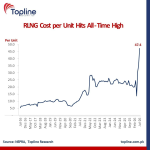
Imported LNG power start with 5 cent in 2016, Pakistan though it will solve its power problems. Then Ukraine war increase it to 10 cent and now with Iran war to $0.16 cent. A disaster. In comparison local coal cost like 3.5 cent/unit.

The good news is these are govt owned power plants and in few years they will be passed out.
1787226624076.png
 

Din Textile operationalises solar expansion

  • DINT informs the Pakistan Stock Exchange today

August 21, 2026

Din Textile Mills Limited (DINT) announced on Friday it had completed and operationalised its planned solar expansion.

DINT informed the Pakistan Stock Exchange (PSX) today.

“The Company’s total operational solar capacity now stands at 12.6 MW, supporting our commitment to sustainability and energy efficiency,” the notice read.
 

Factoring in batteries through VPPs

Ammar H Khan Published August 24, 2026 Updated 2 days ago

Pakistan’s battery imports went from 1.43 gigawatt-hours in 2024 to 4.59 gigawatt-hours in 2025, amounting to $36 million. The solar boom is now being followed by early green shoots of a battery boom.

Battery prices globally have been consistently declining, from $137 per kWh in 2021 to $105 per kWh in 2026. As demand continues to increase, its price will decline, eventually leading to a further surge in demand for batteries and creating a self-perpetuating loop that we have seen with solar panels and other electronic equipment over the years.

Consumer surplus recipe

There are no subsidies or government incentives; it is just the market clearing itself out, as households buy batteries because they have surplus solar power in the morning, which can be used to charge them for later in the evening. A perfect recipe for consumer surplus, and a disaster for an inefficient grid.

This can result in a Virtual Power Plant (VPP), which is not a single facility but rather thousands of household and small-commercial batteries. Together, these units can be networked so that a system operator can operate them as a single, dispatchable block. One battery can be deemed as a backup, but ten thousand batteries, coordinated, are a power station. The difference lies entirely in whether they are orchestrated or not.

The current power model will continue to fail without accounting for changing ground realities of solar
Peak power demand in Pakistan occurs in the same three-hour window, 7pm to 11pm, in every one of the last 26 months, without exception. As solar continues to gain traction and demand from the grid falls, peak demand for the grid remains in late evening, driven by residential and commercial cooling load.

In that window, the marginal cost of the last unit of electricity dispatched swings between roughly Rs10-40 per kilowatt-hour (kWh) depending on the month, averaging around Rs18 per kWh. This is two to three times the average fuel cost, because what is actually being paid for at that hour is largely capacity costs, not fuel.

Effectively, the grid is mostly used for four hours, while for the rest, it just exists; while capacity is paid for all hours.

A decade ago, before the solar revolution, fuel costs accounted for most of electricity tariffs. To avoid past pitfalls, it is crucial that any planned additional capacity accounts for future battery and solar installations. Pretending battery adoption is not taking place is a fallacy that may cost us hundreds of billions in the future, as capacity costs continue to rise.

An existing battery fleet, decentralised, without dedicated capacity payment and guarantees, is consideraly cheaper for the economy. It can be charged while the sun shines and the grid is slack and discharged during the evening peak, when the marginal unit is at its most expensive.

Connecting enough households and small businesses would ensure that during peak hours, the grid does not have to buy from the last, costliest plant on the merit order. This effectively is the entire mechanism that Pakistan’s tariff and planning architecture has simply not been built to capture.

A virtual power plant is a network of thousands of household and small-commercial batteries that a system operator can operate as a single, dispatchable block
Strengthening energy security

However, this mechanism has a ceiling. Modelling this system shows the wholesale price-suppression value of VPP capacity flattens sharply once installed capacity crosses roughly five to six gigawatts. Beyond that point, adding more batteries barely moves the peak-hour price because the most expensive plants on the merit order are already being displaced.

This matters because, given the current learning curve and battery imports, Pakistan may have more than 8GW of battery capacity, well past that saturation point. The case for going that far cannot rest on price compression alone but also on the displacement of imported fuel, thereby strengthening energy security.

The blockade of the Strait of Hormuz did not cause a crisis locally given the sheer growth in solar capacity over the years. If the same had happened a few years back, there would have been six to eight hours of rolling load-shedding and a massive balance-of-payments crisis.

Through a distributed solar infrastructure, Pakistan avoided RLNG imports of roughly $700m in the last six months. If battery imports continue at this rate, by 2030, solar could displace 6 GWh of grid generation annually that would otherwise be met by imported RLNG and coal.

Pricing fairness

None of this works for consumers unless the price paid for their exported flexibility is fair and the necessary infrastructure exists to support it. Pakistan’s experience with net-metering solar is the cautionary tale here, where political rather than economic realities drove export prices.

A VPP buyback framework needs to be institutionalised quickly to crowd in battery capacity and reduce imported fuel and surcharges in the process. Discos need to be equipped to initiate pilots in battery-dense areas through such infrastructure.

This is how the transaction would work: a household with surplus solar capacity charges its batteries during the day, “committing” to sell a predetermined quantity in the evening, just as they do with solar. The household gets paid for the stored kWh, while the grid avoids buying expensive imported kWh from power plants. Learning from the net-metering saga, the price at which the grid buys from households needs to be fair and linked with marginal prices.

Batteries will continue to gain stronger footing in the system, and there will be grid defection in the evening as battery adoption increases. However, whether the grid can be fast enough to capture this opportunity remains to be seen. The market will clear itself out; a cost-plus anachronistic approach to tariffs may fail again.

The deeper shift this all points to is in how Pakistan plans generation at all. The thought process is anchored around centrally dispatched plants, and treats distributed batteries, if at all, as a rounding error. That planning model was built for a grid in which all the capacity is concentrated in a handful of visible power stations. It is the wrong model for a grid where a meaningful share of new capacity is arriving one household battery at a time, invisibly, driven by import data rather than a plan that cannot keep pace with technological advancements.

The batteries are coming regardless of whatever central planning assumes. The only real choice left is whether Pakistan designs a market to use them, or keeps paying peaker-plant prices for a problem households have already almost solved on their own.

The writer is an assistant professor of practice at IBA and CEO of National Credit Guarantee Company Limited.

Published in Dawn, The Business and Finance Weekly, August 24th, 2026
 

CATL cuts out distributors with 63 USD/kWh direct LFP cell sales as 1,800 companies sign on​

4 min to read

Aug 23, 2026 3:11 PM CEST

CATL Mall now offers LFP cells at 63 USD/kWh, with over 1,800 companies signing up to the platform. Credit: CATL
https://db.carnewschina.com/get-full-access
CATL announced that over 1,800 energy storage companies have signed on to CATL Mall, a direct-sales online store run by the battery giant. Launched in June 2026, it aims to meet the needs of small- to medium-scale energy storage system integrators and lower cell cost by cutting out distributors.

CATL Mall has also updated its product range, with the retail price of its energy storage LFP cells now starting at 423 yuan per kWh, or 63 USD per kWh at the time of writing. It also now offers 47- and 105-kWh LFP energy storage modules, as well as 6.6 m / 20-foot energy storage containers good for up to 5 MWh.

CATL’s promises​

While new energy vehicle (NEV) makers can order cells directly from the source, energy storage companies, with lower cell demand, often can’t meet minimum order quotas through traditional channels.

Forced to rely on resellers and distributors, these smaller-scale enterprises face uncertainty in cell quality, consistency and supply chain punctuality. The rise of distributed residential energy storage and home-scale solar systems has further exacerbated this issue.
CATL pledges that with a minimum order of 3 boxes, or 600 cells, buyers will receive a 5-year warranty with no tacked-on fees, and all orders will ship within 3 to 5 days.

CATL’s pricing​

CarNewsChina previously reported on the cell options available on CATL Mall. While the 100 Ah option has been removed and the 587 Ah cell remains unavailable, CATL has released pricing for the 280 Ah and 314 Ah options.

Both cells are only rated for 1C charge and discharge, which is typical for non-automotive LFP cells. CATL rates their lifespan at 8,000 cycles with 70% state-of-health (SoH).


CATL Mall’s listings for 280 and 314 Ah LFP cells.
The 280 Ah energy storage LFP cell is listed at 0.494 yuan per Wh, or 73.5 USD per kWh. With a minimum order of 600 cells, the total price for 603 kWh of cells comes to around 260,000 yuan (38,700 USD).

The larger 314 Ah cell, meanwhile, is listed at 0.423 yuan per Wh, or 62.9 USD per kWh. Ordering 600 units gives the buyer 538 kWh of cells at around 250,000 yuan (37,200 USD).
This pricing isn’t competitive with the domestic industry average. ess-news.com reports that in April 2026, rising material costs and high demand have driven the average cost of 280 Ah and 314 Ah LFP cells in China to 370 yuan (55.1 USD) per Wh and 395 yuan (58.8 USD) per Wh, respectively.
Other Chinese battery makers can likely provide cells with similar specifications and guarantees at lower prices. CATL’s direct-sales platform, though, lets smaller businesses access its cells more easily. These buyers may also be willing to pay a premium for what they see as a “top-shelf product”.
Interestingly, CATL Mall hasn’t published pricing for its energy storage modules and containers.

Is CATL Mall easy to use?​

CATL says that its “battery mall” is intended as a business-to-business (B2B) platform. To register for an account, users must provide a business license issued by China’s State Administration for Market Regulation (SAMR).
Despite this, the battery giant says that the process is as easy as “ordering takeaway”. It claims that registration takes only one minute, and new users can place their first order in 20 minutes. With the help of a local enterprise, CarNewsChina decided to look into the process.
The registration interface for new CATL Mall users. Buyers also get rewards if they purchase enough cells.
After submitting the business license and required information, the user is immediately taken to CATL Mall’s home page, which lists storage modules, containers, and individual cells.
The product page follows a typical online retailer interface, allowing buyers to change order quantities and see price changes in real time. Unregistered users can’t view product list prices on CATL Mall.

While CarNewsChina did not follow through with ordering 15 BYD Seagulls’ worth of cells, it’s likely that after placing an order, support agents will contact buyers about delivery, payment, and taxation details.

CATL also says that cell listings are subject to dynamic pricing and may change due to fluctuations in raw material costs.


Fauji Cement approves 50 MWh battery storage, 10 MW solar project​

Company to install 25 MWh BESS and 5 MW solar setups at each of Nizampur and Jhang Bahtar plants, with project targeted for completion within 10 months


Fauji Cement Company Limited (FCCL) has approved the installation of battery energy storage systems (BESS) with an aggregate capacity of 50 MWh alongside 10 MW of dedicated solar power capacity at its Nizampur and Jhang Bahtar plants.

In a notice to the Pakistan Stock Exchange (PSX) on Tuesday, the company said its board of directors had approved the project through a resolution by circulation.

FCCL will install a 25 MWh battery energy storage system along with a dedicated 5 MW solar power setup at each of its Nizampur and Jhang Bahtar plants, taking the combined capacities to 50 MWh and 10 MW, respectively.


“The Board of Directors of Fauji Cement Company Limited (“FCCL” or the “Company”) has approved, through Resolution by Circulation, the installation of Battery Energy Storage Systems (BESS) of 25 MWh along with dedicated Solar Power Setups of 5 MW each at the Company’s Nizampur and Jhang Bahtar Plants. Accordingly, the project will have an aggregate BESS energy capacity of 50 MWh and aggregate dedicated solar capacity of 10 MW,” read the notice.

The company said the project would be completed within 10 months from its start date.

The battery systems are intended to store solar energy generated during the daytime for discharge during evening peak hours.

According to FCCL, the project is aimed at reducing its reliance on peak grid electricity, optimising energy costs and enhancing the company’s renewable energy capacity.
 

Users who are viewing this thread

Pakistan Defence Latest

Back
Top