Pakistan Space Related News & Discussions

To view this content we will need your consent to set third party cookies.
For more detailed information, see our cookies page.

This is significant, both for civilian and military purposes. Generally speaking, HEO satellites can detect military assets like vehicles, tanks, artillery, etc., through spectral signature even when camouflaged under vegetation or fabric, as well as provide battlefield damage assessment. Of course, a lot goes into it than just simply stating the fact. Pending further details very little can be said about the capabilities of the Pakistani HEO satellite.
 
Detailing the function of the satellite, the statement said, “HS-1 satellite is engineered to capture ultra-precise hyperspectral imagery across hundreds of narrow spectral bands, offering unprecedented resolution for the analysis of land, vegetation, water, and urban features.”

“The cutting-edge technology is set to fundamentally transform Pakistan’s capacity in precision agriculture, rigorous environmental monitoring, urban planning, and proactive disaster management,” it said.

“HS-1 will empower the nation to precisely map crop vitality, soil moisture, and water quality, while rigorously tracking deforestation, pollution, and glacial melt.”

It added that the satellite will “enhance early warning systems and post-disaster assessments for catastrophic events like floods and landslides, especially across the northern regions”.

Per the agency, the satellite is also expected to aid “development initiatives such as CPEC by preemptively identifying geo-hazard risks and guiding sustainable infrastructure development”.

Chairman Suparco, Muhammad Yousaf Khan, “expressed profound gratitude for the Government of Pakistan’s support in bringing this pivotal national project to fruition”, the statement quoted him as saying.

“The data from the Hyperspectral Satellite is poised to revolutionise agricultural productivity, bolster climate resilience, and enable optimised management of the country’s vital natural resources.”

Underscoring the long-standing partnership between Pakistan and China in space science, the space agency continued: “The mission reflects the ever-growing strategic partnership and deep-rooted friendship between the two nations, who continue to cooperate in advancing peaceful space exploration and harnessing its benefits for socioeconomic development.”
 
“HS-1’s successful integration into Pakistan’s expanding space fleet marks a decisive step toward solidifying space technology excellence and reinforces Suparco’s vital role in driving national socioeconomic growth through innovative space applications.”

According to the press release, Project Director HS-1 Mushtaque Hussain Soomro stressed that the satellite “signals a definitive leap in Pakistan’s ambitious space roadmap, positioning the nation as an emerging leader in space technology for sustainable development”.

He also hailed the mission team’s collective dedication and technical brilliance, the statement said.

Separately, in a statement issued today, the foreign office termed the development a major milestone and called it “a pivotal step forward in Pakistan’s space programme.”
 
FO said that the launch “reaffirms Suparco’s commitment to leveraging space technology for national development.”

It also “highlights the long-standing collaboration between Pakistan and China in the peaceful exploration of space and its application for socioeconomic progress.”

“Foreign Minister Mohammad Ishaq Dar commended the scientists/technical teams from Pakistan and China working on HS-1 for their commitment, professional excellence and exemplary cooperation,” the statement said.

On October 15, Suparco announced the upcoming launch of the HS-1 satellite from the Jiuquan Satellite Launch Centre in China.

Last month, a senior official from Suparco said the agency was integrating space-based applications into its disaster risk management framework, “paving a path anchored in science and international collaboration to better prepare for natural calamities”.

In July, the foreign ministry announced the successful launch of a remote sensing satellite from China, which aimed to “strengthen Pakistan’s agricultural monitoring and disaster management, among other capabilities”.

In August, Pakistan successfully launched a remote sensing satellite from a launch centre in China. The satellite aimed to strengthen Pakistan’s agricultural monitoring and disaster management, among other capabilities, according to a Foreign Office statement.

Pa
 
MINISTRY OF FOREIGN AFFAIRS
GOVERNMENT OF PAKISTAN


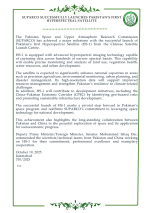
SUPARCO Successfully Launches Pakistan’s First Hyperspectral Satellite

The Pakistan Space and Upper Atmosphere Research Commission (SUPARCO) has achieved a major milestone with the successful launch of Pakistan’s first Hyperspectral Satellite (HS-1) from the Chinese Satellite Launch Centre.

HS-1 is equipped with advanced hyperspectral imaging technology capable of capturing data across hundreds of narrow spectral bands. This capability will enable precise monitoring and analysis of land use, vegetation health, water resources, and urban development.

The satellite is expected to significantly enhance national capacities in areas such as precision agriculture, environmental monitoring, urban planning, and disaster management. Its high-resolution data will support improved resource management and strengthen Pakistan’s resilience to climate-related challenges.

In addition, HS-1 will contribute to development initiatives, including the China–Pakistan Economic Corridor (CPEC) by identifying geo-hazard risks and promoting sustainable infrastructure development.

The successful launch of HS-1 marks a pivotal step forward in Pakistan’s space program and reaffirms SUPARCO’s commitment to leveraging space technology for national development.

This achievement also highlights the long-standing collaboration between Pakistan and China in the peaceful exploration of space and its application for socioeconomic progress.

Deputy Prime Minister/Foreign Minister, Senator Mohammad Ishaq Dar, commended the scientists/technical teams from Pakistan and China working on HS-1 for their commitment, professional excellence and exemplary cooperation.

Islamabad
October 19, 2025
310/2025


Pakistan on Sunday launched its first Hyperspectral Satellite (HS-1) from a Chinese launch centre, the country’s space agency said, describing it as “a breakthrough achievement”.

Hyperspectral imaging is a type of advanced camera technology used in satellites to study the Earth and space, according to a study published in the Journal of Computational Intelligence and Neuroscience.

Unlike regular satellite cameras that capture only a few colours (like red, green, and blue), hyperspectral cameras capture hundreds of very narrow colour bands. This means they can detect tiny differences in light that the human eye, or even normal satellites, can’t see.

In a statement issued today, Pakistan Space and Upper Atmosphere Research Commission (Suparco) said, “The nation’s space agency today announced a breakthrough achievement with the successful launch of Pakistan’s first Hyperspectral Satellite (HS-1) from China.”
 
Detailing the function of the satellite, the statement said, “HS-1 satellite is engineered to capture ultra-precise hyperspectral imagery across hundreds of narrow spectral bands, offering unprecedented resolution for the analysis of land, vegetation, water, and urban features.”

“The cutting-edge technology is set to fundamentally transform Pakistan’s capacity in precision agriculture, rigorous environmental monitoring, urban planning, and proactive disaster management,” it said.

“HS-1 will empower the nation to precisely map crop vitality, soil moisture, and water quality, while rigorously tracking deforestation, pollution, and glacial melt.”

It added that the satellite will “enhance early warning systems and post-disaster assessments for catastrophic events like floods and landslides, especially across the northern regions”.

Per the agency, the satellite is also expected to aid “development initiatives such as CPEC by preemptively identifying geo-hazard risks and guiding sustainable infrastructure development”.

Chairman Suparco, Muhammad Yousaf Khan, “expressed profound gratitude for the Government of Pakistan’s support in bringing this pivotal national project to fruition”, the statement quoted him as saying.

“The data from the Hyperspectral Satellite is poised to revolutionise agricultural productivity, bolster climate resilience, and enable optimised management of the country’s vital natural resources.”
 

Suparco launches country’s first ‘hyperspectral satellite’

Umaid Ali Published October 19, 2025 Updated 41 minutes ago

0
Suparco launches Hyperspectral Satellite (HS-1) from a Chinese launch centre on Oct 19. — Photo via Suparco
Join our Whatsapp channel
Pakistan on Sunday launched its first Hyperspectral Satellite (HS-1) from a Chinese launch centre, the country’s space agency said, describing it as “a breakthrough achievement”.

Hyperspectral imaging is a type of advanced camera technology used in satellites to study the Earth and space, according to a study published in the Journal of Computational Intelligence and Neuroscience.

Unlike regular satellite cameras that capture only a few colours (like red, green, and blue), hyperspectral cameras capture hundreds of very narrow colour bands. This means they can detect tiny differences in light that the human eye, or even normal satellites, can’t see.

In a statement issued today, Pakistan Space and Upper Atmosphere Research Commission (Suparco) said, “The nation’s space agency today announced a breakthrough achievement with the successful launch of Pakistan’s first Hyperspectral Satellite (HS-1) from China.”


To view this content we will need your consent to set third party cookies.
For more detailed information, see our cookies page.


Detailing the function of the satellite, the statement said, “HS-1 satellite is engineered to capture ultra-precise hyperspectral imagery across hundreds of narrow spectral bands, offering unprecedented resolution for the analysis of land, vegetation, water, and urban features.”

“The cutting-edge technology is set to fundamentally transform Pakistan’s capacity in precision agriculture, rigorous environmental monitoring, urban planning, and proactive disaster management,” it said.

“HS-1 will empower the nation to precisely map crop vitality, soil moisture, and water quality, while rigorously tracking deforestation, pollution, and glacial melt.”

It added that the satellite will “enhance early warning systems and post-disaster assessments for catastrophic events like floods and landslides, especially across the northern regions”.

Per the agency, the satellite is also expected to aid “development initiatives such as CPEC by preemptively identifying geo-hazard risks and guiding sustainable infrastructure development”.

Chairman Suparco, Muhammad Yousaf Khan, “expressed profound gratitude for the Government of Pakistan’s support in bringing this pivotal national project to fruition”, the statement quoted him as saying.

“The data from the Hyperspectral Satellite is poised to revolutionise agricultural productivity, bolster climate resilience, and enable optimised management of the country’s vital natural resources.”

Underscoring the long-standing partnership between Pakistan and China in space science, the space agency continued: “The mission reflects the ever-growing strategic partnership and deep-rooted friendship between the two nations, who continue to cooperate in advancing peaceful space exploration and harnessing its benefits for socioeconomic development.”

“HS-1’s successful integration into Pakistan’s expanding space fleet marks a decisive step toward solidifying space technology excellence and reinforces Suparco’s vital role in driving national socioeconomic growth through innovative space applications.”

According to the press release, Project Director HS-1 Mushtaque Hussain Soomro stressed that the satellite “signals a definitive leap in Pakistan’s ambitious space roadmap, positioning the nation as an emerging leader in space technology for sustainable development”.

He also hailed the mission team’s collective dedication and technical brilliance, the statement said.

In a statement from his office, Prime Minister Shehbaz Sharif expressed his appreciation for Pakistani engineers and scientists for the successful launch.

“The cooperation between Pakistan and China in space research, like in other sectors, is exemplary and of key importance,” the PM was quoted as saying. “We are grateful to our great and long-standing friend and strategic partner, China, for this exemplary collaboration.

“The hearts of Pakistanis beat with the Chinese people and leadership,” he added.

According to the statement, the satellite will help Pakistan research environmental changes and geographical variations.

“This progress will prove to be an important milestone in combating the harmful effects of climate change,” PM Shehbaz said. “The satellite will significantly increase national capabilities in areas such as agriculture, environmental monitoring, urban planning and disaster management.”

Separately, in a statement issued today, the foreign office termed the development a major milestone and called it “a pivotal step forward in Pakistan’s space programme.”


FO said that the launch “reaffirms Suparco’s commitment to leveraging space technology for national development.”

It also “highlights the long-standing collaboration between Pakistan and China in the peaceful exploration of space and its application for socioeconomic progress.”

“Foreign Minister Mohammad Ishaq Dar commended the scientists/technical teams from Pakistan and China working on HS-1 for their commitment, professional excellence and exemplary cooperation,” the statement said.

On October 15, Suparco announced the upcoming launch of the HS-1 satellite from the Jiuquan Satellite Launch Centre in China.

Last month, a senior official from Suparco said the agency was integrating space-based applications into its disaster risk management framework, “paving a path anchored in science and international collaboration to better prepare for natural calamities”.

In July, the foreign ministry announced the successful launch of a remote sensing satellite from China, which aimed to “strengthen Pakistan’s agricultural monitoring and disaster management, among other capabilities”.

In August, Pakistan successfully launched a remote sensing satellite from a launch centre in China. The satellite aimed to strengthen Pakistan’s agricultural monitoring and disaster management, among other capabilities, according to a Foreign Office statement.
 
Very good news

military satellites are the eyes and ears of any modern military

its not like 1980s anymore , fast fighter jets and good pilots won't cut it

early warning is the key, Pakistan signed a $500 million contract with China to launch 54 satellites with Phase 1 launching 20 satellites

Pakistan's satellite "revisit time" after the entire constellation satellites are in Space will be measured in a few minutes

if we can extend this coverage over Israel that would be very beneficial for Pakistan

watching your enemy move aircraft on to the tarmac and monitoring them taking off from their air bases is the Holy grail of surveillance and intelligence

it then allows you to put into action your battle plans
 
It’s not my area, but I’d bet foreign (likely Chinese) payload inputs and sensors.

Pakistan signed a contract worth $406 million for the design and development of Satellites with China’s PIESAT, a leading satellite manufacturer, to build a Pakistani satellite manufacturing facility, and manufacture an orbital satellite constellation for launch with SUPARCO

Under the agreement, PIESAT will assist Pakistan in constructing an integrated satellite system for global real-time communication and remote sensing. The first phase includes the launch and operation of 20 satellites, the construction of a satellite manufacturing facility, and the development of supporting software. Piesat will also provide technical support to help Pakistan develop independent capabilities in satellite manufacturing, operations, and applications.
 

Users who are viewing this thread

Latest Posts

Back
Top