Pakistan's Minorities Citizens

Christian community an integral part of Pakistan’s national fabric, says PM Shehbaz in Christmas message


News Desk | APP
December 25, 2025

1766663879163.png

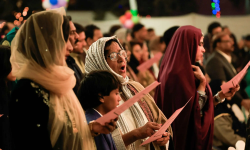
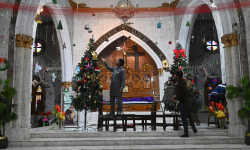
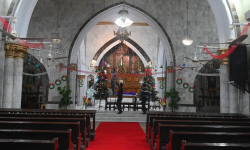
People attend Christmas Eve service at the Central Brooks Memorial Church in Karachi, Pakistan, December 24, 2025. — AFP

Prime Minister Shehbaz Sharif on Thursday said that Pakistan’s Christian community, which is celebrating Christmas today, is an integral part of the country’s national fabric.

“Pakistan’s Christian community forms an integral part of our national fabric. Their enduring contributions to education, healthcare, and social welfare, and their sacrifices alongside the nation in the fight against terrorism, are deeply valued and a source of collective pride,” the premier said in his Christmas message on the social media platform X.
 
To view this content we will need your consent to set third party cookies.
For more detailed information, see our cookies page.
 

Christmas 2025 in pictures: Festive zeal and joyful gatherings across Pakistan


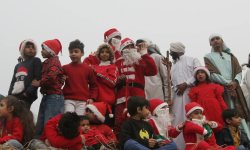
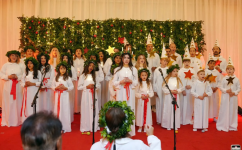
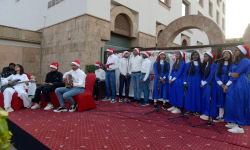
Christian communities marked the Christmas season by participating in peace rallies, visiting shopping areas and funfairs, and attending specially organised pre-Christmas events.

White Star | Fahim Siddiqi | Murtaza Ali | Mohammad Asim | Arif Ali | Shakil Adil
December 25, 2025

Christians across Pakistan are celebrating Christmas on Thursday with their customary zeal and fervour, attending church services, dressing in festive attire, exchanging gifts, and offering prayers for the country’s well-being and prosperity.

The day began with special Christmas masses at churches, though celebrations had been underway since mid-December.

Across the country, Christian communities marked the Christmas season by participating in peace rallies, visiting shopping areas and funfairs, and attending specially organised pre-Christmas events.

Below are glimpses of the celebrations in Karachi, Lahore and Islamabad, captured in the days leading up to the colourful occasion.

1766666149514.png

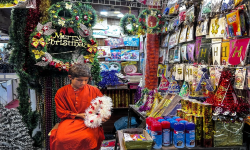
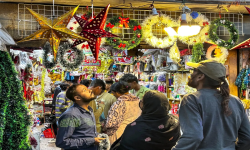
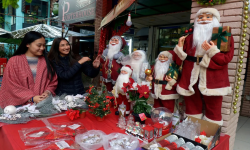
A shop displays Christmas ornaments in Karachi. — Fahim Siddiqui/ White StarA shop displays Christmas ornaments in Karachi as customers inspect them. — Fahim Siddiqui/ White
 
1766666179696.png

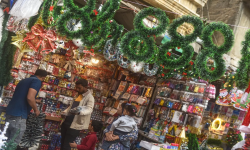
A shop displays Christmas ornaments in Karachi as customers inspect them. — Fahim Siddiqui/ White Star

1766666289800.png

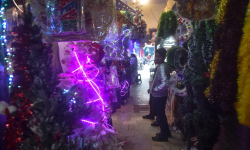
Shops display Christmas ornaments in Karachi. — Fahim Siddiqui/ White Star

1766666310795.png

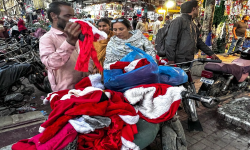
People purchase Christmas costumes from a roadside stall in a busy Karachi market. — Fahim Siddiqui/ White Star

1766666332388.png

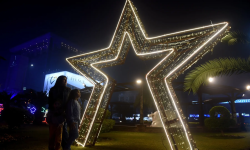
Large Christmas stars hanging at a shop in Bohri Bazaar grabs a passer-by’s attention. — Fahim Siddiqui/ White Star
 
1766666439118.png

People purchase Christmas costumes from a roadside stall in a busy Karachi market. — Fahim Siddiqui/ White Star

1766666455283.png

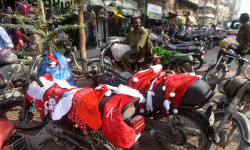
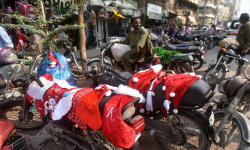
Christmas costumes displayed on motorcycles at a busy
roadside Karachi market. Fahim Siddiqui/ White Star

1766666493119.png

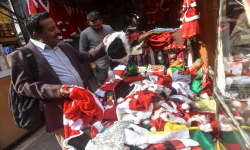
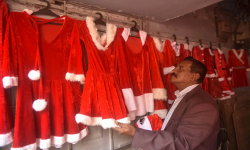
A shop displays red Christmas costumes for women and girls in Karachi. — Fahim Siddiqui/White Star

1766666511079.png

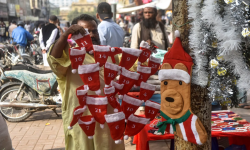
A vendor sells Christmas hats at a roadside stall in a Karachi market. — Fahim Siddiqui/White Star

1766666576243.png

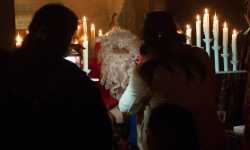
A man dressed as Santa at a pre-Christmas event in Karachi. — Fahim Siddiqui/White Star

1766666603932.png
 
1766666627759.png

1766666646816.png


1766666668299.png

1766666694491.png

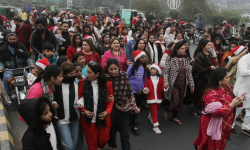
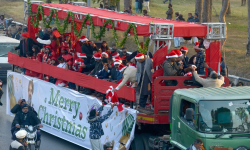
People take part in a Christmas rally at center point near Liberty Market, Lahore. — Murtaza Ali/ White Star
 
1766666757586.png

Christian devotees decorating the Saint Anthony’s Church in Lahore ahead of Christmas. — Arif Ali/ White Star

1766666813553.png

Christian devotees decorating the Saint Anthony’s Church in Lahore ahead of Christmas. — Arif Ali/ White Stars

1766666840133.png


1766666860469.png


1766666913222.png

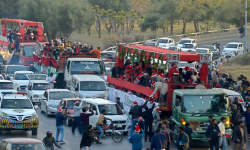
Christmas Aman Rally passes through Faisal Avenue as it heads towards the National Press Club in Islamabad. The rally was organised by United Council of Churches. — Mohammad Asim/White Star
 
1766666946949.png

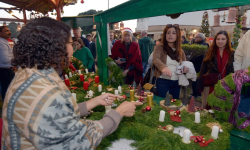
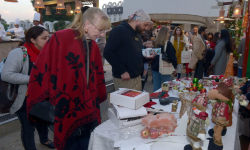
Visitors look at various items on display on stalls while at the Christmas Charity Market organised by the German embassy in Islamabad. — Mohammad Asim/White Star

1766666990376.png


1766667019998.png


1766667045750.png
 
1766675256596.png
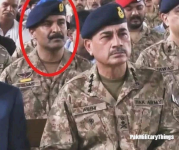
Major General Julian Moazzam James has become the first Christian Commando from the Special Service Group (SSG) & the third Christian to attain the rank of Major General from the Pakistan Army
 
Punjab Chief Minister Maryam Nawaz Sharif on Thursday announced a legal exemption for members of the Sikh community from wearing helmets while riding motorcycles, citing respect for their religious obligation to wear turbans [locally known as dastars].

The announcement, made during a Christmas celebration ceremony in Lahore, comes amid a province-wide traffic crackdown following recent amendments to the Motor Vehicles Ordinance that sharply increased fines and penalties, particularly affecting two-wheeler riders, who form the bulk of Punjab’s road commuters.
 

SONGS OF BELIEF AND BELONGING​

Despite demographic marginalisation and cultural retreat, Hindu sacred music continues to live in Pakistan.

By Brian Bassanio Paul |
January 30, 2026
1770382710502.png


In Pakistan, the Hindu minority lives largely in Sindh and southern Punjab, with smaller pockets in Balochistan and Khyber Pakhtunkhwa. There are estimated to be over five million Hindus (including both Jati and Scheduled Caste communities), making them the largest non-Muslim minority in the country.

Jati groups such as Brahmins, Rajputs, Thakurs, Lohanas, and Maheshwaris tend to be more urban and influential, often active in business, medicine, or law. Scheduled Castes, legally designated in the mid-twentieth century, include Meghwar, Kolhi, Bheel, Oad, Bagri, Balmiki, and others.

They are the majority of Pakistan’s Hindus, yet they face layered disadvantage: religion places them at the margins of the national majority, and caste places them at the margins of Hindu society itself. Seats reserved for Hindus in government rarely reflect this lower-caste majority, and literacy among Scheduled Caste women remains among the lowest in South Asia.

Among the cultural traditions affected by these social and political pressures is Hindu sacred music. It has deep roots in the Indus region. The ancient concept of nada brahma, the idea that creation itself is sonic, still informs devotional practice.

The foundations of Hindu music lie in Vedic literature, where syllabic chanting, melody, and movement coalesced into sangeeta. Over time, the Bhakti movement widened participation to all communities through vernacular song, and its poetic aesthetics, described through raas theory, shaped emotional and spiritual expression.

Before 1947, the region experienced centuries of mutual cultural influence among Hindus and Muslims, producing a shared artistic environment sometimes described as Ganga Jamuna Tehzeeb. In this setting, musical identities were porous and devotional repertoires travelled across communities.

Partition disrupted that world. State policies after independence, combined with broader social prejudice, pushed overtly Hindu cultural forms out of mainstream public life. These dynamics did not erase sacred music but changed how it lived.
 
.

10009098721769317296-1.jpg


Performance shifted to temples, homes, and community gatherings. Instruments became simpler and more folk-oriented. Hymns moved into languages such as Sindhi, Dhatki, Marwari, Gujarati, and Urdu. The tradition adapted to survive in smaller rooms.

Hindu temples reflect a parallel story of continuity and decline. At the time of Partition, there were more than four hundred major temples. Today, functional sites are concentrated in Sindh, while many in Punjab, KP, and Azad Kashmir stand inactive, repurposed, or in archaeological condition.

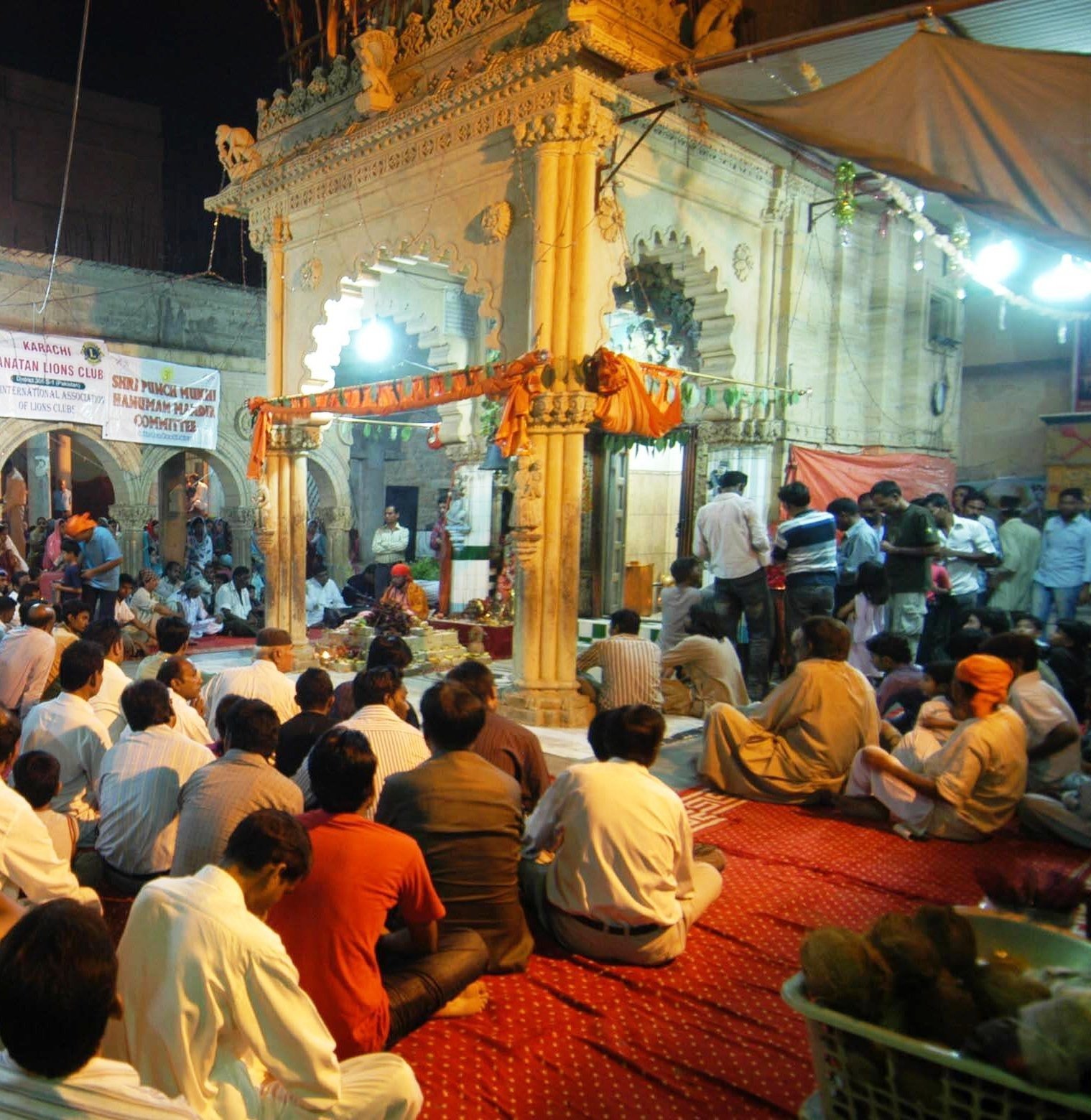
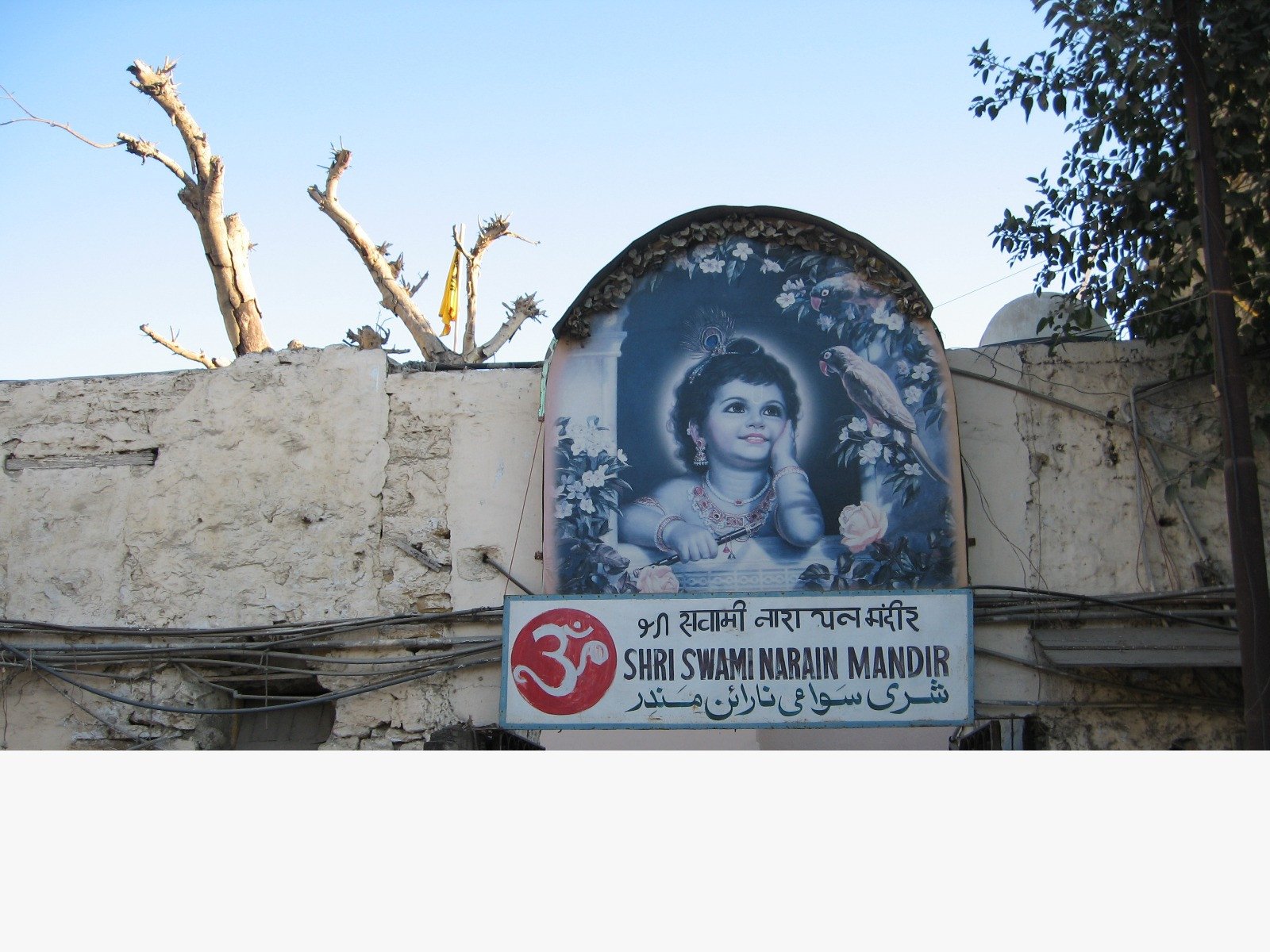
Sindh remains the heart of Hindu life. Karachi hosts the country’s largest Hindu population, yet its devotional presence is quieter than its numbers might suggest. Temples such as Varun Dev, Shri Swaminarayan, Shri Panchmukhi Hanuman, Shri Laxminarayan, and Shri Ratneshwar Mahadev are among the few public venues in a sprawling metropolis. Hyderabad maintains smaller temple communities, and the island temple of Sadhu Bela in Sukkur remains a major spiritual centre.

Rural Sindh, especially Amarkot and Tharparkar, offers a different picture. Devotional singing is woven into weddings, harvests, and evening gatherings. Children learn melodies through oral transmission, often from mothers and grandmothers.
 
.

10009098711769317296-0.jpg


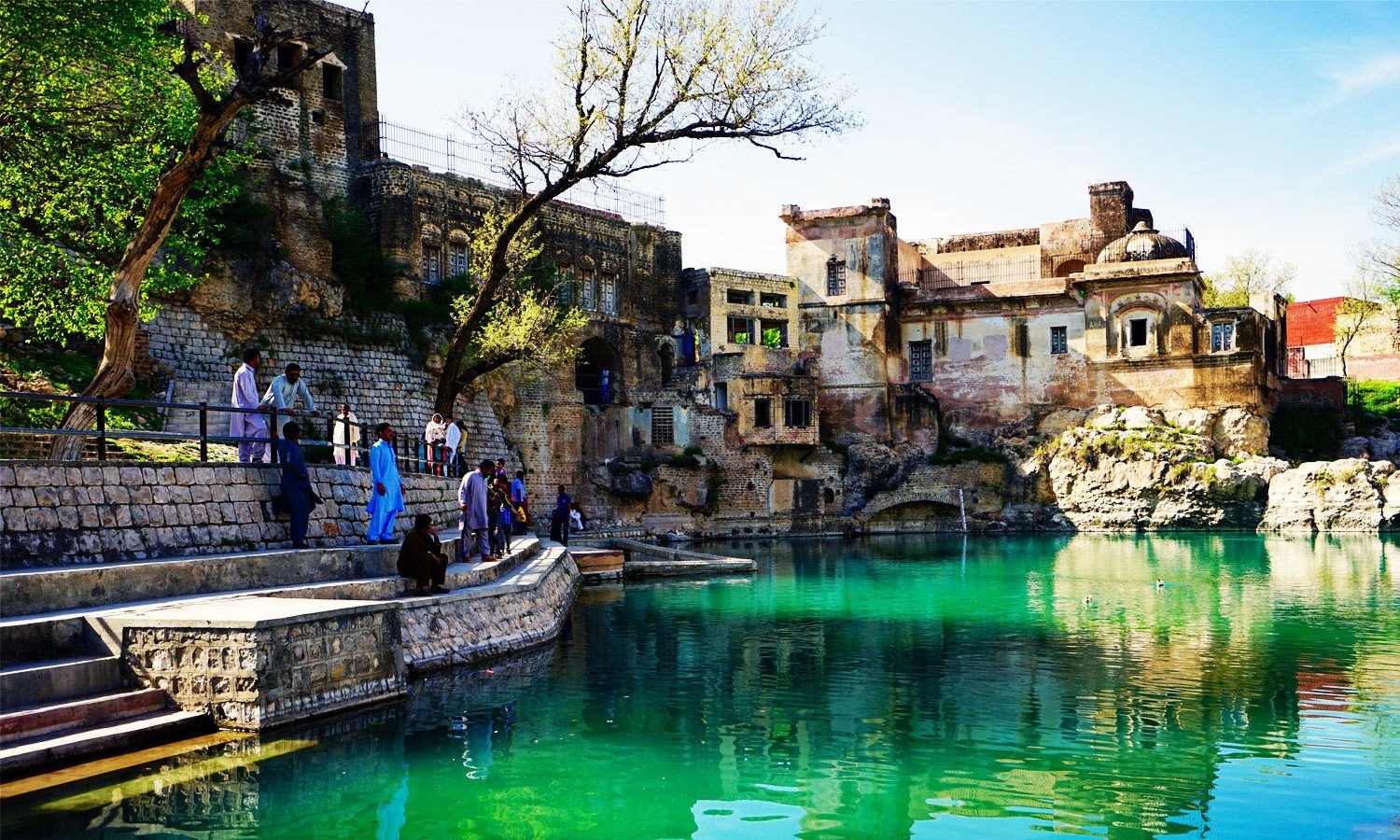
Punjab once hosted a thriving temple culture, yet today most sites are inactive. A small number in Lahore, Rawalpindi, and Multan still open on festival days, while historically significant complexes such as Prahladpuri, Katas Raj, and Tilla Jogian survive as reminders of an older sacred geography.

In K-P only a few temples, including Gorakhnath in Peshawar and Teri in Karak, have seen restoration. Sharda Peeth in Azad Kashmir, once a major centre of learning, now sits in difficult terrain near the Line of Control.

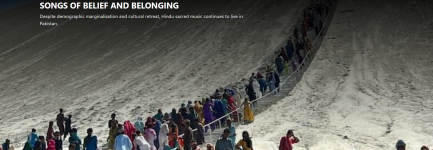
Festivals are the moments when devotional sound expands again into the open. The Hinglaj Yatra in Balochistan draws thousands of pilgrims through Hingol National Park to the shrine of Hinglaj Mata, where ritual movement blends with drums, chanting, and collective baths in the river.

In Sindh, the Ramapir Mela celebrates Ramdev Pir through day-long processions and continuous song, while Cheti Chand and the forty-day Chaliho Sahib observances honour Jhulelal through nightly hymns and public devotion.

These events demonstrate how sacred music can draw from shared regional aesthetics. In parts of Balochistan and Sindh, certain chant patterns echo those heard in local Muslim devotional contexts, illustrating a musical story that has long extended across religious boundaries.

Musicians in specific localities help carry this repertoire forward. In Tharparkar, Bhagat Bhugro Mal and others maintain poetic lineages that blend Rajasthani folk idioms with Hindu devotional themes.

In Amarkot, the music associated with Ramapir is tied to rhythmic drumming that animates both celebration and trance. Sindh’s Sant Nenuram Ashram shows how devotional song can be intertwined with communal service, drawing visitors from multiple faiths.
 
10009098741769317296-3.jpg

In other provinces, sacred music is quieter and more private, yet it still shares melodic structures with regional styles and preserves older practices through memory and oral transmission.

Urban environments add another layer. In Karachi and Hyderabad, temples hold regular aarti and evening songs, though usually indoors and with close management. Language use shifts. Urdu hymns appear alongside Sindhi ones, and recorded chants fill in where musicians are scarce.

Youth often combine traditional devotional lyrics with familiar film or folk melodies. This is not decay so much as negotiation. City life, security concerns, and mixed audiences reshape musical practice without stripping it of purpose.

Gender plays an important role in this transformation. In rural Sindh and Umerkot, women lead morning and evening prayer songs and teach children the simplest melodic forms. In Karachi, women’s bhajan groups perform at weddings and during Navratri.

Their participation reflects a broader redistribution of liturgical authority, driven less by formal policy and more by necessity, education, and initiative.

Digital media has opened another path. Young Hindus record temple singing on smartphones and share it through YouTube and Facebook, reaching diaspora that respond with support.

In Tharparkar, the Bhagat Bhugro Mal Music Academy trains children on harmonium, dholak, and kartal and regularly posts performances online. These platforms allow traditions once confined to courtyards or small sanctuaries to circulate widely.

Civil society organisations support the fragile ecosystem around these practices. The Pakistan Hindu Council, formed in 2005, advocates for religious freedom and runs schools in Tharparkar, while the Pakistan Hindu Panchayat focuses on temple protection, education, and community ritual life.

Their work does not erase the challenges that remain. Women still face restrictions in some settings, youth must navigate identity in public spaces, and teachers often lack resources to formalise training.

The presence of these institutions signals cultural stamina. Sacred music no longer depends solely on hereditary specialists. It now lives through women, children, urban professionals, and digital intermediaries.
 
10009098751769317294-2.jpg


These sounds reveal more than devotion. They hold memory and identity. Scholars such as James C. Scott have described how communities maintain meaning through practices that appear private yet sustain collective truth.

A quiet hymn in a village temple does this. It affirms belonging without confrontation. Music also stabilises community and hope through shared emotional experience, what sociologists sometimes describe as collective effervescence.

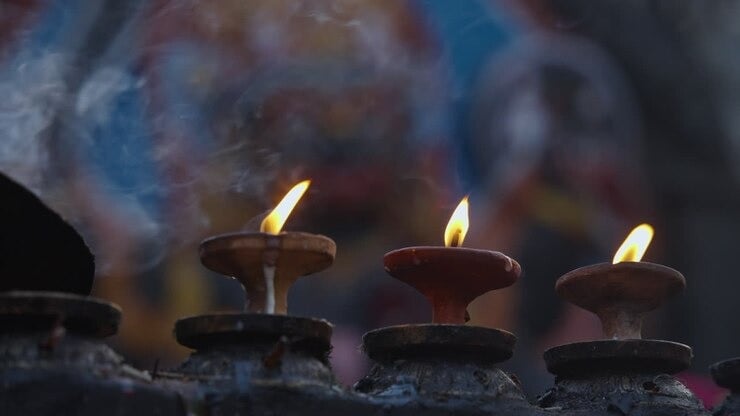
Festivals like Diwali, Janmashtami, Navratri, and Holi amplify this effect. Temples glow with lamps and voices on Diwali. Krishna’s birth is celebrated through playful song. Navratri blends devotional texts with communal movement. Holi layers colour with folk-inflected hymns.

Language has been both a container and a shield. As Sanskrit receded from daily use, vernaculars such as Sindhi, Rajasthani, Punjabi, and Urdu carried the devotional burden. This linguistic shift made sacred songs more accessible within Hindu communities and less likely to be perceived as foreign by surrounding populations.

Migration continues, and public acknowledgment of Hindu contributions to Pakistan’s cultural history remains limited. Yet sacred music has endured. It carries raags and folk modes that predate modern borders.

It models pluralism through lived practice rather than ideology. It reminds listeners that Pakistan’s cultural inheritance is broader than its dominant narratives. The story of Hindu sacred music in Pakistan is not simply one of loss.

It is also a story of adaptation, creativity, and quiet persistence. In temples, festivals, courtyards, and homes, these traditions continue to breathe, and in doing so, they reveal that the cultural soil of Pakistan has always contained many seeds and many lineages.

All facts and information are the sole responsibility of the writer

Brian Bassanio Paul is a music enthusiast and cultural critic. He writes about the intersection of Music, society, and the human condition. He can be reached at [email protected]
 

Users who are viewing this thread

Latest Posts

Back
Top