PTI freedom movement against Judiciary and Establishment: News, Discussion & Updates

Status
Not open for further replies.
You are missing a fundamental point here. The people have not turned against the Army out of affection for Imran Khan; rather, they have rallied behind him out of their growing dislike—now transformed into outright hatred—toward the Army. The support for Khan does not stem from admiration for his competence or the manner in which he governed. In fact, he was quite unpopular in early 2022 due to his perceived failure to manage inflation and his poor governance. His popularity surged only after his expulsion by the Army.
Thanx to marvelous ability of Khan sahab to develop narratives via micro targetting techniques on social media platforms with the help of of date acquired by big data firms. Full marks given. But he messed up badly after May 9th and afterwards.
 
And then the forced imposition of the corrupt PDM added insult to injury, while the subsequent high-handedness of the military and security forces, trampling on the basic human rights of ordinary citizens, including women and children, exercising their constitutional rights to protest and vote etc, or for the mere crime of being associated with PTI, alienated the entire country, especially Punjab.
 
Like I have been shouting on this and previous forum on the top of my voice....

PAKISTAN IS A FAILED BANANA REPUBLIC OF FAUJISTAN!

1000016478.png
 
Thanx to marvelous ability of Khan sahab to develop narratives via micro targetting techniques on social media platforms with the help of of date acquired by big data firms. Full marks given. But he messed up badly after May 9th and afterwards.

It doesn't work that way; the public is not as naive as the establishment believes/claims. Imran Khan or PTI do not control social media; rather, social media reflects the collective mindset of the nation and, in turn, influences PTI's course of action. But I do not expect Army loyalists, who remain mired in a 1990s mentality, to grasp this fundamental reality.
 
And then the forced imposition of the corrupt PDM added insult to injury, while the subsequent high-handedness of the military and security forces, trampling on the basic human rights of ordinary citizens, including women and children, exercising their constitutional rights to protest and vote etc, or for the mere crime of being associated with PTI, alienated the entire country, especially Punjab.
Can never defend the way things were handled regarding civilians, women and children.
 
Frankly speaking our army leadership is compromised they are deceiving the public by hiding their true intentions and motives to support India/American/Israel axis of Zionist.

You hit the nail on the head. It’s really India that’s controlling the British Indian Army of West Pakistan.

The Middle East policy in the US State Dept. is 100% controlled by Jews. Someone wrote that when he visited he found not one non-Jew in charge of US Middle East policy.

I bet if someone visits the US State Dept. South Asia offices he’ll find mostly Indians doing all the planning. So, American policy for Pakistan is probably controlled by Indians who coordinate it with the Indian govt. It wouldn’t have looked good if Krishnaram Punditwallah had issued the memo to Asim Munreer to overthrow the elected government of Pakistan. Instead, they asked a Chinese guy to do it.

Modi is Muneera Whiskey’s boss.
 
Regarding the civilian elite, that consisted of the British trained bureaucracy, politicians, and businessmen. The bureaucracy was the reason Pakistan survived even though the Indians didn't expect it to last more than a couple of years. They and the businessmen created an economic boom in Pakistan that was the best in the world. Pakistan was considered a leader in the Muslim world.

The military and the feudal politicians were the ones who destroyed the country. First Ayub Khan took over and killed Fatima Jinnah and transferred the capital to Pindi. He also created the conditions for the loss of East Pakistan. Then the army installed that bastard Bhutto who f--ked Pakistan so badly that it's never recovered. Bhutto ruined the economy, education, bureaucracy, banking, PIA, and all state-owned enterprises.

The British trained bureaucracy and businessmen were mostly located in Karachi. After the ban on people of Karachi being employed in government and the nationalization of industry, all the most highly educated and trained people left Pakistan. The destruction of Karachi by the British Indian Army has played a major role in the failure of Pakistan.
Not referring to the bureaucracy, afsar shahi, rather the feudals and industrialists who were the supporting pillar for the colonial sepoys as they attempted to destroy Pakistan from day one. Afsar shahi was competent in the initial years, but even they didn't create any miracles on par with east asian countries and were corrupted along the way especially under Bhutto rule and has continued it's downward spiral ever since.
 
You hit the nail on the head. It’s really India that’s controlling the British Indian Army of West Pakistan.

The Middle East policy in the US State Dept. is 100% controlled by Jews. Someone wrote that when he visited he found not one non-Jew in charge of US Middle East policy.

I bet if someone visits the US State Dept. South Asia offices he’ll find mostly Indians doing all the planning. So, American policy for Pakistan is probably controlled by Indians who coordinate it with the Indian govt. It wouldn’t have looked good if Krishnaram Punditwallah had issued the memo to Asim Munreer to overthrow the elected government of Pakistan. Instead, they asked a Chinese guy to do it.

Modi is Muneera Whiskey’s boss.
No need for Indians and Zionists in the state department to formulate nefarious policy against Pakistan, when colonial jamedars are far more capable of doing worse then the state departement hunood and yahood can only dream of...
 
Last edited:
In a real world, Army will remain a major player. You cannot deny that. And things will move on towards betterment.
1. Pakistan hasn't become Sri Lanka.
2. CPEC has been revived against Khan's policies.
3. KSE 100 index has witnessed record 86000 points.
4. Inflation has dropped back into single figure.
5. Pakistan is coming outa of international isolation.

So whether you like it or not, things haven't gone as per plans of Tehreek e Insaaf party and its cult followers.
Someone speaking from jamedar feudal rich elitist bubble...
 
If the army was more corrupt there would be no Pakistan and you would be drinking cow ka cola
Rehnday bhai issi army nay do tehai kashmir, poora mashriqi Pakistan, poora Siachin, aadha Kargil apnay haathon say hindustan kay hawalay kia...aur abb pachis saal say rozana ki buniyaad par dehshat gardon ko bhi khuli chhut di hui hai...
 
You are missing a fundamental point here. The people have not turned against the Army out of affection for Imran Khan; rather, they have rallied behind him out of their growing dislike—now transformed into outright hatred—toward the Army. The support for Khan does not stem from admiration for his competence or the manner in which he governed. In fact, he was quite unpopular in early 2022 due to his perceived failure to manage inflation and his poor governance. His popularity surged only after his expulsion by the Army.
IK would've easily lost the election if he wasn't ousted and no one would have shed a tear for him either. I visited Pakistan just before his ouster in April 2021, everyone was hating on him, but the duffers made him a martyr...
 
View attachment 73889
In a recent social media poll conducted, an overwhelming 94% of respondents expressed that they have zero percent support for the Pakistan Army at the current time. The poll, which garnered over 17,000 votes with around 11 hours remaining, offers a significant insight into the current public perception of the military.

The poll presented four options for voters to select from regarding the level of support for the Pakistan Army. The results, as of this moment, are as follows:

• 0% Support: 94%


• 20% Support: 3%


• 50% Support: 1%


• 100% Support: 2%
This data suggests a major decline in public opinion, as the majority of the participants expressed no support for the military, a once highly regarded institution in Pakistan. The 3% showing for 20% support and only 2% for full support reflect the limited confidence in the army.
The reasons for this sharp decline are likely to be complex and multifaceted, potentially influenced by recent political events, controversies, or actions attributed to the military’s leadership. These sentiments underscore the deepening divide between the army and the public.
With the poll still open for almost 11 more hours, it will be interesting to see if these figures shift, but the initial response is undeniably stark.
Please analyze this shift closely, as it could signal significant changes in Pakistan’s civil-military relations moving forward.

1. Source: kindly include the original tweet link as source don't just put source in the source box. This is a violation of forum rules.

2. Twitter polls are not a reliable source as they can be easily manipulated.

3. 17k odd votes is less than 0.00674603 % population of Pakistan.

4. As of Jan 2024 Pakistan has 110 Million active Internet users*

The country has 71.70 million social media users in January 2024, equating to 29.5 percent of the total population.*

Numbers published in X (Twitter)’s advertising resources indicate that X had 4.50 million users in Pakistan in early 2024.

This figure means that X’s ad reach in Pakistan was equivalent to 1.9 percent of the total population at the time.

As per the University of Oxford 'Organised social media manipulation campaigns were found in each of the 81 surveyed countries, up 15% in one year, from 70 countries in 2019.

Governments, public relations firms and political parties are producing misinformation on an industrial scale, according to the report. It shows disinformation has become a common strategy, with more than 93% of the countries (76 out of 81) seeing disinformation deployed as part of political communication.'


To conclude this poll is an unreliable measure of public sentiment.

Sources:


“They always find a way to sell something—Afghanistan, Dr. Aafia Siddiqui, Raymond Davis, Osama Bin Laden. Now, they’ve sold out Imran Khan, a true hero of this nation. But this time, they’ve miscalculated. Imran Khan’s supporters are predominantly men under 45, and for the next 100 years, this misstep will haunt them. General Asim Munir’s legacy will suffer, and this will leave a lasting mark on the army’s reputation.”
 
Zardari had once said that I will destroy you brick by brick(tam logon ki ant se ant baja don ga) He did in way it will be remembered for centuries. Army lost big time and Pakistan lost big time.must read the article and conclusion.

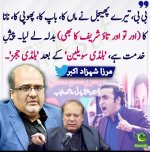
In Pakistan’s volatile political landscape, a dangerous game of revenge has been playing out for years. Once the country’s most respected institution, the Pakistani military has found itself outmanoeuvred, used, and discredited by the very politicians and figures it once supported or defended. What was once an unshakeable force has now been reduced to a story of downfall, brought about by its own leadership, manipulative politicians, and a judiciary that turned against its own values. The military’s reputation is shattered, with analysts predicting it won’t recover for decades.
Nawaz Sharif’s Masterstroke: Using Asim Munir to Dismantle the Army

Nawaz Sharif, often ridiculed for his political missteps, executed one of the most cunning and strategic moves against the military. Having been ousted from power by the military in 1999 through a coup led by General Pervez Musharraf, Nawaz harboured a deep-seated resentment against the institution that had humiliated him. However, he understood that direct confrontation would not work. Instead, Sharif employed a more insidious approach: use the army itself to destroy its reputation.
Sharif’s genius was in the selection of General Asim Munir. Unlike other generals, Munir was more loyal to Sharif’s cause than to the military institution he was supposed to serve. Sharif knew this well, and he played his cards brilliantly. Munir, known for his questionable loyalty and perceived as a “deceiver” within military ranks, was the perfect candidate for Sharif’s plan. By promoting Munir to key positions, Sharif ensured that the military’s leadership would be compromised from within.
Asim Munir’s rise was instrumental in pulling the army deeper into political controversies, making it look like a compromised, political pawn rather than the formidable force it once was. The general, more loyal to Sharif’s vision than to the institution, allowed the army to be further entangled in political affairs, slowly but surely eroding its credibility and turning it into a laughingstock in the eyes of the public. Munir’s mismanagement ensured that the army, once seen as an untouchable force, was now perceived as corrupt and ineffective.
Sharif used Munir in a way that few could have anticipated. The army, under Munir’s compromised leadership, became a tool of the political elite, used to manipulate and coerce rather than defend. By the time the military realised what was happening, its once untouchable image had already been shattered. Nawaz Sharif, often dismissed as politically incompetent, had outplayed the military, using its own leadership to destroy it from within.

Bilawal Bhutto: A Clumsy Pawn in the Game
Bhutto Zardari, though widely seen as an inexperienced and foolish politician, also played his part in the downfall of the military, albeit more clumsily than Nawaz Sharif. Bilawal, son of Benazir Bhutto, has long sought revenge for the deaths of his mother and grandfather, both of whom his family believes were victims of military conspiracies.

Although Bilawal’s strategy has often been erratic and foolish, he managed to contribute to the military’s downfall by constantly dragging it into the political quagmire. With his public rants and misplaced criticism, Bilawal helped further tarnish the army’s reputation, turning it into a symbol of political incompetence. While Bilawal may be perceived as a puppet and a poor strategist, his constant needling of the military—combined with their involvement in political affairs—further cemented the army’s image as a meddling and corrupt force.
IMG_8188.jpeg

Chief Justice Isa: Revenge Against the Judiciary Itself
No political betrayal is more damning than the one Chief Justice Qazi Faez Isa exacted on his own institution. Having once been protected by his fellow judges when corruption cases were brought against him, Isa turned on the judiciary the moment it suited him. Instead of standing firm to uphold the law, he aligned himself with the political forces that sought to undermine the country’s judicial integrity.

When the 26th Constitutional Amendment came into play, it was widely viewed as an attack on the military’s autonomy. However, this amendment also revealed the judiciary’s role in its own undoing. Justice Isa, under the guise of legality, helped facilitate the passage of the amendment, thus ensuring that both the military and judiciary would be further politicised and weakened. The amendment, which gave more power to civilian politicians and chipped away at military influence, was passed with the active cooperation of a judiciary that had once prided itself on its independence.
Chief Justice Isa, instead of defending the constitutional rights and upholding the sanctity of the court, betrayed the institution that once saved him. The Supreme Court, which had long protected the military’s involvement in critical national decisions, now found itself undermined, with Isa helping the very politicians who sought to diminish both military and judicial autonomy. His revenge against the judiciary, much like the revenge of the politicians against the military, was subtle but devastating.
The 26th Constitutional Amendment: The Final Blow

The 26th Constitutional Amendment has been the most significant and final blow to the military’s power and the judiciary’s independence. Brought forward by a political class hungry for power, this amendment was cloaked in language promoting civilian rule and reforms but was in reality a way to strip the military of its autonomy and independence.

By aligning themselves with the amendment, politicians like Nawaz Sharif, Bilawal Bhutto, and Maulana Fazlur Rehman ensured that the army would become a shadow of its former self, manipulated and weakened beyond recognition. The Supreme Court, through Justice Isa’s betrayal, allowed the amendment to pass without challenge, thus securing the political elite’s victory over the institutions that once held power in Pakistan.

The 26th Amendment was illegal and clear attack on the very foundations of Pakistan’s power structures. It has left the military humiliated, reduced to a political tool for civilian elites. More importantly, the judiciary—once a bastion of independence—has been compromised, now little more than an accomplice to political whims. The military and judiciary, once pillars of stability in Pakistan, have been utterly destroyed, and the damage will likely take decades to repair.

Conclusion: A Story of Betrayal and Revenge

Today, Pakistan stands at a crossroads. The military, once the most powerful institution in the country, is now a shell of its former self, reduced to political manoeuvring, with a reputation in tatters. The judiciary, once a beacon of hope, has been exposed as corrupt, willing to betray its own values for the sake of political power. And behind it all are the politicians—Nawaz Sharif, Bilawal Bhutto, and Maulana Fazlur Rehman—who masterfully manipulated these institutions, using them to further their own personal vendettas.

Chief Justice Isa, who was once saved by the judiciary, turned his back on the very institution that protected him, allowing corrupt political forces to push through amendments that have forever weakened Pakistan’s military and judicial structures. In their quest for revenge, these political actors have left Pakistan’s once strong institutions broken, corrupt, and discredited.


What’s left is a nation that no longer trusts its military or its courts, a public that sees the army not as a defender of the state but as a pawn of corrupt politicians, and a judiciary that has lost its credibility. The army, disrespected and humiliated, may not recover for the next 30 years if at all. The politicians may have won their personal battles, but Pakistan as a whole has lost. The very institutions that once held the country together are now stories of betrayal and defeat.
 
Status
Not open for further replies.

Users who are viewing this thread

Pakistan Defence Latest

Country Watch Latest

Back
Top