Reforestation, Xinjiang fighting back the desert and replace it with forest

How did China cross the entire "Sea of Death" to create the world's longest desert highway?​

To view this content we will need your consent to set third party cookies.
For more detailed information, see our cookies page.


May 8, 2024
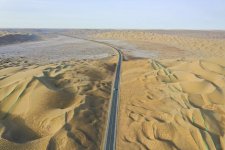
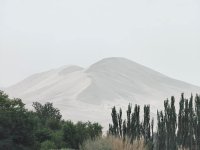
The Taklamakan Desert in China, the second-largest shifting desert globally and the country's largest, hosts an awe-inspiring engineering marvel – a highway.

Despite the harsh conditions, including infrequent rainfall and severe sandstorms, the people of China successfully built the north-to-south spanning highway, intended to facilitate transport of the abundant oil and gas resources discovered in the Tarim Basin.

This desert highway, green-belted by windproof and sand-fixing desert plants, spans 446 kilometers through the entire desert with a construction that exemplifies human victory over harsh environments.

It's not only a significant transport route but also an embodiment of human resilience and innovation.
 
The west only sees "forced labor" from these pics and videos.

w020240112302630792724-jpeg.10333
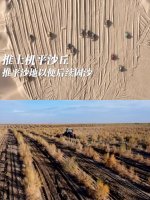
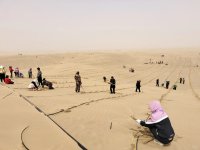
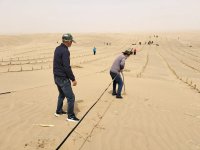
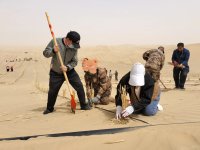
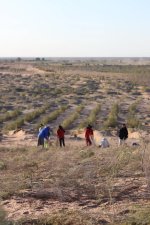
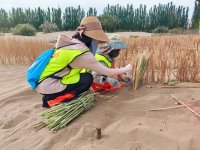
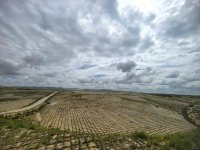
This is the chequered board method, the most effective way developed by Chinese scientist after multiple failures. This method reduces sand movement by 70%, there is actually a machine developed just to do this.
 
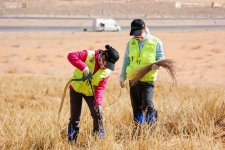
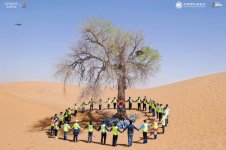
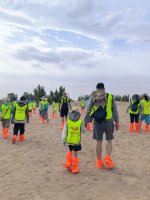
Government encourages Xinjiang local villagers to plant trees. Uyghur lady in her vlog talks to the local tree farmers and learns a tree farmer can make ¥400,00 ($56,000)each year just by planting trees.

To view this content we will need your consent to set third party cookies.
For more detailed information, see our cookies page.
 
Fighting the deserts

To view this content we will need your consent to set third party cookies.
For more detailed information, see our cookies page.
 

Robot aids desert cultivation of apocynum in Xinjiang​

To view this content we will need your consent to set third party cookies.
For more detailed information, see our cookies page.
 

The final kilometer of Taklimakan Desert green barrier nears completion​

Nov 27, 2024

To view this content we will need your consent to set third party cookies.
For more detailed information, see our cookies page.

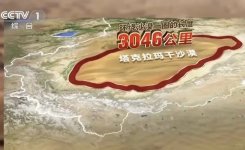
China is in the final stages of completing a 3,046-kilometer green barrier around the Taklimakan Desert, aiming to combat desertification through the cultivation of drought-resistant plants.

Covering 337,000 square kilometers, Taklimakan in northwest China's Xinjiang Uygur Autonomous Region is China's largest desert and dubbed the "Sea of Death."

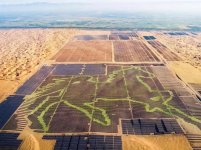
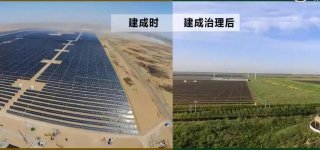
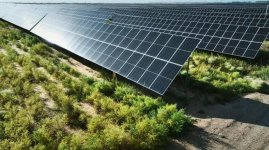
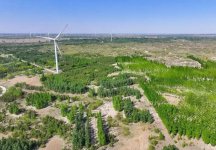
China has built a 2,761-kilometer-long green barrier on the edge of the Taklimakan Desert by the end of 2023 through innovative methods such as grass grids, photovoltaic power stations and windbreak forests.
 

China rings vast Taklamakan Desert in Xinjiang with green belt to aid environment, economy​

Just completed multi-decade project in Xinjiang region is intended to help prevent desertification and boost local economies​


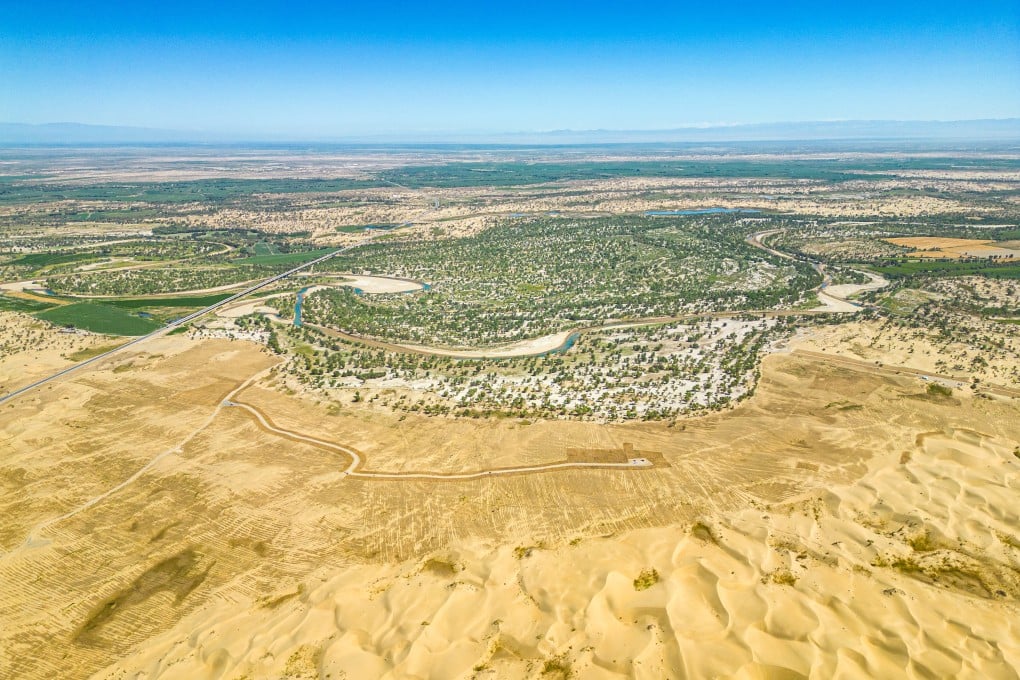
China has construction a vast green belt of salt-tolerant, drought-resistant plants to combat desertification in the Xinjiang region. Photo: CFOTO/Future Publishing via Getty Images

Victoria Bela

Published: 9:00pm, 28 Nov 2024

China’s largest desert, and the world’s second-largest sand-shifting desert – is now surrounded by a green belt of various trees and shrubs, as well as a solar-based sand blocking technology.

The encirclement of the Taklamakan Desert in China’s northwestern Xinjiang Uygur autonomous region – an area about the size of Germany – is meant to prevent sandstorms and protect local infrastructure, as well as boost regional economic opportunities.

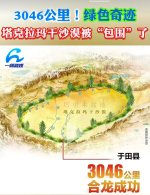
The green belt – which stretches 3,050km (1,900 miles) – was completed on Thursday after the final batch of several types of vegetation was planted in Yutian county at the desert’s southern edge, according to state media.

Sand-shifting deserts like the Taklamakan are dominated by wind-driven sand dunes and frequent sandstorms, which can affect weather, agriculture and human health.

The wall of trees around the Taklamakan Desert is equipped with water-saving irrigation systems. Photo: Xinhua

The wall of trees around the Taklamakan Desert is equipped with water-saving irrigation systems. Photo: Xinhua

About 85 per cent of the 337,600 sq km (130,350 square mile) desert is covered by shifting sand dunes, earning the Taklamakan the label “sea of death”.

 
Green Miracle, after 46-year efforts , the last gap had been closed this week, now the Taklimakan Desert had been totally surrounded and locked by 3046 kilometers long man made green belts and forests

_1_煮字郎_来自小红书网页版.jpg塔克拉玛干沙漠被围起来_1_浪淘沙_来自小红书网页版.jpg
 
Last edited:

China Completes Green Belt Around Its Biggest Desert

By Tripti Nath
Nov 29 2024, 18:33


China has finished a 46-year campaign to encircle Taklamakan, its largest desert with trees as part of national efforts to end desertification.

Chinese State media reported on Friday that the effort is aimed at curbing the sandstorms that plague parts of the country during the spring

A “green belt” of about 3,000 km (2,000 miles) around the Taklamakan was completed on Thursday in the northwestern region of Xinjiang.

The work was completed after workers planted the final 100 metres of trees on the desert’s southern edge, the Communist Party-run People’s Daily said.

The Taklamakan desert is also called the sea of death to highlight its harsh and inhospitable terrain.

The desert’s name is derived from the Uyghur language and means “the place of no return”, or “sea of death.

Efforts to enclose the desert with trees began in 1978 with the launch of China’s “Three-North Shelter belt” project, colloquially known as the Great Green Wall.

More than 30 million hectares (116,000 square miles) of trees have been planted.

Tree planting in the arid northwest has helped bring China’s total forest coverage above 25% by the end of last year, up from around 10% in 1949.

Forest coverage in Xinjiang alone has risen from one per cent to five per cent in the last 40 years, the People’s Daily said.

The shelter belt project has involved decades of experimentation with different tree and plant species to determine which is the hardiest.

Critics say that survival rates have often been low, and it has been ineffective in reducing sandstorms, which routinely reach the capital Beijing.

China will continue planting vegetation and trees along the edge of the Taklamakan to ensure that desertification is kept in check, Zhu Lidong, a Xinjiang forestry official, told media persons in Beijing.

He said poplar forests on the northern edge of the desert would be restored through the diversion of flood waters.

Apart from this, officials were also planning new forest networks to protect farmland and orchards on the western edge.

Despite China’s tree planting efforts, 26.8% of its total land is still classified as “desertified”, according to official data from the forestry bureau.

https://stratnewsglobal.com/china/china-completes-green-belt-around-its-biggest-desert/
 

Users who are viewing this thread

Back
Top