Navigation
Install the app
How to install the app on iOS
Follow along with the video below to see how to install our site as a web app on your home screen.
Note: This feature may not be available in some browsers.
More options
Style variation
You are using an out of date browser. It may not display this or other websites correctly.
You should upgrade or use an alternative browser.
You should upgrade or use an alternative browser.
Royal Saudi Arabia Armed forces
- Thread starter The SC
- Start date
More options
Who Replied?


The SC
INT'L MOD
- Thread starter
- #380
An American arms deal with $ 100 billion in Saudi Arabia .. What are the most prominent systems that Riyadh is expected to squire?
Reports indicate that the United States of America is considering concluding a huge armament package with Saudi Arabia, which may exceed $ 100 billion. This possible deal comes in the context of historical and firm military cooperation between the two countries. Like what happened in the visit of former US President Donald Trump to the Kingdom in 2017 where huge deals were announced, this upcoming step reflects the continued deep strategic partnership.
The deal is expected to include various categories of advanced military systems, in response to the growing defensive needs of the Kingdom and to face the current regional challenges. Among the most prominent of these categories: air and missile defense systems, combat aircraft and advanced march, and high -resolution ammunition. The strategic motivation behind these widespread purchases is to enhance Saudi defense capabilities in a complex regional environment.
However, this possible deal is likely to face potential obstacles, most notably the process of reviewing and adopting major arms deals in the US Congress, as well as the ongoing concerns related to human rights issues.
A busy record of US armament deals for Saudi Arabia
The United States and the Kingdom of Saudi Arabia have historical and profound military relations, its beginnings due to the 1951 defense assistance agreement. For decades, the United States formed the main military provider of the Kingdom, and the march of relations witnessed the conclusion of many huge armament deals.
Among the most prominent of these deals:
- 2011 (Obama Administration): A deal worth about $ 29.4 billion, focused on the Air Force by including 84 new F-15SA fighters, in addition to updating 70 F-15 fighters within the Royal Saudi Air Force fleet.
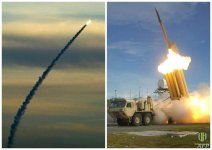
- 2017 (Trump Administration): During his first visit to the Kingdom, President Trump announced a "intentional agreement" or a large -scale "proposed package" with an immediate value of about $ 110 billion, with a ceiling of expectations that may reach 350 billion dollars over a period of ten years. This package was described as one of the largest in the history of US arms sales. It included a wide range of advanced systems, such as the THAAD defense system, Patriot batteries (MIM-104 Patriot), Abrams Tanks (M1A2), Bradley Martial Vehicles, and potential surface combat ships. It also included vital components such as promotions of communication systems, cybersecurity, leadership and control to enhance operating compatibility with American forces. However, it is necessary to note that the announcement in 2017 was ambitious, and the declared value did not turn into contracts immediately, as many items remained subject to the approvals of Congress and the export control reviews. For example, the value of the contracts signed actually did not exceed part of the declared value by 2018.
- In 2010 (Obama Administration): Notifying Congress with a major deal, its estimated value at the time was 60.5 billion dollars, which confirms the continuous approach of the United States to provide the Kingdom with qualitative military capabilities.
Military systems expected in the upcoming deal
According to the circulating reports and analysis of the strategic environment surrounding the Kingdom, the proposed armament package is expected to include a wide range of vital military systems:
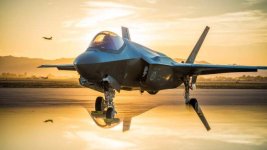
- Air Force: The deal is very likely to include advanced combat aircraft. However, the Kingdom's obtaining F-35 fighters is still excluded in the short term due to the American policy aimed at maintaining the qualitative military superiority of Israel. So, the deal may focus on more current F-15 fighter fleet promotions or buy other types of modern combat aircraft.
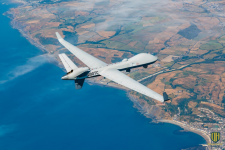
- UAVS/Drones: The importance of this component has emerged in particular, as the MQ-9B Seaguardian specifically was mentioned as a great possible element, which may amount to $ 20 billion. These aircraft will enhance the Kingdom's capabilities in the areas of monitoring and reconnaissance (ISR) significantly, which reflects the increasing focus on these capabilities in modern conflicts and facing asymmetric threats.
- Air and missile defense: Given the continuous threats to the Kingdom of ballistic missiles and drones, it is almost certain that the deal includes acquisitions or updates of major defense systems such as Thaad and Patriot. Patriot systems have been practically effective in intercepting many Houthi attacks on the Kingdom's lands.
- Precision ammunition: These munitions are a decisive element of Saudi air and land operations, and therefore it is strongly expected to be an essential part of the deal.
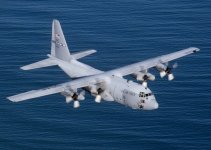
- Transport aircraft: Reports indicated the possibility of purchasing military transport planes from Lockheed Martin. This interest confirms the need to enhance logistical capabilities and the ability to re -deploy the forces and equipment.
- Radar, leadership and communications systems: These systems are a pivotal link and integration of various components of military power, and therefore it is natural that they are within the armament package to ensure comprehensive operational event.
Specific examples of the potential military systems to be included
Here are more specific examples of the systems that the deal may include, based on the known leaks and needs:
Air Force:
- F-15sa Advanced Eagle: This fighter is a major element in the Royal Saudi Air Force, and the deal will include more update or acquisition of additional copies.
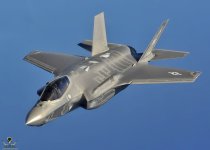
- F-35 Lightning II: As we mentioned earlier, the possibility of the Kingdom to obtain this ghostly fighter remains weak in the foreseeable term due to the American commitment to maintain the qualitative military superiority of Israel.
- UAVS/Drones:
- GENERAL ATOMICS MQ-9B Seaguardian: This driving plane for monitoring and reconnaissance tasks (ISR) is strongly candidate to be an essential element in the deal, especially to enhance marine and land monitoring capabilities.
- Air and missile defense:
- Lockheed Martin Thaad (Terminal High altitude Area Defense): A very important system for intercepting ballistic missiles at high altitudes, and its numbers are expected to increase or update current systems.
- Raytheon Mim-104 Patriot (including PAC-3 MSE): the most used air defense and missile defense system to counter tactical ballistic missiles and other weather threats. The Kingdom is likely to be supplied with more batteries or advanced objectionable missiles (such as PAC-3 MSE).
- Munition accurately:
- Miscellaneous ammunition: A large package of accurately directed munitions is expected to be included from major companies such as Raytheon (RTX) and Boeing. Common examples include laser grenades (Paveway) and other advanced air to land bombs and missiles necessary to support combat operations.
- Transport aircraft:
- Lockheed Martin C-1330 Hercules: The military transport plane for many of the air force, and new copies are likely to be purchased to enhance the tactical air transport capabilities.
- Other possible systems:
- The deal may also include various (non -air defense) missiles, new radar systems, advanced communications equipment, and cybersecurity technology. Some reports also indicated a possibility that it included lightweight pours.
Strategic and defensive motives behind Saudi Arabia's endeavor to obtain these weapons
There are many strategic and defense causes and motives that make the Kingdom of Saudi Arabia seek to obtain these qualitative military capabilities at the present time, the most prominent of which are:
Addressing the growing regional threats: foremost of which are Iranian activities and agents in the region, especially ballistic missile attacks and frequent drones.
Ensurance of air excellence: In an area that witnesses an arms and development race in the air capabilities of some regional powers, the preservation of a deterrent and superior air force is a decisive matter for the Kingdom's security and its ability to impose its air sovereignty.
Securing the vast borders: The Kingdom has widespread and naval borders, which require effective protection against infiltration, smuggling and other threats, and modern systems contribute to strengthening these capabilities.
Development of intelligence, monitoring and reconnaissance capabilities (ISR): to enhance circumstantial awareness, monitor regional developments and monitor potential threats early.
Update of the armed forces: replacing older regimes with newer and more advanced systems to raise combat efficiency and enhance capabilities in various types.
Promoting operational consensual with American forces: maintaining a high degree of consensualism between Saudi and American armament systems is necessary to facilitate planning and implementing joint operations within the framework of strategic partnership.
Great historical deals ... precedents to measure the upcoming deal
To assess the size and importance of the expected potential deal, it is useful to look at the previous major armament deals between the United States and the Kingdom of Saudi Arabia:
A deal of 2017: The package, whose intentions were announced during President Trump's visit in 2017, is an initial value of 110 billion dollars and a potential ceiling of 350 billion dollars, the nearest historical precedent in terms of size and scope that can be measured.
A deal of 2010: The Obama administration's notification of Congress indicates a deal of about $ 60.5 billion to the ability to conclude large and varied defensive packages between the two countries.
F-15sa fighter deal in 2011: Although its value ($ 29.4 billion) was less than the above deals, it represented a significant strategic investment in strengthening the advanced air capabilities of the Kingdom.
These historical precedents confirm a continuous pattern of large -scale US arms transfers to the Kingdom for decades. These deals are often linked in the official speech to enhancing joint strategic cooperation and facing challenges and opponents in the region.
The potential impact of the deal on the balance of power in the Persian Gulf
There is no doubt that the completion of a armament deal of this size will result in a significant strengthening of Saudi military capabilities in various dimensions, which may carry tangible implications for the balance of the forces existing in the Arab Gulf region:
A possible change in the balance of power: the Kingdom will have deterrent capabilities and greater fire, which may reshape the current military balances with other regional powers.
Stimulating the arms race: This deal may push other countries in the region to seek similar or anti -armament systems to maintain its security balances, which may lead to an escalation in the regional armament race.
Impact on the regional view: While strengthening defensive capabilities (such as air and missile defense) can be considered a stable factor, but having greater offensive capabilities may be seen by regional opponents as a possible threat.
Establishing the American role: The deal will reaffirm the role of the United States as a major security partner for the Kingdom and the region in general, and this may reduce the share of other suppliers of weapons such as Russia and China in the Saudi market.
A possible huge deal with multi -faceted effects
In light of these data, the upcoming armament deal stands at a decisive crossroads: between a historical opportunity to redraw the features of power in the Gulf, and a difficult test of the ability of the Saudi-American alliance to withstand the winds of politics and variables.
The coming days alone will reveal if this deal will become the cornerstone of regional security equations, or will it remain merely an ambitious suspended in the possibility space.
The SC
INT'L MOD
- Thread starter
- #381
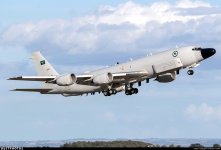
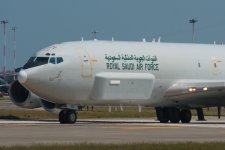
AIM-120C-8 deal for Saudi Arabia
WASHINGTON, May 2, 2025-The US State Department announced its approval of a potential military sale deal for the Kingdom of Saudi Arabia, including an advanced AIM-120C-8-air-to-air missile, in addition to logistical and relevant program support, at an estimated cost of $ 3.5 billion. The Defense Security Cooperation Agency has provided the certificate required to notify Congress in this possible deal today.
The Kingdom of Saudi Arabia has requested the purchase of a thousand (1,000) AIM-120C-8-Joe-Jo-Jo a medium-term (Amraam) and fifty (50) guidance units itself. The deal also includes the following elements that are not classified as a major defensive habit: spare parts for missile control units, missile transport containers, and support equipment; Parts, consumers, accessories, maintenance and repair services; Support of arms systems; Secret and non -secret software and support services; Publications and secret and non -secret technical documents; Studies and polls; Engineering, technical and logistical support services provided by the American government and contractors; In addition to logistical elements and other relevant software support. The total estimated cost of the deal is $ 3.5 billion.
https://www.dsca.mil/Congressional-...c-8-advanced-medium-range-air-to-air-missiles
https://media.defense.gov/2025/May/02/2003703408/-1/-1/1/PRESS RELEASE - KINGDOM OF SAUDI ARABIA 25-33 CN.PDF
With this deal, the AIM-120 C5/C7/C Missile stock in stock rises to more than 2,200 missiles !!!
WASHINGTON, May 2, 2025-The US State Department announced its approval of a potential military sale deal for the Kingdom of Saudi Arabia, including an advanced AIM-120C-8-air-to-air missile, in addition to logistical and relevant program support, at an estimated cost of $ 3.5 billion. The Defense Security Cooperation Agency has provided the certificate required to notify Congress in this possible deal today.
The Kingdom of Saudi Arabia has requested the purchase of a thousand (1,000) AIM-120C-8-Joe-Jo-Jo a medium-term (Amraam) and fifty (50) guidance units itself. The deal also includes the following elements that are not classified as a major defensive habit: spare parts for missile control units, missile transport containers, and support equipment; Parts, consumers, accessories, maintenance and repair services; Support of arms systems; Secret and non -secret software and support services; Publications and secret and non -secret technical documents; Studies and polls; Engineering, technical and logistical support services provided by the American government and contractors; In addition to logistical elements and other relevant software support. The total estimated cost of the deal is $ 3.5 billion.
https://www.dsca.mil/Congressional-...c-8-advanced-medium-range-air-to-air-missiles
https://media.defense.gov/2025/May/02/2003703408/-1/-1/1/PRESS RELEASE - KINGDOM OF SAUDI ARABIA 25-33 CN.PDF
With this deal, the AIM-120 C5/C7/C Missile stock in stock rises to more than 2,200 missiles !!!
The SC
INT'L MOD
- Thread starter
- #384
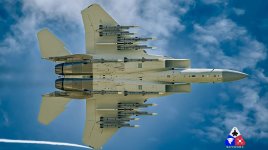
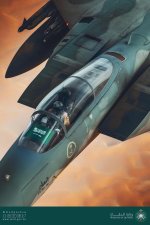
F15+APKWS deadly defensive platform to confront the danger of drones
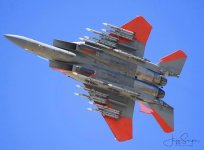
The F-15 fighter can be loaded with 42 APKWS missiles + up to 12 AIM-120 AMRAAM missile
No drone or cruise missile can escape from it
It is an air defense battery..
KSA has more than 6,300 APKWS missiles operating with the land and sea forces..
The system can also deal with 42 ground or naval targets from a distance of 14 km..
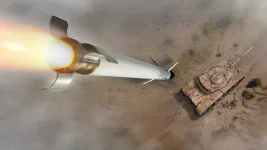
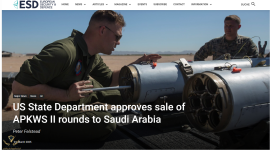
The US State Department has approved a Foreign Military Sale (FMS) to Saudi Arabia of Advanced Precision Kill Weapon Systems (APKWS) II all-up rounds, the US Defense Security Cooperation Agency (DSCA) announced on 20 March 2025.
The proposed sale, which is worth an estimated USD 100 million (EUR 92.65 million), has been passed to the US Congress for final approval.
Saudi Arabia has requested to buy 2,000 APKWS II rounds, along with spares, support equipment and related elements of training, engineering, logistics and programme support.
“The proposed sale will improve the Kingdom of Saudi Arabia’s capability to meet current and future threats and give it the ability to precisely engage targets with much less risk of collateral damage than other guided missile systems,” the DSCA stated.
APKWS II rounds constitute Hydra 2.75-inch (70 mm) unguided rockets that have been turned into precision-guided munitions with the addition of a laser guidance kit. They are typically used to arm attack helicopters such as the AH-64D/E Apaches operated by the Royal Saudi Land Forces and Saudi Arabian National Guard
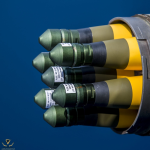
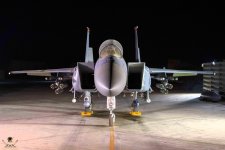
The F-15 fighter can be loaded with 42 APKWS missiles + up to 12 AIM-120 AMRAAM missile
No drone or cruise missile can escape from it
It is an air defense battery..
KSA has more than 6,300 APKWS missiles operating with the land and sea forces..
The system can also deal with 42 ground or naval targets from a distance of 14 km..
The US State Department has approved a Foreign Military Sale (FMS) to Saudi Arabia of Advanced Precision Kill Weapon Systems (APKWS) II all-up rounds, the US Defense Security Cooperation Agency (DSCA) announced on 20 March 2025.
The proposed sale, which is worth an estimated USD 100 million (EUR 92.65 million), has been passed to the US Congress for final approval.
Saudi Arabia has requested to buy 2,000 APKWS II rounds, along with spares, support equipment and related elements of training, engineering, logistics and programme support.
“The proposed sale will improve the Kingdom of Saudi Arabia’s capability to meet current and future threats and give it the ability to precisely engage targets with much less risk of collateral damage than other guided missile systems,” the DSCA stated.
APKWS II rounds constitute Hydra 2.75-inch (70 mm) unguided rockets that have been turned into precision-guided munitions with the addition of a laser guidance kit. They are typically used to arm attack helicopters such as the AH-64D/E Apaches operated by the Royal Saudi Land Forces and Saudi Arabian National Guard

The SC
INT'L MOD
- Thread starter
- #388
In a real embodiment and re -proof of Saudi military development and excellence, 21 suicide drones intercepted..It is a strong message to the world that Chinese technologies have been proved by the Saudis and their defenses in unparalleled numbers..
The Kingdom is able to protect its interests and its security with innovative solutions and adapt to threats!
It is true that the unconventional threats of drones are increasing and there are countries that are already suffering..But we find that Saudi Arabia has invented defensive technical solutions characterized by intelligent and quick response
It is not just a military response but rather complex strategies that depend on technological excellence..Integrated coordination between defensive systems and the integrated network.
Now the Patriot system is itself protected by the Saudi SkyGuard..(technology transfer) And SkyShield
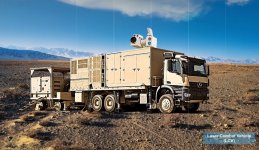
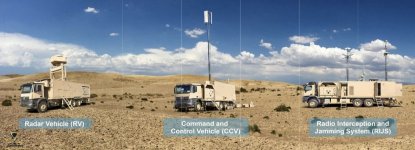
The Kingdom is able to protect its interests and its security with innovative solutions and adapt to threats!
It is true that the unconventional threats of drones are increasing and there are countries that are already suffering..But we find that Saudi Arabia has invented defensive technical solutions characterized by intelligent and quick response
It is not just a military response but rather complex strategies that depend on technological excellence..Integrated coordination between defensive systems and the integrated network.
Now the Patriot system is itself protected by the Saudi SkyGuard..(technology transfer) And SkyShield
The SC
INT'L MOD
- Thread starter
- #389
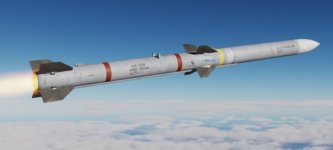
Saudi Arabia acquired 1000 AIM-120C-8 missiles in a $ 3.5 billion deal
httphttps://www.dsca.mil/Press-Media/Major-Arms-Sales/Article-Display/Article/4173146/kingdom-of-saudi-arabia-aim-120c-8-advanced-medium-range-air-to-air-missiless://www.dsca.mil/Press-Media/Major-Arms-Sales/Article-Display/Article/4173146/kingdom-of-saudi-arabia-aim-120c-8-advanced-medium-range-air-to-air-missiles
httphttps://www.dsca.mil/Press-Media/Major-Arms-Sales/Article-Display/Article/4173146/kingdom-of-saudi-arabia-aim-120c-8-advanced-medium-range-air-to-air-missiless://www.dsca.mil/Press-Media/Major-Arms-Sales/Article-Display/Article/4173146/kingdom-of-saudi-arabia-aim-120c-8-advanced-medium-range-air-to-air-missiles
The SC
INT'L MOD
- Thread starter
- #390
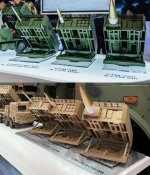
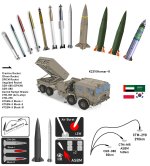
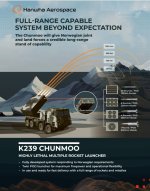
Riyadh and Seoul are looking for a KSS-II submarine deal and a plan to supply the CTM-500 ballistic missiles
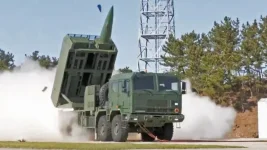
August 2, 2025: South Korean journalist Mayson, a specialist in tracing defensive deals made by his country, revealed that Korea is planning to export its CTM-X tactical missile (also known as CTM-500), which has a range of 500 km, to both Poland, Saudi Arabia and the United Arab Emirates.
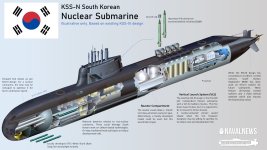
He added that South Korea is negotiating with Saudi Arabia on a possible deal for KSS-III submarines, which is characterized by its ability to launch ballistic missiles from board (SLBM),

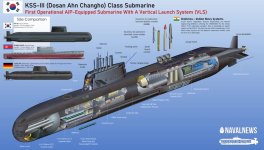
With the potential for:
August 2, 2025: South Korean journalist Mayson, a specialist in tracing defensive deals made by his country, revealed that Korea is planning to export its CTM-X tactical missile (also known as CTM-500), which has a range of 500 km, to both Poland, Saudi Arabia and the United Arab Emirates.
He added that South Korea is negotiating with Saudi Arabia on a possible deal for KSS-III submarines, which is characterized by its ability to launch ballistic missiles from board (SLBM),
With the potential for:
Users who are viewing this thread
Total: 2 (members: 0, guests: 2)
Pakistan Defence Latest
-
 Federal cabinet gives nod to imposition of emergency in KP; summary sent to president (25 Viewers)
- Latest: Meengla
-
-

-
-
PTI Murad Saeed in Afghanistan, was 'controlling KP govt' from there: Rana Sanaullah (2 Viewers)
- Latest: Prophecy
Country Watch Latest


Latest Posts
-

-
Federal cabinet gives nod to imposition of emergency in KP; summary sent to president (25 Viewers)
- Latest: Meengla
-
-
