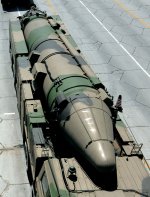
Royal Saudi Arabian Strategic Missile Force

The SC

INT'L MOD
Joined
Feb 13, 2012
Messages
52,440
Reaction score
49,920
Reputation
3,795.8
Country of Origin
Country of Residence
1708140792203.jpeg
Royal Saudi Strategic Missile Force​


It is the (strategic) missile defense branch and the newest military wing of the Saudi Armed Forces.

It is one of the general pillars of war concerned with absorbing everything that would enhance missile capabilities to achieve deterrence
Against any threat that might affect the sanctities and capabilities of the Kingdom of Saudi Arabia,

The nucleus of the Royal Strategic Missile Force was established as a project known within the Saudi Ministry of Defense as the strategic missile “Falcon Project” and the role of the strategic force, which remained secret until not long ago.

It has been growing rapidly since 2009, when Saudi Arabia announced its desire to establish a nuclear program as a countermeasure to Iran's nuclear program. This was mentioned by the late King Abdullah bin Abdulaziz and Prince Turki Al-Faisal, the former head of General Intelligence.


To view this content we will need your consent to set third party cookies.
For more detailed information, see our cookies page.


The Saudi Royal Strategic Missile Force is known to adhere to complete secrecy.
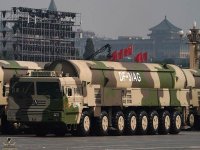
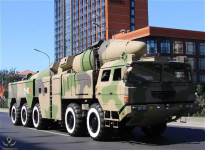
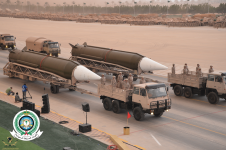
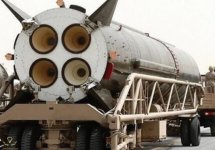
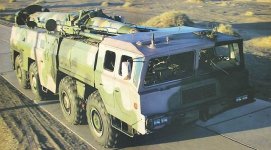
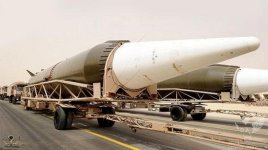
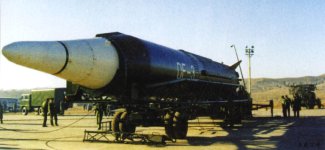
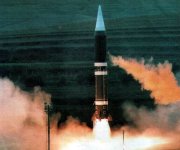
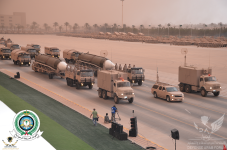
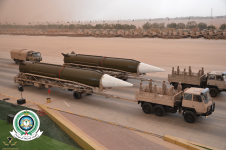
It is almost impossible to know the number of personnel, officers, or equipment it possesses, but by the end of April 2014 AD the Great Kingdom of Saudi Arabia finally decided to show (part of its power) as the deadly missile appeared..it was the Chinese DF-3 capable of carrying nuclear warheads during the military parade of the Saif Abdullah maneuvers..
1708141322580.png

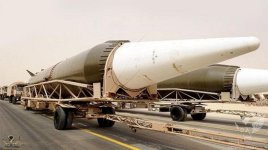
The Debka File website, which is close to the Israeli intelligence services, stated that the Kingdom of Saudi Arabia has recently reviewed a group of Chinese-made Dongfeng (DF-3) missiles, which are distinguished by their ability to carry nuclear warheads, the site claimed that Saudi Arabia is considered the first country in the Middle East to possee this type of missile, which it was able to purchase from China more than 27 years ago..

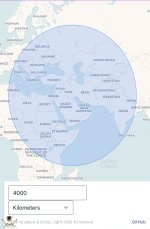
The effective range of the East Wind missiles reaches 2,650 kilometers, and these missiles can carry nuclear warheads.
The destructive capacity of these missiles ranges from one to three megatons, according to Israeli intelligence sources..

The nuclear missile display includes sending a very clear message to both the United States and Iran during the period before reaching an agreement between the two sides regarding Iran’s nuclear program, this clearly means that Saudi Arabia has nuclear missiles that can be used in the event of the outbreak of an armed conflict with Iran..
1708141651223.jpeg

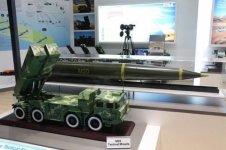
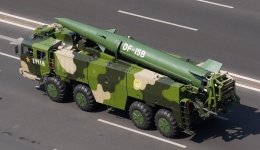
Depka File also mentioned that during the recent visits made by Saudi officials to China, the possibility of Riyadh obtaining Dongfeng (DF-21) missiles with a range of up to 1,700 kilometers was discussed.. In addition to the systems accompanying those missiles..

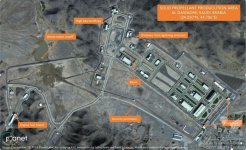
US intelligence specifically indicates that Saudi Arabia has expanded its missile infrastructure, in addition to technology through recent purchases from China,
1708141891754.jpeg

In a statement, the Chinese Foreign Ministry said: China and Saudi Arabia are “strategic partners.”
The two countries “maintain friendly cooperation in all fields, including arms deals, and such cooperation does not violate any international laws, or engage in preventing the proliferation of weapons of mass destruction.”

Jeffrey Lewis, a missile expert at the Middlebury Institute of International Studies in Monterey, California, said, the huge investment in missiles is often linked to interest in nuclear weapons.

Lewis who studied satellite images said, “I would be a little concerned that we're underestimating the ambitions of the Saudis here,”

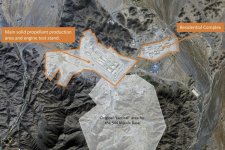
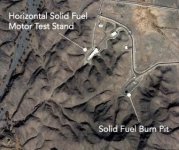
Michael Elliman, a senior fellow for missile defense at the International Institute for Strategic Studies in Washington, also reviewed satellite images and said they show a ballistic missile program. The question remains: where did Saudi Arabia gain the technical know-how to build such a facility?
Lewis said the Saudi facility is very similar to the design used by China, although it is smaller..

The Saudi Strategic Missile Force has widespread bases throughout the Kingdom, they are as follows (according to what is known):

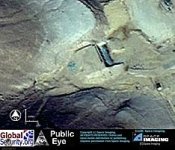
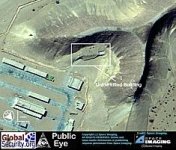
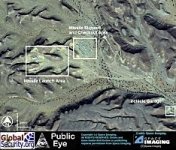
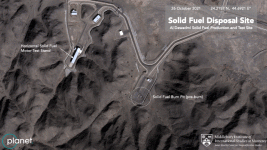
Al-Watah Base: In the Al-Watah area, 201 km from the Saudi capital, Riyadh. The base was monitored via satellite images
Taken in July 2013, analysts who examined the images spotted two missile launchers and found signs on them.. One of them points to the northwest, towards Tel Aviv, and the second platform points to the northeast, towards Tehran.

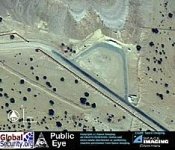
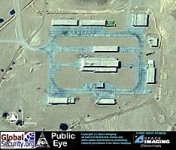
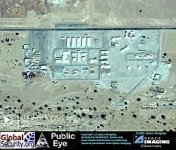
Al Sulayyil Base: It is the first Saudi ballistic missile facility.. It was built in 1987-1988 AD near the town of Al-Sulail, 450 km south of Riyadh..

Base 511: It is about 180 km south of the city of Riyadh and located in Al Hareeq Governorate.

Base 533: It belongs to Raniya Governorate

Base 566: It is approximately 750 km northwest of Riyadh

Base 522: In Wadi Al-Dawasir

To view this content we will need your consent to set third party cookies.
For more detailed information, see our cookies page.


A few types
1708143842088.jpeg

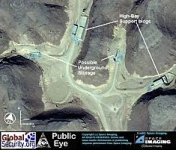
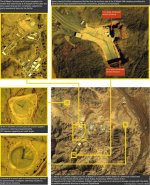
In a number of new Saudi missile bases... satellite images revealed that the dimensions of the "entrances" of the storage sites do not fit the DF-3A missiles.
1708144288316.jpeg

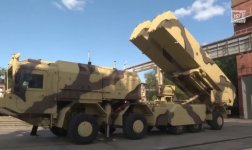
We did not talk about the Grom-2 missiles or the Saudi-Ukrainian deals that included the transfer of technology..
1708144375207.jpeg

Nor about the factories that the East and West talk about, which have been proven to produce missiles..


There are 50,000 thousand soldiers with about 10 bases for the Strategic Missile Force now..
 
Source:
Different sources
The entire Saudi program is built with Chinese capabilities, technologies and methods
Even the underground and above-ground bases and Chinese-style firing silos.

1708145958601.jpeg

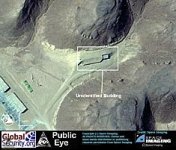
The engine testing platform is located at the Al-Watah base along with manufacturing facilities and Base 544, the rest of the bases have facilities but no platforms for testing engines (or perhaps underground)..

1708145980146.jpeg

1708146020785.jpeg

Self-reliance and developing a striking force, including the self-capacity to develop and manufacture ballistic missiles and a nuclear program with the right to enrich uranium, is the only option to confront the barbaric neighbors and hedge against the blackmails of the West!
 
In Saudi Arabia, there is a special force called...Strategic Missile Force
1708146248482.png


Type: DF-3A

Range: 2800 to 4000 km
Length: 24 meters
Diameter: 2.24 meters
Weight: 64 tons


Type: DF-M1

Range: 1900 to 2500 km
Length: 18,5 m
Diameter: 1,25 m
Payload: M-11


Type: CSS-5

Range: 4000 to 5500 km


Type: CSS-6

Range: 5000 to 6500 km


Type: DF-11

Range: 900 to 1500 km

In addition to the old CSS-2 missiles


Type: DF-31

- Range: 6000 km to 11000 km


Pakistani medium range missiles


Type: Ghauri

Range: 1100 km to 2300 km


Type: Shaheen-2

Range: 2000 km to 2200 km


Saudi-Ukrainian short-range missiles

Type: Grom 2

Range: 50-550 km
 
To view this content we will need your consent to set third party cookies.
For more detailed information, see our cookies page.


From the beginning of the 1980s until the mid-1990s, the Saudi missile program was entirely supplied by China..

From the mid-nineties, the first attempts at local missile manufacturing appeared, and even these experiments appeared officially..

Then it entered into a strange silence for nearly a decade, in the middle of the last decade, specifically after King Abdullah’s visit to China...this force has expanded very significantly and increased the number of its missile bases, and in the past 7 years the first evidence has emerged that Saudi Arabia has received technical assistance from China to establish missile production plants and factories, which are located in the middle of the Saudi missile bases, which, by the way, were recently established..

Al Sulayyil Base:

1708147374905.jpeg

1708147410991.jpeg

1708147453120.jpeg

1708147473630.jpeg

1708147508141.jpeg

1708147544765.jpeg
 
Continued..

1708147607152.jpeg

1708147644804.jpeg


Saudi Arabia has imported sensitive missile technology from the Chinese military and is manufacturing its own ballistic missiles, according to Saudi advisers and officials familiar with US intelligence, raising new fears of an arms race in the Middle East.

Saudi efforts to manufacture its own ballistic missiles are the latest in a series of moves by US allies in the Middle East to increase military cooperation with China in a trend that has angered the Biden administration during a period of growing hostility between Washington and Beijing.

Saudi advisers and an official familiar with US intelligence said that the Saudi government had requested assistance from the People's Liberation Army's missile force and that these talks had moved to the stage of actually obtaining equipment from the Chinese army.

The Chinese military also transferred multiple batches of ready-made Dongfeng missiles from about 2018 until this spring of 2021, Saudi advisers and the official familiar with US intelligence said.

One official familiar with US intelligence said that the United States is preparing to impose sanctions on Chinese entities responsible for missile transfers, but not on Saudi officials or institutions.
 
In an exclusive statement to #Translations, security expert and former British intelligence analyst @AimenDean:

The Kingdom of Saudi Arabia has been keen to possess ballistic missile technology and manufacture it locally since 2013, and #Saudi Arabia and its air defense have a record in confronting ballistic missiles that no country in the world has, not even #Israel!
 
The sources revealed that Chinese-Saudi cooperation in the field of missiles has reached advanced stages, as in the year 2006-2019, this cooperation led to the purchase of a new generation of DF-21 missiles, and then in late December 2021, it was discovered that the cooperation had reached local production. for rocket engines.

1708150677359.gif
 
DF-21C

1714159938601.png


A medium-range ballistic missile that entered service in 2006. It has a range between (1,700 km - 2,150 km) and is equipped with a maneuvering warhead equipped with a conventional explosive payload weighing (2 tons).

Its CEP at a maximum range is 40 m..


The East Wind is a series of Chinese ballistic missiles and is not the name of a single missile or a single deal..
 
To view this content we will need your consent to set third party cookies.
For more detailed information, see our cookies page.


1714161386059.png

What we know is that Saudi Arabia has 7 strategic missile bases

The first strategic missile base was built in 1987, that is, 37 years ago

The first missile to enter service was the DF-3A with a Maximum range of 4000 km, It can carry a conventional warhead of 2,150 tons or 3 nuclear warheads..

1714160915141.jpeg

1714161047916.jpeg
 
Chinese missile technologies susceptible to enhance the SAUDI Ukrainian Grom 2 tactical ballistic missile..

Dong Feng-12 (DF-12); M-20/CSS-X-15 CRBM​

1714190387489.jpeg

The DF-12 has a range of 280 to 420 kilometers and wields a 400-kilogram warhead that can employ either cluster or high-explosive (HE) munitions. It is not MIRV-capable.

Dong Feng-15 (DF-15) (CSS-6) SRBM​

1714190666259.jpeg

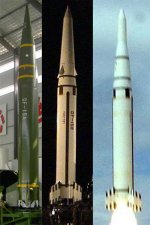
Three variants of the DF-15 (from left to right): DF-15A, B and C
1714190685285.jpeg

The DF-15 is a road-mobile, single-stage, solid-propellant SRBM with a range of 600 – 800 kilometers and a payload of 50 – 350 kilotons, capable of hosting HE, nuclear, chemical, or sub-munitions type of warhead. It is not MIRV-capable.

Dong Feng-11 (DF-11) (CSS-7) SRBMs​

1714191053172.jpeg

in the far deadlier game of SRBM capability, the DF-11, along with the aforementioned DF-15, doubles down in providing a credible theater nuclear capability.

This road-mobile missile’s 800-kilogram warhead can carry either conventional explosives or a nuclear payload with a yield of 350 kilotons. The range is 280 – 300 kilometers. It is a single-stage missile that uses solid propellant. There is no MIRV capability.
 
This section indirectly answers all those who are in delusion that China takes international rules seriously. If you have money and trust Chinese weapons they are more than willing to sell you those. Even the weapons which can't be traded.

@White and Green with M/S @Awwad @Falcon26 @MastanKhan
 
East winds

Type: DF-3A

1714370936558.jpeg

1714370578848.jpeg

Maximum range: 2800 to 4000 kilometers
Length: 24 meters
Diameter: 2.24 meters
Weight: 64 tons


Type: DF-21C

1714371848944.jpeg

Range: 2,150 km km

East winds (Dongfeng (DF)) Ballistic Missiles, China​


The Dongfeng (DF) ballistic missile family, has advanced deterrence abilities.

he Dongfeng missiles, generally referred to as DF missiles, are a series of ballistic missiles with the capability to engage targets at short, medium, intermediate, and even intercontinental ranges. The DF missiles are operated by the Chinese People’s Liberation Army Rocket Force (PLARF).

Manufactured by the China Aerospace Science and Industry Corporation (CASIC), a state-owned aerospace and defence company, the wide range of DF missiles have diverse warhead carrying capabilities. The missiles significantly improved China’s deterrence abilities.

Reuters reported that the Chinese armed forces launched 11 DF ballistic missiles, including the DF-15 and a new version of DF-16 missiles, into the waters near the northeast and southwest coasts of Taiwan in August 2022.

DF-41 missile details​


The DF-41 is a road-mobile intercontinental ballistic missile (ICBM), which can be launched from a transporter-erector launcher (TEL). It has a length of up to 22m, a diameter of 2.25m, and a launch weight of 80,000kg.

Powered by a three-stage solid propellant engine, the DF-41 is China’s longest-range missile with an operational range of up to 15,000km. Its extended range makes the missile capable of striking areas in the US, Europe, and Russia.

The missile can carry multiple independently targeted warheads (MIRV), including up to ten nuclear warheads, with a total payload weight of 2,500kg. The missile is carried by the Tian HTF5980 16×16 TEL.

The first flight test of the missile was conducted in July 2012. A canister-ejection test for the missile from a rail-mobile launcher was conducted in December 2015. The missile was unveiled to the public in October 2019.

A new type of missile silo was also constructed at the missile training area near Jilantai in inner Mongolia province.

DF-31 missile details​


The DF-31 is a road-mobile ICBM having three variants, namely DF-31, DF-31A and DF-31AG.

The missile has a length of 15m, a diameter of 2m, and a launch weight of 42,000kg. It can carry a single nuclear warhead weighing up to 1,750kg.

Powered by a three-stage, solid-propellant, the missile can strike up to a range of 11,700km. The missile entered operational service in 2006.

DF-5 missile details​


The DF-5 is a silo-based ICBM available in three variants, namely DF-5A, DF-5B, and DF-5C.

The 32.6m-long missile has a diameter of 3.35m and a launch weight of 183,000kg. It uses a two-stage liquid propellant engine. It has an operational range of 12,000km and a payload capacity of 3,900kg.

The missile can be armed with nuclear warhead with yield of one to three megatons (MT). The DF-5A can carry a single warhead, while the DF-5B can be armed with multiple warheads. The ICBM can also use chaff, decoys, or other penetration aids.

The DF-5 missile entered service with the People’s Liberation Army in 1981 and is stored in hardened silos in central China.

Dongfeng intermediate-range ballistic missiles details​


The Dongfeng series has four intermediate-range ballistic missiles (IRBM), namely DF-3, DF-4, DF-25 and DF-26.

The DF-3 achieved initial operational capability in 1971. Several outdated DF-3 missiles were sold to Saudi Arabia.

The DF-3 is a silo-based IRBM developed with an effective range of 3,000km and capable of carrying nuclear or conventional warheads up to 2,000kg. It uses a single-stage liquid propellant engine and an inertial guidance system.

Designed to be China’s first modern missile, the DF-3 also provided the first stage for the two-stage transportable, liquid-fuelled DF-4 IRBM.

The DF-4 measures 28m in length and 2.25m in diameter, and weighs 82,000kg at launch. It has an effective range of up to 5,500km and can accommodate a single nuclear warhead with a yield of up to 3MT.

Developed with the aim of deploying a ballistic missile capable of hitting Guam, the missile has been in service since 1980.

The DF-25 is a two-stage solid-fuel missile, which has an operational range of 1,700km and can carry conventional warheads.

The DF-26 is a road-mobile, two-stage solid-fuel IRBM developed as China’s first nuclear-armed system with an operational range of 4,000km.

It has a length of 14m, a diameter of 1.4m, and a launch weight of 20,000kg. The missile can be armed with a conventional or nuclear warhead. It entered service with PLA in 2016, while its anti-ship variant DF-26B was tested in 2020.

Dongfeng medium-range ballistic missiles details​


The Dongfeng series has three medium-range ballistic missiles (MRBM), namely DF-2, DF-17, and DF-21.

The DF-2 is a transportable MRBM with a length of 20.6m, a diameter of 1.65m, and a launch weight of 32,000kg. It uses a single-stage cryogenic fuel engine and an inertial guidance system. The DF-2A variant became operational with a nuclear warhead in 1966. Its production, however, ceased at the beginning of 1970.

The DF-2 was retired in 1979 and replaced with the more updated versions DF-3 and DF-21.

The DF-21 is a road-mobile, two-stage solid fuel MRBM which entered service in 1991. The 10.7m-long missile has a diameter of 1.4m and a launch weight of 14,700kg. It can carry a nuclear warhead with a yield of either 250 kiloton (kT) or 500kT or conventional high-explosive warhead up to a range of 2,150km.

The DF-21 series includes the DF-21, DF-21A/B/C, and an anti-ship variant DF-21D.

The DF-17, which has been in service since 2019, is a road-mobile MRBM equipped with a hypersonic glide vehicle. The 11m-long MRBM has a launch weight of 15,000kg and is capable of carrying conventional and nuclear warheads to a distance of up to 2,500km.

Dongfeng short-range ballistic missiles details​


The Dongfeng series has five short-range ballistic missiles (SRBM), namely DF-1, DF-11, DF-12, DF-15, and DF-16.

Launched in November 1960, the DF-1 single-stage SRBM was armed with a conventional warhead and is no longer operational.

The DF-11 and DF-12 are road-mobile, single-stage solid-fuelled SRBMs. The 7.5m-long DF-11 can deliver up to 800kg payload, including nuclear, fuel-air explosive (FAE), chemical, or submunition warhead, up to 300km. It entered service in 1992.

The DF-12 has a length of 7.3m and a range of 420km. It can carry up to 480kg payload, including high-explosive, submunition, earth-penetrator, and thermobaric warhead. It entered service in 2013. Qatar uses the DF-12A variant of DF-12 missiles, which have a range of 280km and can carry a 480kg warhead.

The DF-15 and DF-16 are road-mobile, solid-fuelled SRBMs. The DF-15 is a 9.1m-long, 1m-diameter missile with a launch weight of 6,200kg. It has an effective range of up to 900km and can deliver a single warhead of up to 750kg. It has been operational since 1990.

The DF-16, which entered service in 2011, can deliver a payload of up to 1,000kg up to 1,000km range. It can be armed with up to three MIRV high explosive, nuclear or submunition warheads. The PLARF has deployed DF-16 in the Guangdong Province, with Taiwan and Vietnam within its target range.


https://www.army-technology.com/projects/dongfeng-df-ballistic-missiles-china/?cf-view&cf-closed
 
This section indirectly answers all those who are in delusion that China takes international rules seriously. If you have money and trust Chinese weapons they are more than willing to sell you those. Even the weapons which can't be traded.

@White and Green with M/S @Awwad @Falcon26 @MastanKhan
Well..while this is true somehow.. there is the main fact that Saudi Arabia has a very high strategic value for China, since it is its most reliable supplier of Oil.. and that goes beyond money alone!
 
This section indirectly answers all those who are in delusion that China takes international rules seriously. If you have money and trust Chinese weapons they are more than willing to sell you those. Even the weapons which can't be traded.

@White and Green with M/S @Awwad @Falcon26 @MastanKhan
Old technology yes but new/state of the art Chinese military technology is out of reach of Pakistan
 

Users who are viewing this thread

Latest Posts

Back
Top