Russian Air Force (VVS)

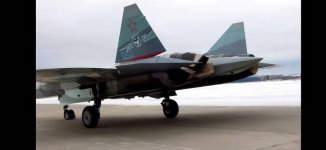
The first contracts for the export of the Russian Su-57 fighter jet were signed at the Airshow China 2024 exhibition in China. The General Director of Rosoboronexport Alexander Mikheev announced the deliveries of Su-57E aircraft abroad. However, he did not specify which countries or companies the contracts were signed with. Presumably, the Su-57 may be purchased by Iran, North Korea, Algeria or Venezuela. According to unofficial data, Russia currently has 22 Su-57 fighter jets, and by 2027 it is planned to increase their number to 76 units. The expected production volumes of the Su-57 from 2025 to 30 units per year, this has not been officially confirmed.

To view this content we will need your consent to set third party cookies.
For more detailed information, see our cookies page.
 
Russian military personnel tested a homemade FPV drone equipped with a flamethrower. Presumably, the drone is designed to intercept enemy drones, the drone will attack from above, hovering over the enemy drone. There is no technical information on the drone.

To view this content we will need your consent to set third party cookies.
For more detailed information, see our cookies page.
 
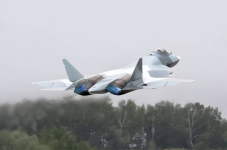
Spectacular footage of a low-altitude turn by a Russian Su-57 fighter jet in China. The turn is performed with a radius of about 250 meters and is carried out at an altitude of 60 meters, at a speed of 240 - 270 km / h. From 2025, the Russian Air Force should begin to receive an improved version of the Su-57M, which has been undergoing flight tests since October 2022 and will be equipped with a new engine - AL-51F. The maximum speed of the Su-57M may increase from 2550 to 2950 km / h, which will put the Su-57M on par with the MiG-31BM interceptor. The Su-57 will also have an almost 10% increase in range and rate of climb. This will allow the aircraft to quickly reach an altitude of 13,000-18,000 meters to destroy air targets at maximum distances.

To view this content we will need your consent to set third party cookies.
For more detailed information, see our cookies page.
 
Footage of testing a Russian interceptor drone equipped with a net from KPB Polet. According to the news, more and more companies are developing a device for intercepting drones using nets, they are usually inexpensive and effective. Earlier, we showed drones with similar devices that are already actively used by the Russian army. The net for intercepting drones from KPB Polet can be installed on any FPV drone. As reported online, some versions of drones with these nets can intercept drones autonomously without operator intervention, how this is implemented is unknown. The net can work effectively at a distance of 4 to 6 meters from the enemy drone, the diameter of the deployed net is about 2 meters. An electric fuse is used to activate the net.

To view this content we will need your consent to set third party cookies.
For more detailed information, see our cookies page.
 
Footage of the assembly and launch of the improved Russian FPV drone aircraft "Molniya-2". Earlier we talked about the first version of the UAV "Molniya-1", these drones are considered simple and cheap. The improved UAV "Molniya-2" is now equipped with two engines, a new body and has an aerodynamic fairing. The drone is also equipped with an improved interference-proof command and telemetry module. The drone has an increased flight range and presumably the mass of the warhead, there is no technical information yet. The launch of the UAV "Molniya-2" is carried out using a catapult.

To view this content we will need your consent to set third party cookies.
For more detailed information, see our cookies page.
 
The first contracts for the export of the Russian Su-57 fighter jet were signed at the Airshow China 2024 exhibition in China. The General Director of Rosoboronexport Alexander Mikheev announced the deliveries of Su-57E aircraft abroad. However, he did not specify which countries or companies the contracts were signed with. Presumably, the Su-57 may be purchased by Iran, North Korea, Algeria or Venezuela. According to unofficial data, Russia currently has 22 Su-57 fighter jets, and by 2027 it is planned to increase their number to 76 units. The expected production volumes of the Su-57 from 2025 to 30 units per year, this has not been officially confirmed.

To view this content we will need your consent to set third party cookies.
For more detailed information, see our cookies page.


I'm guessing China buying a batch of Su-57.
 
Close-up footage of the Russian Gerbera drone has suddenly appeared in Belarus, according to some media, Bryansk region. The Russian Gerbera drone reportedly landed in a field. The video shows combine operators, presumably from Belarus, trying to start the UAV's engine. This is currently the only close-up footage of the Gerbera UAV, which is actively used by the Russian army.

To view this content we will need your consent to set third party cookies.
For more detailed information, see our cookies page.
 
Russian troops have received the Chernika UAV, about 4,500 drones have been delivered since 2022, but they have only been reported now. The Chernika drone is made as a flying wing UAV, and is manufactured by the Innovative Technologies Corporation. There are two versions, the Chernika-1 UAV and the larger Chernika-2 UAV, with a wingspan of 2.2 meters. According to military personnel, the Chernika-2 UAV has proven itself well. The Chernika-1 drone is equipped with a 0.7 kg warhead, with the ability to activate after a specified time, the Chernika-2 UAV in a modernized version has a 3.5 kg warhead. Both drones are resistant to electronic warfare. The Chernika-2 UAV is designed to destroy buildings, dugouts, equipment, and enemy manpower. Usually, the drone automatically goes to the target at the specified coordinates, and at the end, the operator controls the drone's operation. The flight range of the UAV "Chernika-2", under good conditions, can reach 100 km, UAV "Chernika-1" up to 80 km, how this is implemented is unclear. The flight altitude of the UAV "Chernika-2" with a maximum load is up to 1 km, the flight time is up to 1.5 hours, without a load up to 2 hours. The flight speed reaches 60 km / h. Both models of drones are launched by hand or catapult, the price is not reported. The drone body was most likely copied.

To view this content we will need your consent to set third party cookies.
For more detailed information, see our cookies page.
 
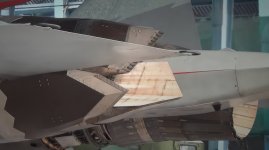
The first footage of the Russian Su-57 aircraft with a flat nozzle on its engines. The footage shows that the test Su-57 is equipped with only one new AL-51F1 engine with a flat nozzle, the second engine is the standard AL-41F1 power plant. The new Su-57 nozzle has four independently controlled flaps, two of which are designed for use in subsonic mode and two for supersonic flight. The flat nozzle is also installed on the US F-22, but it has only one thrust vector, while the Su-57 has a nozzle with an all-aspect thrust vector, which provides better maneuverability and better control of the aircraft. The design of the new nozzle allows for better cooling of the exhaust gases. This, in turn, reduces the infrared signature of the aircraft in the rear projection. It is worth noting that the "Flat" nozzle will reduce the thrust of the Su-57 to some extent, but it will improve the stealth characteristics from the rear projection of the aircraft. Currently, the Su-57 aircraft uses the first-stage AL-41F1 "Product 117" engine; Su-57s with second-stage AL-51F1 "Product 30" engines should be installed from 2025. The AL-51F1 has several non-afterburning modes, in which the fighter will operate at high supersonic speeds and will be less visible in the infrared range. An improved version of the fighter should be designated Su-57M. According to experts, the new engine will provide the Su-57 with the highest level of thrust among all fighters in the world currently in use.

To view this content we will need your consent to set third party cookies.
For more detailed information, see our cookies page.
 
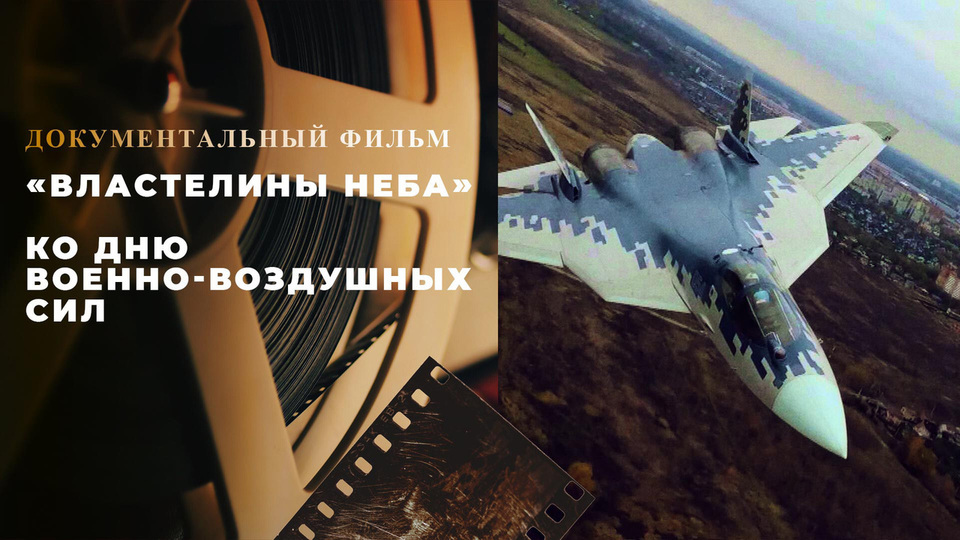
Lords of the Sky. Documentary film dedicated to the 85th anniversary of the Sukhoi Design Bureau and the MiG Design Bureau.
 
The first footage of the new augmented reality flight helmet for pilots of Russian fifth-generation Su-57 fighters. The new helmet significantly simplifies the control of the Su-57 aircraft's weapons. When using missiles with an infrared homing head, the pilot sees when the target is captured: the aiming mark changes from a cross to a circle. The missile is automatically aimed at the target in the direction of the pilot's gaze, which makes the use of weapons even more accurate and intuitive. The helmet-mounted display system allows you to display an image of any complexity on the protective visor. The new AR helmet not only projects a digital image during combat operations, but also transmits the pilot's actions to the command center. Sensors showing blood pressure, pulse and the pilot's condition can be installed on the pilot's helmet. The helmet weighs less than two kilograms, the slots on the helmet are designed to distribute air flows during the pilot's ejection, so that the helmet does not crack.

To view this content we will need your consent to set third party cookies.
For more detailed information, see our cookies page.
 

Users who are viewing this thread

Pakistan Defence Latest

Back
Top