Navigation
Install the app
How to install the app on iOS
Follow along with the video below to see how to install our site as a web app on your home screen.
Note: This feature may not be available in some browsers.
More options
Style variation
You are using an out of date browser. It may not display this or other websites correctly.
You should upgrade or use an alternative browser.
You should upgrade or use an alternative browser.
Saudi Arabia strategic Projects: news, discussions & updates
- Thread starter The SC
- Start date
More options
Who Replied?


The SC
INT'L MOD
- Thread starter
- #291
After Saudi-American relations were affected by Riyadh’s oil positions and its huge military, security and trade agreements with the East, South and Europe, and after its reconciliation with Iran under the auspices of China, and its dismissal of “contrived” and “Western-designed” conflicts with its neighbours, Washington offered Riyadh a comprehensive framework for safe and fruitful relations with it.
The offer began with a new security agreement that replaces the previous historical agreement that secures sources and routes of energy supply, which is more than eighty years old and has been overtaken by the transformations in the American energy market and its lack of dependence on Middle Eastern oil, and in Saudi policy, which has moved to a zone of positive neutrality and built its various international partnerships on the basis of Common interests, bilateral and collective.
What prompted President Biden's administration to put forward this offer with such enthusiasm was Riyadh's move to an advanced stage of moving away from American markets, interests, and policies. This was evident in the Kingdom’s refusal to meet its urgent need to raise oil production and reduce its price, after the Russian invasion of Ukraine, and its demand to end Russia’s membership in OPEC Plus, and to apply Western sanctions against it, including preventing the use of Saudi airspace for the passage of Russian aircraft.
American fears were compounded by Riyadh’s invitation to join the BRICS alliance, Beijing’s announcement of trade exchange with the Kingdom in local currencies, including energy prices, and the revelation of wide-ranging cooperation in advanced fields such as space, artificial intelligence, and sustainable energy, in addition to military and industrial contracts that include participation in research, development, and transportation. Technology and content localization. All of this is within the framework of respect for national sovereignty and non-interference in internal affairs.
The American offer also came to reassure Riyadh after laxity in providing defensive weapons to protect its cities and vital installations from Iranian militia missiles and drones, and even secret and public service with Iran and its agents in the region and seeking to revive the nuclear agreement. In return, freezing or postponing the implementation of arms deals to Riyadh, for a price, as a pressure method to implement the demands.
From the Saudi perspective, Washington in the second millennium is no longer what it was in the last century. It cannot be relied upon as a guaranteed strategic ally, nor can its security pledges be relied upon. Riyadh must diversify its sources of weapons and its economic, security and political partnerships, and put its interests and those of its brothers ahead of others.
It is aided in this by the development of its capabilities in various fields and its wide welcome in the major global capitals.
It added to the list of demands its other needs, including its project to produce peaceful nuclear energy. Its lands contain the sixth global reserve of uranium metal. It not only wants to extract it, but also to enrich it locally. It needs American technology to achieve this under the supervision of the International Atomic Energy Agency.
It also stipulated the localization of advanced industries, providing them with super-fast chips and computers, and supporting their centers to develop and Arabize artificial intelligence. It called for trade and investment agreements that support its development vision to diversify sources of national income and reduce dependence on oil. While adhering to its agreements with great powers such as China and Russia.
In order for America to respond to all these demands and conditions, and to pass them through the legislative bodies, and be approved by representatives and senators of Congress, the media, and the pro-Israel forces in the deep state, Washington added the condition of normalization with Israel.
Riyadh did not reject, but rather welcomed, but only after Tel Aviv accepted the Saudi initiative, which was adopted by the Arab Summit in Beirut in 2002 and was based on Security Council resolutions and the agreements sponsored by America in Oslo and Camp David between Israel and the Palestinian Authority.
The ball returned to Tel Aviv's court, and the Biden administration pressured the Netanyahu government to accept the deal in exchange for providing guarantees for Israel's security. There seemed to be progress in the negotiations. Then everything stopped after the “October 7 invasion,” in which Iran wanted to sabotage the peace project and the Saudi-American alliance.
Today, the most ideologically, politically, and terrorist Israeli government is no longer willing to accept the establishment of an independent Palestinian state and move forward with any negotiations on a normalization deal that stipulates its withdrawal from Gaza, handing it over to the Palestinian Authority, and accepting a documented road map that guarantees the implementation of the provisions of the Arab Initiative. It finally found the excuse it needed to say no as it wanted.
Negotiations between Riyadh and Washington are still ongoing to implement the bilateral part of the project, and they have reached 90% of it, according to statements by officials in the two countries. But the question is: What if the final agreement is reached, will it be implemented immediately on the basis of Saudi Arabia’s commitment to normalization when Israel accepts its conditions? Or does the bilateral agreement wait for Israeli approval of the Saudi conditions?
Riyadh is not in a hurry, and will not implement any of the American demands or abandon its project to expand the circle of multipolar international partnerships. America will not get more Saudi investments and deals. When it is ready to move forward, Riyadh will be ready..
The offer began with a new security agreement that replaces the previous historical agreement that secures sources and routes of energy supply, which is more than eighty years old and has been overtaken by the transformations in the American energy market and its lack of dependence on Middle Eastern oil, and in Saudi policy, which has moved to a zone of positive neutrality and built its various international partnerships on the basis of Common interests, bilateral and collective.
What prompted President Biden's administration to put forward this offer with such enthusiasm was Riyadh's move to an advanced stage of moving away from American markets, interests, and policies. This was evident in the Kingdom’s refusal to meet its urgent need to raise oil production and reduce its price, after the Russian invasion of Ukraine, and its demand to end Russia’s membership in OPEC Plus, and to apply Western sanctions against it, including preventing the use of Saudi airspace for the passage of Russian aircraft.
American fears were compounded by Riyadh’s invitation to join the BRICS alliance, Beijing’s announcement of trade exchange with the Kingdom in local currencies, including energy prices, and the revelation of wide-ranging cooperation in advanced fields such as space, artificial intelligence, and sustainable energy, in addition to military and industrial contracts that include participation in research, development, and transportation. Technology and content localization. All of this is within the framework of respect for national sovereignty and non-interference in internal affairs.
The American offer also came to reassure Riyadh after laxity in providing defensive weapons to protect its cities and vital installations from Iranian militia missiles and drones, and even secret and public service with Iran and its agents in the region and seeking to revive the nuclear agreement. In return, freezing or postponing the implementation of arms deals to Riyadh, for a price, as a pressure method to implement the demands.
From the Saudi perspective, Washington in the second millennium is no longer what it was in the last century. It cannot be relied upon as a guaranteed strategic ally, nor can its security pledges be relied upon. Riyadh must diversify its sources of weapons and its economic, security and political partnerships, and put its interests and those of its brothers ahead of others.
It is aided in this by the development of its capabilities in various fields and its wide welcome in the major global capitals.
It added to the list of demands its other needs, including its project to produce peaceful nuclear energy. Its lands contain the sixth global reserve of uranium metal. It not only wants to extract it, but also to enrich it locally. It needs American technology to achieve this under the supervision of the International Atomic Energy Agency.
It also stipulated the localization of advanced industries, providing them with super-fast chips and computers, and supporting their centers to develop and Arabize artificial intelligence. It called for trade and investment agreements that support its development vision to diversify sources of national income and reduce dependence on oil. While adhering to its agreements with great powers such as China and Russia.
In order for America to respond to all these demands and conditions, and to pass them through the legislative bodies, and be approved by representatives and senators of Congress, the media, and the pro-Israel forces in the deep state, Washington added the condition of normalization with Israel.
Riyadh did not reject, but rather welcomed, but only after Tel Aviv accepted the Saudi initiative, which was adopted by the Arab Summit in Beirut in 2002 and was based on Security Council resolutions and the agreements sponsored by America in Oslo and Camp David between Israel and the Palestinian Authority.
The ball returned to Tel Aviv's court, and the Biden administration pressured the Netanyahu government to accept the deal in exchange for providing guarantees for Israel's security. There seemed to be progress in the negotiations. Then everything stopped after the “October 7 invasion,” in which Iran wanted to sabotage the peace project and the Saudi-American alliance.
Today, the most ideologically, politically, and terrorist Israeli government is no longer willing to accept the establishment of an independent Palestinian state and move forward with any negotiations on a normalization deal that stipulates its withdrawal from Gaza, handing it over to the Palestinian Authority, and accepting a documented road map that guarantees the implementation of the provisions of the Arab Initiative. It finally found the excuse it needed to say no as it wanted.
Negotiations between Riyadh and Washington are still ongoing to implement the bilateral part of the project, and they have reached 90% of it, according to statements by officials in the two countries. But the question is: What if the final agreement is reached, will it be implemented immediately on the basis of Saudi Arabia’s commitment to normalization when Israel accepts its conditions? Or does the bilateral agreement wait for Israeli approval of the Saudi conditions?
Riyadh is not in a hurry, and will not implement any of the American demands or abandon its project to expand the circle of multipolar international partnerships. America will not get more Saudi investments and deals. When it is ready to move forward, Riyadh will be ready..
The SC
INT'L MOD
- Thread starter
- #292
Bloomberg Agency:
The US-Saudi nuclear agreement is about to be completed, and Congress is aware of the details.

- the details:
Lawmakers said National Security Council officials briefed members of Congress on a long-awaited agreement to share nuclear technology with Saudi Arabia.
Senator Jeff Merkley, an Oregon Democrat who serves on the committee, said in an interview that members of the Senate Foreign Affairs Committee received a classified briefing on the features of the deal on Tuesday.
A senior US official said last month that the agreement was essentially complete after years of negotiations.
While it could strengthen Westinghouse Electric and other US nuclear companies, the #Saudi partnership
The senior US official said the Saudi agreement includes elements related to nuclear nonproliferation and was drafted with input from the Department of Defense, the Department of Energy and the State Department. A National Security Council spokesman did not respond to a request for comment.
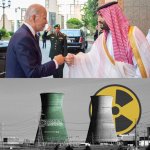
The US-Saudi nuclear agreement is about to be completed, and Congress is aware of the details.
- the details:
Lawmakers said National Security Council officials briefed members of Congress on a long-awaited agreement to share nuclear technology with Saudi Arabia.
Senator Jeff Merkley, an Oregon Democrat who serves on the committee, said in an interview that members of the Senate Foreign Affairs Committee received a classified briefing on the features of the deal on Tuesday.
A senior US official said last month that the agreement was essentially complete after years of negotiations.
While it could strengthen Westinghouse Electric and other US nuclear companies, the #Saudi partnership
The senior US official said the Saudi agreement includes elements related to nuclear nonproliferation and was drafted with input from the Department of Defense, the Department of Energy and the State Department. A National Security Council spokesman did not respond to a request for comment.
The SC
INT'L MOD
- Thread starter
- #293
The nuclear program is being built horizontally and vertically
- Horizontally - uranium mines - uranium preparation facilities
- Vertically - research reactors - nuclear power reactors - universities with nuclear specializations
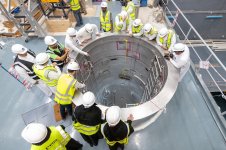
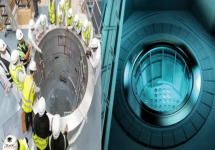
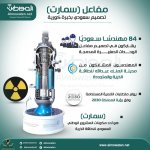
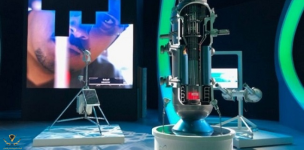
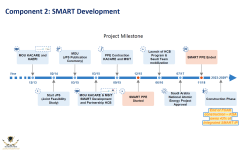
The Kingdom of Saudi Arabia own 43% of the intellectual property rights of the reactor!
- Horizontally - uranium mines - uranium preparation facilities
- Vertically - research reactors - nuclear power reactors - universities with nuclear specializations
The Kingdom of Saudi Arabia own 43% of the intellectual property rights of the reactor!
The SC
INT'L MOD
- Thread starter
- #294
For centuries, a large swath of Saudi Arabia was associated with barren deserts and barren landscapes. However, the sands began to shift and the Kingdom embarked on an ambitious mission to transform the barren lands into green farms.
Here we are at the largest indoor vertical farm on site. We have 27 modular farming units. Each one can hold about 45,360 plants. So when we scale up production, we're looking at growing about 1.1 million plants at a time in different age cycles.
Today we will discover together how the Kingdom of Saudi Arabia achieved this transformation? What innovative technologies and strategies have been used to overcome water scarcity?
Here we are at the largest indoor vertical farm on site. We have 27 modular farming units. Each one can hold about 45,360 plants. So when we scale up production, we're looking at growing about 1.1 million plants at a time in different age cycles.
Today we will discover together how the Kingdom of Saudi Arabia achieved this transformation? What innovative technologies and strategies have been used to overcome water scarcity?
The SC
INT'L MOD
- Thread starter
- #295
In a report from ConstructionBriefing
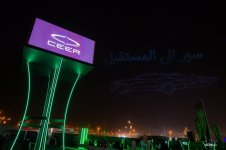
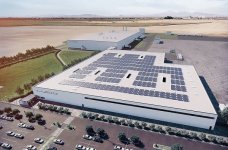
Ceer, the first electric vehicle brand in Saudi Arabia, has awarded a contract worth 5 billion Saudi riyals (1.3 billion US dollars) to Saudi Arabia's Modern Building Leaders to build a new advanced factory.
What are the details?
⁃The Ceer electric car manufacturing complex will be established in King Abdullah Economic City in the Kingdom.
⁃The new facility will extend over an area of one million square meters, with a covered area of 530,000 square meters.
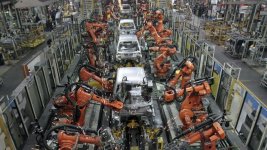
⁃It will contain areas dedicated to each stage of vehicle production, including the press shop, body shop, paint shop, and general assembly.
⁃The complex will also include areas designated for logistics and waste management, warehouses, offices, a water treatment system, and a vehicle testing track.
⁃Ceer is a joint venture between Saudi Arabia's Public Investment Fund and Taiwan-based electronics manufacturer Foxconn, with BMW as the component technology provider.
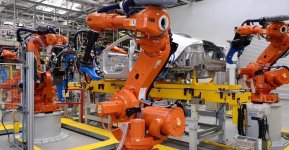
Ceer, the first electric vehicle brand in Saudi Arabia
, has awarded a contract worth 5 billion Saudi riyals (1.3 billion US dollars) to Saudi Arabia's Modern Building Leaders to build a new advanced factory.What are the details?
⁃The Ceer electric car manufacturing complex will be established in King Abdullah Economic City in the Kingdom.
⁃The new facility will extend over an area of one million square meters, with a covered area of 530,000 square meters.
⁃It will contain areas dedicated to each stage of vehicle production, including the press shop, body shop, paint shop, and general assembly.
⁃The complex will also include areas designated for logistics and waste management, warehouses, offices, a water treatment system, and a vehicle testing track.
⁃Ceer is a joint venture between Saudi Arabia's Public Investment Fund and Taiwan-based electronics manufacturer Foxconn, with BMW as the component technology provider.
The SC
INT'L MOD
- Thread starter
- #296
Construction work has begun on the #Sir Electric Car Manufacturing Complex, located in King Abdullah Economic City, on a total area of one million square meters, and includes various areas that serve all stages of electric car manufacturing, and areas designated for logistical operations.




The SC
INT'L MOD
- Thread starter
- #299
Today, the Public Investment Fund announced the launch of the National Company for Investment in the Automotive and Mobility Sector, “Tasaru Mobility Investments,” an investment company specialized in developing local capabilities for the automotive and mobility sector supply chains in the Kingdom.
The SC
INT'L MOD
- Thread starter
- #300
The European Commission approves the acquisition of a strategic stake in the German company “Holon” for self-driving cars by the “Tasaru” company, owned by the Public Investment Fund.
 This investment will contribute to facilitating continued progress in developing the “Holon Mover,” the self-driving electric vehicle.
This investment also paves the way for the establishment of a production plant in Saudi Arabia, which creates local job opportunities and enhances the transfer of technology to the Kingdom.
These efforts and aspirations are in line with the goals of “Acceleration” to localize expertise and contribute to economic diversification in Saudi Arabia.



This investment will contribute to facilitating continued progress in developing the “Holon Mover,” the self-driving electric vehicle.This investment also paves the way for the establishment of a production plant in Saudi Arabia, which creates local job opportunities and enhances the transfer of technology to the Kingdom.These efforts and aspirations are in line with the goals of “Acceleration” to localize expertise and contribute to economic diversification in Saudi Arabia.Users who are viewing this thread
Total: 2 (members: 0, guests: 2)
Pakistan Defence Latest


Country Watch Latest
-

-
-
-

-
 India Has Lost Air Superiority to Pakistan, No Jets Left to Fight (10 Viewers)
- Latest: NGAD IS THE BEST
Latest Posts
-

-
-
 Pakistan vows to defend Saudi Arabia against Iran-backed Houthis by ‘whatever means’ (17 Viewers)
- Latest: Feroze
-

-