South Korea Defence and News Forum

South Korea starts $1.29B electronic warfare aircraft project.​


NewsAviation
ByGu Min Chul

Jan 22, 2026
Modified date: Jan 22, 2026


Concept rendition (KAI pic)
Key Points
  • South Korea launched a $1.29 billion program to develop a dedicated electronic warfare aircraft designed to jam enemy air defense and command networks by 2034.
  • The project, led by DAPA with LIG Nex1, aims to improve the survivability and interoperability of South Korean and allied air operations in contested airspace.
South Korea has launched a 1.9 trillion-won ($1.29 billion) program to develop a new class of aircraft designed to jam and disrupt enemy air defense networks, the Defense Acquisition Program Administration (DAPA) announced.

DAPA said the project, known as Block-I, will focus on developing large, dedicated electronic warfare aircraft capable of degrading an adversary’s integrated air defense systems and electronic command networks through sustained jamming operations. The agency discussed the development plan during a formal meeting with LIG Nex1, one of South Korea’s primary defense contractors, according to a statement released by DAPA.

The program represents one of the largest investments by Seoul in airborne electronic warfare capabilities and reflects growing concern over increasingly dense air defense environments in Northeast Asia. DAPA said the aircraft is intended to support joint operations by improving the survivability of South Korean and allied air assets operating in contested airspace.


Under the current plan, the Block-I aircraft is scheduled to enter service in 2034. The platform is expected to operate as a stand-off electronic attack system, targeting enemy radars, sensors, and command links from outside heavily defended zones while enabling follow-on air operations.

As noted by DAPA, the aircraft will be designed to conduct wide-area jamming missions rather than point attacks, allowing it to affect multiple layers of an opponent’s air defense network simultaneously. The agency did not disclose the specific airframe or sensor configuration but said the platform would be optimized for long endurance and high electrical power generation to support advanced jamming payloads.

The Block-I aircraft is also intended to improve interoperability with South Korea’s existing air and missile defense architecture and allied forces. DAPA said the system would play a key role in future combined operations by enabling safer access for strike aircraft, intelligence platforms, and unmanned systems.

In parallel with Block-I, DAPA confirmed plans to pursue a follow-on Block-II version after the initial aircraft reaches maturity. The advanced variant is expected to incorporate improved electronic attack technologies and expanded mission sets, though no timeline or budget details were released.

South Korea currently relies on a limited number of modified aircraft and ground-based systems for electronic warfare support. The new program aims to provide a dedicated airborne capability comparable to specialized electronic attack aircraft operated by the United States and other advanced air forces.

According to the agency, the project is part of a broader effort to adapt to modern warfare, where electronic dominance is increasingly critical to air operations. Dense radar coverage, mobile surface-to-air missile systems, and networked command structures have made traditional suppression missions more complex, increasing the demand for stand-off jamming platforms.

LIG Nex1, which participated in the planning meeting, is already involved in several of South Korea’s electronic warfare and sensor programs. The company is expected to play a central role in developing mission systems, jamming equipment, and integration solutions for the new aircraft, though DAPA did not name additional contractors.

The announcement comes as South Korea continues to expand its defense budget and invest in high-end capabilities, including long-range strike systems, missile defense, and space-based surveillance. Seoul has repeatedly stated that future conflicts would depend heavily on information dominance and the ability to operate in contested electromagnetic environments.
 

Cambodia will send 73 online scam suspects to South Korea

73 South Koreans detained in Cambodia for alleged involvement in online scams will be brought back home this week to face criminal investigation

By HYUNG-JIN KIM Associated Press
January 22, 2026, 12:20 AM ET

To view this content we will need your consent to set third party cookies.
For more detailed information, see our cookies page.


SEOUL, South Korea -- Dozens of South Koreans detained in Cambodia for alleged involvement in online scam compounds will be sent home this week to face investigations, officials said Thursday, in what would be the largest group reparation of Korean criminal suspects from abroad.

The 73 South Korean suspects allegedly scammed fellow Koreans out of 48.6 billion won ($33 million), according to the statement.

The suspects, 65 men and eight women, were among about 260 South Koreans detained in a crackdown in Cambodia in recent months. Public outrage over scam centers in Southeast Asia flared in South Korea when a Korean student was found dead last summer after reportedly being forced to work at a scam compound in Cambodia.

Authorities said at the time he died after being tortured and beaten, and South Korea sent a government delegation to Cambodia in October for talks on a joint response.

South Korea will send a chartered plane to Cambodia, which is expected to return Friday with the suspects, who will be immediately handed over to investigative authorities upon arrival, according to a South Korean government statement.

Cybercrime has flourished in Southeast Asia, particularly in Cambodia and Myanmar, as trafficked foreign nationals were employed to run romance and cryptocurrency scams, often recruited with false job offers and then forced to work in conditions of near-slavery. According to estimates from the U.N. Office on Drugs and Crime, scam victims worldwide lost between $18 billion and $37 billion in 2023.

In January, Cambodia said it had arrested and extradited to China a tycoon accused of running a huge online scam operation.

Since October, about 130 Korean scam suspects from Cambodia have been sent back home and less then 30 such Korean suspects from Laos, Vietnam, Thailand and the Philippines altogether. After Friday's repatriation, about 60 South Koreans will remain detained in Cambodia awaiting repatriation, according to police.

South Korean officials said in October that about 1,000 South Koreans were estimated be in scam centers in Cambodia. Some are believed to be forced laborers.

South Korea said it will continue its efforts to crack down on scam crimes targeting South Korean nationals.
 

S Korea’s former PM found guilty of insurrection, given 23 years in prison​

Ex-Prime Minister Han Duck-soo accused of failing to hold a lawful cabinet meeting following martial law declaration.

1769139399805.jpeg
Former South Korean Prime Minister Han Duck-soo, centre, arrives at the Seoul Central District Court for his sentencing in an insurrection case on January 21, 2026 [Chung Sung-Jun/AFP]
https://www.aljazeera.com/author/ted_regencia_201281121442856892
ByTed Regenciaand News Agencies
Published On 21 Jan 202621 Jan 2026

A South Korean court has sentenced former Prime Minister Han Duck-soo to 23 years in prison after finding him guilty on insurrection charges related to disgraced ex-President Yoon Suk-yeol’s short-lived declaration of martial law.

Han was found guilty on Wednesday of abetting Yoon’s brief imposition of martial law and for failing to hold a lawful cabinet meeting, as required by South Korean law, after the decree to mobilise the military was ordered by the then-president in December 2024.

Han”disregarded his duty and responsibility as prime minister until the very end”, said Judge Lee Jin-gwan, of the Seoul Central District Court.

“As a result of the defendant’s actions, South Korea was in danger of returning to the dark past ‌when the basic rights and liberal democratic order of the people were violated, potentially preventing them from escaping from the quagmire of dictatorship for a long time,” the judge said.

The court ordered Han to be detained after sentencing, citing concerns about the possible destruction of evidence.

Han, 76, is the first member of Yoon’s cabinet to be found guilty and sentenced to jail in relation to the martial law declaration.

The former prime minister denied the charges against him, saying he had no prior knowledge of Yoon’s plan to impose military rule.

Last week, a court sentenced Yoon to five years in jail after finding him guilty on charges linked to the imposition of martial law, including obstructing the work of authorities, fabricating official documents and failing to comply with legal processes.
 

Taiwan per capita income overtakes S Korea, Japan: IMF


Dec. 25, 2025 17:42

Taiwan has overtaken South Korea this year in per capita income for the first time in 23 years, IMF data showed.
Per capita income is a nation’s GDP divided by the total population, used to compare average wealth levels across countries.
Taiwan also beat Japan this year on per capita income, after surpassing it for the first time last year, US magazine Newsweek reported yesterday.

Across Asia, Taiwan ranked fourth for per capita income at US$37,827 this year due to sustained economic growth, the report said.

In the top three spots were Singapore, Macau and Hong Kong, it said.

South Korea ranked fifth at US$35,960, while Japan was in sixth place at US$34,720, it said.

Taiwan’s improved per capita income could be attributed to Taiwan Semiconductor Manufacturing Co as the world’s largest contract producer of microchips, the rise of artificial intelligence and its reputation as the “Silicon Island,” National Development Council Minister Yeh Chun-hsien (葉俊顯) was quoted as saying in the article.
 

Taiwan rides the AI wave to rapid economic growth

Published: 21 February 2026

IN BRIEF

Taiwan’s economy surged 8.6 per cent in 2025, driven by strong exports, particularly in AI chips and consumer electronics.
The US became Taiwan’s largest export market, surpassing China and Hong Kong, as higher US tariffs on Chinese goods shifted production to Taiwan.
Advanced chip demand, especially for AI applications, fuelled TSMC’s revenue, while legacy chip exports to China remained stable.
A new Taiwan–US trade deal and closer investment ties reinforce economic growth, though heavy reliance on the United States leaves Taiwan vulnerable to geopolitical risks.

Driven by vigorous exports, Taiwan’s economy grew by 8.6 per cent in 2025, outperforming most of the world’s major economies. Strong demand from US firms for consumer electronics and artificial intelligence (AI) lifted the island’s economy, despite the challenges posed by US President Donald Trump’s tariff policy.

Taiwan benefitted from the relatively higher US tariffs on Chinese goods, which prompted a partial shift of export production away from the mainland. In 2025, the United States surpassed China and Hong Kong to become Taiwan’s largest export destination, accounting for 31 per cent of the island’s total exports. Information, communication and audio–video products comprised 77 per cent of those exports, which were mostly assembled in and exported from mainland China before extra levies were imposed.

Meanwhile, the combined share of China and Hong Kong in Taiwan’s total exports plunged from 44 per cent in 2020 to 27 per cent in 2025, declining in almost all sectors except electronic components, which saw decent growth. This trend highlights that China has never been a major consumer market for Taiwanese manufacturers. Taiwan’s robust exports to China primarily centred on assembling industrial materials into final goods destined for the US market. As China’s role as a final assembly and export hub diminishes, cross-Strait economic ties will naturally weaken.

Taiwan’s declining exports to the mainland can also be attributed to China’s overcapacity in sectors such as internal combustion automobiles, iron and steel, cement, phone handsets, legacy semiconductor chips, solar panels and electric vehicles. Compounding this, US export control policies further curtailed Taiwan’s exports of advanced chips to China. In 2024, Taiwan was restricted from exporting advanced chips of 7 nanometres and below to China, and in 2025, restrictions extended to chips using 16-nanometre process technology.

Yet the resilience of Taiwan’s electronic component exports indicates that Chinese demand for legacy chips — chips with 28-nanometre process technology or larger — remains steady. Many Chinese manufacturers continue to rely on Taiwanese chipmakers, whose high quality — especially compared with domestic alternatives — is important for maintaining the value and reputation of Chinese-branded products.

The rapid global development of AI has driven strong overall demand for Taiwan’s advanced chips, mostly from US AI firms. Much of this demand comes from high-performance computing, which enables AI applications and accounted for 58 per cent of total revenue for TSMC, the leading manufacturer, in 2025.

Taiwan’s stronger exports relative to imports enlarged its trade surplus significantly to US$157 billion in 2025, up from US$81 billion in the previous year. Foreign exchange reserves also rose to US$602.6 billion in 2025 from US$577 billion in 2024, placing Taiwan only behind China, Japan and Switzerland. More than 80 per cent of these reserves are invested in US Treasury bonds.

Unlike chips and consumer electronics, Taiwan’s exports of other industrial goods — such as plastics, steel, textiles and transportation equipment — have been waning over recent years. Growing competition from cheap Chinese industrial goods, along with Taiwan’s exclusion from regional free trade agreements, has especially affected the Chinese and Southeast Asian markets.

But the Taiwan–US trade deal finalised in February 2026 — which lowers tariffs on Taiwanese imports from 20 to 15 per cent — may help offset these challenges. By leveraging its manufacturing strength, particularly its robust chip fabrication capacity, Taiwan has established a competitive position in the US market for a range of manufactured and industrial goods.

Beyond consumer electronics and chips, the United States is a key market for Taiwanese electrical machinery and wood products, accounting for 40 per cent of total exports in these sectors in 2025. It is also a major destination for Taiwan’s basic metals, transportation equipment and machinery, taking in about one-third of each sector’s total exports in the same year.

Taiwan’s closer ties with the United States extend beyond trade. The United States has replaced China as Taiwan’s largest investment destination, accounting for 13 per cent of the island’s total outward foreign direct investment, driven in part by TSMC’s building of chip fabrication plants in Arizona since 2020. The new bilateral trade arrangement may encourage further Taiwanese investment, as firms investing in US semiconductor capacity could qualify for preferential treatment under the agreement.

Overall, Taiwan’s successful economic reshuffle from China to the United States has contributed to the island’s outstanding economic growth. The sixth US–Taiwan Economic Prosperity Partnership Dialogue in January 2026 reaffirmed bilateral cooperation in constructing a resilient supply chain network. Greater economic relations between the two countries are expected to continue to underpin Taiwan’s economy in the coming years.

But increasing reliance on the US economy is not without risks. The 15 per cent tariff remains costly for Taiwanese manufacturers, and moving production capacity to the United States is a significant investment that could exacerbate brain drain.

Geopolitical uncertainty continues to shape US policy, and Taiwan’s heavy reliance on the US market leaves it vulnerable to policy changes or future retaliation — any of which could disrupt its economic trajectory and jeopardise long-term economic prosperity.

 
Good accomplishment. So when is China going to annex Taiwan?
 

US Imports More From Taiwan Than Mainland China for First Time in Decades​

By Bloomberg News
February 20, 2026 at 12:01 PM GMT+8

The US imported more from Taiwan than Mainland China for the first time in decades as President Donald Trump’s tariffs reshape trade flows while a global boom in artificial intelligence fuels demand for tech products.

US purchases of goods from China plunged almost 44% in December from a year earlier to $21.1 billion, Commerce Department data showed Thursday. By contrast, shipments from Taiwan more than doubled during the same period to $24.7 billion.


US Imports More From Taiwan Than Mainland China for First Time in Decades​

By Bloomberg News
February 20, 2026 at 12:01 PM GMT+8

The US imported more from Taiwan than Mainland China for the first time in decades as President Donald Trump’s tariffs reshape trade flows while a global boom in artificial intelligence fuels demand for tech products.

US purchases of goods from China plunged almost 44% in December from a year earlier to $21.1 billion, Commerce Department data showed Thursday. By contrast, shipments from Taiwan more than doubled during the same period to $24.7 billion.

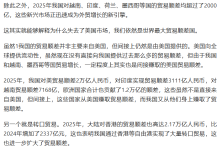
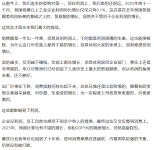
US imports more from Taiwan, a small island of 22 million, than mainland China.

US is becoming more and more irrelevant in China's overall exports and trade, don't know why Trump still goes after China in bilateral trade.

Taiwan_20260220142854_6i3eus.jpg
 
Those Taiwanese will always suck up to the Japanese and Americans but despise Koreans no matter what. They want to be tied with Japan and US. Just despicable colonial mentality.

Soon, US will be insignificant in China's trade ad therefore economy. Decoupling will be achieved finally. That's good for China because US is no longer a reliable partner. China can dump all US bonds now.
 
Last edited:
According to latest data, they will physically die out in a couple decades. The birth rate is shocking.

To view this content we will need your consent to set third party cookies.
For more detailed information, see our cookies page.


When you have such big problems, GDP per capita doesn't matter.
 
US is becoming more and more irrelevant in China's overall exports and trade, don't know why Trump still goes after China in bilateral trade.

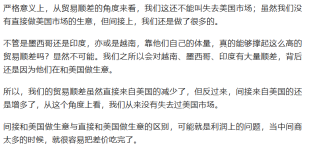
The US is still the world's largest net importer. China's exports eventually still end up in the US market via third-party routing.

1771736641578.png
1771736998922.png
1771736744973.png
 
According to latest data, they will physically die out in a couple decades. The birth rate is shocking.

To view this content we will need your consent to set third party cookies.
For more detailed information, see our cookies page.


When you have such big problems, GDP per capita doesn't matter.

Don't worry, they will import Indian workers in large numbers, :LOL:.
 
Don't worry, they will import Indian workers in large numbers, :LOL:.
Quite likely. Indians are already being imported into Japan to deal with their demographic catastrophe.
 
According to latest data, they will physically die out in a couple decades. The birth rate is shocking.

To view this content we will need your consent to set third party cookies.
For more detailed information, see our cookies page.


When you have such big problems, GDP per capita doesn't matter.


China, Japan, Korea. East Asia as a whole is dying out.
 

Users who are viewing this thread

Back
Top