The Evolution of PAF's JF-17 Thunder through OCU [Operational Capability Upgrade] - News, Updates, Possibilities & Discussions.

Both, JF-17 and J-10C's radars are GaN based! While, the radars of J-35 and J-20 use "Silicon Carbide" instead of Gallium Nitride. J-20 and J-35 radars are the most advanced in the world from a tech standpoint. Even the US is still using GaN in F-22 and F-35!
Do you actually have any concrete evidence on this lol. Im guessing the answer is no.


We can integrate whatever we want to with our Radars for OUR use. However, China and Turkiye are internally hostile towards each other. So we can't expose Chinese tech to Turkiye and Turkish tech to China.
No we cant. Not even for OUR use. There are many members on here with first hand experience of the project, where integration of payloads causes systems to lock up without Chinese support. Stop spreading falsehoods.


The only way around this is that we buy weapons on TOT for all our major systems. Build locally and do whatever we want to. No dependency on any nation. Only collaborations for future advancements.
lol were entirely dependant on china for the jf-17...
 
Everyone is focused on AESA vs PESA, GaN vs GaS, 200-300 KM range.

Although these are important aspects but what really matters is data processing power and speed at which onboard computers can run algorithms. And if Algorithms are coded up to best code writing standards.

Does engine generate enough power to sufficiently run those processors?

There are pulse doppler radars radars more powerful in processing compared to Hypebeast AESA

The reason you use GaN and SiC, etc, automatically shows you the processing. We migrated from from vacuum tubes to transistors to semi-conductors and now to specific rare earth mineral composites that process a semi-conductor 3,10 or 20 times faster. So when we say something is GaN based, its implied it's running a high-speed computing on the back-end. If we say SiC, that's even faster, so like a mini-super computer processing data.

On algorithms, we are in 2025. Radars are an invention of pre-1940's, so nearly 100 years. So the logic doesn't change much for Radar waves to be sent out and read back.
 
Do you actually have any concrete evidence on this lol. Im guessing the answer is no.

No we cant. Not even for OUR use. There are many members on here with first hand experience of the project, where integration of payloads causes systems to lock up without Chinese support. Stop spreading falsehoods.

lol were entirely dependant on china for the jf-17...

This is public information. That's all I can post. We want everyone to post all sensitive details here. That's not possible. Read all 3 of my posts above 2-3 times. You'll find a lot of data in them.

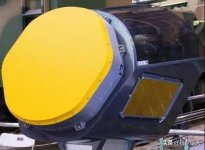
The KLJ-7A airborne active phased array radar (AESA) weighs only 120 kilograms and is equipped with more than 1,000 transmit/receive modules (TRM). The radar cross section (RCS) provides a maximum range of 170-200 kilometers for a target of 5 square meters, and can track 15 targets and engage 4 targets at the same time.

Pakistan has decided to use KLJ-7A radar to upgrade the JF-17 Xiaolong fighter, and the "Block III" of the Xiaolong fighter will also install the KLJ-7A airborne active phased array radar.

According to the total design of the radar, the technical level of the KLJ-7A has no generation difference with the APG-77 radar of the F-22, and the functional level is similar to the AN/APG-81 radar of the F-35.


KLJ7A.jpg
 
Last edited:
The reason you use GaN and SiC, etc, automatically shows you the processing. We migrated from from vacuum tubes to transistors to semi-conductors and now to specific rare earth mineral composites that process a semi-conductor 3,10 or 20 times faster. So when we say something is GaN based, its implied it's running a high-speed computing on the back-end. If we say SiC, that's even faster, so like a mini-super computer processing data.

On algorithms, we are in 2025. Radars are an invention of pre-1940's, so nearly 100 years. So the logic doesn't change much for Radar waves to be sent out and read back.

The reason you use GaN and SiC, etc, automatically shows you the processing. We migrated from from vacuum tubes to transistors to semi-conductors and now to specific rare earth mineral composites that process a semi-conductor 3,10 or 20 times faster. So when we say something is GaN based, its implied it's running a high-speed computing on the back-end. If we say SiC, that's even faster, so like a mini-super computer processing data.

On algorithms, we are in 2025. Radars are an invention of pre-1940's, so nearly 100 years. So the logic doesn't change much for Radar waves to be sent out and read back.
F-22 radar is GaAS based. So is it bad?

You're absolutely right it's not 1940s anymore;
A modern fighter jet’s radar doesn’t just ping and listen—it’s multitasking.

In addition to transmitting and receiving radar pulses, it’s typically doing all of these at the same time (thanks to high-speed digital signal processing ):
  1. Target Detection & Tracking
    • Find new targets (search mode)
    • Track existing ones in real time (track-while-scan)
    • Predict target movement using algorithms so it doesn’t “lose” them.
  2. Range & Velocity Measurement
    • Calculate how far away and how fast something’s moving (via Doppler shift).
  3. Identification
    • Perform IFF (Identification Friend or Foe) interrogations to avoid friendly fire.
  4. Terrain Mapping
    • Generate high-resolution ground maps for navigation or targeting.
  5. Weapons Guidance
    • Provide mid-course updates to missiles in flight.
  6. Electronic Counter-Countermeasures (ECCM)
    • Actively adapt to enemy jamming so it can still see targets.
  7. Data Fusion
    • Combine radar data with info from IR sensors, EW systems, or datalinks to give the pilot a single coherent picture.

In short a fighter jet radar is essentially doing search, track, ID, navigation, and counter-jamming simultaneously, while still acting as a missile guidance system.
 
F-22 radar is GaAS based. So is it bad?

You're absolutely right it's not 1940s anymore;
A modern fighter jet’s radar doesn’t just ping and listen—it’s multitasking.

In addition to transmitting and receiving radar pulses, it’s typically doing all of these at the same time (thanks to high-speed digital signal processing ):
  1. Target Detection & Tracking
    • Find new targets (search mode)
    • Track existing ones in real time (track-while-scan)
    • Predict target movement using algorithms so it doesn’t “lose” them.
  2. Range & Velocity Measurement
    • Calculate how far away and how fast something’s moving (via Doppler shift).
  3. Identification
    • Perform IFF (Identification Friend or Foe) interrogations to avoid friendly fire.
  4. Terrain Mapping
    • Generate high-resolution ground maps for navigation or targeting.
  5. Weapons Guidance
    • Provide mid-course updates to missiles in flight.
  6. Electronic Counter-Countermeasures (ECCM)
    • Actively adapt to enemy jamming so it can still see targets.
  7. Data Fusion
    • Combine radar data with info from IR sensors, EW systems, or datalinks to give the pilot a single coherent picture.

In short a fighter jet radar is essentially doing search, track, ID, navigation, and counter-jamming simultaneously, while still acting as a missile guidance system.


Latest radar tech can be divided into 3 sets of technologies, just like fighter jets and everything else in Gen 1,2,3. We'll exclude the older radars for this analysis, only AESA.

Gen 1: GaAs - Gallium Arsenide - Rafale and the kinds.

Gen 2: GaN - Gallium Nitride. Makes information process much faster than GaAS. F-22, F-35, J-10C, and our JF-17 use this technology. JF-17 really uses the J-10C tech, only made smaller. I've posted its TR module details above.

Gen 3: Silicon Carbide (SiC): Up to 10* faster processing when used in the architecture on semiconductors, plus works extremely fast with AI based chips like NVdia's GPU's. It creates immense power in beams transmitting out to farthest ranges. This is used in J-35 and J-20 and will also be used in Chinese 6th gen. This is breaking technology and China was very concerned about it getting in Turkey's hands when Pakistan first asked for J-35.

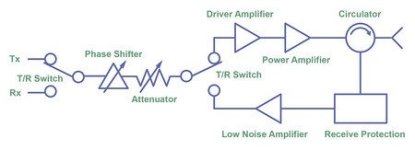
Here is a reference architecture diagram where these technologies are used. Anyone having some background will understand.

AESA.jpg

Here is it from a defense site, see the bold about F-22 radar and difference that I explained above.

The F-22 Raptor, the flagship of the US Air Force, is equipped with Northrop Grumman's AN/APG-77 radar. This AESA radar is known for its ability to detect and simultaneously track multiple aerial targets at long distances while remaining stealthy. The AN/APG-77 uses gallium nitride (GaN) TRM modules, offering increased power and efficiency compared to traditional gallium arsenide (GaAs) modules. Its jamming and electronic counter-countermeasure (ECCM) capabilities make it a formidable tool in aerial combat.

Making stuff up can't change the engineering designs! I will not comment further on posts from you. When someone shares knowledge, us Pakistanis instead of learning, try to insult that person or get into a silly debate by changing the entire product like this post above. This may look good on politics, but in science, technology, engineering issues, it looks silly. So better to avoid time waste.
 
Instead of writing these dumb one line statement, give me counter arguments, based on engineering, technology and background that I've displayed in my posts.

People are seeing that you have no counter. Common.........counter. Take google's help even, let's see if google can win over experience :)

id be better off doing so to a brick wall
 
Latest radar tech can be divided into 3 sets of technologies, just like fighter jets and everything else in Gen 1,2,3. We'll exclude the older radars for this analysis, only AESA.

Gen 1: GaAs - Gallium Arsenide - Rafale and the kinds.

Gen 2: GaN - Gallium Nitride. Makes information process much faster than GaAS. F-22, F-35, J-10C, and our JF-17 use this technology. JF-17 really uses the J-10C tech, only made smaller. I've posted its TR module details above.

Gen 3: Silicon Carbide (SiC): Up to 10* faster processing when used in the architecture on semiconductors, plus works extremely fast with AI based chips like NVdia's GPU's. It creates immense power in beams transmitting out to farthest ranges. This is used in J-35 and J-20 and will also be used in Chinese 6th gen. This is breaking technology and China was very concerned about it getting in Turkey's hands when Pakistan first asked for J-35.

Here is a reference architecture diagram where these technologies are used. Anyone having some background will understand.

View attachment 139996

Here is it from a defense site, see the bold about F-22 radar and difference that I explained above.

The F-22 Raptor, the flagship of the US Air Force, is equipped with Northrop Grumman's AN/APG-77 radar. This AESA radar is known for its ability to detect and simultaneously track multiple aerial targets at long distances while remaining stealthy. The AN/APG-77 uses gallium nitride (GaN) TRM modules, offering increased power and efficiency compared to traditional gallium arsenide (GaAs) modules. Its jamming and electronic counter-countermeasure (ECCM) capabilities make it a formidable tool in aerial combat.

Making stuff up can't change the engineering designs! I will not comment further on posts from you. When someone shares knowledge, us Pakistanis instead of learning, try to insult that person or get into a silly debate by changing the entire product like this post above. This may look good on politics, but in science, technology, engineering issues, it looks silly. So better to avoid time waste.
tf did i do
 
id be better off doing so to a brick wall

Well, if you don't can't add anything productive, don't screw the topic either!

tf did i do

You said the F-22 and F-35 were on Gallium Arsenide and that I was incorrect. I just tried to show you the reality......... don't like it?
 
According to the total design of the radar, the technical level of the KLJ-7A has no generation difference with the APG-77 radar of the F-22, and the functional level is similar to the AN/APG-81 radar of the F-35.

View attachment 139970

It isn't technically possible for KLJ-7A to have the same 'functional level' as APG-81.

one is air cooled another one is liquid cooled. (F35 has the highest cooling capacity of any modern fighter by a large margin) They will have widely different pulse repetition frequency (PRF). 100khz for air cooled ones (E.g. APG-81, even though it share the same TRM as APG-81) vs upto 300khz (at highest) for something as advanced as APG-81. (Though they usually don't operate at such high PRF) Hence, average transmission output will differ.

Secondly, the number of TRM. KLJ-7A has around 1000 TRM while APG-81 has 1650 TRM)

That will result in significant difference in range, resolution, ECCM capability.

Here's a simplified formula using 4th root law. (Given by AESA radar calculator's developer)

(1650/1000)^3)^(1/4)

=1.45

(So you will have 45% increase in range for APG-81 even if we keep PRF the same. (Assuming KJL-7A and APG-81 has the same tech, which it doesn’t) And increasing the PRF for APG-81 will add additional range over previous 45%.

Also, the more TRM you have the narrower the BEAM you can generate. And the narrower the beam, the higher the resolution and ECCM capability.

Also, the more TRM you have the higher receiver Gain you will achieve. That helps with filtering out the very week returns from background noise.

That's all even without taking F35 close-in-loop sensor fusion into account and how it integrates APG-81. Which is entirely a different story.
 
It isn't technically possible for KLJ-7A to have the same 'functional level' as APG-81.

one is air cooled another one is liquid cooled. (F35 has the highest cooling capacity of any modern fighter by a large margin) They will have widely different pulse repetition frequency (PRF). 100khz for air cooled ones (E.g. APG-81, even though it share the same TRM as APG-81) vs upto 300khz (at highest) for something as advanced as APG-81. (Though they usually don't operate at such high PRF) Hence, average transmission output will differ.

Secondly, the number of TRM. KLJ-7A has around 1000 TRM while APG-81 has 1650 TRM)

That will result in significant difference in range, resolution, ECCM capability.

Here's a simplified formula using 4th root law. (Given by AESA radar calculator's developer)

(1650/1000)^3)^(1/4)

=1.45

(So you will have 45% increase in range for APG-81 even if we keep PRF the same. (Assuming KJL-7A and APG-81 has the same tech, which it doesn’t) And increasing the PRF for APG-81 will add additional range over previous 45%.

Also, the more TRM you have the narrower the BEAM you can generate. And the narrower the beam, the higher the resolution and ECCM capability.

Also, the more TRM you have the higher receiver Gain you will achieve. That helps with filtering out the very week returns from background noise.

That's all even without taking F35 close-in-loop sensor fusion into account and how it integrates APG-81. Which is entirely a different story.

You are absolutely right. I was hoping "someone" would read the post in detail and start a discussion. I didn't want to change the original content.

A few technical things: KLJ-7A Version 1 to X, can NEVER match the F-22 and F-35 radars. Why? The sheer radar size is much smaller for the JF-17 than the later two. F-22 is one of the larges stealth AESA's out there. Secondly, both the F-35 and F-22 carry larger sets of TR modules, the power availability is much larger in F-22 and F-35, etc.

I think the writer added some "feel good" Chinese nationalistic comments. We see Indian members do this here a lot. I think the point he was trying to convey was that the tech is of the same generation, meaning GaN. That's huge for Chinese products to be on the same techs standards or above the Americans.
 
You are absolutely right. I was hoping "someone" would read the post in detail and start a discussion. I didn't want to change the original content.

A few technical things: KLJ-7A Version 1 to X, can NEVER match the F-22 and F-35 radars. Why? The sheer radar size is much smaller for the JF-17 than the later two. F-22 is one of the larges stealth AESA's out there. Secondly, both the F-35 and F-22 carry larger sets of TR modules, the power availability is much larger in F-22 and F-35, etc.

I think the writer added some "feel good" Chinese nationalistic comments. We see Indian members do this here a lot. I think the point he was trying to convey was that the tech is of the same generation, meaning GaN. That's huge for Chinese products to be on the same techs standards or above the Americans.
i dont understand why your focus is so heavily locked into array size. Its quite puzzling even.
 
Latest radar tech can be divided into 3 sets of technologies, just like fighter jets and everything else in Gen 1,2,3. We'll exclude the older radars for this analysis, only AESA.

Gen 1: GaAs - Gallium Arsenide - Rafale and the kinds.

Gen 2: GaN - Gallium Nitride. Makes information process much faster than GaAS. F-22, F-35, J-10C, and our JF-17 use this technology. JF-17 really uses the J-10C tech, only made smaller. I've posted its TR module details above.

Gen 3: Silicon Carbide (SiC): Up to 10* faster processing when used in the architecture on semiconductors, plus works extremely fast with AI based chips like NVdia's GPU's. It creates immense power in beams transmitting out to farthest ranges. This is used in J-35 and J-20 and will also be used in Chinese 6th gen. This is breaking technology and China was very concerned about it getting in Turkey's hands when Pakistan first asked for J-35.

Here is a reference architecture diagram where these technologies are used. Anyone having some background will understand.

View attachment 139996

Here is it from a defense site, see the bold about F-22 radar and difference that I explained above.

The F-22 Raptor, the flagship of the US Air Force, is equipped with Northrop Grumman's AN/APG-77 radar. This AESA radar is known for its ability to detect and simultaneously track multiple aerial targets at long distances while remaining stealthy. The AN/APG-77 uses gallium nitride (GaN) TRM modules, offering increased power and efficiency compared to traditional gallium arsenide (GaAs) modules. Its jamming and electronic counter-countermeasure (ECCM) capabilities make it a formidable tool in aerial combat.

Making stuff up can't change the engineering designs! I will not comment further on posts from you. When someone shares knowledge, us Pakistanis instead of learning, try to insult that person or get into a silly debate by changing the entire product like this post above. This may look good on politics, but in science, technology, engineering issues, it looks silly. So better to avoid time waste.
I have clarified this thing previously but i guess you forgot. there are some technical mistakes in your post like claiming GaN "makes information process much faster" is misleading. GaN improves power output and efficiency, not processing speed, which depends on signal processing hardware/software. Also, Silicon Carbide (SiC) is a substrate material, often used with GaN (GaN-on-SiC) to enhance thermal management and power density, not a standalone radar technology. It doesn’t inherently enable “10x faster processing” or directly integrate with AI chips like NVIDIA GPUs.

Let me explain one more time to you. Gallium Nitride (GaN) is the key semiconductor material that forms the active electronic components of the radar's transmit/receive (T/R) modules. It's chosen for its wide bandgap, which allows it to operate at high power levels and high frequencies. This translates to more powerful radar signals and better resolution, enabling the jet to detect targets from greater distances and with higher accuracy. While, Silicon Carbide (SiC) serves as the substrate, or base, upon which the GaN components are grown. SiC is crucial because it has very high thermal conductivity. GaN devices, especially when operating at high power, generate a significant amount of heat. SiC effectively pulls this heat away from the GaN components, preventing them from overheating. This thermal management is essential for the radar's reliability and longevity, allowing it to function under demanding conditions without performance degradation.
 
I have clarified this thing previously but i guess you forgot. there are some technical mistakes in your post like claiming GaN "makes information process much faster" is misleading. GaN improves power output and efficiency, not processing speed, which depends on signal processing hardware/software. Also, Silicon Carbide (SiC) is a substrate material, often used with GaN (GaN-on-SiC) to enhance thermal management and power density, not a standalone radar technology. It doesn’t inherently enable “10x faster processing” or directly integrate with AI chips like NVIDIA GPUs.

Let me explain one more time to you. Gallium Nitride (GaN) is the key semiconductor material that forms the active electronic components of the radar's transmit/receive (T/R) modules. It's chosen for its wide bandgap, which allows it to operate at high power levels and high frequencies. This translates to more powerful radar signals and better resolution, enabling the jet to detect targets from greater distances and with higher accuracy. While, Silicon Carbide (SiC) serves as the substrate, or base, upon which the GaN components are grown. SiC is crucial because it has very high thermal conductivity. GaN devices, especially when operating at high power, generate a significant amount of heat. SiC effectively pulls this heat away from the GaN components, preventing them from overheating. This thermal management is essential for the radar's reliability and longevity, allowing it to function under demanding conditions without performance degradation.
you are wasting your breath bhai
 
It isn't technically possible for KLJ-7A to have the same 'functional level' as APG-81.

one is air cooled another one is liquid cooled. (F35 has the highest cooling capacity of any modern fighter by a large margin) They will have widely different pulse repetition frequency (PRF). 100khz for air cooled ones (E.g. APG-81, even though it share the same TRM as APG-81) vs upto 300khz (at highest) for something as advanced as APG-81. (Though they usually don't operate at such high PRF) Hence, average transmission output will differ.
First of all great post. Thanks. However, i think PRF differences (100 kHz for air-cooled vs. 300 kHz for liquid-cooled) is confusing. what i heard is that PRF is not directly tied to cooling type but to radar design, waveform, and mission requirements (e.g., range vs. velocity resolution). Correct me if i am wrong.
Secondly, the number of TRM. KLJ-7A has around 1000 TRM while APG-81 has 1650 TRM)

That will result in significant difference in range, resolution, ECCM capability.

Here's a simplified formula using 4th root law. (Given by AESA radar calculator's developer)

(1650/1000)^3)^(1/4)

=1.45

(So you will have 45% increase in range for APG-81 even if we keep PRF the same. (Assuming KJL-7A and APG-81 has the same tech, which it doesn’t) And increasing the PRF for APG-81 will add additional range over previous 45%.
I think the formula and 45% is wrong. The radar range is proportional to the fourth root of the transmitted power, which scales with the number of T/R modules (approximately linearly). The correct simplified form would be (1650/1000)^(1/4), yielding ~1.13 (13% range increase), not 1.45 (45%). The cube in the formula is erroneous and inflates the range difference. Again correct me if i am wrong here as well.
Also, the more TRM you have the narrower the BEAM you can generate. And the narrower the beam, the higher the resolution and ECCM capability.

Also, the more TRM you have the higher receiver Gain you will achieve. That helps with filtering out the very week returns from background noise.

That's all even without taking F35 close-in-loop sensor fusion into account and how it integrates APG-81. Which is entirely a different story.
 
The KLJ7A was originally intended to be a budget alternative, focusing more on price than performance.
 

Users who are viewing this thread

Pakistan Defence Latest

Latest Posts

Back
Top