Timeline of Pakistan's Nuclear Programme

The renewed importance of our nukes emerged just recently after dangerous turn of events in West Asia. A political government would like to emphasize and use that to its advantage. That's what, I think, happened.
 
A-5 (Q-5) is believed to be Pakistan’s first tactical nuclear strike delivery aircraft. Two fuel tanks and nuclear devices not so different from O-27 shown below. Obviously its not declared mostly speculated but believed to be true.

O-27 tactical N-bomb mounted on modified Q-5A. first operational N-bomb. Q-5A would fly at an altitude of 300m to avoid radar detection, about 12km before target would start 45° climb reaching altitude of 1,200m & release. It was developed for Soviets & mission was one way .

Fg-qo04WIAY_7wx
 
To view this content we will need your consent to set third party cookies.
For more detailed information, see our cookies page.
 
Pakistan is not party to the Nuclear Non-Proliferation Treaty (NPT) but does have its civil power reactors and two research reactors (PARR 1&2) under item-specific IAEA safeguards.

An agreement for two further 340 MWe reactors – Chashma 3 & 4 – came into force in April 2011. In March 2017 the IAEA approved Pakistan’s request to apply international safeguards to both Karachi Coastal units, and the agreement on this came into force in May. Pakistan has refused calls for international inspections of its enrichment activities.

The Institute for Science and International Security (ISIS) said in May 2018: "Unlike India, Pakistan has barely separated its civil and military nuclear facilities and in general remains highly secretive about its nuclear program. The opaqueness of Pakistan's nuclear program, its expanding nuclear weapons arsenal, and its refusal to separate its military and civilian nuclear program are cited as reasons by many countries opposing Pakistan's membership of the Nuclear Suppliers Group (NSG), as well as [opposing] any country supplying it with additional nuclear power reactors or other fuel cycle facilities or capabilities. Such supply is viewed by many countries as a violation of NSG guidelines."

Pakistan's Kahuta project (incorporating Project-706) to produce a uranium bomb was launched in 1972, following a disastrous war with India. It was partly financed by Libya to 1979. In May 1974 India exploded a nuclear test close to the Pakistan border, galvanising Pakistani efforts. The project was disbanded in 1983 after a successful cold test of weapons components.

In May 1998 Pakistan exploded five atomic devices in Baluchistan. At least one was evidently made from enriched uranium, but the Chagai II test in Kharan desert used plutonium produced by New Labs.

Pakistan is reported to be the sole nation blocking agreement of the Fissile Material Cutoff Treaty (FMCT) in Geneva negotiations.

Through the activities of Dr Khan, a centrifuge plant and nuclear weapons designs were secretly supplied to Libya from the late 1990s to 2003 to help build a weapons program there. He also transferred centrifuge technology to North Korea in the 1990s, and to Iran. This is the main basis for the NSG refusing to ease nuclear trade sanctions for Pakistan, as it has for India. China is the only country to act in defiance of trade sanctions, and has deepened cooperation since the international US-led concessions to India in 2008. This is most obvious in 2013 agreements to build the twin-unit Karachi Coastal power plant and the CNNC contract with PAEC for lifetime fuel supply for this.

Addressing the 3rd Nuclear Security Summit at The Hague in March 2014, the prime minister said that Pakistan had been running a safe and secure nuclear program for over four decades with the expertise, manpower and infrastructure to produce civil nuclear energy. He called for Pakistan’s inclusion in all international export control regimes, especially the NSG. He pointed out that international treaties and forums would supplement Pakistan’s national actions to fortify nuclear security.

Domestically, he said that today the country’s nuclear security is supported by five pillars – a strong command and control system led by the National Command Authority (NCA); an integrated intelligence system; a rigorous regulatory regime; a comprehensive export control regime; and active international cooperation. The security regime covers physical protection, material control and accounting, border controls and radiological emergencies, he said.

Pakistan is a major recipient of technical cooperation from the IAEA, and is one of 35 members of the IAEA Board of Governors, though it remains outside the NPT.
 
Timeline of Pakistan's Nuclear Programme


1956- Pakistan Atomic Energy Commission (PAEC) established with the establishment of the Atomic Energy Research Council (AERC)

1960- Dr. I.H. Usmani, a physicist and an ex-ICS officer, takes over as PAEC Chairman from Dr. Nazir Ahmad (1955-60)

1961- PAEC sets up an Atomic Energy Mineral Centre at Lahore

1963- Pakistan Institute of Nuclear Science & Technology (PINSTECH) is established at Nilore, near Islamabad. Construction work begins under the guidance of the American architect Edward Stone.

1965- September 6th-21st, second Indo-Pak war

1965-October, Zulfiqar Ali Bhutto visits Vienna and meets Mr. Munir Ahmad Khan. They discuss India’s nuclear plans and Pakistan’s future nuclear roadmap. Their private meetings continue till 1972.

1965-December 11, Munir Khan meets President Ayub Khan at the Rochester Hotel, London. Ayub remains unconvinced that Pakistan needs to take notice of India’s nuclear program and acquire nuclear facilities while they were still easily available. Munir comes out of the meeting and tells Zulfiqar Ali Bhutto, “The President did not agree.” Bhutto replies, “Don’t worry, our turn will come.”

1965- December 21st, the 5 MW Pakistan Research Reactor-1 (PARR), supplied by the United States, becomes critical.

1965- September; Construction of 137 MW Karachi Nuclear Power Plant (KANUPP) 137 MW begins near coast of Karachi under a contract from Canadian General Electric Company (CGE)

1967- The Electronics Division is established at PINSTECH

1967- Nuclear Physics Division (NPD) is established at PINSTECH

1967- Reactor School is established in PINSTECH to train scientists and engineers, and put R&D on fast track

1968- Nuclear Non Proliferation Treaty is completed. Pakistan refuses to sign.

1970-Reactor School becomes operational

1971- July; Construction of KANUPP is completed

1971- August 1st, KANUPP reactor becomes critical

1971- October 21st, generation of electricity is achieved at KANUPP

1971- December, third Pak-Bharat war. Bharat invades East Pakistan subsequently making into Bangladesh.

1971-December President Zulfiqar Ali Bhutto takes over as President of Pakistan soon after the fall of East Pakistan. He immediately asks Mr. Munir Ahmad Khan, a nuclear engineer working as Head of Reactor Engineering at the IAEA, to return to the country and prepare a feasibility status report on Pakistan’s nuclear infrastructure. Munir Khan takes a round of all PAEC establishments and prepares a status-report which is submitted to ZA Bhutto before the Multan Conference.

1972- January 2nd, President Z.A.Bhutto calls a meeting of senior scientists and engineers at Multan where he announces the intention of building an atomic bomb for Pakistan. This meeting was attended by the future Nobel Laureate, Dr. Abdus Salam, PAEC Chairman (1960-72) Dr. I.H.Usmani and other senior scientists. It was here that Bhutto announced that he was appointing Mr. Munir Ahmad Khan, a nuclear engineer working as Head of Reactor Engineering Division at the IAEA as PAEC Chairman (1972-91) and head of the nuclear weapons program. This was the day when Pakistan embarked on its quest for the atomic bomb.

1972- PAEC was transferred from the Science and Technology Research Division to the President's Secretariat

1972- March, Mr. Munir Ahmad Khan formally takes over as Chairman PAEC

1972-May, PAEC submits a detailed nuclear plan to President Bhutto which calls for the establishment of a various nuclear plants and facilities. This plan is aimed at acquiring complete control of the nuclear fuel cycle

1972- November 28, Pakistan’s first nuclear power plant, KANUPP, inaugurated by the President of Pakistan, Z.A.Bhutto, Dr. Abdus Salam and PAEC Chairman Mr. Munir Ahmad Khan.

December 1972- Two theoretical physicists working at the International Centre for Theoretical Physics, Trieste, Italy, asked to report to the PAEC chairman by Dr. Abdus Salam. This marked the beginning of the “Theoretical Physics Group” in PAEC that would develop the designs of Pakistan’s nuclear weapons.

1972- Radio Isotopes and Applications Division (RIAD) established at PINSTECH

1973-Dr. Riazuddin travels to the United States and obtains all the declassified information on the Manhattan Project. On his return to Pakistan, he is appointed Member (Technical), by chairman PAEC.

1973- Nuclear Materials Division (NMD) established at PINSTECH, which played a critical role in Pakistan's nuclear program.

1972-PAEC decides not to pursue plans to acquire and build a pilot-reprocessing plant which is downgraded and is on offer from the UK Atomic Energy Authority. It is also decided to open negotiations with the French and the Belgians for an upgraded reprocessing facility.

1973- March, PAEC and Saint Gobain Nucleaire (SGN) of France, sign an initial contract, to prepare the basic design for a large-scale reprocessing plant at Chashma, one with a capacity of 100 tons of fuel per year.

1973-March, A team of three PAEC scientists and engineers is sent to the headquarters of the Belgian firm Belgonucliare at Mol for participation in the designing of a pilot reprocessing facility and obtain training in reprocessing of spent nuclear fuel.

1973-December, PAEC chairman announces the discovery of large-scale uranium deposits in Dera Ghazi Khan. He also announces plans for setting up 15-24 nuclear reactors by the end of the century to meet two-thirds of Pakistan’s energy requirements. This plan could not be implemented due to international sanctions and apathy of successive Pakistani governments.

1973- The Theoretical Physics Group in PAEC decides to opt for an “implosion” design for the atomic bomb in place of the gun-type bomb. Dr. Zaman Sheikh is also tasked with the development of the explosive lenses of the nuclear device.
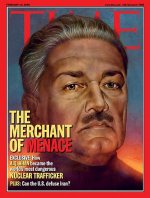
You missed important timeline events.

1. AQ Khan stealing centrifuge design and other classified information/materials from Europe
2. North Koreans helping to set things right for Pakistan

1101050214_400.jpg
 
To view this content we will need your consent to set third party cookies.
For more detailed information, see our cookies page.
 
To view this content we will need your consent to set third party cookies.
For more detailed information, see our cookies page.
 
Beautiful, very lovely capture of key moments from Pakistan's Nuclear Program success story

Special thanks to all people who were involved in making key decision and countless scientist, that shared their knowledge in training thousand and thousand new scientist to work on Nuclear Program

It seems not only AQ Khan but many other were involved, beside Canada there was nuclear knowledge attained from various nations , thru collaboration and peaceful work. Thanks to all those nation (France/Belgium) as well plus China

A True success story

May Allah Reward those souls with Jannat in afterlife and forgive their sins if any These souls many of them live a life of Anonymity, quietly doing their work , research and development. Never being in light working day, night no recognition given while living their lives. But they quietly become Mohsin to whole nation

In ideal world we should be celebrating all people who worked on Nuclear program on a single day , where whole nation pays tribute to heros

Greatest success story of Civilian-Military partnership in Pakistan's history


1752275536985.png

This thread is most likely the most important thread on our history of Nuclear Program should be highlighted as sticky for sure , real History which should be in books

If our country did not had the 1971 fiasco perhaps Bhutto would have had a even more prominent position in history. However Pakistan unable to process election results correctly by handing over power to Bangladesh , left a blemish role of Bhutto


However it seems alot of things were also happening behind the scene


The timeline moments felt like I was imagining , moments from our Manhattan Project Movie

I have personally never read such detailed info on Pakistan' Nuclear program before year to year break down
 
Last edited:
Need to include to qadeer vs muneer rivalry. Muneer was working on the plutonium route and qadeer retired to sabotage it at various points. Qadeer was close to Zia and even reduced funding for the plutonium program.
 
Need to include to qadeer vs muneer rivalry. Muneer was working on the plutonium route and qadeer retired to sabotage it at various points. Qadeer was close to Zia and even reduced funding for the plutonium program.
PAEC was responsible for both the uranium and plutonium routes as part of the nuclear fuel cycle including uranium exploration, mining and refining (Baghalchur-1), production of uranium hexafluoride gas (Chemical Plants Complex DG Khan) for the gas-centrifuges and conversion of enriched UF6 gas to metal (Uranium Metal Lab), fuel fabrication (Kundian Fuel Complex) for power (KANUPP-1), research (PARR-1) and plutonium production reactors (Khushab Complex), and fuel reprocessing (New Labs and Chashma), and the nuclear weapons design, development and testing programs under the Theoretical Physics Group, Wah Group and Directorate of Technical Development which carried out the cold tests from 1983-1995 and the 1998 hot tests.

KRL was responsible for gas-centrifuge enrichment at Kahuta.
 
Reality check: under US pressure, French firm SGN backed out of Chashma reprocessing deal.

Pakistan still did a cold test by 1984.

1755984336977.png


Ghulam Ishaq Khan has a great contribution in Pakistan's Nuclear program.
 
Pakistan’s nuclear journey

Dr. Rizwan Zeb


June 28, 2020


Twenty-two years ago, Muhammad Arshad chanted Allahu Akbar and pushed the button. It took a nerve-racking 30 seconds before the mountain turned white. Pakistan’s nuclear tests were successful. This was the culmination of a long arduous Pakistani quest for a nuclear weapon.

Scott Sagan in his magnum opus ‘Why Do States Build Nuclear Weapons? Three Models in Search of a Bomb’ has identified different factors that lead a state to build nuclear weapons: national security concern is one of these reasons: Pakistan is a classic case for this model. Pakistan’s nuclear history can be divided into two phases: 1947-1972 when Pakistan had a peaceful nuclear programme, whereas in the post 1972 due to national security concerns in the wake of the east Pakistan debacle, Pakistan started exploring options for building a bomb that got intensified after India’s nuclear test in 1974.

In the first phase, four personalities played the most significant role and established the programme on firm footing: Dr Rafi Mohammad Chaudhry of Government College Lahore, (now Government College University – GCU), Pakistan’s only Nobel laureate Professor Abdus Salam and Dr Nazir Ahmed who was the first chairman of Pakistan Atomic Energy Commission (PAEC). These three laid a solid foundation by training the manpower, and setting institutional priorities. Pakistan also benefited from the American Atom for Peace program. During this phase, the programme was focused on peaceful use of atomic energy.


The fourth was Dr Ishrat Hussain Usmani who was appointed Chairman of PAEC by President Ayub Khan on the recommendation of Dr Abdus Salam. According to Feroz Hasan Khan: “PAEC chairman Usmani laid down three objectives: to construct nuclear power plants and so alleviate the shortage of conventional energy sources; to apply nuclear knowledge (radioisotopes) to agriculture, medicine, and industry; and to conduct research and development on problems of national importance.” (Eating Grass, Stanford University Press, p50) Dr Usamani is credited to have laid down the foundation of the Pakistan Institute of Nuclear Science and Technology (PINSTECH), a world renowned education and training centre.

During this phase, the focus was on the peaceful use of nuclear energy and even if there was a voice in favour of building one, it lacked any major support and was mostly muffled. Zulfiqar Ali Bhutto and Munir Ahmed Khan were among the bigger supporters of going for this option.

The second phase of Pakistan’s nuclear programme began with Bhutto taking over the helm of affairs in Islamabad. In 1972, Bhutto held a meeting with key officials in Multan and ordered them to build a nuclear bomb. He appointed his friend and fellow member of the so-called bomb lobby, Munir Ahmed Khan the new chairman of PAEC. This meeting set the future direction of Pakistan’s nuclear programme.

After the Indian nuclear explosion in 1974, Pakistan’s own quest for nuclear weapons began in earnest. Despite this, Pakistan offered several arms control measures to India but India rejected all of them on the pretext that they have to take their security concerns about China into account as well.

PAEC under Munir Ahmed Khan’s leadership worked hard towards achieving their goal. This effort was further intensified when Dr. A. Q. Khan joined the effort. Despite the political change in the country, the nuclear quest continued and General Zia continued it despite tremendous pressure from the international community especially when he was fighting the Soviets in Afghanistan as a frontline state.

According to media reports, in 1987, he signalled that Pakistan had achieved the capability to make a nuclear weapon. Despite achieving the capability, Pakistan neither expressed nor demonstrated its capability as Pakistan built the bomb only to ensure its national security. Had the situation remained ambiguous and India not conducted another series of tests, the likelihood of Pakistan conducting overt tests was extremely remote.

To fulfil its electoral promise, the BJP government tested its nuclear devices Shakti I, II and III on May 11, 1998 followed by two more on May 13. This rang alarm bells in Islamabad. Then Prime minister of Pakistan Nawaz Sharif cut short his state visit to Uzbekistan and rushed back to Islamabad. Immediately after his return, he summoned a meeting of the Defence Committee of the Cabinet (DCC). In this meeting, Dr Samar Mubarakmand assured the Prime Minister that PAEC needs only ten days to prepare and conduct the tests. Once again, the Indians caught the global power centres napping as neither of them were able to stop the Indian tests. Once again, the international community, instead of addressing the root cause, started pressuring Pakistan not to conduct its tests. Despite Islamabad’s declaring the Indian tests a “death blow to the global efforts at nuclear non-proliferation” the Americans were more focused on convincing Islamabad to abstain from responding. The Talbot mission delivered a sermon to the Pakistani leadership about what is best for Pakistan and the Pakistani people, but were not willing to pay any heed to Pakistan’s security concerns.

After intense and extensive debate, and also due to the inability of the international power centres especially USA to objectively engage and address Pakistan’s concerns and the statements emanating from India, the Defence Committee of the Cabinet decided to conduct the nuclear test. Once given the go ahead, the PAEC team, under the leadership of Dr Samar Mubarakmand, prepared the testing site and conducted the test. In total six successful tests were conducted by Pakistan on 28 and 30 May 1998.
 
Atoms for Peace symbol, 1955

Pakistan began its nuclear efforts during the 1950s as an energy program. It was prompted in large part by the United States’ “Atoms for Peace” program, which sought to spread nuclear energy technology across the globe. In 1956, the Pakistani government created the Atomic Energy Commission (PAEC) to lead the new program. The United States gave Pakistan its first reactor—the five megawatt Pakistan Atomic Research Reactor (PARR-1)—in 1962.

During this early period, PAEC chairman Ishrat Usmani devoted government resources to training the next generation of Pakistani scientists. Usmani founded the Pakistan Institute of Nuclear Sciences and Technology (PINSTECH) in 1965 and sent hundreds of young Pakistani students to be trained abroad.

Although Pakistan claimed that its nuclear program was only pursuing peaceful applications of atomic energy, there were signs that its leadership had other intentions. This fact was particularly evident in wake of the 1965 Indo-Pakistani War, which ended in a nominal victory for India. “If India builds the bomb, we will eat grass or leaves, even go hungry, but we will get one of our own,” proclaimed then-Minister of Foreign Affairs Zulfikar Ali Bhutto.
 

Users who are viewing this thread

Pakistan Defence Latest

Latest Posts

Back
Top