You have a noob take on this theme. War in Taiwan sounds easy in forums but China does not seem to be up for it. I recall the October Surprise thread created by a Chinese member on the old PDF in 2020 (
click to read); 39 pages of entertainment in it.
China is in a bind on this issue due to following reasons:
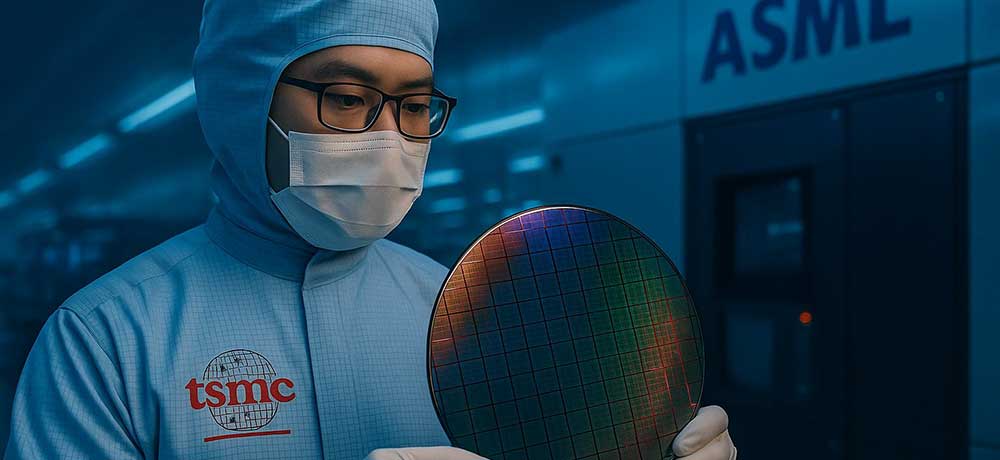
1. War in Taiwan have the potential to disrupt TSMC and spark a global computing crisis.
"If China were to launch a blockade or invasion of Taiwan, the world would not only face a supply chain crisis but also the possible loss of the singular human capital that powers advanced chip production."
In February 2023, CIA Director William Burns revealed that, according to U.S. intelligence, Xi Jinping had ordered the Chinese military to be ready to invade Taiwan by 2027. Since then, China’s coercion has shifted from sporadic brinkmanship to a steady campaign of naval maneuvers and near-daily...

www.trumanproject.org
This war is bad news for the economy of many countries including China itself.
A major Taiwan contingency, such as a quarantine, blockade, or invasion, could significantly disrupt the flow of trade through the Taiwan Strait—one of the world’s busiest waterways.

www.csis.org
2. Approximately 80% of Japan's energy imports pass through the seas around Taiwan. Japan have sufficient basis to support Taiwan in the event of Chinese invasion.
3. If Japan intervenes in the Sino-Taiwan war, the US cannot stand by and ignore this development. Supporting Japan is NOT OPTIONAL for the US unlike Ukraine.
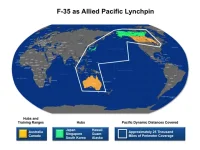
Chinese military buildup and excercises around Taiwan have not deterred Japan and the US but have pushed both to respond in kind. Japan and the US are setting up new defenses in the region. Phillippines and Australia are also supporting Japan and the US in these matters.
"Sitting just 110 kilometers (68 miles) east of Taiwan, Yonaguni marks the tail end of an archipelago stretching north to Japan’s main islands, a distance roughly equivalent to the length of the California coastline. Ever since former U.S. House Speaker Nancy Pelosi’s trip to Taipei in 2022 prompted China to fire missiles that landed near Yonaguni, Japan has accelerated plans for its largest military buildup in at least four decades."
"The Indo-Pacific is entering a new missile age, marked by rapid proliferation of advanced missile systems amid intensifying US-China strategic competition. The US deployment of the Navy-Marine Expeditionary Ship Interdiction System (NMESIS) in the Philippines, Japan’s test of its Type 88 anti-ship missile in June 2025, Australia’s procurement of hypersonic and long-range air-to-air missiles from the United States, South Korea’s debut of the Hyunmoo-5 ballistic missile, and India’s export of BrahMos to the Philippines signal a coordinated effort to counter China’s growing military reach. Alongside this, China’s own deployment of hypersonic missiles, such as the DF-17 and YJ-21, underscores its aim and ambition to dominate not only the first island chain but also the South China Sea. These developments, driven by strategic rivalry, risk escalating tensions, particularly around flashpoints like the Taiwan Strait, threatening regional stability and global trade."
Examining escalating missile proliferation in the Indo-Pacific, and how it underscores a dangerous shift in regional security dynamics moving forward.
www.geopoliticalmonitor.com
View attachment 166171
The US is also developing and deploying new missile systems in the Pacific including
Typhon and
Dark Eagle. The US Navy found a golden opportunity to test its defenses in the Red Sea while PLAN kept its distance.
While China continues to wait, other countries are finding time to improve their defenses and come up with a better plan and strategy for potential intervention in Taiwan. An outcome less than regime change in Taiwan will be a major strategic setback to China. It can also affect Chinese strategic calculus in the South China Sea where more countries want to secure their interests.
Chinese nuclear sabre-rattling may not help either. It can affect Chinese international image. Many countries and companies are already exploring ways to revisit their supply chains. TSMC is also investing in the US.
Advanced chip production on track to start by 2027, ahead of the original schedule

asia.nikkei.com
Chinese planners probably assume that their best bet is to annex Taiwan without firing a shot:
"The greatest victory is that which requires no battle." - Sun Tzu. Chinese military excercises around Taiwan might be aimed to reshape public opinion in Taiwan, to convince them to accept reunification. But Taiwan have not surrendered yet. People in Taiwan may not desire war but well-designed polls do not give the impression that they will fold at the first sign of trouble.
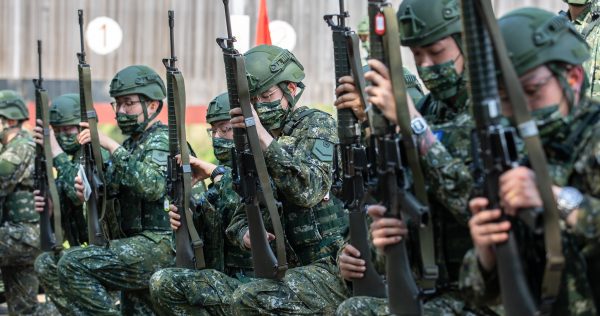
A wide body of academic surveys with nationally representative samples shows Taiwanese people’s willingness to fight to defend their homeland, including those under 30.
thediplomat.com
But... but... Cheen Simps think that China can wipe out Taiwan, Japan, the US, Phillippines and Australia in this hypothetical war like in the PDF-exclusive October Surprise Saga. Absolutely, son.