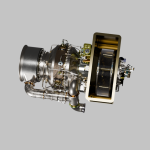
Turkish Engine Programs

In order for TEI not to waste time with the subsystems of TF35000, all these subsystem works were transferred to TRMotor by SSB. A logical decision. If it were me, I would do the same.
Absolutely. Plus, it helps with creating a spill-over effect and establishing an ecosystem that will foster new ideas, technologies and products.
 

TEI Wins U.S. Navy’s LM2500 Power Turbine Maintenance Contract

Turkey’s leading engine company, TEI, has won the maintenance tender issued by the U.S. Navy for the power turbine modules of LM2500 engines. With 40 years of experience in the field of aviation engines, TEI signed a depot-level maintenance contract for the gas generator modules of LM2500 engines with the U.S. Navy in 2024, with a ceiling value of $45.6 million. Following this, in the second quarter of 2025, TEI signed a new depot-level maintenance contract for the power turbine modules, with a ceiling value of $67.5 million.

TEI successfully carries out the maintenance and repair operations of the LM2500 gas turbine engines used by both the Turkish Navy and the U.S. Navy — which owns the world’s largest LM2500 fleet — at its advanced technology facilities in Eskişehir. TEI has reached a high level of technological capability and skilled workforce to provide maintenance and repair services for LM2500 engines used by many countries. As a result, TEI has become a globally preferred strategic maintenance center, ensuring the sustainability of propulsion systems of frigates, corvettes, destroyers, and amphibious ships. The U.S. Navy’s choice of TEI — a force known for its high operational capability — once again proves TEI’s reliability and technical excellence in the international defense industry ecosystem.
 

TEI Wins U.S. Navy’s LM2500 Power Turbine Maintenance Contract

Turkey’s leading engine company, TEI, has won the maintenance tender issued by the U.S. Navy for the power turbine modules of LM2500 engines. With 40 years of experience in the field of aviation engines, TEI signed a depot-level maintenance contract for the gas generator modules of LM2500 engines with the U.S. Navy in 2024, with a ceiling value of $45.6 million. Following this, in the second quarter of 2025, TEI signed a new depot-level maintenance contract for the power turbine modules, with a ceiling value of $67.5 million.

TEI successfully carries out the maintenance and repair operations of the LM2500 gas turbine engines used by both the Turkish Navy and the U.S. Navy — which owns the world’s largest LM2500 fleet — at its advanced technology facilities in Eskişehir. TEI has reached a high level of technological capability and skilled workforce to provide maintenance and repair services for LM2500 engines used by many countries. As a result, TEI has become a globally preferred strategic maintenance center, ensuring the sustainability of propulsion systems of frigates, corvettes, destroyers, and amphibious ships. The U.S. Navy’s choice of TEI — a force known for its high operational capability — once again proves TEI’s reliability and technical excellence in the international defense industry ecosystem.

If Turkey can get LM2500 License production in Turkey like Japan has, that would be amazing.
 
If Turkey can get LM2500 License production in Turkey like Japan has, that would be amazing.
I do not think this idea is feasible.

Firstly, the LM2500 is basically an F110 engine. We can produce much better than this without paying a license fee after the Project of TF35000 is completed. In other words, we will not gain anything technologically by producing the LM2500.

Secondly, two manufacturers are more than enough to satisfy this tight market. Therefore, GE will not look favorably on this idea. Especially GE, which is influenced by the MAGA ideology, will not approve it under any circumstances.

On the other hand, the depot-level maintenance tender is another issue. Maintenance on turbines is a task that requires intensive human labor. At the same time, this labor must be supplied cheaply. This is why TEI was able to win this tender.
 
Last edited:
I do not think this idea is feasible.

Firstly, the LM2500 is basically an F110 engine. We can produce much better than this without paying a license fee after the Project of TF35000 is completed. In other words, we will not gain anything technologically by producing the LM2500.

Secondly, two manufacturers are more than enough to satisfy this tight market. Therefore, GE will not look favorably on this idea. Especially GE, which is influenced by the MAGA ideology, will not approve it under any circumstances.

On the other hand, the depot-level maintenance tender is another issue. Maintenance on turbines is a task that requires intensive human labor. At the same time, this labor must be supplied cheaply. This is why TEI was able to win this tender.

The LM2500(47,000shp) is based on the High Bypass CF6(50,000-70,000lbf), its different from the F110(29,000-32,000lbf). Turkey uses the LM2500 as the standard essentially for all the ships it produces, it would make logistic even easier if the LM2500 was produced in Turkey. License producing the LM2500 would I think be helpful in building a Turkish drop-in equivalent. Right now, even if Turkey turned the TF35000 into a naval gas turbine, you would not get the Thrust outlook thats equivalent to the LM2500, plus it would require a far longer development process(first to get the TF35000 completely developed, then to make a derivative based off it) and would not be a dropin replacement, even when it will be ready, the LM2500 variant at that time or equivalent GE product will likely have evolved as well to produce more thrust and more effeciency.
 
Last edited:
Secondly, two manufacturers are more than enough to satisfy this tight market.

Trump is looking to build more US Navy ships, right now they have determined with with US capacity alone, they cannot build enough ships inside the US to compete with China's building capacity, so the DoD has made proposals to have ships built for the United States Navy abroad, with Italy and South Korea being looked at as candidates to build US ships for the US Navy. I think if Turkey pushes hard with Trump, maybe Turkey's name can be added to this list of potential countries that build ships for the UN Navy. In which case, they may be more open to GE building the Gas Turbine engines in Turkey via TEI like they did with the F-16s, where not only were the F-16s built in Turkey but the engine was a well.
 
Good news is coming from engine programs...

To view this content we will need your consent to set third party cookies.
For more detailed information, see our cookies page.


It has been a while since we started the TS1400 GÖKBEY engine. We are completing the certification processes. This engine will be an internationally civilian certified engine. This means the following: It goes through the same processes as a passenger plane engine goes through.

When the certification process of the GÖKBEY engine is completed, we will have demonstrated that we can now make a passenger aircraft engine and certify it.

Civil certification is a very difficult process. Because it involves human life and has very strict rules. The engine has to pass some very difficult stages by proving it, and it has to do so in the presence of an international arbitrator.

'I did it, just sign here...' There is no such thing. You perform those tests one by one in the presence of the arbitrator, you show that the engine has successfully passed those difficult tests, and at the end they give a certificate saying 'This engine can carry civilian passengers'.

The process is almost over, we are almost there. We have exceeded 1740 horsepower in the engine. The maximum continuous power required by the helicopter is 1298 horsepower... In other words, we are in a position to fly the helicopter very comfortably.

We have also successfully completed the life tests stipulated by international standards, and our engine is still running. God forbid.

Once the civil certification process is completed, this engine will be sold together with GÖKBEY. Otherwise, our engine is already ready.
 
To view this content we will need your consent to set third party cookies.
For more detailed information, see our cookies page.


Are you ready to start the power with TRMOTOR, which developed Turkey's first domestic and national auxiliary power units?
 
“We [have] already started working on” the new TF35000 turbofan engine, Mehmet Demiroğlu, general manager at TAI, told Breaking Defense at Le Bourget, adding that work is being done jointly by Tusas Engine Industries (TEI) and TRMotor. As part of the system’s preliminary design phase, a “conceptual design is almost done,” he added, “and then it will go to initial prototyping maybe by the end of the year.”

Additionally, Demiroğlu said that “some early testing” of the powerplant is planned in 2026 and integration on KAAN could be a reality starting in 2032.


Users who are viewing this thread

Pakistan Defence Latest

Back
Top