US Defence related thread

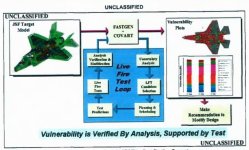
Survivability analysis of the F35 vs proximity fused MANPADS. (Posted here to avoid usual hope and cope troll posts)
1000015684.jpg
The F-35 underwent one of the most extensive survivability evaluation programs ever run on a fighter, spanning 20+ years.

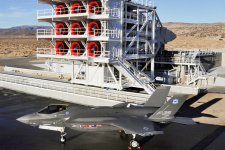
Full scale jets, structural test airframes, subsystems and F135 engines were all subjected to ballistic threats to identify and assess vulnerabilities.

To view this content we will need your consent to set third party cookies.
For more detailed information, see our cookies page.


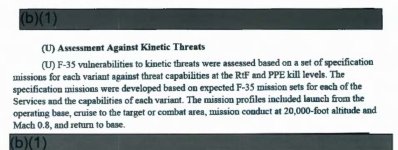
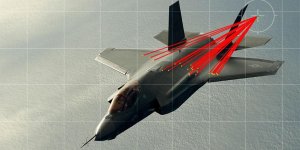
The program prioritized a wide range of threats incl. API/HEI rounds, SAM/MANPADS in its simulations using Advanced Diverging Ray Methodology (ADRAM).

Frag zones were mapped around IR lock-on areas where near-proximity detonations would occur under real world intercept velocities
1000015686.jpg
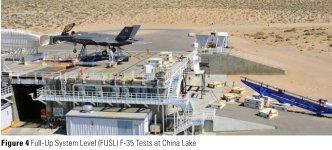
Wing and fuselage tanks took fragment hits, and tests evaluated how fuel blasts outward and whether fires would ignite in dry bays.

The F-35 kept those fires smaller and more contained than legacy jets, in part due to OBIGGS' inerting of fuel tanks and improved structural design.
1000015687.jpg
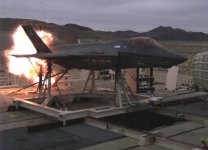
Fuel ingestion tests perforated tanks to create leaks into the engine path. The F135 tolerated single fragment hits at full thrust with no catastrophic failure, while multiple fragments were higher risk but the engine still kept running long enough in modeled scenarios.
1000015688.jpg
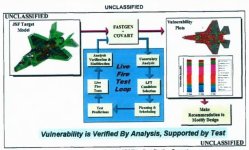
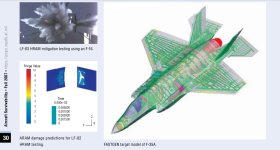
To gauge these threats the program used FASTGENv4 and COVARTv4, developed specifically for the F-35 LFT&E effort.
1000015689.jpg
FASTGENv4 generated realistic shotlines by tracing thousands of virtual rays through the aircrafts 3D geometry from any direction to show where fragments from a near-miss/proximity explosion would hit under combat conditions.

(Cont - can only post 6 images 😮‍💨)
 

Attachments

  • 1000015684.jpg
    1000015684.jpg
    213.7 KB · Views: 1
Survivability analysis of the F35 vs proximity fused MANPADS. (Posted here to avoid usual hope and cope troll posts)
View attachment 187184
The F-35 underwent one of the most extensive survivability evaluation programs ever run on a fighter, spanning 20+ years.

Full scale jets, structural test airframes, subsystems and F135 engines were all subjected to ballistic threats to identify and assess vulnerabilities.

To view this content we will need your consent to set third party cookies.
For more detailed information, see our cookies page.


The program prioritized a wide range of threats incl. API/HEI rounds, SAM/MANPADS in its simulations using Advanced Diverging Ray Methodology (ADRAM).

Frag zones were mapped around IR lock-on areas where near-proximity detonations would occur under real world intercept velocities
View attachment 187185
Wing and fuselage tanks took fragment hits, and tests evaluated how fuel blasts outward and whether fires would ignite in dry bays.

The F-35 kept those fires smaller and more contained than legacy jets, in part due to OBIGGS' inerting of fuel tanks and improved structural design.

View attachment 187186
Fuel ingestion tests perforated tanks to create leaks into the engine path. The F135 tolerated single fragment hits at full thrust with no catastrophic failure, while multiple fragments were higher risk but the engine still kept running long enough in modeled scenarios.
View attachment 187187
To gauge these threats the program used FASTGENv4 and COVARTv4, developed specifically for the F-35 LFT&E effort.

View attachment 187188
FASTGENv4 generated realistic shotlines by tracing thousands of virtual rays through the aircrafts 3D geometry from any direction to show where fragments from a near-miss/proximity explosion would hit under combat conditions.

(Cont - can only post 6 images 😮‍💨)

COVARTv4 processed those shotlines to calculate vulnerable areas and two primary kill categories for survivability: Post-Impact Event (PPE) and Return-to-Force (RTF). PPE covers immediate effects such as:
1000015690.jpg
Structural failure, leaks igniting, FCS degradation, or loss of propulsion. RTF addresses longer-term outcomes, measuring whether the aircraft could sustain damage, and retain control. The key metric being the ability to return the aircraft to friendly territory.

Calibrated data demonstrated low uncertainty (+9% / -6%) on RTF probability with the narrow range being indicative of the models being reliable for predicting outcomes after damage.

This helped demonstrate that the F-35 could absorb and isolate damage from prox. fuzed projectiles in conditions similar to those where legacy jets have historically survived and returned safely after near encounters but with much greater survivability built in through its design features.

DOT&E further accessed that all F-35 variants showed lower vulnerability than the F-16C being replaced for 3/4 specification threats (both safe pilot ejection and return to safe territory/FLOT). F-35A/C met FLOT reqs for 2/4 threats (F-35B for 1/4 in older data, but improvements noted).

This benchmark was tied to Block 3F and was not repeated for the Block 4.

Whatever happened over Iran yesterday, the pilot did not have to go down over hostile territory.

That was likely due at least in part to the aircraft itself, its design, survivability, and its tested and validated systems. It got its pilot home, and that is all that counts.
1000015691.jpg

@AZ_HighCountry
 
During the Initial phase of Operation Epic Furry/ Roaring Lion Began with SEAD/DEAD Specifically Targeting and systematically Destroying Iran's Chinese made YLC-8B "Stealth Hunter" Radar network. The YLC-8B Claimed by Beijing as the ultimate counter to the U.S. and Israeli stealth capabilities having detection range of over 350 Km Operating in the UHF-band, 3D surveillance radars were engineered to detect the Stealth Fighter like the F-35 and F-22 Raptor and Stealth Bombers like B-2 Spirit These Radars Integrated with the Air Defence Systems was touted to be Eyes and Ears of Iran’s Interceptor batteries against the Stealth Capability. Sources Connected to U.S And Israeli Air Force claim that the Targeting and Destruction of YLC-8B sites was the top priority during the Suppression of Enemy Air Defenses (SEAD)/ Destruction of Enemy Air Defence (DEAD) Missions launched on February 28.

>> Electronic Attack and Suppression:Few Minutes before the First Misiles were fired by the Americans and Israelis the U.S. Navy’s EA-18G Growlers taking off From Aircraft Carrier conducted massive Electronic Attack and Jamming flooding the "Chinese Ninth Bureau" encrypted data links with high-intensity jamming. This "soft kill" prevented the radars from transmitting target data to the S-300 and HQ-16 Air Defence missile batteries effectively isolating the sensors from Shooter Network.

>> When Iranian Air Defence and EW System Operators Tried to increase the transmitter power to "Burn through" the jamming, they inadvertently created a massive Electronic Beacon and the Americans had Already led Trap for this.The Americans responded by Launching multiple AGM-88 HARM (High-speed Anti-Radiation Missiles) From F/A 18 Super Hornet which homed in on the emissions and leveled the radar arrays near Isfahan and Tehran. The Technique was called the "Emission Trap"

>> Precision Incursions Tactic by the Israelis : The Israeli Air Force Spearheaded the EW Operation with their 5th Gen F-35I ‘Adir’ stealth fighters that used their own internal sensor-fusion to geolocate the remaining mobile stations. Working in the "Dark Mode" (without using their own radar), the Israeli F-35i ‘Adir’ delivered GBU-39 Small Diameter Bombs to the radar trailers before the SAM Operator crews could execute their "shoot-and-scoot" protocols.

>> The overall Destruction of YLC-8B network using the Combination of “Soft Kill” and “Hard Kill” created a "Black Hole" in Iran’s Overall situational awareness due to Iranian Air Defence Huge Dependence on the YLC-8B Radar.

>> By March 7, the IDF reported that over 200 Air Defence systems mostly S-300 a Indigenous Bavar-373 Integrated with YLC-8B Radar had been destroyed. Without their Chinese-made "eyes," the remaining Russian-made batteries were reduced to using short-range, autonomous radars that were easily bypassed by non-stealthy Allied bombers like the B-1B Lancer.

The China's flagship "Anti-stealth" Radar and Network System failed within the first 100 hours of conflict. For the U.S. and Israel, the destruction of the "Stealth Hunter" was a Major Milestone in their Sustained Air Campaign and it left entire Iranian Air Defence and Situational Awareness Ecosystem Redundant.
To view this content we will need your consent to set third party cookies.
For more detailed information, see our cookies page.


I mean he's pointing out the obvious but nonetheless it's nice that someone did the research and posted a breakdown of the unclassified capabilities of US SEAD/DEAD.

This right here is the true power behind USAF and USN capability to penetrate and strike at others.
 
During the Initial phase of Operation Epic Furry/ Roaring Lion Began with SEAD/DEAD Specifically Targeting and systematically Destroying Iran's Chinese made YLC-8B "Stealth Hunter" Radar network. The YLC-8B Claimed by Beijing as the ultimate counter to the U.S. and Israeli stealth capabilities having detection range of over 350 Km Operating in the UHF-band, 3D surveillance radars were engineered to detect the Stealth Fighter like the F-35 and F-22 Raptor and Stealth Bombers like B-2 Spirit These Radars Integrated with the Air Defence Systems was touted to be Eyes and Ears of Iran’s Interceptor batteries against the Stealth Capability. Sources Connected to U.S And Israeli Air Force claim that the Targeting and Destruction of YLC-8B sites was the top priority during the Suppression of Enemy Air Defenses (SEAD)/ Destruction of Enemy Air Defence (DEAD) Missions launched on February 28.

>> Electronic Attack and Suppression:Few Minutes before the First Misiles were fired by the Americans and Israelis the U.S. Navy’s EA-18G Growlers taking off From Aircraft Carrier conducted massive Electronic Attack and Jamming flooding the "Chinese Ninth Bureau" encrypted data links with high-intensity jamming. This "soft kill" prevented the radars from transmitting target data to the S-300 and HQ-16 Air Defence missile batteries effectively isolating the sensors from Shooter Network.

>> When Iranian Air Defence and EW System Operators Tried to increase the transmitter power to "Burn through" the jamming, they inadvertently created a massive Electronic Beacon and the Americans had Already led Trap for this.The Americans responded by Launching multiple AGM-88 HARM (High-speed Anti-Radiation Missiles) From F/A 18 Super Hornet which homed in on the emissions and leveled the radar arrays near Isfahan and Tehran. The Technique was called the "Emission Trap"

>> Precision Incursions Tactic by the Israelis : The Israeli Air Force Spearheaded the EW Operation with their 5th Gen F-35I ‘Adir’ stealth fighters that used their own internal sensor-fusion to geolocate the remaining mobile stations. Working in the "Dark Mode" (without using their own radar), the Israeli F-35i ‘Adir’ delivered GBU-39 Small Diameter Bombs to the radar trailers before the SAM Operator crews could execute their "shoot-and-scoot" protocols.

>> The overall Destruction of YLC-8B network using the Combination of “Soft Kill” and “Hard Kill” created a "Black Hole" in Iran’s Overall situational awareness due to Iranian Air Defence Huge Dependence on the YLC-8B Radar.

>> By March 7, the IDF reported that over 200 Air Defence systems mostly S-300 a Indigenous Bavar-373 Integrated with YLC-8B Radar had been destroyed. Without their Chinese-made "eyes," the remaining Russian-made batteries were reduced to using short-range, autonomous radars that were easily bypassed by non-stealthy Allied bombers like the B-1B Lancer.

The China's flagship "Anti-stealth" Radar and Network System failed within the first 100 hours of conflict. For the U.S. and Israel, the destruction of the "Stealth Hunter" was a Major Milestone in their Sustained Air Campaign and it left entire Iranian Air Defence and Situational Awareness Ecosystem Redundant.
To view this content we will need your consent to set third party cookies.
For more detailed information, see our cookies page.


I mean he's pointing out the obvious but nonetheless it's nice that someone did the research and posted a breakdown of the unclassified capabilities of US SEAD/DEAD.

This right here is the true power behind USAF and USN capability to penetrate and strike at others.

Can you tell something about the classified ones ? Heard melodies are sweet but those unheard are sweeter still.
 
Last edited:
Can you tell something about the classified ones ? Heard melodies are sweet but those unheard are sweeter still.
That info doesn't get out and if it does we'll never know if it's true. For instance the F-35 in block 3f is capable of deploying an electronic virus (somehow) at IADS. We only know this because former head of F-35 program General Hostage hinted at it in a Breakingdefense interview.

-LANGLEY AFB: If you want to stop a conversation about the F-35 with a military officer or industry expert, then just start talking about its cyber or electronic warfare capabilities.

These are the capabilities that most excite the experts I’ve spoken with because they distinguish the F-35 from previous fighters, giving it what may be unprecedented abilities to confuse the enemy, attack him in new ways through electronics (think Stuxnet), and generally add enormous breadth to what we might call the plane’s conventional strike capabilities.

So I asked Air Force Gen. Mike Hostage, head of Air Combat Command here, about the F-35’s cyber capabilities, mentioning comments by former Air Force Chief of Staff Gen. Norton Schwartz several years ago about the F-35 having the “nascent capability” to attack Integrated Air Defense Systems (known to you and me as surface to air missiles) with cyber weapons.

Hostage deftly shifts the conversation each time I press for insights on the F-35’s cyber and EW. He doesn’t refuse to talk, as that would be impolite and, well, too obvious.

He starts off with what sounds like a shaggy dog story.

“When I was a youngster flying F-16s we would go fly close air support at the National Training Center for the Army,” he tells me. “They would have a large ground force: blue guys, OpFor [opposing forces], they’d go out and have big battles on the ground. And they would bring the [Close Air Support] CAS in to participate. They’d let us come in, we’d fly for 30 minutes and then they’d shoo us away because they wanted to have their force on force and if they allowed the CAS to participate during force on force it fundamentally changed the nature of the ground battle.”

Want To Shoot Someone? Turn Off The Cyber
During those Red Flag-3 exercises they integrate space and cyber weapons into the fight, including those the F-35 possesses. Those capabilities make are “so effective that we have to be very careful that in a real world scenario we don’t hurt ourselves allowing them to play.”

Then he gets back to the point at hand. “So, to answer your question, it has tremendous capability. We’re in the early stages of exploring how to get the most effectiveness out of cyber and space, but we’re integrating it into the Air Operations Center; we’re integrating it into the combat plan; and it is absolutely the way of the future. And you’re right, the AESA radar has tremendous capacity to play in that game.”

Boil all that down and it comes to this. Gen. Hostage is saying that the F-35’s cyber capabilities are so effective — combined with space assets, which are often difficult to distinguish in effect from cyber capabilities — that the planes have to stop using them so the pilots can shoot at each other.

The obvious question that arises from this is, how can a radar system also be a cyber weapon? We’ve all seen those World War II movies where the radar dish sweeps back and forth. The energy beams out, strikes the enemy plane and comes back as a blip. What makes an AESA radar special is the fact that it beams energy in digital zeroes and ones — and the beam can be focused. This allows the radar to function as both a scanning radar, a cyber weapon and an electronic warfare tool.

AESA Radar, Cyber And IADS

Here’s an excellent explanation for how we go from radio and radar and military systems that are not connected to the Internet yet remain vulnerable to hacking that I’ve cribbed from my deputy, Sydney Freedberg, from a recent piece he wrote in Breaking Defense about cyberwar. An enemy’s radios and radars are run by computers, so you can transmit signals to hack them. If the enemy’s computers are linked together then your virus can spread throughout that network. The enemy does not have to be connected to the Internet. You just need the enemy’s radios and radar to receive incoming signals – which they have to do in order to function.

So, as a former top intelligence official explained to me about two years ago, the AESA radar’s beams can throw out those zeros and ones to ANY sort of receiver. And an enemy’s radar is a receiver. His radios are receivers. Some of his electronic warfare sensors are also receivers.

But neither Hostage nor many others I spoke with were willing to be specific on the record about how effective the AESA radar, working with the aircraft’s sensors like the Distributed Aperture System and its data fusion system, will be. So the following is information culled from conversations over the last three months with a wide range of knowledgeable people inside government and the defense industry, as well as retired military and intelligence officers.

As the F-35 flies toward the Chinese coast and several hundred incoming PLAAF J-20s streak toward them in the scenario outlined in the first piece of this series, spoofing (using the enemy’s own systems to deceive him) will be a major part of our attack.

Enemy radar may well show thousands of F-35s and other aircraft heading their way, with stealth cross-sections that appear to match what the Chinese believe is the F-35’s cross section. Only a few hundred of them are real, but the Chinese can’t be certain which are which, forcing them to waste long-range missiles and forcing them to get closer to the US and allied F-35s so they can tell with greater fidelity which ones are real. The Chinese will try and use Infrared Search and Track (IRST) sensors, which have shorter ranges but provide tremendous fidelity in the right weather conditions. But that, of course, renders them more vulnerable to one sensor on the F-35 that even the plane’s critics rarely criticize, the Distributed Aperture System (DAS).


This was a 2014 article so it's old.
 
To view this content we will need your consent to set third party cookies.
For more detailed information, see our cookies page.
 

F-35 stealth fighter makes emergency landing after apparent Iranian strike: Source​

To view this content we will need your consent to set third party cookies.
For more detailed information, see our cookies page.
 
To view this content we will need your consent to set third party cookies.
For more detailed information, see our cookies page.
 
To view this content we will need your consent to set third party cookies.
For more detailed information, see our cookies page.

Every second day,they announce we are entering the war but then nothing.
There is still a lot of naval presence in Red Sea. Plus in previous conflict with US, much of their weapons capabilities are degraded . Iranian supply has also dried up so they are keeping their heads down (for now).
 
To view this content we will need your consent to set third party cookies.
For more detailed information, see our cookies page.


Don't know what's he is talking about
Using Iranian oil against iran?
How's that possible?
 
To view this content we will need your consent to set third party cookies.
For more detailed information, see our cookies page.
 
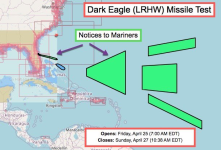
Seems the US quietly carried out a Long Range Hypersonic weapon test today:
1774139130949.png
1774139165940.png
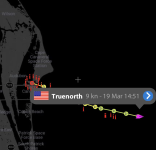
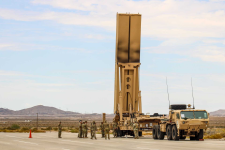
Two ships fitted with telemetry arrays at Port Canaveral & have now departed. This is the same type of down range monitoring utilized in Army Dark Eagle (LRHW) & Navy Conventional Prompt Strike (CPS) tests
1774139187098.png
1774139217340.png
1774139358991.png
@AZ_HighCountry seems trump is deploying some big toys.
 

Users who are viewing this thread

Country Watch Latest

Latest Posts

Back
Top