I have conducted business in the Gulf region for the past ten years. My perspective on the Gulf differs from that of others. While many individuals aim to establish a life there and raise a family, I have come to believe that this is an inappropriate approach, once I recognized that the environment is not conducive to such endeavors. Disregarding the issue of citizenship, it is evident that the Gulf was originally established as a transactional society bridging the East and the West.
Their society is built like a sand castle; as long as foreign investment flows strongly, it will expand. When it comes to shocks, it will contract, as shown in the past when Abu Dhabi had to inject capital to keep Dubai's real estate portfolio from collapsing. To give context, in 2009, Abu Dhabi lent Dubai $20 billion, and by 2014 and 2019, Abu Dhabi allowed Dubai to roll over $20 billion in debt. As of 2023, it has paid $5.5 billion in debt. It's to be seen how much debt Dubai will accumulate now due to the Iran-Israel/US War. Recently, they have needed a direct line to the Federal Reserve because liquidity is drying up.
Over the last two years, Saudi Arabia has begun cutting back on project investments, such as the Line (NEOM) and Cube City, which were unrealistic and depended on real estate investment. Their sovereign wealth funds aren't as productive, as they're investing in foreign stocks, bonds, and real estate, with no real incentive for those companies to build infrastructure to create jobs within. [I can do on with their sovereign wealth funds, but it's not what it's made out to be.]
Now, what this conflict has done to the Middle East's economies is cause long-term damage. First, the U.S. will most likely become Europe's largest oil and LNG supplier; past policies have cut off Russia, and current events will limit Middle Eastern oil. China, while having access to oil and gas, might reproach the rest of Asia for a lifeline to Russia. Do note: Before World War II, Japan imported 80% of its oil from the U.S. It's possible that it could ignore Russia and pursue a dual Canadian-U.S. oil deal.
Now, for the U.S., this conflict will have other costs; supply chain disruptions will increase costs across food and materials. It will squeeze the average American, who is already facing financial stress, credit card debt, foreclosures, etc.
118,727 properties had a foreclosure filing in Q1 — up 26% year‑over‑year. March 2026 alone saw 46,000 filings, up 18% from February and 28% from March 2025.
The number of properties with a foreclosure filing was up by 26 percent year over year.

www.theepochtimes.com
Bank repossessions climbed 45% year‑over‑year.
/PRNewswire/ -- ATTOM, the leading provider of property data, AI-powered analytics, and real estate intelligence solutions, today released its Q1 2026 U.S....

www.prnewswire.com
These are but a few examples; the commercial side isn't as healthy inside either. I will let other members do the digging.
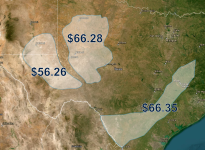
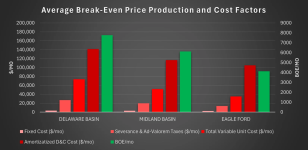
Key point: While the U.S. exports light crude (shale), it imports heavy crude because that's the refining system it has set up. The balance between the two has allowed the United States to keep oil costs low; any shock to this balance, and the American public will pay the inflated costs determined by international commodity prices. The U.S. isn't "
energy independent" in the way people think, as the U.S. isn't immune to global pricing.
The lack of imports of heavy crude does have a looped effect. Its pricing touches all aspects of American life.