Navigation
Install the app
How to install the app on iOS
Follow along with the video below to see how to install our site as a web app on your home screen.
Note: This feature may not be available in some browsers.
More options
Style variation
You are using an out of date browser. It may not display this or other websites correctly.
You should upgrade or use an alternative browser.
You should upgrade or use an alternative browser.
US Perspective on the Iran - Israel / US War
- Thread starter AZ_HighCountry
- Start date
More options
Who Replied?

The SC
INT'L MOD
If it was already posted..you can just delete it..I won't complain..That is typical of what I see (re)posted here.

F-22Raptor
Elite Member

Even Iranian officials admit it

SolarWarden
Trusted Member
So this will likely bite me in the ass but it seems US strikes hit something critical to force IRGC to potentially sign this deal that even Iranian gubemt is admitting is almost done. Iran also didn't retaliate the way many were expecting.
Now watch the deal be killed and hostilities resume.
Now watch the deal be killed and hostilities resume.
SolarWarden
Trusted Member
Senior U.S. administration official briefs reporters on the emerging Iran deal:
• Deal achieves core U.S. objectives
• Strait of Hormuz to reopen
• U.S. to receive enriched material from Iran under the agreement
• Deal includes a nuclear monitoring regime
• Official says it ensures long-term peace in the region
• Iran will receive economic rewards only if it complies
• Significant sanctions relief will be tied to Iranian performance
• U.S. expects the deal to be signed in the coming days
• Draft agreement would lead to the dismantling of Iran’s nuclear program
• “We are not quite at the finish line, but very close”• Iran receives nothing upon signing
So it was axe the difference between this deal and 2015...
-Based on the US briefing, this emerging deal looks substantially stricter than the 2015 JCPOA. JCPOA allowed Iran limited enrichment (3.67% cap), reduced but operational centrifuges/stockpiles, IAEA monitoring, and phased sanctions relief with 10-15 year sunsets. It was pre-conflict and nuclear-focused only. This framework reportedly requires dismantling Iran’s nuclear program, transferring enriched material to the US, a monitoring regime, and significant sanctions/economic relief only after verified performance — with nothing upon signing. It also includes reopening the Strait of Hormuz. It shifts to full rollback and delayed benefits in a post-conflict setting. Details remain preliminary.
• Deal achieves core U.S. objectives
• Strait of Hormuz to reopen
• U.S. to receive enriched material from Iran under the agreement
• Deal includes a nuclear monitoring regime
• Official says it ensures long-term peace in the region
• Iran will receive economic rewards only if it complies
• Significant sanctions relief will be tied to Iranian performance
• U.S. expects the deal to be signed in the coming days
• Draft agreement would lead to the dismantling of Iran’s nuclear program
• “We are not quite at the finish line, but very close”• Iran receives nothing upon signing
So it was axe the difference between this deal and 2015...
-Based on the US briefing, this emerging deal looks substantially stricter than the 2015 JCPOA. JCPOA allowed Iran limited enrichment (3.67% cap), reduced but operational centrifuges/stockpiles, IAEA monitoring, and phased sanctions relief with 10-15 year sunsets. It was pre-conflict and nuclear-focused only. This framework reportedly requires dismantling Iran’s nuclear program, transferring enriched material to the US, a monitoring regime, and significant sanctions/economic relief only after verified performance — with nothing upon signing. It also includes reopening the Strait of Hormuz. It shifts to full rollback and delayed benefits in a post-conflict setting. Details remain preliminary.
F-22Raptor
Elite Member
U.S. military making plans to secure Iran's nuclear materials if deal is reached, sources say
Washington — Amid volatile diplomacy and tit-for-tat strikes between the United States and Iran, American military planners have discussed contingencies that would involve U.S. forces helping secure Iran's nuclear materials if a deal is reached, according to U.S. officials familiar with knowledge of the ongoing planning.
The discussions, which remain preliminary and are contingent on a range of battlefield and political developments, center on how the Pentagon could support the Department of Energy in seizing Tehran's highly enriched uranium, the officials told CBS News, speaking on condition of anonymity to discuss national security issues.
Under one scenario reviewed by defense officials, U.S. troops would be deployed to several countries across the Middle East to support a rapid response operation. Specialized teams from the Department of Energy, working alongside American military personnel and other U.S. government agencies, could then enter Iran to locate, secure and remove stockpiles of enriched uranium, the officials said.
Before an American F-15E Strike Eagle was shot down back in April, triggering a major combat search and rescue effort, Pentagon officials had examined a similar concept involving the Department of Energy's Nuclear Emergency Support Team, known as NEST, according to the officials. The proposal also envisioned participation from U.S. Special Operations forces and the Army's 20th Chemical, Biological, Radiological, Nuclear, Explosives Command, which specializes in countering weapons of mass destruction and hazardous materials.
The officials told CBS News that the discussions do not represent a decision to conduct an operation. Rather, they are part of routine military contingency planning.
A senior administration official told reporters on a call Friday that under the terms of a deal, which could be signed in the coming days, Iran's enriched uranium would be "destroyed on site and then taken out of the country."
There will be a "technical process to figure that out," the official said, speaking on the condition of anonymity. Technical negotiations are slated to last 60 days, after a memorandum of understanding is signed, the official said.
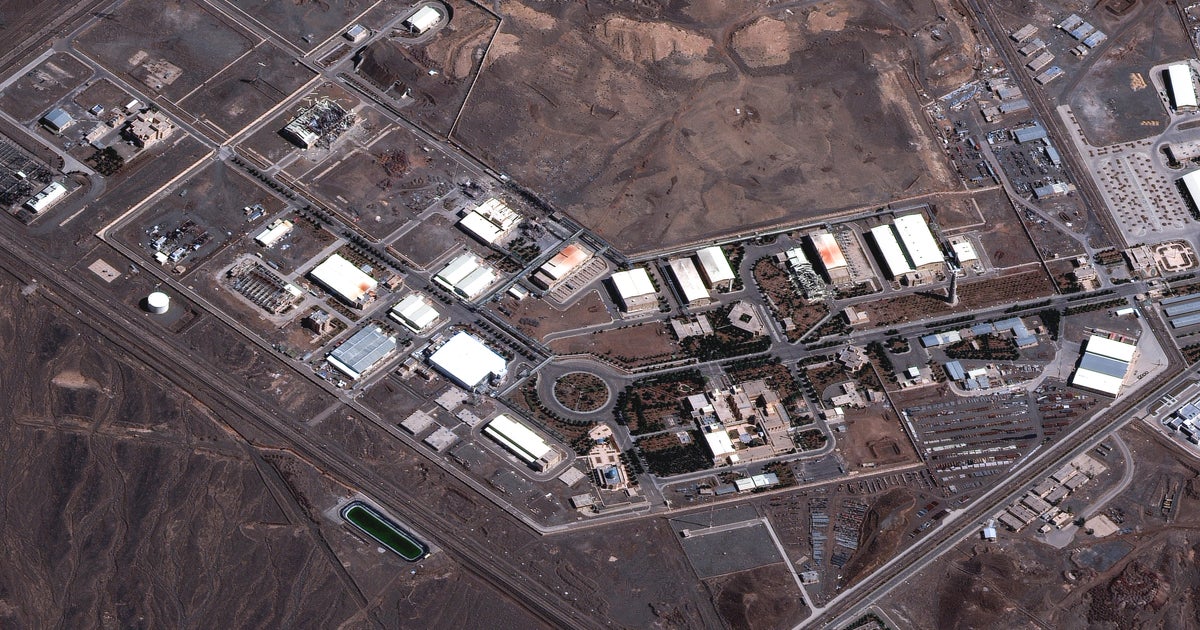
U.S. military making plans to secure Iran's nuclear materials if deal is reached, sources say
Military planners have discussed contingencies that would involve U.S. forces helping secure Iran's nuclear materials if a deal is reached, according to U.S. officials familiar with knowledge of the ongoing planning.
 www.cbsnews.com

F-22Raptor
Elite Member
So this will likely bite me in the ass but it seems US strikes hit something critical to force IRGC to potentially sign this deal that even Iranian gubemt is admitting is almost done. Iran also didn't retaliate the way many were expecting.
Now watch the deal be killed and hostilities resume.
Irans civilian leaders see the writing on the wall regarding their economy. $300B in direct economic damage from the war on top of an already terrible economy. Add in the blockade and Iran is essentially a failed state. They’ve got no choice but to concede. Only ones denying a deal are the IRGC nutcases that’d rather see their country in rubble than concede. They are Hamas at state level.
Hazard
Registered Member


Senior U.S. administration official briefs reporters on the emerging Iran deal:
• Deal achieves core U.S. objectives
• Strait of Hormuz to reopen
• U.S. to receive enriched material from Iran under the agreement
• Deal includes a nuclear monitoring regime
• Official says it ensures long-term peace in the region
• Iran will receive economic rewards only if it complies
• Significant sanctions relief will be tied to Iranian performance
• U.S. expects the deal to be signed in the coming days
• Draft agreement would lead to the dismantling of Iran’s nuclear program
• “We are not quite at the finish line, but very close”• Iran receives nothing upon signing
So it was axe the difference between this deal and 2015...
-Based on the US briefing, this emerging deal looks substantially stricter than the 2015 JCPOA. JCPOA allowed Iran limited enrichment (3.67% cap), reduced but operational centrifuges/stockpiles, IAEA monitoring, and phased sanctions relief with 10-15 year sunsets. It was pre-conflict and nuclear-focused only. This framework reportedly requires dismantling Iran’s nuclear program, transferring enriched material to the US, a monitoring regime, and significant sanctions/economic relief only after verified performance — with nothing upon signing. It also includes reopening the Strait of Hormuz. It shifts to full rollback and delayed benefits in a post-conflict setting. Details remain preliminary.
If any of the above is true, this is just pathetic actually. Iran has to basically bend over backwards FIRST and then it 'maybe' rewarded with sanctions relief?!?!? The F**k have I just read?!?!? Months of negotiations, 40+years of tip toeing around Nukes and this is what they agree to? I hope this is fake news.
F-22Raptor
Elite Member
If any of the above is true, this is just pathetic actually. Iran has to basically bend over backwards FIRST and then it 'maybe' rewarded with sanctions relief?!?!? The F**k have I just read?!?!? Months of negotiations, 40+years of tip toeing around Nukes and this is what they agree to? I hope this is fake news.
Aragachis and Nabavians X posts above indicate that those terms are indeed true.

AZ_HighCountry
INT'L MOD
- Thread starter
- #4,437
Sorry bro', should have clarified a bit better.If it was already posted..you can just delete it..I won't complain..
I should have expanded by saying what was contained in that Tweet is embedded in the mindsets of a number of people here.
AZ_HighCountry
INT'L MOD
- Thread starter
- #4,438
Once again, X posts are not to be trusted. Even now, Trump is saying there may or may not be a deal.Aragachis and Nabavians X posts above indicate that those terms are indeed true.
Until we see the actual deal in print, any Twitter posts of leaks especially from"those close to the President" should be treated with skepticism.
It's really not a hard concept.
lightning f57
Trusted Member
The Iranian Missile cities the US couldn't destroy
For 40 days, US and Israeli aircraft pounded the mountains around Yazd, trying to silence one of Iran’s most important military projects: a buried missile complex carved deep into the granite above the ancient desert city.
Yet, according to residents, the Iranian missiles kept firing regardless. “US and Israeli forces kept bombing those mountains,” said one resident of Yazd. “And Iran kept launching missiles until the final moments before the ceasefire.”
The resilience of Iran’s underground “missile cities” has become one of the most significant and contested questions in the aftermath of the US-Israeli bombardment earlier this year.
While Donald Trump has focused on the damage done to the facilities, to Iranian officials and some outside analysts, the war has proved that the Islamic republic’s missile force can be suppressed — but not destroyed. Much of Tehran’s arsenal is ready again for the next confrontation.
Show video description
An Iranian military underground 'missile city' at an unspecified location in Iran © Reuters
That has helped Tehran maintain the core of its asymmetric strategy against the US and Israel, emboldening it to threaten shipping and energy infrastructure across the Gulf even after weeks of bombardment. In exchanges of fire with Israel and the US this week, Iran’s Revolutionary Guards launched multiple ballistic missile barrages.
A regime insider said the war — and the fate of the missile cities — had fundamentally reinforced the leadership’s belief that military power, rather than diplomacy, remains the ultimate guarantor of security.
“More than ever before, we have concluded that building trust is a meaningless strategy,” he said. “Only strength can serve as a deterrent, not arguments in international forums about our rights. The enemy must be convinced of our capabilities and must never be allowed to miscalculate again. Iran is demonstrating in practice that it is prepared to go further than its adversaries.”
He claimed that the Yazd missile complex extended roughly 500 metres into the surrounding granite mountains and that it remained operational throughout the conflict. Bombings destroyed entrances to the missile cities, he said, but they were reopened relatively quickly.
LOADING
Show video description
An animation showing the granite mountains, housing Iranian missiles, outside Yazd © FT
In his speech launching the war on February 28, Trump said: “We’re going to destroy their missiles and raze their missile industry to the ground. It will be totally, again, obliterated.” Israel said in April that most Iranian launchers had been “taken out of operation”.
But US intelligence assessments reported in American media have suggested that Iran still retains roughly 70 per cent of its mobile launchers and approximately 70 per cent of its pre-war missile stockpile. They also indicated that Tehran had restored access to many of its missile sites, launchers and underground facilities, including positions along the Strait of Hormuz.
A senior western diplomat in Tehran said those estimates broadly aligned with his own. “We believe they have protected a significant portion of their arsenal and capability,” the diplomat said. “The entrances to some tunnels were bombed, but they could dig themselves out.”

People in central Israel watch trails in the sky after Iranian missiles were intercepted on Monday © Itai Ron/Reuters
Accounts from residents appear to back this up. “Often, only a few hours after a bombing, Iran would launch missiles from the same locations,” said one resident of Kermanshah province. “We couldn’t believe those facilities were surviving such intense attacks.”
Sam Lair, of the James Martin Center for Nonproliferation Studies, said views of the missile cities had evolved since the war, and depended on different interpretations of Iranian objectives and the analytical timeframe.
During the most intense phase of the conflict, he noted Iranian missile fire rates fell from high levels to a few dozen a day — a sign the US and Israeli suppression campaign had an effect.
“But if you think about this in kind of a broader timeline, then the missile cities have succeeded in preserving a large portion of the Iranian missile force,” he said.
“It is a strategy that preserves this asset for later rounds of conflict, but it assumes that you’re going to have later rounds of conflict . . . with enough time and enough shovels, then you can dig your way out.”
Show video description
Israeli forces strike an Iranian air defence facility in central Iran on Monday © IDF/X
And while the volume of missiles fired ebbed and flowed, Iran repeatedly showed that it was able to respond swiftly to US and Israeli strikes in like-for-like attacks, particularly using its short-range arsenal to hit energy facilities and other infrastructure in Gulf states.
Nicole Grajewski, an assistant professor at Sciences Po, said evidence from the conflict suggested Iran was restoring access to parts of the network far more rapidly than many expected.
“We only discovered that during the later stages of the war because there’d be persistent strikes on a certain base and then Iran would fire from there,” she said. “They’re excavating quite a bit from the bases, but even during the war.”
She said the repeated pattern of strikes followed by launches suggested either rapid excavation, repairs to launch equipment or the use of decoys.
“The rapid kind of turnaround on cleaning up the missile bases during the war, at least enough to lob some missiles and make it operational, was very impressive,” she said.
While acknowledging shortcomings in Iran’s missile strategy, she argued that the force had performed better than many expected, particularly against targets in the Gulf.
“The missile strategy was a survival strategy,” she said. “The survivability aspect of it is important when we’re thinking about this in a long-term, strategic perspective, but not just the tactical and operational.”

A Syrian man with the remains of an Iranian missile lodged in the ground at Najha, near Damascus, after it was intercepted by Israeli air defences on Monday © Bakr Alkasem/AFP/Getty Images
The precise number of underground missile complexes remains unclear. Analysts estimate that Iran operates dozens of such facilities across the country, many buried deep inside mountainous terrain.
Their location has proved critical. Decker Eveleth, an associate research analyst at the Center for Naval Analyses, said facilities close to Iran’s western borders were more vulnerable because drones could loiter overhead and strike launchers as they emerged from tunnels. Sites deeper inside the country, however, were harder to suppress.
“The problem for the US and Israel has been that the things needed to pin down a lot of these bases require a lot of continuous operations,” he said.
A second person close to the Islamic regime argued the depth of many sites rendered them largely immune to conventional aerial bombardment. He said some were not even used during the war because numerous other facilities remained operational.

Although shortcomings in Iran’s missile strategy have been recognised, the force has performed better than many expected, particularly against targets in the Gulf © Iranian Army Office/ZUMA Press Wire/Reuters Connect
“No bomber can do much against facilities buried more than 70 metres underground,” he said. “Watching B-52s drop multiple bunker-buster bombs on a single site looked terrifying. Yet, only a few hours later, missiles were being launched from the same location. They cannot be destroyed. Full stop!”
Iran has significant tunnelling experience, developed through decades of building metro systems and long tunnels through mountainous terrain. But Grajewski said Iran drew crucial lessons from North Korea after a visit by Amir Ali Hajizadeh, the former head of the missile force who was assassinated by Israel last year.
Another factor was Tehran’s move, over the past two decades, to increasingly decentralise its missile programme to compensate for a weak air force and limited air-defence capabilities.
This increased resilience but also strengthened the position of the Revolutionary Guards, which oversee much of the missile programme. Analysts suggest the war is likely to reinforce that trend further.
“Today the guards are stronger than they were before the war,” said the second person close to the regime. “Their standing within the system has risen dramatically because they fought under extraordinary pressure and continued launching missiles until the final moment.
For 40 days, US and Israeli aircraft pounded the mountains around Yazd, trying to silence one of Iran’s most important military projects: a buried missile complex carved deep into the granite above the ancient desert city.
Yet, according to residents, the Iranian missiles kept firing regardless. “US and Israeli forces kept bombing those mountains,” said one resident of Yazd. “And Iran kept launching missiles until the final moments before the ceasefire.”
The resilience of Iran’s underground “missile cities” has become one of the most significant and contested questions in the aftermath of the US-Israeli bombardment earlier this year.
While Donald Trump has focused on the damage done to the facilities, to Iranian officials and some outside analysts, the war has proved that the Islamic republic’s missile force can be suppressed — but not destroyed. Much of Tehran’s arsenal is ready again for the next confrontation.
Show video description
An Iranian military underground 'missile city' at an unspecified location in Iran © Reuters
That has helped Tehran maintain the core of its asymmetric strategy against the US and Israel, emboldening it to threaten shipping and energy infrastructure across the Gulf even after weeks of bombardment. In exchanges of fire with Israel and the US this week, Iran’s Revolutionary Guards launched multiple ballistic missile barrages.
A regime insider said the war — and the fate of the missile cities — had fundamentally reinforced the leadership’s belief that military power, rather than diplomacy, remains the ultimate guarantor of security.
“More than ever before, we have concluded that building trust is a meaningless strategy,” he said. “Only strength can serve as a deterrent, not arguments in international forums about our rights. The enemy must be convinced of our capabilities and must never be allowed to miscalculate again. Iran is demonstrating in practice that it is prepared to go further than its adversaries.”
He claimed that the Yazd missile complex extended roughly 500 metres into the surrounding granite mountains and that it remained operational throughout the conflict. Bombings destroyed entrances to the missile cities, he said, but they were reopened relatively quickly.
LOADING
Show video description
An animation showing the granite mountains, housing Iranian missiles, outside Yazd © FT
In his speech launching the war on February 28, Trump said: “We’re going to destroy their missiles and raze their missile industry to the ground. It will be totally, again, obliterated.” Israel said in April that most Iranian launchers had been “taken out of operation”.
But US intelligence assessments reported in American media have suggested that Iran still retains roughly 70 per cent of its mobile launchers and approximately 70 per cent of its pre-war missile stockpile. They also indicated that Tehran had restored access to many of its missile sites, launchers and underground facilities, including positions along the Strait of Hormuz.
A senior western diplomat in Tehran said those estimates broadly aligned with his own. “We believe they have protected a significant portion of their arsenal and capability,” the diplomat said. “The entrances to some tunnels were bombed, but they could dig themselves out.”
People in central Israel watch trails in the sky after Iranian missiles were intercepted on Monday © Itai Ron/Reuters
Accounts from residents appear to back this up. “Often, only a few hours after a bombing, Iran would launch missiles from the same locations,” said one resident of Kermanshah province. “We couldn’t believe those facilities were surviving such intense attacks.”
Sam Lair, of the James Martin Center for Nonproliferation Studies, said views of the missile cities had evolved since the war, and depended on different interpretations of Iranian objectives and the analytical timeframe.
During the most intense phase of the conflict, he noted Iranian missile fire rates fell from high levels to a few dozen a day — a sign the US and Israeli suppression campaign had an effect.
“But if you think about this in kind of a broader timeline, then the missile cities have succeeded in preserving a large portion of the Iranian missile force,” he said.
“It is a strategy that preserves this asset for later rounds of conflict, but it assumes that you’re going to have later rounds of conflict . . . with enough time and enough shovels, then you can dig your way out.”
Show video description
Israeli forces strike an Iranian air defence facility in central Iran on Monday © IDF/X
And while the volume of missiles fired ebbed and flowed, Iran repeatedly showed that it was able to respond swiftly to US and Israeli strikes in like-for-like attacks, particularly using its short-range arsenal to hit energy facilities and other infrastructure in Gulf states.
Nicole Grajewski, an assistant professor at Sciences Po, said evidence from the conflict suggested Iran was restoring access to parts of the network far more rapidly than many expected.
“We only discovered that during the later stages of the war because there’d be persistent strikes on a certain base and then Iran would fire from there,” she said. “They’re excavating quite a bit from the bases, but even during the war.”
She said the repeated pattern of strikes followed by launches suggested either rapid excavation, repairs to launch equipment or the use of decoys.
“The rapid kind of turnaround on cleaning up the missile bases during the war, at least enough to lob some missiles and make it operational, was very impressive,” she said.
While acknowledging shortcomings in Iran’s missile strategy, she argued that the force had performed better than many expected, particularly against targets in the Gulf.
“The missile strategy was a survival strategy,” she said. “The survivability aspect of it is important when we’re thinking about this in a long-term, strategic perspective, but not just the tactical and operational.”
A Syrian man with the remains of an Iranian missile lodged in the ground at Najha, near Damascus, after it was intercepted by Israeli air defences on Monday © Bakr Alkasem/AFP/Getty Images
The precise number of underground missile complexes remains unclear. Analysts estimate that Iran operates dozens of such facilities across the country, many buried deep inside mountainous terrain.
Their location has proved critical. Decker Eveleth, an associate research analyst at the Center for Naval Analyses, said facilities close to Iran’s western borders were more vulnerable because drones could loiter overhead and strike launchers as they emerged from tunnels. Sites deeper inside the country, however, were harder to suppress.
“The problem for the US and Israel has been that the things needed to pin down a lot of these bases require a lot of continuous operations,” he said.
A second person close to the Islamic regime argued the depth of many sites rendered them largely immune to conventional aerial bombardment. He said some were not even used during the war because numerous other facilities remained operational.
Although shortcomings in Iran’s missile strategy have been recognised, the force has performed better than many expected, particularly against targets in the Gulf © Iranian Army Office/ZUMA Press Wire/Reuters Connect
“No bomber can do much against facilities buried more than 70 metres underground,” he said. “Watching B-52s drop multiple bunker-buster bombs on a single site looked terrifying. Yet, only a few hours later, missiles were being launched from the same location. They cannot be destroyed. Full stop!”
Iran has significant tunnelling experience, developed through decades of building metro systems and long tunnels through mountainous terrain. But Grajewski said Iran drew crucial lessons from North Korea after a visit by Amir Ali Hajizadeh, the former head of the missile force who was assassinated by Israel last year.
Recommended
News in-depthMiddle East war
How Iran’s military harnesses western AI
https://archive.is/o/YG2Jc/https://www.ft.com/content/4f18256e-a58f-4411-97e4-ac5e5eb055aa
“He was also the head of the construction aspect of the missile force,” said Grajewski. “He went to North Korea, he saw their underground missile silos and he’s like: ‘This is great. We can actually defend ourselves and build these cities that you could have, you don’t necessarily need air defences’.”News in-depthMiddle East war
How Iran’s military harnesses western AI
https://archive.is/o/YG2Jc/https://www.ft.com/content/4f18256e-a58f-4411-97e4-ac5e5eb055aa
Another factor was Tehran’s move, over the past two decades, to increasingly decentralise its missile programme to compensate for a weak air force and limited air-defence capabilities.
This increased resilience but also strengthened the position of the Revolutionary Guards, which oversee much of the missile programme. Analysts suggest the war is likely to reinforce that trend further.
“Today the guards are stronger than they were before the war,” said the second person close to the regime. “Their standing within the system has risen dramatically because they fought under extraordinary pressure and continued launching missiles until the final moment.
F-22Raptor
Elite Member
Pakistan Defence Latest
-
 Ankara's arms and Dhaka's dilemma on the price of strategic autonomy (14 Viewers)
- Latest: Hakikat ve Hikmet
-
-

-

-
Country Watch Latest

Latest Posts
-
-

-

-
-
Ankara's arms and Dhaka's dilemma on the price of strategic autonomy (14 Viewers)
- Latest: Hakikat ve Hikmet