Navigation
Install the app
How to install the app on iOS
Follow along with the video below to see how to install our site as a web app on your home screen.
Note: This feature may not be available in some browsers.
More options
Style variation
You are using an out of date browser. It may not display this or other websites correctly.
You should upgrade or use an alternative browser.
You should upgrade or use an alternative browser.
Tughril-Class (Type 054A/P) Frigate | Updates & Discussion
- Thread starter AZADPAKISTAN2009
- Start date
More options
Who Replied?


Harbyharb
Registered Member

Dude I keep hearing you yapping about Mian Channu, what Mian Channu, this?Recall the main incident in Mian Channu, which revealed deficiencies in Pakistan's Chinese-origin air defense system. It relies on outdated semi-active radar guidance that is ineffective against modern high-speed projectiles

2022 India–Pakistan missile incident - Wikipedia
Also, semi-active radar guidance is not outdated, especially not against high-speed projectiles with significant altitudes, like an airbreathing supersonic AShM like BrahMos. When trying to intercept high-velocity targets the missile's seeker head has to account for large relative angular velocity, which if you have to use an active radar seeker would mean you have to choose between having a fixed forward radar aperture, narrow FoV, thus a possible drop in intercept rate, or have an actuating aperture, which reduces your aperture size on top of having extra weight far from a missile's CG, degrading flight performance and maximum range.
A semi-active seeker is typically lighter by quite a long shot and has wide angles of reception, and while yes this makes the missile vulnerable to ground noise and low return targets, when we are talking about conspicuous high-speed projectiles that specifically have high-velocity differential compared to the background and give pronounced radar returns, well...
And guess which navy relies on said conspicuous high-speed projectiles.
Last edited:
Be dazzled
THINK TANK: CONSULTANT

That's all he can Bragg about to save face. There's hq9B and P to content with now. Let see if they dare another "mishap"Dude I keep hearing you yapping about Mian Channu, what Mian Channu, this?
Pretty sure Pakistan, India, China, and US agreed that this is a ****-up2022 India–Pakistan missile incident - Wikipedia
en.wikipedia.org
Also, semi-active radar guidance is not outdated, especially not against high-speed projectiles with significant altitudes, like an airbreathing supersonic AShM like BrahMos. When trying to intercept high-velocity targets the missile's seeker head has to account for large relative angular velocity, which if you have to use an active radar seeker would mean you have to choose between having a fixed forward radar aperture, narrow FoV, thus a possible drop in intercept rate, or have an actuating aperture, which reduces your aperture size on top of having extra weight far from a missile's CG, degrading flight performance and maximum range.
A semi-active seeker is typically lighter by quite a long shot and has wide angles of reception, and while yes this makes the missile vulnerable to ground noise and low return targets, when we are talking about conspicuous high-speed projectiles they specifically have high-velocity differential compared to the background and give pronounced radar returns.
And guess which navy relies on said conspicuous high-speed projectiles.
DDG-80
Trusted Member

Although this may not be the appropriate thread for the discussion, since you requested it, I'm posting it here. I have conducted a detailed analysis of the intercepted capabilities of the LRSAM and HQ16FE against various flight profiles of the BrahMos missile.Dude I keep hearing you yapping about Mian Channu, what Mian Channu, this?
Pretty sure Pakistan, India, China, and US agreed that this is a ****-up2022 India–Pakistan missile incident - Wikipedia
Also, semi-active radar guidance is not outdated, especially not against high-speed projectiles with significant altitudes, like an airbreathing supersonic AShM like BrahMos. When trying to intercept high-velocity targets the missile's seeker head has to account for large relative angular velocity, which if you have to use an active radar seeker would mean you have to choose between having a fixed forward radar aperture, narrow FoV, thus a possible drop in intercept rate, or have an actuating aperture, which reduces your aperture size on top of having extra weight far from a missile's CG, degrading flight performance and maximum range.
A semi-active seeker is typically lighter by quite a long shot and has wide angles of reception, and while yes this makes the missile vulnerable to ground noise and low return targets, when we are talking about conspicuous high-speed projectiles that specifically have high-velocity differential compared to the background and give pronounced radar returns, well...
And guess which navy relies on said conspicuous high-speed projectiles.
800+km range BrahMos missile successfully test fired by Indian Navy
Given Parameters: HQ-9 speed (v_hq9) = 1225 m/s BrahMos speed (v_brahmos) = 1020 m/s Maximum altitude for interception (h_max) = 30000 m Initial distance between the 052D (defender) and the target = 10.9 km = 10900 m Time taken for BrahMos to reach h_max: Time_brahmos = h_max / v_brahmos =...
 defencepk.com
Harbyharb
Registered Member
Wtf even is this?Although this may not be the appropriate thread for the discussion, since you requested it, I'm posting it here. I have conducted a detailed analysis of the intercepted capabilities of the LRSAM and HQ16FE against various flight profiles of the BrahMos missile.
800+km range BrahMos missile successfully test fired by Indian Navy
Given Parameters: HQ-9 speed (v_hq9) = 1225 m/s BrahMos speed (v_brahmos) = 1020 m/s Maximum altitude for interception (h_max) = 30000 m Initial distance between the 052D (defender) and the target = 10.9 km = 10900 m Time taken for BrahMos to reach h_max: Time_brahmos = h_max / v_brahmos =...
You took the show board of the Guidance Radar of a Ground-Based HQ-16FE, assuming that it is somehow the only radar operating in an HQ-16 battery even when the show board itself is specifically labelled (3) HQ-16FE Guidance Radar, as in, the third part out of many of an entire system
When in fact the Jiangkai II/Tughril class frigates guide its HHQ-16 missiles with a completely different set of systems (in Tughril's case SR2410C UHF surveillance + Type 517 VHF supplementary against sea-skim/low observable + MR-90 illumination). There's a reason why HHQ-16 had an extra "H" in front of HQ-16, or did that just fly over your head?
Not only that, do you even know how Soviet-Russian AShM flight profiles work? You mentioned the "steep-dive" trajectory exploiting the top blindspot, how does the BrahMos arrive dead atop its target, does it teleport above the target with yoga magik, or I dunno, perhaps it has to either climb or cruise to them?
Do you know why Soviet AShMs like to have steep-dive trajectories instead of remaining full-stage sea-skim? It's because of this:
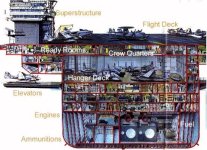
And because I'm feeling like a spiteful bastard today I'm not gonna explain it for you. Figure out for yourself what an AShM have to go through to cripple a carrier in different trajectories.
Last edited:
Harbyharb
Registered Member
I'm done for tonight and this damn thread. The Jiangkai II/Tughril class is not perfect, far from it. If I had to rate the top 10 frigates of the world the Jiankai II/Tughril would not be in it. It is not a wunderwaffen, but like almost all Chinese arms, they are adequate but expendable products based on cruel calculations of cost-effectiveness and the availability of contemporary systems.
If you wish to slander this type of vessel there are so many angles that could be approached, but people just HAD to butt their heads against perhaps the most infallible part of the ship, and that is the HQ-16. The PLAN SPECIFICALLY made a class of air pickets, which is good at being air pickets, what a shocker.
(okay that isn't entirely fair it is also not too bad at ASW but whatever.
If you wish to slander this type of vessel there are so many angles that could be approached, but people just HAD to butt their heads against perhaps the most infallible part of the ship, and that is the HQ-16. The PLAN SPECIFICALLY made a class of air pickets, which is good at being air pickets, what a shocker.
(okay that isn't entirely fair it is also not too bad at ASW but whatever.
Tank131
Registered Member
@Harbyharb . While many will advise you not to engage in these debates, i for one learned a great deal from your engagement. Masterclass! Load of technical information, no personal attacks and no rose colored glasses. Just cold hard fact with logical conclusions. Maybe my favorite series of posts since the new forum opened. Thanks for the illuminating info. Bravo!
DDG-80
Trusted Member
You're right that the HQ-16FE guidance radar is just one part of a broader system. On ships, other radars like the SR2410C and Type 517 support it. However, the specific limitations of the HQ-16FE radar's elevation coverage (0° to 80°) are still important to note.Wtf even is this?
You took the show board of the Guidance Radar of a Ground-Based HQ-16FE, assuming that it is somehow the only radar operating in an HQ-16 battery even when the show board itself is specifically labelled (3) HQ-16FE Guidance Radar, as in, the third part out of many of an entire system
When in fact the Jiangkai II/Tughril class frigates guide its HHQ-16 missiles with a completely different set of systems (in Tughril's case SR2410C UHF surveillance + Type 517 VHF supplementary against sea-skim/low observable + MR-90 illumination). There's a reason why HHQ-16 had an extra "H" in front of HQ-16, or did that just fly over your head?
DDG-80
Trusted Member
Steep-Dive Trajectory:Not only that, do you even know how Soviet-Russian AShM flight profiles work? You mentioned the "steep-dive" trajectory exploiting the top blindspot, how does the BrahMos arrive dead atop its target, does it teleport above the target with yoga magik, or I dunno, perhaps it has to either climb or cruise to them?
Do you know why Soviet AShMs like to have steep-dive trajectories instead of remaining full-stage sea-skim? It's because of this:
View attachment 43462
Figure out for yourself what an AShM have to go through to cripple a carrier in different trajectories.
- The BrahMos missile can climb to a high altitude and then dive almost vertically onto the target. This isn’t “teleporting”; it’s part of its flight profile.
- This trajectory helps the missile hit less-protected areas from above, making it more lethal against heavily armored targets like aircraft carriers. A steep-dive attack increases the impact force and targets less-protected areas of the ship, like the deck and superstructure.
Sea-Skimming Trajectory:
- The missile flies close to the sea surface to avoid radar detection until the last moment. This makes it harder to detect and intercept but doesn’t have the same impact force as a steep dive.
Harbyharb
Registered Member
I'm glad that you found it helpful/entertaining, on top of being "cold" and "logical" because I sure felt like throwing some personal attacks after this@Harbyharb . While many will advise you not to engage in these debates, i for one learned a great deal from your engagement. Masterclass! Load of technical information, no personal attacks and no rose colored glasses. Just cold hard fact with logical conclusions. Maybe my favorite series of posts since the new forum opened. Thanks for the illuminating info. Bravo!
NO.You're right that the HQ-16FE guidance radar is just one part of a broader system. On ships, other radars like the SR2410C and Type 517 support it. However, the specific limitations of the HQ-16FE radar's elevation coverage (0° to 80°) are still important to note.
The HQ-16FE guidance radar DOES NOT EXIST on ships.
Do you see a giant ******* **** sucking tombstone antenna on the Tughril??? I don't, and I'm not blind!
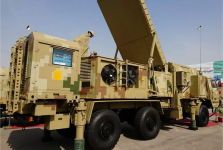
And that's because the SR2410C UHF Search and Guidance AESA radar took its place!
And, well, just perhaps, that the BrahMos, can I dunno, get shot while flying at a high altitude before being dead atop its target?Steep-Dive Trajectory:
- The BrahMos missile can climb to a high altitude and then dive almost vertically onto the target. This isn’t “teleporting”; it’s part of its flight profile.
And that just perhaps, an area-denial SAM, originally specifically designed to stop high-alt nuclear bombers dropping nukes dead above them and the city they protect, is really good at not letting you be atop of them?

NGAD IS THE BEST
Elite Member
This not Indian navy thread, stick to the topicThe Indian Navy's frontline SAM is the Barak 8, which is already installed on P15A/B guided missile destroyers and INS Vikrant. Now, 7 more P17A frigates sailing in the waters of the IOR are also slated to be equipped with this modern SAM. Meanwhile, our domestically developed VL-SRSAM will be fitted on future vessels, including the 6 Next Generation Missile Vessels contracted by the Indian government. The Shivalik-class vessels are scheduled to receive these VL-SRSAMs as part of their MLU. Recently, these ships have been observed conducting BrahMos missile test firings. In parallel, the Indian Army and Indian Air Force are actively integrating Barak 8 MRSAM squadrons, complemented by the Akash SAM featuring an active radar seeker.
huanghong
Registered Member


What I find most difficult to understand about Tughril-Class is that it actually canceled the large active and passive VDS at the stern. This anti-submarine equipment is actually the core mission of 054A in the Chinese Navy and the key equipment for vanguard anti-submarine.

ghazi52
THINK TANK: CONSULTANT

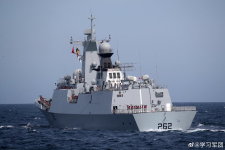
Type 054A/P frigate PNS Tippu Sultan and PNS Shah Jahan. (Picture source: Pakistan Navy)
The Tughril class frigate displaces 4,200 tonnes (4,100 long tons) and measures 134 meters (439 feet 8 inches) in length, with a beam of 16 meters (52 feet 6 inches). The propulsion system operates on a CODAD arrangement, utilizing four Shaanxi Shaanxi 16 PA6 STC diesel engines, each generating 5700 kW.
This allows the vessel to reach a speed of 27 knots (50 km/h; 31 mph) and offers a range of 8,025 nautical miles (14,862 km; 9,235 miles). The ship's complement is 165.
In terms of sensors and processing systems, the ship is equipped with an array of radar systems including SR2410C AESA radar, Type 517 (SUR17B) VHF air-search radar, Type 344 fire-control radar for SSM, and four MR-90 Front Dome systems for SAM.

MastanKhan
VIP Member
Recall the main incident in Mian Channu, which revealed deficiencies in Pakistan's Chinese-origin air defense system. It relies on outdated semi-active radar guidance that is ineffective against modern high-speed projectiles
Hi,
At the end of the day---we got a Brahmos missile---all critical elements mostly intact---.
Brahmos missile---that is normally facing away from pakistan---how did it manage to fly into pakistan---.
Did pakistan sabotage the launch of the missile so that it would land in pakistan---.
But if the indians intentionally launched the missile---why would pak military take it down---it was just one missile---how much damage could it do---.
Why take it out and disclose one's assets.
Pakistan Defence Latest


Country Watch Latest
-
-
 TF-X / KAAN / Hürjet Turkish Fighter & Trainer Aircrafts News & Discussions (12 Viewers)
- Latest: Afif
-
-
 Bangladesh Keen To Join Saudi-Pak-Turkey Defence Alliance, Says PM's Top Aide (11 Viewers)
- Latest: Aryan_B
-

Latest Posts
-
-
 Singapore must keep Asian identity to avoid monolingual society, says PM Wong (7 Viewers)
- Latest: Beijingwalker
-

-

-
TF-X / KAAN / Hürjet Turkish Fighter & Trainer Aircrafts News & Discussions (12 Viewers)
- Latest: Afif