JF-17 PFX program

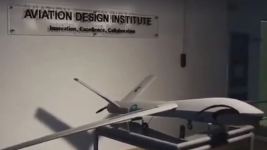
According to this leaflet here, it has no mention of the JF-17. It seems like a new aircraft. TBH, it might not even be anything beyond the drawing board right now so nothing really concrete.

View attachment 123957
@Quwa @JamD

same chaps who couldnt finish this:

1748342024978.png


want to build a new fighter from the ground up lol
 
@Quwa @JamD

same chaps who couldnt finish this:

View attachment 124050


want to build a new fighter from the ground up lol
Not the same team I guess as there were reports that the chief of that project had left organization over some differences.

if I remember correctly some member on previous forum were discussing about this
 
Not the same team I guess as there were reports that the chief of that project had left organization over some differences.

if I remember correctly some member on previous forum were discussing about this
the incompetence runs deep though
 
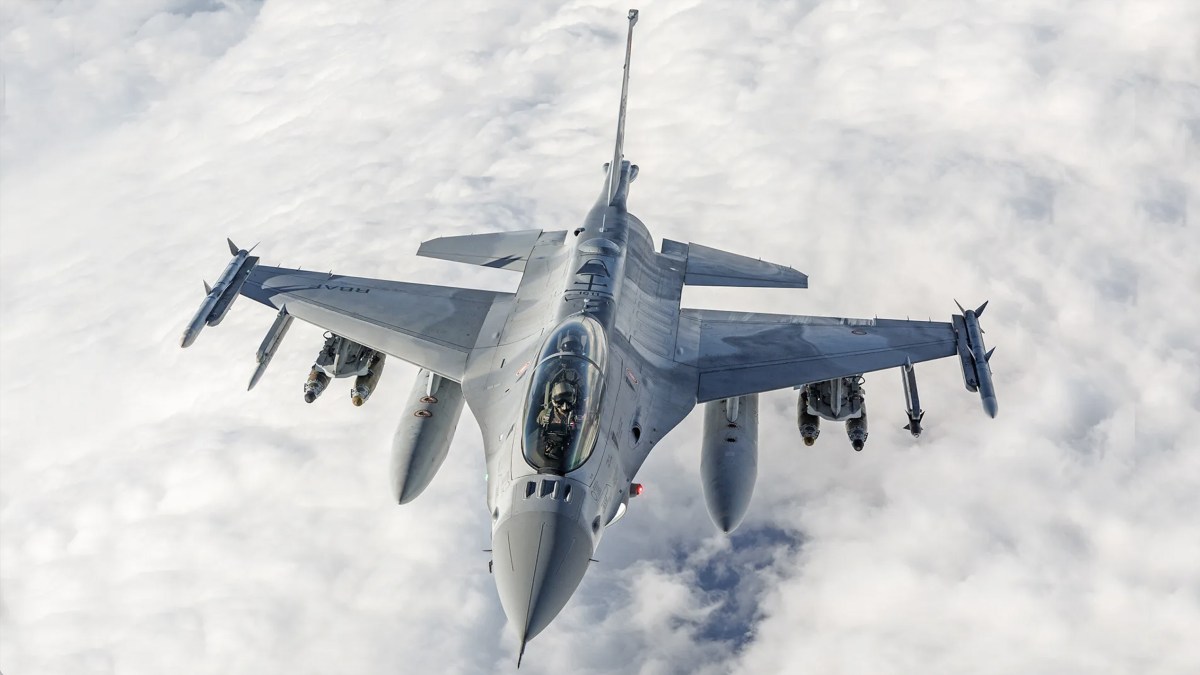
IMO JF-17 production will continue with iterative upgrades. I don't expect any significant changes to the airframe. Rather, the PAF will keep upgrading the electronics, especially as they get more and more power-efficient (e.g., GaN) and use the JF-17s as nodes for deploying LRAAMs and SOWs.

If there's one major change they will need to do, however, it'd be to adapt the JF-17 for motorway operations so that the PAF could mount a proper dispersal operations doctrine. It will need that now more than ever as India would use the BrahMos at very large scale and intensity to destroy the MOBs and FOBs.

If there's an appetite for a totally new fighter platform, then the PAF should focus on a jet-powered UCAV. I've mentioned this a bunch of times over a couple of years, but start with a 2-3-ton loyal wingman or CCA platform designed for expendability (i.e., make it cheap, but capable enough to deploy 2 SOWs or 2 LRAAMs). Develop and build the engine, composites, steel, and so on in Pakistan, and manufacture 1,000+ units.

To get to 1,000+ units you don't need to expand PAC or NASTP -- rope in the private sector. Give them a solid long-term production commitment (100 units a year for 10 years), and they'll invest in setting up net-new capacity. Cut red tape and do better and marketing, and they can profit from net-new exports.
 
Not the same team I guess as there were reports that the chief of that project had left organization over some differences.

if I remember correctly some member on previous forum were discussing about this

If the chief left and the project did not get completed because of that, then it does suggestion institutional problems both in-terms of team building to complete projects and institutional goals that need to be achieved regardless of the makeup of the team. Feels very 'tribal' unfortunately to me, hopefully they can learn from their collaboration with the Turks on how to create, manage and deliver projects and how to optimise resources towards that goal.
 
The pace technology is evolving 5 years is a lifetime for pfx if the work continues on it day and night. With chinese and Turkish support ... Pakistan can make good progress on it. If pfx is less than kf21 type ... in my opinion it is waste of resources. Future of air warfare is going to be very different. 4th generation type fighters are becoming obsolete very fast. That is why China is now fully focus on j20, j35 , j36 and j50. All j16 , j15, j11 and j10 production is coming towards closure if not already done.
Not really. Just see how many F-15EX and newer F-16s are becoming part of USAF. 5Gen provides you an edge but it also comes with its own limitations like limited number of A2A/A2G weapons in internal stores. UCAVs are going to play a bigger role than 5Gen fighters. The purpose of Air power is to decimate enemy forces on ground without indulging into air combats which wasn't primary role of Air power anyways. Stealth UCAVs with turbojet propulsion are going to change battlefield in future. As far PFX is concern, it is part of PAF's journey to be able to complete the aircraft life cycle. From Design to Certification. Becoming an authority where no foreign support needed to complete crucial steps like Certifying an aircraft design, build quality, and air worthiness. PFX is not to churn numbers. That will be aircraft that will emerge from it and no one has any clue about it as the entire program is on paper right now.
 
I think PXF should be a program to upgrade JF17 and nothing more.
 
Not really. Just see how many F-15EX and newer F-16s are becoming part of USAF. 5Gen provides you an edge but it also comes with its own limitations like limited number of A2A/A2G weapons in internal stores. UCAVs are going to play a bigger role than 5Gen fighters. The purpose of Air power is to decimate enemy forces on ground without indulging into air combats which wasn't primary role of Air power anyways. Stealth UCAVs with turbojet propulsion are going to change battlefield in future. As far PFX is concern, it is part of PAF's journey to be able to complete the aircraft life cycle. From Design to Certification. Becoming an authority where no foreign support needed to complete crucial steps like Certifying an aircraft design, build quality, and air worthiness. PFX is not to churn numbers. That will be aircraft that will emerge from it and no one has any clue about it as the entire program is on paper right now.
What you mention is true today and may be for the next five years at most. The future of air warfare lies in fifth and sixth-generation aircraft, with trusted wingmen, plus AI-driven drones and stealth UCAVs. There is limited or no space for fourth and fourth-and-a-half generation fighters if the adversary has all of the above. In fact, the classic dogfight might just make a comeback as the BVR advantage is diminished due to the low-observable designs of fifth and sixth-generation fighters supported by stealth UCAV wingmen.

Think near future not immediate future
 
One sign of a competent military industry is that it understands its own practical limitations of what it can achieve given the available resources.

We saw Project Azm where someone had knee-jerk wants of canard stealth designs and in the end nothing was achieved, obviously because Pakistan has neither the human resources, physical infrastructure nor technical know-how for the advanced materials, manufacturing and electronic subsystems & sensors that require.

In the end it failed, let's hope they don't pull another like this. Having strong fundamentals is important for making a quality product. No point of rushing a flying tin can that can't perform because you had no real capacity.
 
After recent performance of PAF I think we can now easily bring Arabs on board. They can finance these projects, and Turkey can help with technology.
 
What you mention is true today and may be for the next five years at most. The future of air warfare lies in fifth and sixth-generation aircraft, with trusted wingmen, plus AI-driven drones and stealth UCAVs. There is limited or no space for fourth and fourth-and-a-half generation fighters if the adversary has all of the above. In fact, the classic dogfight might just make a comeback as the BVR advantage is diminished due to the low-observable designs of fifth and sixth-generation fighters supported by stealth UCAV wingmen.

Think near future not immediate future
No one is denying that but as the technologies are maturing you will see the role of manned aircraft evolved including that of 4.5+ gen. (Super cruise, networked, GaN based avionics). I believe these aircraft will act as command posts for loyal wingman /CCA type assets which will be completely stealth and would be flying in advance with their own sensors turned off. Taking commands from either AWACS or manned fighters. Eventually, these fighters will become obsolete as manufacturing of these aircraft will comes to end but that is going to be a gradual process. Demand for these aircraft will exist for long time as not many countries have the resources to field entire fleet of 5/6 gen fighters and Pakistan and India both fall in this category. For next couple of decades we will see that companies like LM/Boeing Defense/Dassault etc. will focus more on keeping these 4.5+ gen relative while carrying out R&D on 5/6 gen fighters. Rafale will get next upgrade like F-15 has in the form of EX program. F-16 Block 80 for USAF is already in news.
USAF despite 1 trillion USD defence spending on its back facing the challenge of aging fleet. Can it replace everything with 5G fighter? I don't think so. Some will be replaced, Some will be modified, some will be augmented by Unmanned assets. This transition from 4.5/4.5+ based air forces to complete 5/6 G air forces will take decades even for a force like USAF or Israelis or Chinese. Newer innovations will extend possibilities for existing platforms along with ushering ground breaking systems with capabilities that existing platform can't mimic at all. Many sub-systems from 5th gen fighters have made their way to 4.5G fighters. This is true even in the case of JF-17 where certain elements like HUD came from J-20, weapons like PL-15s, etc. enhancing the relevance of this aircraft in modern air combat like we just witnessed few days ago. This phenomenon is universal. Where PFX sits in this all will become clear if this project survives Post Sidu sahib PAF in next few years. If it's his brainchild then he just has one more tenure to push it to a stage where PAF become compelled to invest more in it i.e. mature it enough. Fingers Crossed.
 
After recent performance of PAF I think we can now easily bring Arabs on board. They can finance these projects, and Turkey can help with technology.
Gulf won't be interested. They'll probably work with South Korea and India.

However, Algeria could be an interesting bet: it's a carbon-rich country without much access to the latest Western equipment. It relies on Russia, but could be open to exploring new partnerships with others, especially if co-production and transfer of technology are on the cards (help them diversify their economy, industrialize, etc).

Iraq could also be on the cards, but I'm not sure how much the national gov't benefits now from the oil wealth these days.
 
One sign of a competent military industry is that it understands its own practical limitations of what it can achieve given the available resources.

We saw Project Azm where someone had knee-jerk wants of canard stealth designs and in the end nothing was achieved, obviously because Pakistan has neither the human resources, physical infrastructure nor technical know-how for the advanced materials, manufacturing and electronic subsystems & sensors that require.

In the end it failed, let's hope they don't pull another like this. Having strong fundamentals is important for making a quality product. No point of rushing a flying tin can that can't perform because you had no real capacity.
If we see in retrospective way, PFX is indeed the outcome of that mistake. Not realizing the limitation and not working on acquiring missing technical and industrial prowess. Even the entire NASTP is the outcome of that, IMHO. PAF had realized during the last decade that self-sufficiency is the only way forward but couldn't realized that it's not a readymade available thing, one has to earn it through solid planning, financial support, and political backing. NASTP got all these and that's why I see good things emerging out of those places including sub-systems for PFX and beyond. PAF must continue working on PFX regardless of failures and time. Goal here is not just building an aircraft but building an aerospace eco-system.
 
Gulf won't be interested. They'll probably work with South Korea and India.

However, Algeria could be an interesting bet: it's a carbon-rich country without much access to the latest Western equipment. It relies on Russia, but could be open to exploring new partnerships with others, especially if co-production and transfer of technology are on the cards (help them diversify their economy, industrialize, etc).

Iraq could also be on the cards, but I'm not sure how much the national gov't benefits now from the oil wealth these days.
Bangladesh could be a good partner for the future. Dependent on politics but naturally if they increasingly see India as a threat then sharing development costs and weapons becomes a no-brainer.
 
Remember, the USAF is a large force. If the economy permits, the PAF, with its 20 squadrons, can easily transition to a modern force structure with LO fighters.
 

Users who are viewing this thread

Country Watch Latest

Back
Top