Beijingwalker
VIP Member

China’s Imposing LY-1 High-Power Laser Weapon Unveiled At Huge Military Parade
The LY-1 is reportedly designed primarily for protecting ships against drones and missiles, but appears to also have a role on land.Joseph Trevithick
Published Sep 3, 2025 3:31 PM EDT
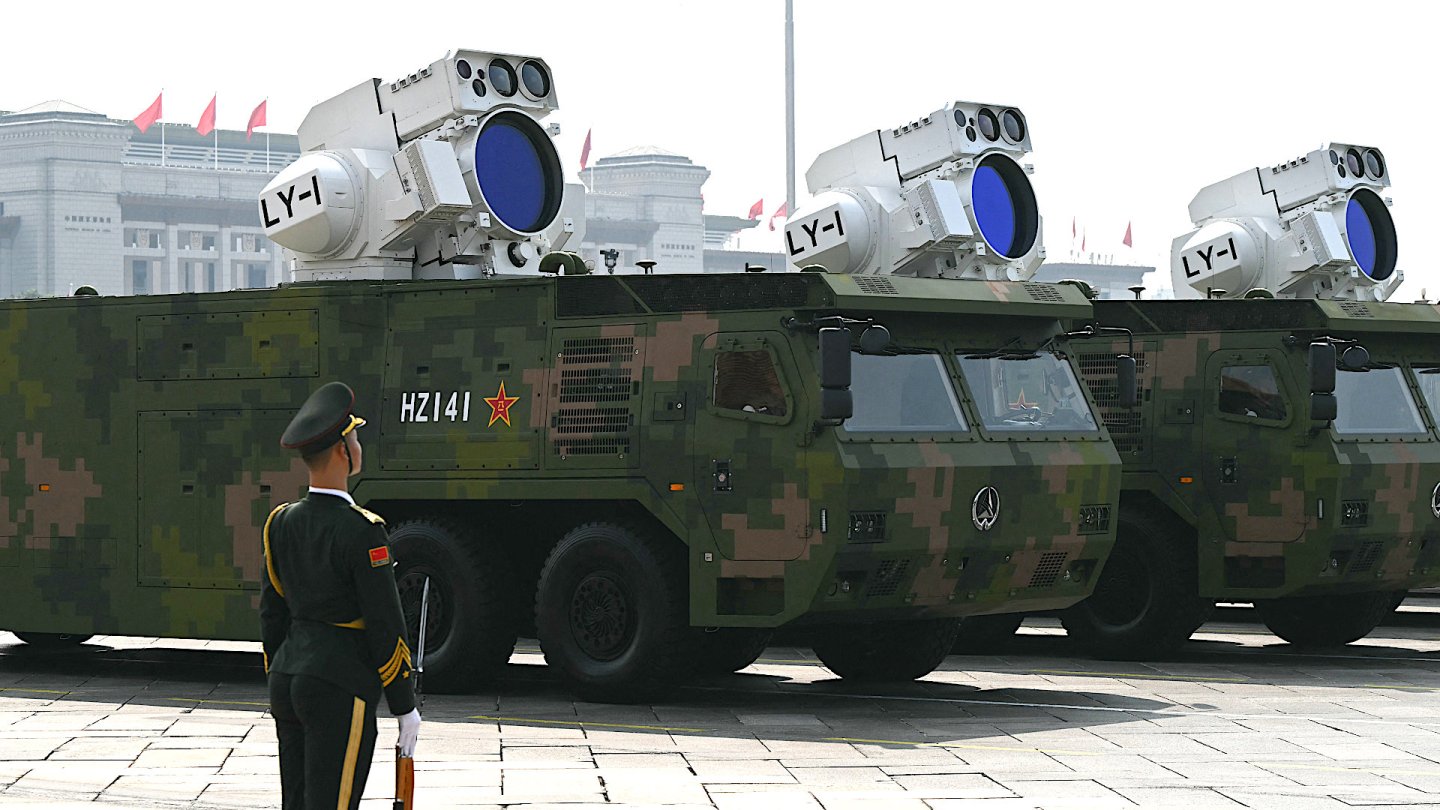
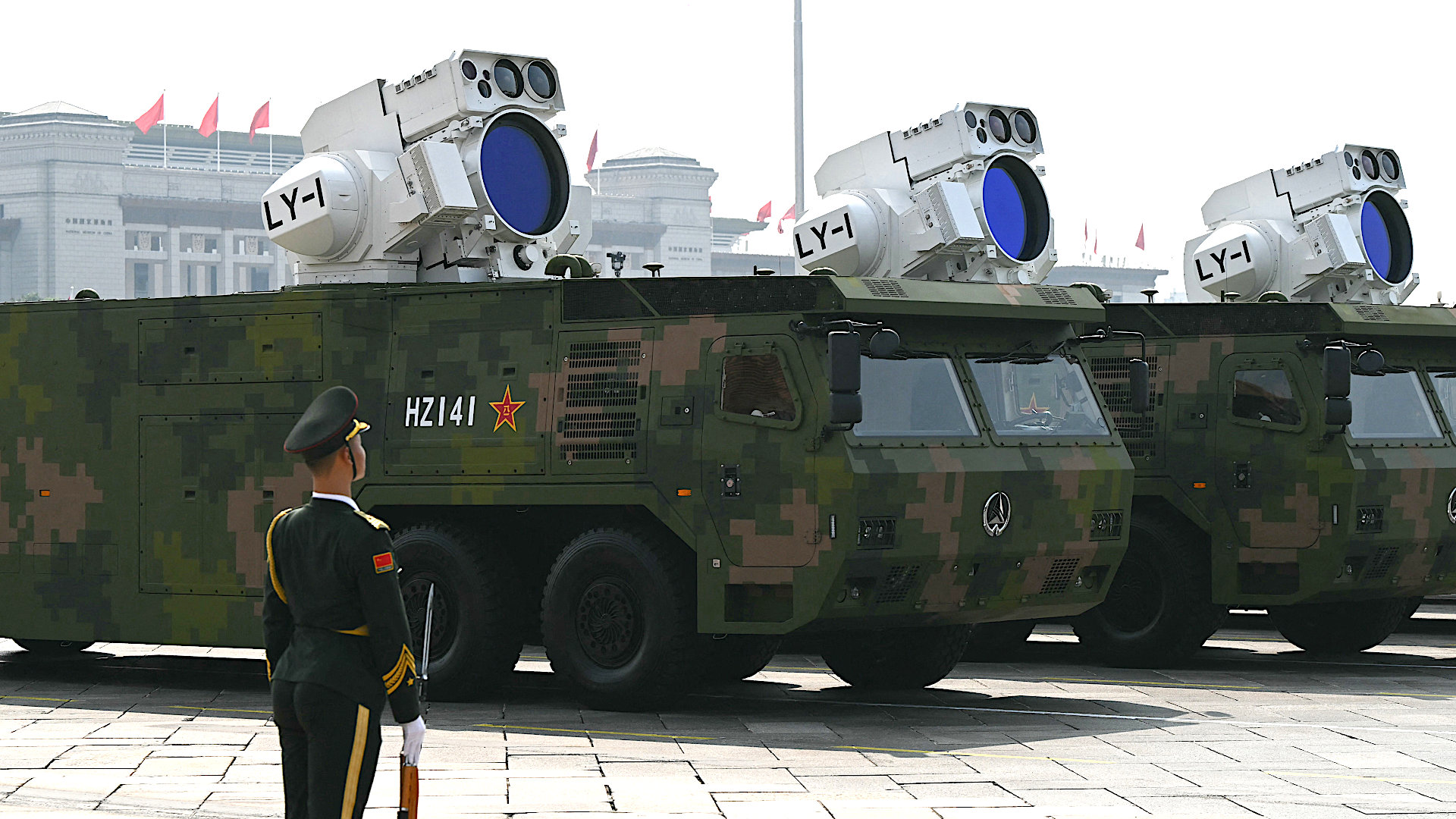
Avery large directed energy laser weapon was among the new capabilities officially rolled out for the first time at a massive military parade in China. Called the LY-1, the laser has so far been described as primarily intended for shipboard self-defense, but was shown at today’s event in a form that also points to land-based applications.
Today’s parade in Beijing was months in the making, and new drones, missiles, and other systems had already emerged during the preparations. The event marked the 80th anniversary of what was then the Republic of China’s victory over Japan during World War II.

A look at an LY-1 laser directed energy weapon system from the front. Chinese state television capture
“The LY-1 has sufficient space for power units, meaning that it could have higher power, enabling it to be capable of intercepting not only attacks from unmanned equipment, but also anti-ship missiles, with very low-cost for each interception,” according to a report today from China’s Global Times newspaper, an outlet run by the ruling Chinese Communist Party, citing an independent expert. “Shipborne laser weapons can effectively damage the optical sensors of enemy weapons and equipment.”
“Parade narrators for CGTN, China’s English-language state media outlet, said the LY-1 is capable of ‘precision destruction and consistent strike,'” Business Insider has also reported.
Laser directed energy weapons known to be in development globally typically fall into two categories: so-called dazzlers designed to blind optics, including optical seekers on incoming missiles, and higher-powered designs capable of physically damaging or destroying a target. A high-power type could also be designed to incorporate a low-power capability. The LY-1’s size and configuration, together with the descriptions above, put it firmly in the higher-powered category, and with a primary focus on protecting ships from incoming aerial threats like drones and missiles.
How close the LY-1 might be to entering operational service, and in what form, is also unknown. What looked to be a laser directed energy weapon with a configuration very similar to the LY-1 had been spotted on a Chinese People’s Liberation Army Navy (PLAN) Type 071 amphibious warfare ship last year, as you can read more about here. Back in 2019, China’s state-run CCTV-7 television network had also broadcast imagery of a laser directed energy weapon with a similar, but more simplified design that was said to be under development for the PLAN.
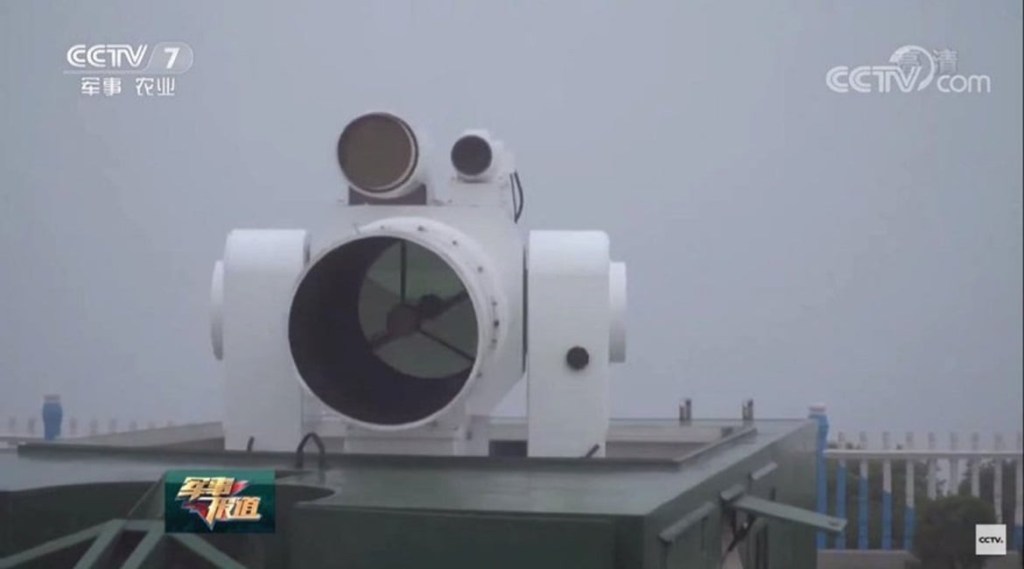
A 2019 Chinese state television report said the laser directed energy weapon system seen here was under development for the People’s Liberation Army Navy. CCTV-7 capture via Jane’s
Broadly speaking, laser weapons hold the promise of largely unconstrained magazine depth, as long as there is sufficient power and cooling. While a single laser can only be focused on one point at a time, a turreted beam can also be readily redirected from one target to the next after the laser has effected its target in a satisfactory manner.
It is worth noting that lasers, in general, are sensitive to environmental factors, including smoke, clouds, rain, or other particles in the air, all which can break up a beam and reduce its effectiveness. The power of that beam already drops as it propagates through the atmosphere and gets further away from the source. When developing a practical and reliable laser weapon system that can stand up to real combat use, especially being battered at sea for months at a time and exposed to salt water spray, the delicate nature of their adaptive optics presents further challenges.
The capabilities laser weapon systems are designed to offer are in high demand for ships, especially amid ever-growing drone and missile threats. Even advanced warships with deeply-layered defensive capabilities are among the most protected but threatened objects on earth. Adding a laser layer for close-in defense is seen as highly adventurous. Shipboard applications also offer their own challenges when it comes to meeting the significant power and cooling, as well as physical space demands.
The benefits that high-power laser directed energy weapons offer, at least in principle, are also relevant in the land and air domains, and the LY-1 could also be intended for use in a ground-based configuration. At today’s parade, the laser weapons appeared in what looked to be a very purpose-built eight-wheeled road-mobile format. As a comparison, HQ-10 naval surface-to-air missile launchers, or mockups thereof, were also paraded, but in a configuration more clearly intended for display, rather than operational use.