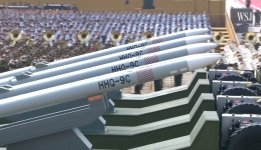
2025 China Victory Day Parade

China’s Imposing LY-1 High-Power Laser Weapon Unveiled At Huge Military Parade​

The LY-1 is reportedly designed primarily for protecting ships against drones and missiles, but appears to also have a role on land.
Joseph Trevithick
Published Sep 3, 2025 3:31 PM EDT
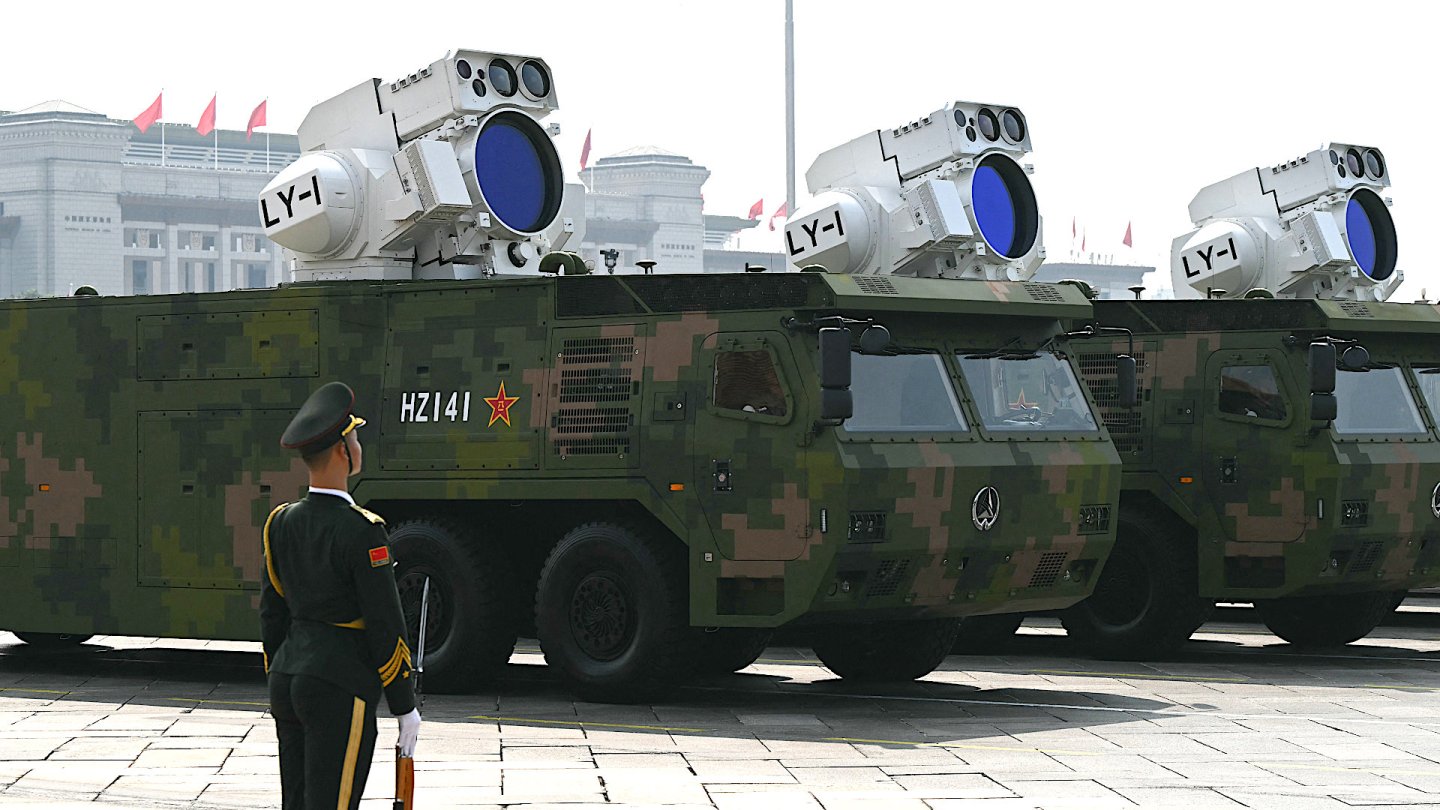
ly-1-laser-2025-china-parade.jpg

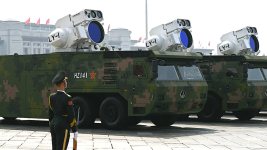
Avery large directed energy laser weapon was among the new capabilities officially rolled out for the first time at a massive military parade in China. Called the LY-1, the laser has so far been described as primarily intended for shipboard self-defense, but was shown at today’s event in a form that also points to land-based applications.

Today’s parade in Beijing was months in the making, and new drones, missiles, and other systems had already emerged during the preparations. The event marked the 80th anniversary of what was then the Republic of China’s victory over Japan during World War II.

ly-1-front-view.jpg

A look at an LY-1 laser directed energy weapon system from the front. Chinese state television capture

“The LY-1 has sufficient space for power units, meaning that it could have higher power, enabling it to be capable of intercepting not only attacks from unmanned equipment, but also anti-ship missiles, with very low-cost for each interception,” according to a report today from China’s Global Times newspaper, an outlet run by the ruling Chinese Communist Party, citing an independent expert. “Shipborne laser weapons can effectively damage the optical sensors of enemy weapons and equipment.”

“Parade narrators for CGTN, China’s English-language state media outlet, said the LY-1 is capable of ‘precision destruction and consistent strike,'” Business Insider has also reported.

Laser directed energy weapons known to be in development globally typically fall into two categories: so-called dazzlers designed to blind optics, including optical seekers on incoming missiles, and higher-powered designs capable of physically damaging or destroying a target. A high-power type could also be designed to incorporate a low-power capability. The LY-1’s size and configuration, together with the descriptions above, put it firmly in the higher-powered category, and with a primary focus on protecting ships from incoming aerial threats like drones and missiles.

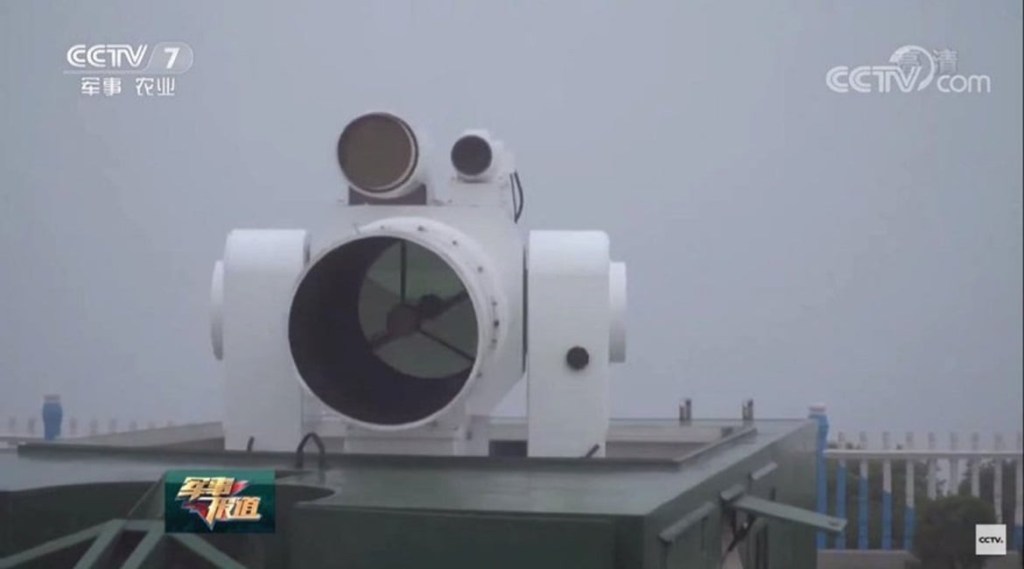
How close the LY-1 might be to entering operational service, and in what form, is also unknown. What looked to be a laser directed energy weapon with a configuration very similar to the LY-1 had been spotted on a Chinese People’s Liberation Army Navy (PLAN) Type 071 amphibious warfare ship last year, as you can read more about here. Back in 2019, China’s state-run CCTV-7 television network had also broadcast imagery of a laser directed energy weapon with a similar, but more simplified design that was said to be under development for the PLAN.
To view this content we will need your consent to set third party cookies.
For more detailed information, see our cookies page.


2019-cctv-7-laser.jpg

A 2019 Chinese state television report said the laser directed energy weapon system seen here was under development for the People’s Liberation Army Navy. CCTV-7 capture via Jane’s

Broadly speaking, laser weapons hold the promise of largely unconstrained magazine depth, as long as there is sufficient power and cooling. While a single laser can only be focused on one point at a time, a turreted beam can also be readily redirected from one target to the next after the laser has effected its target in a satisfactory manner.

It is worth noting that lasers, in general, are sensitive to environmental factors, including smoke, clouds, rain, or other particles in the air, all which can break up a beam and reduce its effectiveness. The power of that beam already drops as it propagates through the atmosphere and gets further away from the source. When developing a practical and reliable laser weapon system that can stand up to real combat use, especially being battered at sea for months at a time and exposed to salt water spray, the delicate nature of their adaptive optics presents further challenges.

The capabilities laser weapon systems are designed to offer are in high demand for ships, especially amid ever-growing drone and missile threats. Even advanced warships with deeply-layered defensive capabilities are among the most protected but threatened objects on earth. Adding a laser layer for close-in defense is seen as highly adventurous. Shipboard applications also offer their own challenges when it comes to meeting the significant power and cooling, as well as physical space demands.

The benefits that high-power laser directed energy weapons offer, at least in principle, are also relevant in the land and air domains, and the LY-1 could also be intended for use in a ground-based configuration. At today’s parade, the laser weapons appeared in what looked to be a very purpose-built eight-wheeled road-mobile format. As a comparison, HQ-10 naval surface-to-air missile launchers, or mockups thereof, were also paraded, but in a configuration more clearly intended for display, rather than operational use.
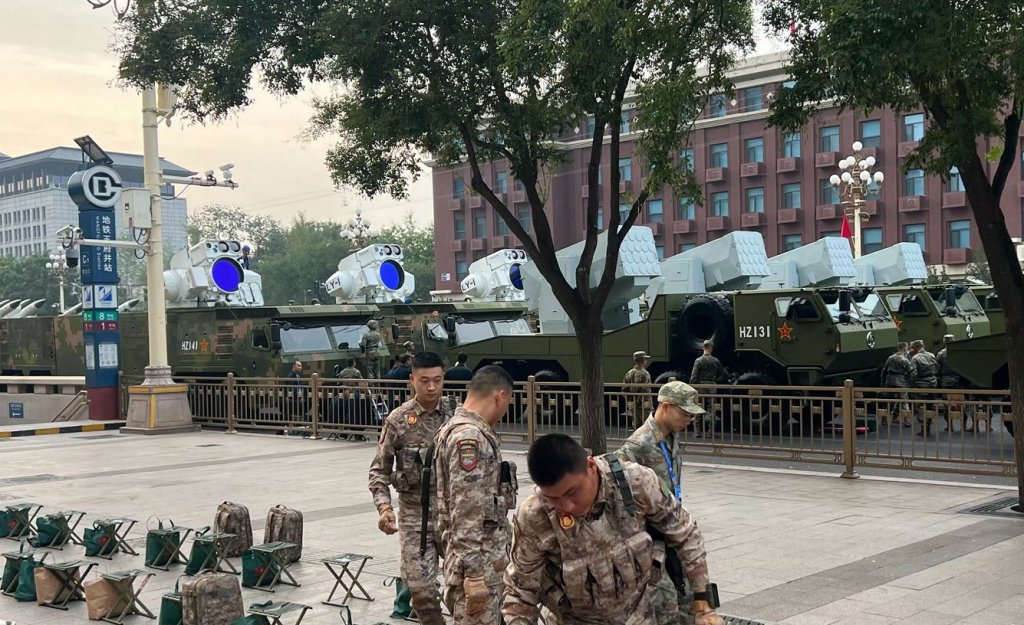
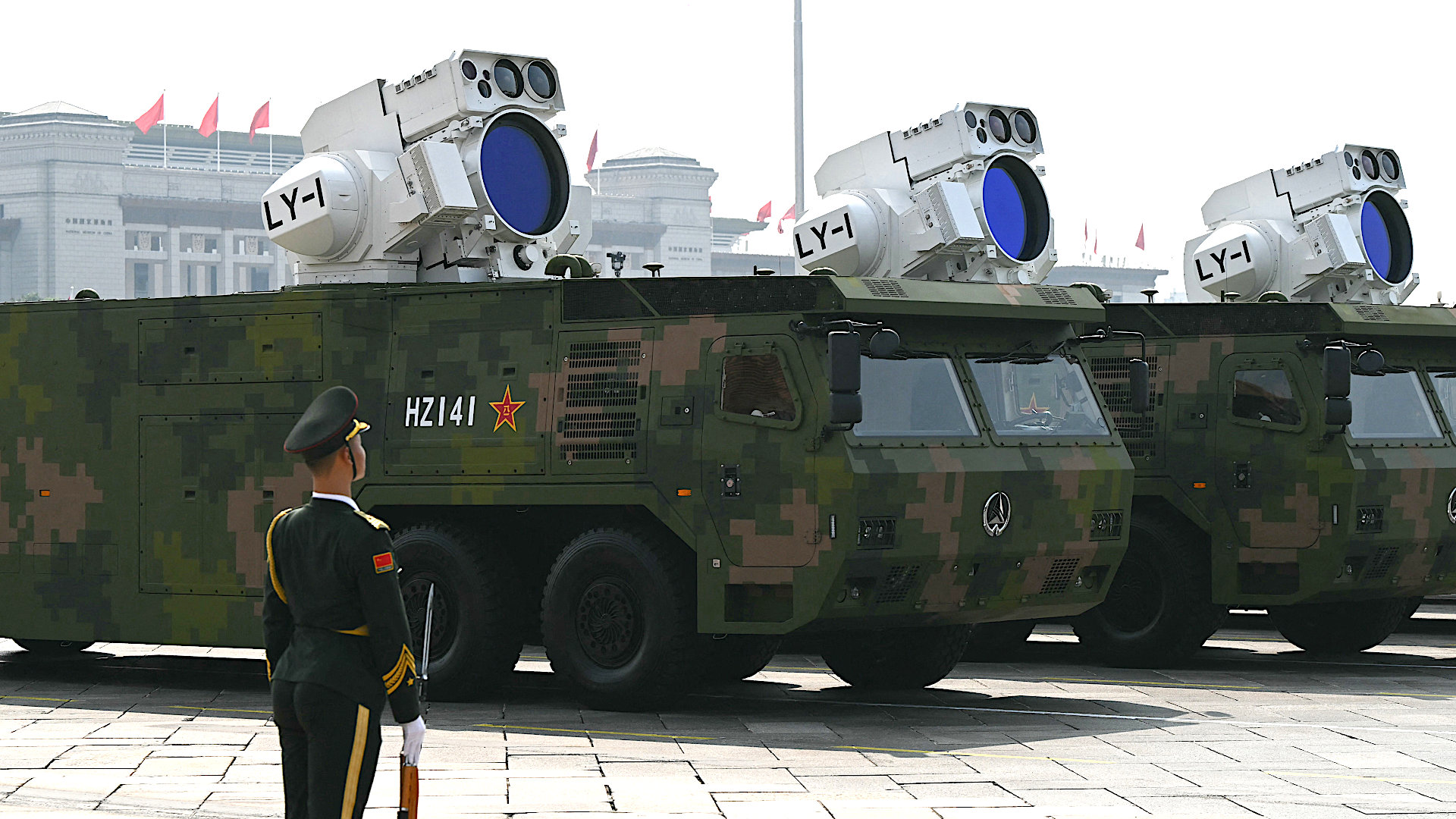
ly1-hq-10-lineup.jpg
LY-1s, at left, seen together with trucks carrying HQ-10s, or mockups thereof, at right, just before the start of today’s parade. Chinese internet
 
There is precedent for adapting naval weapon systems, especially those intended for close-in defense, for use ashore. The U.S. Army’s Centurion, a ground-based version of the 20mm Vulcan cannon-armed Phalanx Close-In Weapon System (CIWS) found on various U.S. Navy and foreign warships, is a prime example. China has also previously developed versions of its own naval gun-armed CIWS systems for applications on land.

To view this content we will need your consent to set third party cookies.
For more detailed information, see our cookies page.


A land-based version of the LY-1 could provide an additional layer of defense against drones, cruise missiles, and even helicopters and fixed-wing aircraft, depending on its real-world effective range and power rating. If the system is self-contained, it might have some capability to engage targets on the move, as well.

As noted, there are still questions about how close the LY-1 might be to entering operational service in any domain. In the United States, laser directed energy weapon development has faced repeated setbacks, especially due to power and cooling challenges, as well as making systems rugged enough for actual combat use, as you can read more about here. While the U.S. Navy has made more visible progress on this front than other branches of America’s armed forces, the service’s senior leaders have still expressed frustration with the pace of actually fielding these capabilities.

At the same time, China has clearly been making significant investments in operationalizing various tiers of laser and high-powered microwave directed energy weapons. This includes higher-end ground-based lasers designed to at least disrupt the operation of orbiting satellites. There are also smaller land-based laser weapons primarily intended for the counter-drone role, some of which were also showcased at today’s parade. Chinese firms have already succeeded in securing at least limited export sales of systems in that general category, including to Saudi Arabia and Iran, and reportedly Russia.

To view this content we will need your consent to set third party cookies.
For more detailed information, see our cookies page.


To view this content we will need your consent to set third party cookies.
For more detailed information, see our cookies page.


A massive high-powered microwave weapon called the Hurricane 3000, which is mounted on a modified Shacman SX2400/2500-series 8×8 truck, was also on display at the event today in Beijing. That particular system had previously been showcased publicly at last year’s Zhuhai Airshow, as you can read more about here.

To view this content we will need your consent to set third party cookies.
For more detailed information, see our cookies page.


While more remains to be learned about the LY-1 and China’s plans for it, it is the latest reflection of the country’s push to develop and field laser and other directed energy weapons for use in multiple domains.

 
China debuts multiple wingman, air superiority drones; to profoundly change future air combat: experts
1000053253.jpg
1000053254.jpg


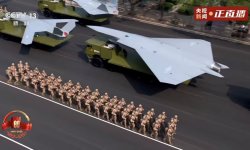
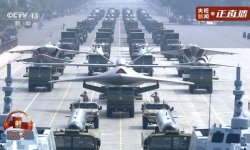
Multiple completely new types of unmanned aerial vehicles (UAVs) debuted at China's V-day military parade on Wednesday to mark the 80th anniversary of the victory in the Chinese People's War of Resistance Against Japanese Aggression and the World Anti-Fascist War, attracting widespread attention with their highly futuristic appearances.
Military affairs experts told the Global Times that some of the UAVs showcased at the parade not only have new appearances, but also embody new concepts, which could overturn the existing air combat scenarios and profoundly change the future air combat.
UAVs reviewed this time include new armed reconnaissance drones, wingman drones, air superiority drones, and shipborne unmanned helicopters. These aircraft are all debuting for the first time. They are capable of stealth attacks, with wide coverage and autonomous collaboration, bringing innovative new patterns for future air combat.

To view this content we will need your consent to set third party cookies.
For more detailed information, see our cookies page.


Wingman drones, also known as "loyal wingmen," represent a key concept in recent years within the drone sector and are widely regarded as a vital component of future unmanned combat systems.
A technical expert told the Global Times previously that wingman drones can operate in close formation with manned warplanes, enabling efficient coordination in air superiority, air defense and suppression, as well as escort tasks. This approach not only addresses limitations such as the limited operational capacity of manned aircraft and aging fleets but also facilitates the development of new unmanned combat capabilities to establish a manned-unmanned collaborative warfare pattern.
Serving as both sensors and ammunition depots, these drones also function as intelligent assistants to human pilots. On one hand, they extend pilots' operational awareness and strike capabilities; on the other hand, they also function as intelligent nodes within air combat system through large-scale swarm-based general deployment. Each wingman drone acquires local combat information, filters them and integrates data to form a comprehensive battlefield picture, and assists human pilots in decision-making. This liberates pilots from dangerous, high-stress combat environments, enabling them to go beyond traditional pilot roles and assume the roles of commanders of aerial formations, according to the expert.
"Simply put, wingman drones can serve as external sensors and weapon stations for manned aircraft, working alongside them to carry out combat missions," explained military affairs expert Zhang Xuefeng. He told the Global Times that wingman drones can act as decoys for manned aircraft to confuse adversaries, conduct target reconnaissance, and even perform electronic jamming. Each of the wingman drones showcased this time possesses distinct capabilities, some are suited for extended subsonic cruising, while others boast fast speed and high maneuverability. This demonstrates that China's wingman drone technology encompasses a diverse range of approaches.
In addition to wingman drones, another new type of unmanned aerial combat equipment at the parade is the air superiority drone, which also marks the debut of this new concept of unmanned combat equipment.
"The air superiority drones can be seen as one of the most cutting-edge weapons and equipment in the entire aerial unmanned combat formations. This type of UAV has strong independent aerial combat capabilities. From a global perspective, this type of unmanned equipment is leading and pioneering," Zhang said, noting that the combat concept embodied by this unmanned combat equipment will overturn the existing air combat scenarios and profoundly change future air combat mode.
Zhang further noted that from its appearance, the air superiority drones have the advantages of high stealth, high autonomy, and high maneuverability.
"The reason why I emphasize the drones' high autonomy and advantages is because most of the combat drones demonstrated by China previously were mainly used to attack ground targets, which are usually remotely operated by personnel from afar. However, in air-to-air combat scenarios, it will be difficult to use drones solely relying on remote control from long distances," Zhang explained.
The air combat environment is extremely complex and the battlefield situation is constantly changing; Therefore, in order for drones to participate in air-to-air combat, they must have a high degree of autonomous combat capability. This also means that the air superiority drones may have more advanced avionics and AI systems to achieve autonomous control, Zhang added.
Zhang further explained that UAVs can have stronger maneuverability than manned aerial vehicles when performing aerial combat missions. Modern fighter pilots can withstand a load of up to 9G, while drones are not limited by human pilots. This gives them certain advantages in aerial combat against manned aircraft. In addition, Zhang believes that high stealth is reflected in the smaller size of the UAVs, and stealth design can be given priority, without considering pilot factors.
Notably, some of the new drones showcased this time also adopt a tailless design.
"The tailless configuration has stronger stealth performance than the V-shaped vertical tails, and can achieve omnidirectional and full spectrum stealth," military affairs expert Fu Qianshao told the Global Times. He said that canceling vertical tail normally poses a great challenge to the aircraft's flight control system. The drones unveiled on Wednesday adopt tailless configurations, which also indicates that China has solved this challenge. Having mastered highly advanced aerodynamic control technology, it is likely that this technology can also be applied to manned aircraft, Fu said.
"Wingman drones and air superiority drones are the direction of drone technology development, and many countries are making efforts. China has unveiled multiple new types of UAVs at once, which also shows that China is at the forefront of the world in this field," said Fu.
In addition, a type of shipborne unmanned helicopter was included in the aerial unmanned combat formations. Fu said that unmanned helicopters can perform a variety of tasks, including early warning, reconnaissance, anti-ship, anti-submarine, search and rescue, and transportation.
"Since there is no need for carrying pilots, the range, endurance, and flexibility of unmanned helicopters are higher than those of manned helicopters of a similar size. The relatively small size also means that it can be carried by various types of ships such as frigates, destroyers, amphibious ships, and aircraft carriers, and also in larger numbers," said Fu.

RELATED ARTICLES
 
so, 100 of these mean, 50 dead war ships or 03/02 naval carrier completely oblieterated

To view this content we will need your consent to set third party cookies.
For more detailed information, see our cookies page.

They wouldn't just launch the same type missile but combined with others like YJ-19, YJ-20, YJ-15 from naval tactical jets like J-15T.
 
To view this content we will need your consent to set third party cookies.
For more detailed information, see our cookies page.

Smooth like butter
 
To view this content we will need your consent to set third party cookies.
For more detailed information, see our cookies page.

The most powerful man in the world
 
General Zhang has retired from the world for many years, but the legend about him is still widely circulated.

His status in the Chinese military fan community is absolutely supreme!

005BgIbDgy1i4vts1yxz5j30j00b3q3s.jpg
1756986064842.png
 
China displays for first time its strategic nuclear triad, debuts air-launched JL-1, submarine-launched JL-3, land-based DF-61, DF-31BJ
By Liu Xuanzun, Fan Wei and Liang Rui
Published: Sep 03, 2025 11:11 AM

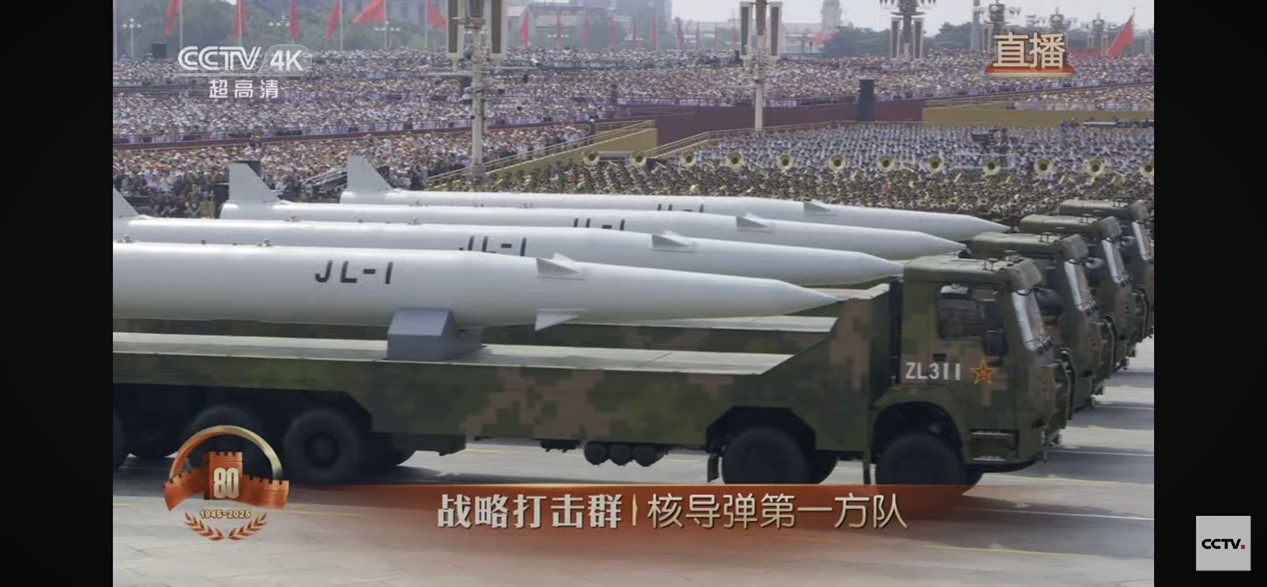
JL-1 air-launched long-range missile is reviewed at China's V-Day military parade on September 3, 2025. Photo: Screenshot from CCTV News's V-Day military parade on September 3, 2025. Photo: Screenshot from CCTV News

JL-1 air-launched long-range missile is reviewed at China's V-Day military parade on September 3, 2025. Photo: Screenshot from CCTV News

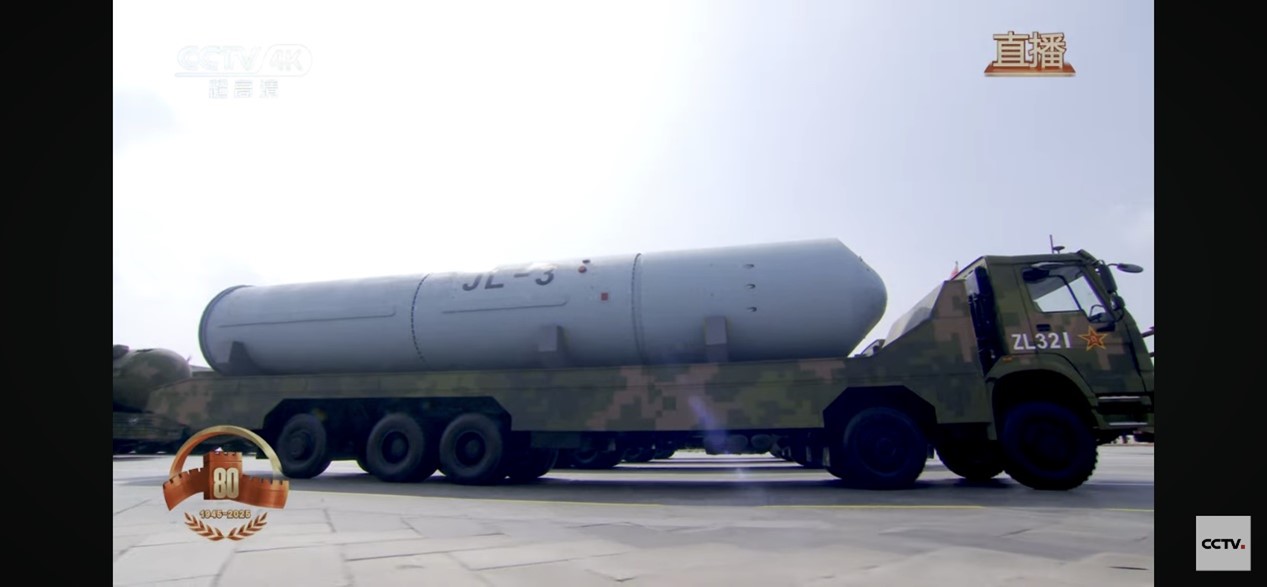
JL-3 submarine-launched intercontinental missile is reviewed at China's V-Day military parade on September 3, 2025. Photo: Screenshot from CCTV News's V-Day military parade on September 3, 2025. Photo: Screenshot from CCTV News

JL-3 submarine-launched intercontinental missile is reviewed at China's V-Day military parade on September 3, 2025. Photo: Screenshot from CCTV News

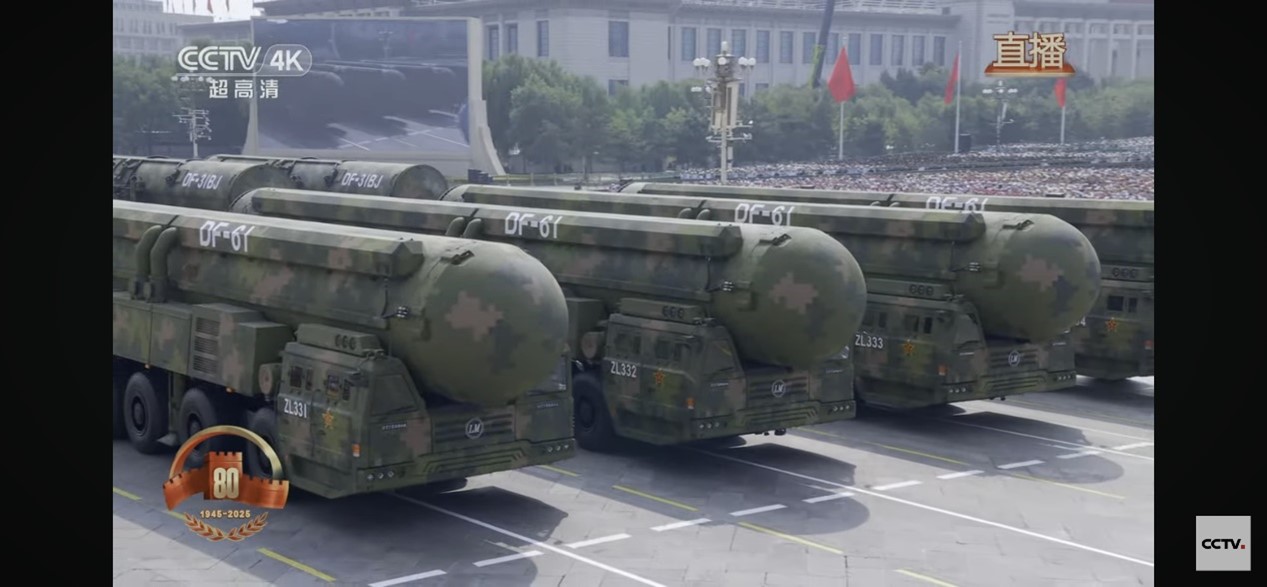
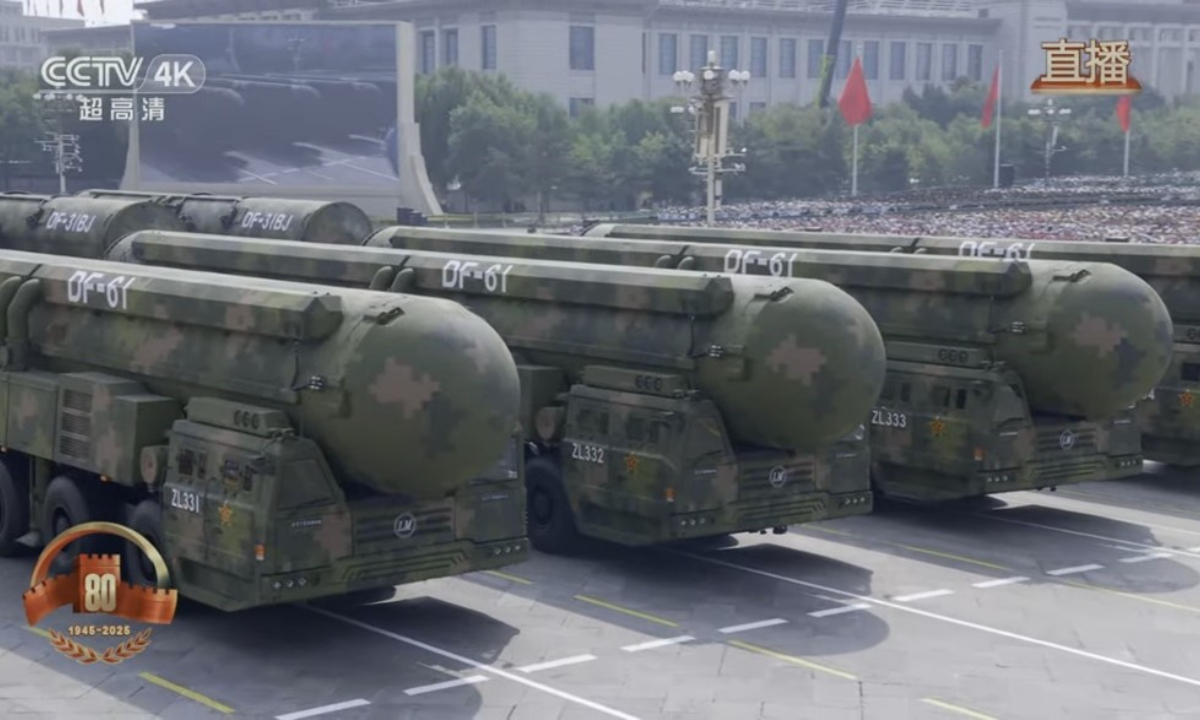
DF-61 land-based intercontinental missile is reviewed at China's V-Day military parade on September 3, 2025. Photo: Screenshot from CCTV News's V-Day military parade on September 3, 2025. Photo: Screenshot from CCTV News

DF-61 land-based intercontinental missile is reviewed at China's V-Day military parade on September 3, 2025. Photo: Screenshot from CCTV News

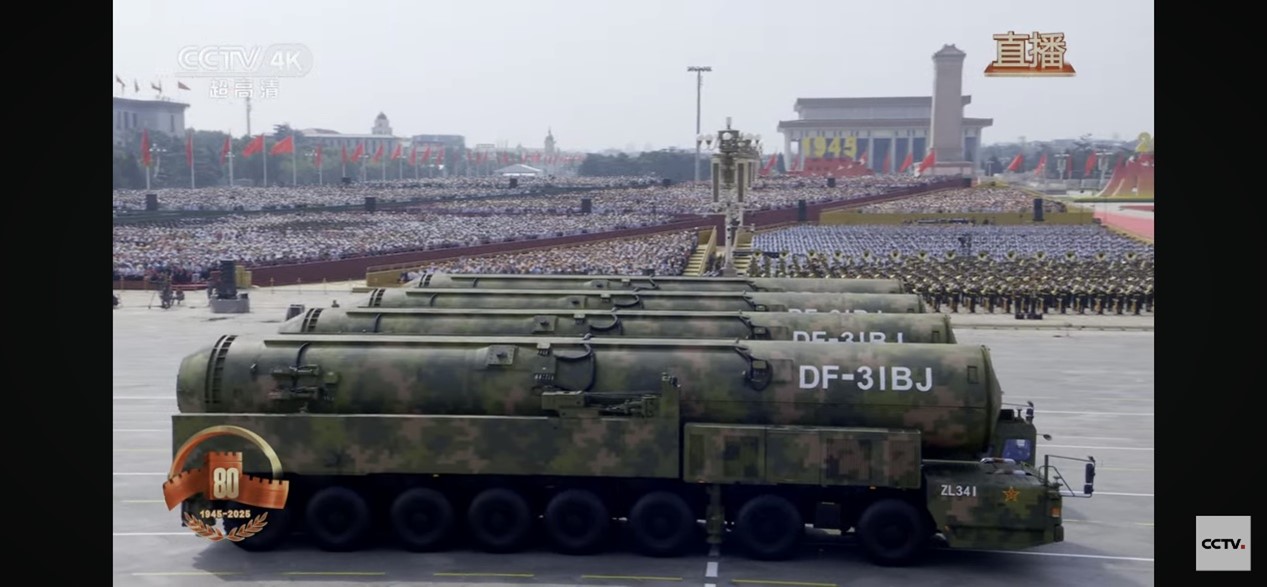
DF-31BJ land-based intercontinental missile is reviewed at China's V-Day military parade on September 3, 2025. Photo: Screenshot from CCTV News's V-Day military parade on September 3, 2025. Photo: Screenshot from CCTV News

DF-31BJ land-based intercontinental missile is reviewed at China's V-Day military parade on September 3, 2025. Photo: Screenshot from CCTV News

The first nuclear missile formation consisting of JL-1 air-launched long-range missile, JL-3 submarine-launched intercontinental missile, as well as DF-61 and DF-31BJ land-based intercontinental missiles were reviewed at China's V-Day military parade on Wednesday to mark the 80th anniversary of the victory in the Chinese People's War of Resistance Against Japanese Aggression and the World Anti-Fascist War, marking the first concentrated appearance of China's land, sea, and air-based strategic nuclear triad.

Military affairs experts told the Global Times that with the addition of air-launched long-range missile and the upgrade of submarine-launched strategic missile into the intercontinental range, China's nuclear deterrence and strategic nuclear counterattack capabilities have been further enhanced, providing stronger and more reliable means of defending national sovereignty, security, and development interests.

The first concentrated display of the Chinese military's land, sea, and air-based integrated strategic nuclear triad is a strategic trump card for safeguarding national sovereignty and defending national dignity. Among them, air-based strategic nuclear forces are showcased in parade for the first time, military affairs expert Shao Yongling told the Global Times, adding that the commissioning of the air-launched strategic missile provides China with an additional option for nuclear strikes, which can make China's nuclear deterrence and counterattack capabilities even more reliable and credible.

"The official debut of air-launched strategic missile means that China has become one of the few countries in the world with a nuclear triad," said military expert Zhang Junshe.

He told the Global Times that, generally speaking, air based strategic nuclear forces use strategic bombers as strike platforms, which have stronger maneuverability and survivability, making them one of the most reliable secondary nuclear strike forces. Strategic bombers can take off at any time to carry out nuclear strike readiness duty, and it is difficult to predict the location and timing of air-based strategic missile launches. This increases the difficulty for opponents to detect and reduces the probability of being intercepted, according to Zhang.

Zhang said that the air-launched long-range strategic missile can provide a supplement to China's existing nuclear strike methods. The strike method of long-range strategic bombers carrying long-range strategic missiles has a faster response time and can coordinate and support existing land-based and sea-based strategic missiles.

Meanwhile, the newly debuted JL-3 further extends the strike range of China's submarine-launched ballistic missiles. At the 2019 military parade during the celebrations marking the 70th anniversary of the founding of the People's Republic of China in Beijing, the JL-2 submarine-launched ballistic missile made its first public appearance. Designated as a new-generation submarine-launched long-range ballistic missile, it features rapid response capabilities, high stealth performance, and a broad strike range. The new JL-3 is designated as an intercontinental ballistic missile. It marks that China's submarine-launched ballistic missile, which bears the responsibility of supporting the country's sea-based nuclear deterrence, has officially entered the intercontinental era.

"From long-range to intercontinental, this means that the range of JL-3 can reach about 10,000 kilometers, and it also means that even if launched in China's coastal areas, it can still cover all countries in the world that may pose a nuclear threat to China," Zhang said. The extended range also means that China's strategic nuclear submarines need not venture beyond the so-called second island chain or the depths of the Pacific Ocean to carry out nuclear counterstrikes, Zhang added. "From our coastal regions, we can maintain sea-based strategic nuclear strike capabilities. In our nearshore areas, we can also deploy more robust support and protective forces to safeguard strategic nuclear submarines carrying out counterstrike missions, thereby enhancing the survivability of China's sea-based strategic nuclear strike forces."

Shao also said that the new submarine-launched intercontinental missile can greatly enhance China's nuclear counterattack capability. "Generally speaking, the longer the range of submarine-launched ballistic missiles, the safer the nuclear submarines are. The expected range of the new submarine-launched intercontinental ballistic missile is about 10,000 kilometers, which also means that China's nuclear submarine does not need to go out to sea to carry out nuclear counterattack missions, but to conduct a second nuclear counterattack in the better supported and safer coastal waters," she said.

"Certainly, China's nuclear-powered strategic missile submarines can still go out to far seas and carry out strategic nuclear strikes. This combined deployment capability in both coastal waters and far seas also increase the difficulty for opponents to predict and enhances the suddenness of a second nuclear counterattack," Zhang said, adding that the commissioning of the JL-3 can effectively curb nuclear threats, blackmails, and blockades imposed by certain nuclear powers on China.

The coordination of land, sea, and air-based strategic nuclear forces can also break through the existing antiballistic missile networks in the world, further enhance China's strategic nuclear counterattack capability, and effectively defend China's national sovereignty, security, and development interests, Zhang added.
Here's a question I'm pondering: if the Pentagon orders a pizza and a DF-61 for takeout at the same time, I wonder if the pizza comes first? Or would the DF-61 comes first? With any unluck, the pizza might be cold, but the DF-61 would definitely be hot.
 
China debuts multiple wingman, air superiority drones; to profoundly change future air combat: experts
View attachment 144618
View attachment 144620


Multiple completely new types of unmanned aerial vehicles (UAVs) debuted at China's V-day military parade on Wednesday to mark the 80th anniversary of the victory in the Chinese People's War of Resistance Against Japanese Aggression and the World Anti-Fascist War, attracting widespread attention with their highly futuristic appearances.
Military affairs experts told the Global Times that some of the UAVs showcased at the parade not only have new appearances, but also embody new concepts, which could overturn the existing air combat scenarios and profoundly change the future air combat.
UAVs reviewed this time include new armed reconnaissance drones, wingman drones, air superiority drones, and shipborne unmanned helicopters. These aircraft are all debuting for the first time. They are capable of stealth attacks, with wide coverage and autonomous collaboration, bringing innovative new patterns for future air combat.

To view this content we will need your consent to set third party cookies.
For more detailed information, see our cookies page.


Wingman drones, also known as "loyal wingmen," represent a key concept in recent years within the drone sector and are widely regarded as a vital component of future unmanned combat systems.
A technical expert told the Global Times previously that wingman drones can operate in close formation with manned warplanes, enabling efficient coordination in air superiority, air defense and suppression, as well as escort tasks. This approach not only addresses limitations such as the limited operational capacity of manned aircraft and aging fleets but also facilitates the development of new unmanned combat capabilities to establish a manned-unmanned collaborative warfare pattern.
Serving as both sensors and ammunition depots, these drones also function as intelligent assistants to human pilots. On one hand, they extend pilots' operational awareness and strike capabilities; on the other hand, they also function as intelligent nodes within air combat system through large-scale swarm-based general deployment. Each wingman drone acquires local combat information, filters them and integrates data to form a comprehensive battlefield picture, and assists human pilots in decision-making. This liberates pilots from dangerous, high-stress combat environments, enabling them to go beyond traditional pilot roles and assume the roles of commanders of aerial formations, according to the expert.
"Simply put, wingman drones can serve as external sensors and weapon stations for manned aircraft, working alongside them to carry out combat missions," explained military affairs expert Zhang Xuefeng. He told the Global Times that wingman drones can act as decoys for manned aircraft to confuse adversaries, conduct target reconnaissance, and even perform electronic jamming. Each of the wingman drones showcased this time possesses distinct capabilities, some are suited for extended subsonic cruising, while others boast fast speed and high maneuverability. This demonstrates that China's wingman drone technology encompasses a diverse range of approaches.
In addition to wingman drones, another new type of unmanned aerial combat equipment at the parade is the air superiority drone, which also marks the debut of this new concept of unmanned combat equipment.
"The air superiority drones can be seen as one of the most cutting-edge weapons and equipment in the entire aerial unmanned combat formations. This type of UAV has strong independent aerial combat capabilities. From a global perspective, this type of unmanned equipment is leading and pioneering," Zhang said, noting that the combat concept embodied by this unmanned combat equipment will overturn the existing air combat scenarios and profoundly change future air combat mode.
Zhang further noted that from its appearance, the air superiority drones have the advantages of high stealth, high autonomy, and high maneuverability.
"The reason why I emphasize the drones' high autonomy and advantages is because most of the combat drones demonstrated by China previously were mainly used to attack ground targets, which are usually remotely operated by personnel from afar. However, in air-to-air combat scenarios, it will be difficult to use drones solely relying on remote control from long distances," Zhang explained.
The air combat environment is extremely complex and the battlefield situation is constantly changing; Therefore, in order for drones to participate in air-to-air combat, they must have a high degree of autonomous combat capability. This also means that the air superiority drones may have more advanced avionics and AI systems to achieve autonomous control, Zhang added.
Zhang further explained that UAVs can have stronger maneuverability than manned aerial vehicles when performing aerial combat missions. Modern fighter pilots can withstand a load of up to 9G, while drones are not limited by human pilots. This gives them certain advantages in aerial combat against manned aircraft. In addition, Zhang believes that high stealth is reflected in the smaller size of the UAVs, and stealth design can be given priority, without considering pilot factors.
Notably, some of the new drones showcased this time also adopt a tailless design.
"The tailless configuration has stronger stealth performance than the V-shaped vertical tails, and can achieve omnidirectional and full spectrum stealth," military affairs expert Fu Qianshao told the Global Times. He said that canceling vertical tail normally poses a great challenge to the aircraft's flight control system. The drones unveiled on Wednesday adopt tailless configurations, which also indicates that China has solved this challenge. Having mastered highly advanced aerodynamic control technology, it is likely that this technology can also be applied to manned aircraft, Fu said.
"Wingman drones and air superiority drones are the direction of drone technology development, and many countries are making efforts. China has unveiled multiple new types of UAVs at once, which also shows that China is at the forefront of the world in this field," said Fu.
In addition, a type of shipborne unmanned helicopter was included in the aerial unmanned combat formations. Fu said that unmanned helicopters can perform a variety of tasks, including early warning, reconnaissance, anti-ship, anti-submarine, search and rescue, and transportation.
"Since there is no need for carrying pilots, the range, endurance, and flexibility of unmanned helicopters are higher than those of manned helicopters of a similar size. The relatively small size also means that it can be carried by various types of ships such as frigates, destroyers, amphibious ships, and aircraft carriers, and also in larger numbers," said Fu.

RELATED ARTICLES


The first drone in your post, the 6th generation CCA. If China doesn't produce it in hundreds and do not use it extensively as a standalone weapon system . That would be a huge disappointment.
 
1756989887218.jpeg

@Deino are those red dots what I think it is? That would be a significant upgrade.
 
Pizza delivery order spikes up 400% at the Pentagon?
To view this content we will need your consent to set third party cookies.
For more detailed information, see our cookies page.
 
To view this content we will need your consent to set third party cookies.
For more detailed information, see our cookies page.
 
To view this content we will need your consent to set third party cookies.
For more detailed information, see our cookies page.
 
The “global south” immigrates to the US in droves. The vast majority would never immigrate to China.

BTW, Chinas parade was full of mockups and prototypes. Not impressed, and the US military isn’t deterred
Your whole 6 generation fighter projects are based on powerpoint faggot now go back to your cave where u belong.
 

Users who are viewing this thread

Pakistan Defence Latest

Back
Top