China Auto Thread

Ford’s CEO calls China an existential threat while Stellantis, Mercedes, and Volkswagen rush to adopt Chinese technology in their own cars​

07/04/2026 at 10:22

fords-ceo-calls-china-an-existential-threat-while.jpeg


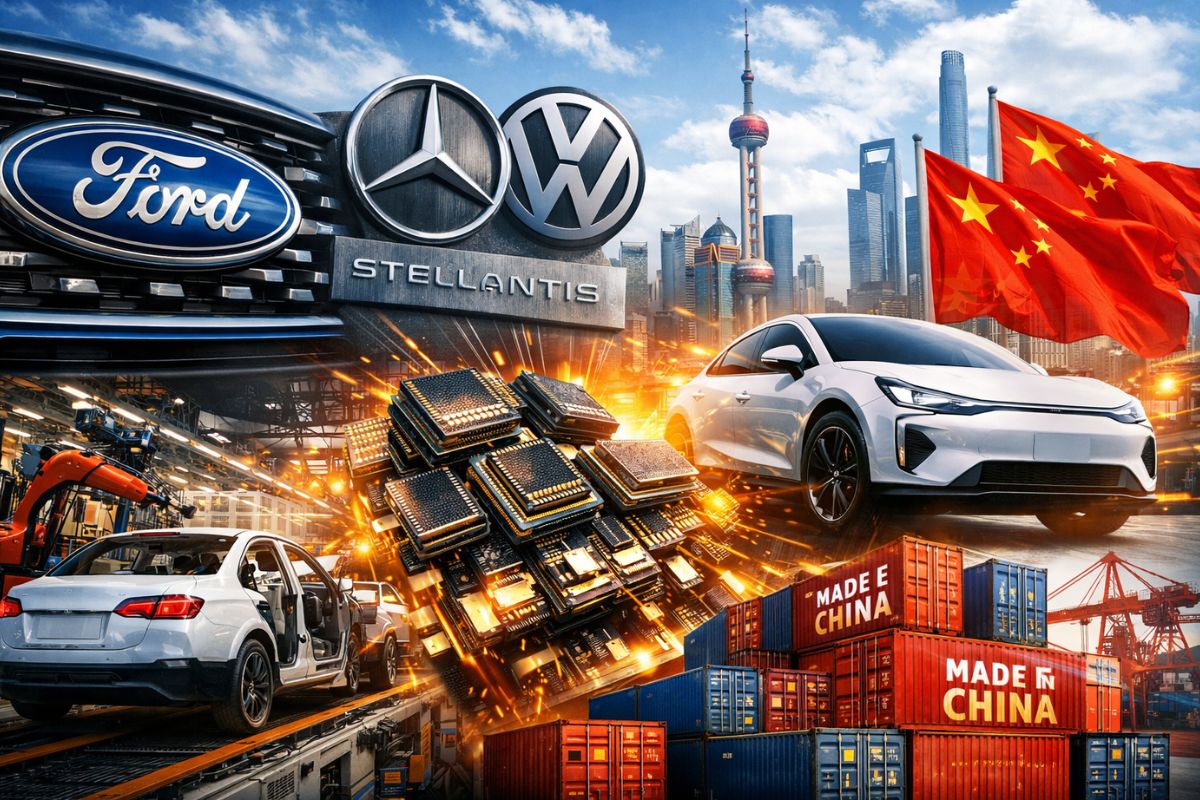
China has already registered five times more future transportation patents than Germany, and now European and American automakers are importing software platforms and even Chinese engineers for their own models, while Ford CEO Jim Farley classifies the advance as an existential threat to the Western industry.

According to the portal Brasil 247, China has stopped being the factory of the world to become the brain of the global automotive industry, and the largest automakers in the West already recognize this. Stellantis is considering using electric vehicle platforms and software from Chinese Leapmotor as a basis for models from brands like Fiat, Opel, and Peugeot. Mercedes-Benz is in talks with Geely about cooperation on future electric vehicles. Volkswagen has partnered with Xpeng. Renault developed the new electric Twingo in Shanghai. And Ford CEO Jim Farley described this scenario in two words: “existential threat.”

What is happening goes beyond a trade war. China has imposed a new pace on the industry, dubbed “China Speed” by its own Western executives: development cycles that take less than two years compared to five to seven for traditional automakers, intense integration between suppliers and factories, and the ability to fix flaws via remote updates on the same day. Since 2009, the Chinese government has invested at least $230 billion in support of the electric vehicle sector, according to the Center for Strategic & International Studies. The result is an industry that has registered over 343,000 patents for future transportation technologies between 2000 and 2023, nearly five times the total of Germany, and now exports not only cars but the very logic of how cars are made.

What is “China Speed” and why does it scare Western automakers​

The term defines a production model where the vehicle does not need to be fully finished to hit the market. Some Chinese manufacturers have adopted the practice of launching the car and continuing to adjust it through remote software updates.

A concrete example: a Leapmotor C10 tested on the Autobahn in Germany braked abruptly during driving. After an email to engineers in Hangzhou, China, the car received an update that fixed the problem. In a European automaker, the solution could take weeks.

This speed has structural roots. Many Chinese automakers were founded by entrepreneurs from the technology sector, not from the old automotive industry.

Founders of Xpeng, Nio, and Li Auto have backgrounds in internet startups; Lei Jun from Xiaomi comes from the software world.

Teams are younger, organized under aggressive performance goals, and intense domestic competition in China forces continuous innovation; those who do not evolve quickly simply disappear. It is this internal pressure that has forged the pace that now scares Detroit, Wolfsburg, and Stuttgart.

Which traditional automakers are already adopting technology from China​

The list is extensive and grows every month. Stellantis is in talks with Xiaomi and Xpeng about possible investments in Europe, in addition to the existing partnership with Leapmotor.

Audi is working with SAIC Motor on electric models based on a local Chinese platform. Renault aims to source 40% of the parts for the new electric Twingo, by value, from suppliers in China. Nissan announced an investment of at least $1.4 billion to create electric vehicles in China for external markets.

Even traditional suppliers are migrating. Robert Bosch, the world’s largest auto parts manufacturer, is cutting thousands of jobs in Germany while shifting battery and driver assistance activities to China.

Bosch engineers in Suzhou redesigned an electrical connector in six months, about half the time that teams in Germany would need. The company acknowledged that development timelines in China are often much shorter and classified the country as an important innovation hub.

Why Ford’s CEO calls China an existential threat​

Jim Farley is not using hyperbole. Ford faces a scenario where Chinese automakers are advancing into markets that were considered safe territories: Brazil, Mexico, the UK, the Middle East, while tariff protection in the U.S. only delays an entry that many consider inevitable.

UBS analysts estimate that just the battery cells already give Chinese manufacturers like BYD a cost advantage of about $2,000 per vehicle. The bank projects that these companies’ market share will rise from 25% in 2025 to 35% by 2030.

Farley is discussing with the Trump administration ways to structure joint ventures between American and Chinese companies should China’s entry into the U.S. market expand.

Ford recognizes that it cannot compete solely with what it has; it needs to somehow incorporate Chinese speed and cost to survive. European executives have already compared the moment to a “Nokia moment,” referencing the impact that the iPhone had on the Finnish mobile leader. The suggestion is clear: those who do not adapt will disappear.

The risks of Chinese speed that no one should ignore​

“China Speed” is not just a virtue. The “launch and then fix” model has already generated concrete problems.

In October, JD Power’s annual survey recorded a decline in the reliability of cars sold in China for the second consecutive year, with Japanese and American joint ventures outperforming local brands. The study pointed out that insufficient validation systems in research and development, combined with pressure for cost reduction, are becoming a systemic risk to quality.

An emblematic case occurred in February when a Lynk & Co Z20 SUV turned off its headlights at night after the driver asked the voice system to turn off an internal reading light.

The vehicle was left in the dark and collided with the median; no one was injured, but the incident raised debate about consumers becoming involuntary product testers. The automaker installed an update, and the senior executive apologized, but the incident exposed that speed without proper validation has real costs.

Western automakers still maintain a relevant advantage in long-term reliability; the question is whether this advantage is sufficient to offset the difference in price and speed.

Volkswagen CEO Oliver Blume summed up the scenario in one sentence: “There is no other region in the world where the transformation of our industry is occurring more consistently, dynamically, or quickly. It is in China that it is decided who will be at the forefront of this transformation.”

The German Chancellor Friedrich Merz, after visiting China, was even more direct: “Germany simply is no longer productive enough.”

For the consumer, the impact will come in the form of cheaper electric cars, with more embedded technology and constant updates, but possibly with less guarantee that each feature has been thoroughly tested before hitting the streets.

China has changed the rules of the game: speed and cost have become more valuable than tradition and pedigree. Western automakers that understand this in time can reinvent themselves. Those that do not may join Nokia on the list of giants that underestimated the speed of change.


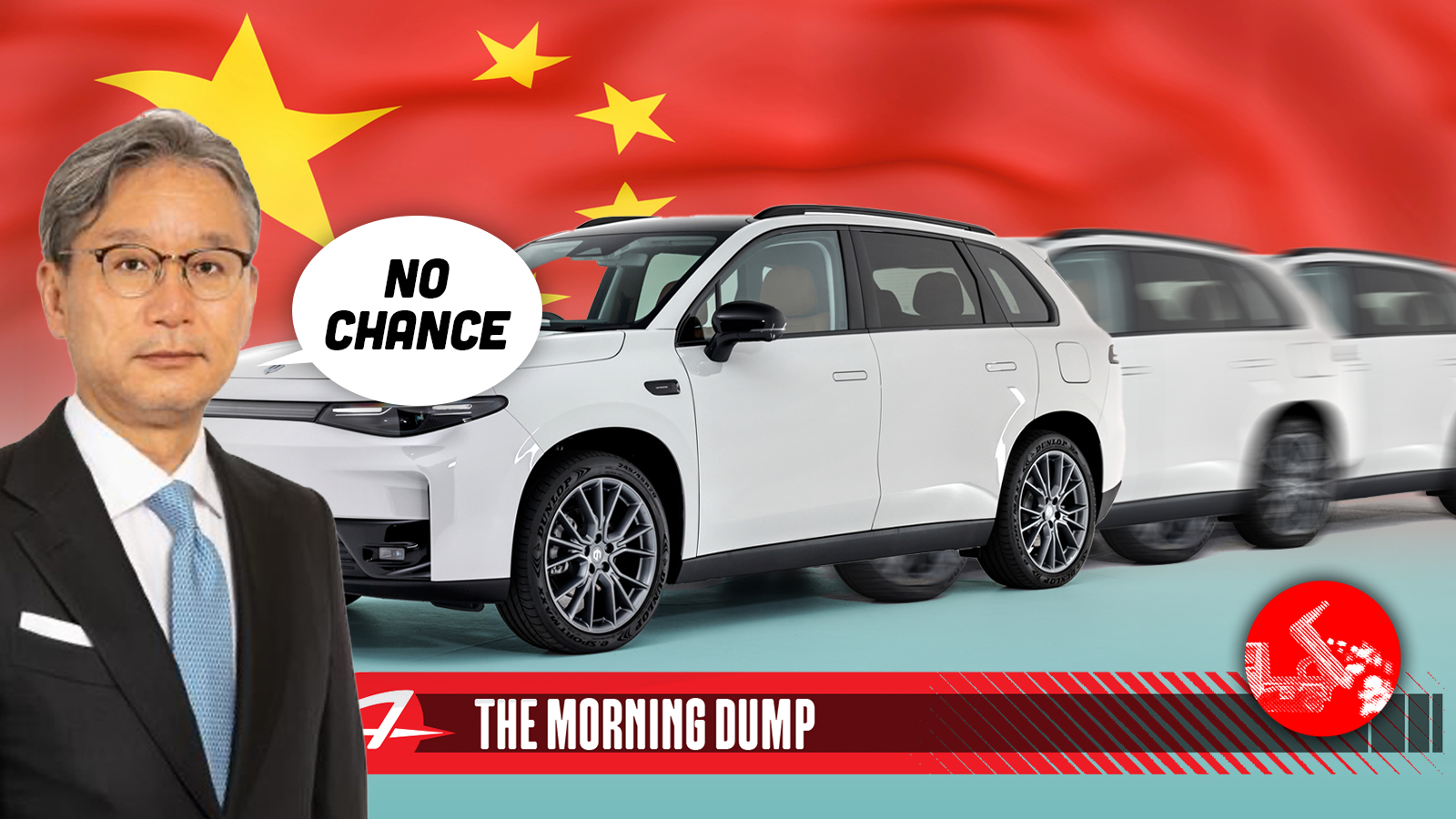
‘We Have No Chance Against This’ Says Honda CEO After Witnessing ‘China Speed’ Firsthand

TMD_Chinas_Speed_TS2.jpg


Ford created the concept of mass produced cars with the implementation of the moving assembly line. Half a century later, Toyota’s kaizen philosophy and “just in time” manufacturing further accelerated automotive production, and nearly every car plant in the world now incorporates lessons from all of the above. The next benchmark for the world? China Speed.

I’m excited we’re all here today so that we can read The Morning Dump. It felt a little more touch-and-go there than usual yesterday. I doubt Honda is letting the brief euphoria distract itself from the much larger existential threat from Chinese manufacturing, which has achieved the difficult: fast, cheap, and good.

Making cars is hard, and even the most cutting edge automakers out there are trying to get consumers to pay a monthly fee for tech you can get for free elsewhere. How long can that last? The EU and the US have a framework for a deal, but it’s not set in stone and at least one automaker thinks the EU is trying to keep out big trucks. At the same time, there’s some good news for EV charging in the US.

What Is China Speed?​

People I know who do business in China and the United States often marvel at how easy and fast it is to manufacture items in the country. If you’ve got an idea, you can get a 3D mockup by lunch, a prototype by dinner, and your first crate of products ready to go to the market by the end of the week.

This is called ‘China Speed,’ and it’s what happens when a country decides it wants to be the world’s producer, and has the ability to cut a lot of the red tape that seems to slow down everyone else (granted, some of that red tape exists to protect consumers, the environment, and workers). And this isn’t just about building things. This is about everything.

 
To view this content we will need your consent to set third party cookies.
For more detailed information, see our cookies page.
 

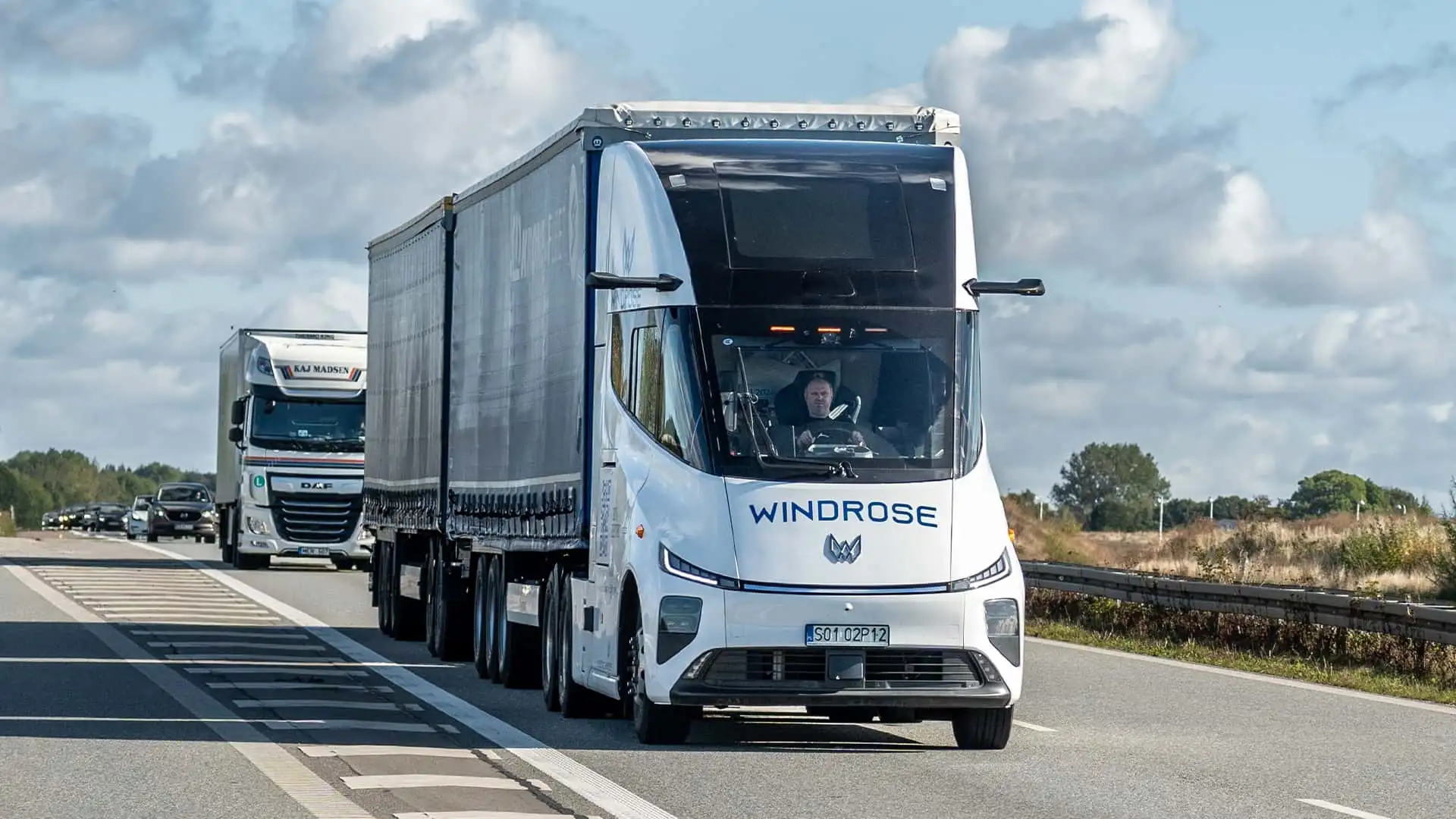
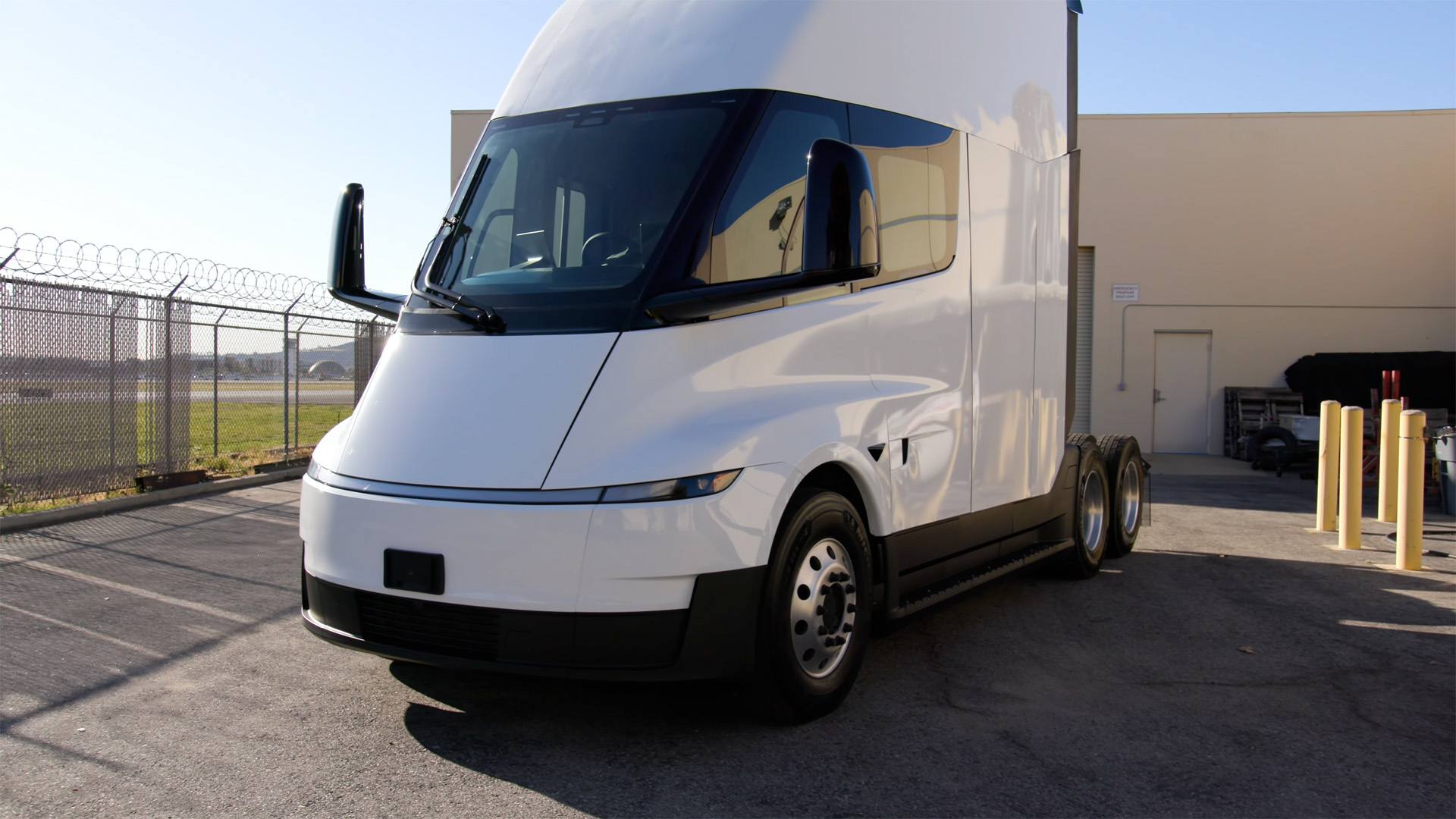
Don’t Call It A Tesla Semi: China’s Windrose Delivers First EV Truck In The U.S.​


windrose-semi.webp


  • China’s Windrose has delivered its first Global E700 electric truck tractor to its American customer.
  • The 1,400-horsepower Tesla Semi lookalike was handed over to Texas logistics firm Allogic and charging partner Greenspace E-Mobility earlier this month.
  • Windrose advertises a 416-mile range with a fully loaded trailer and a full battery.


Tesla Semi
Tesla_Semi_JayLeno_13.jpg
 

Japanese Cars Collapse in Thailand! 60-Year Hegemony Ended by Chinese Automakers

Wallstreetcn2026.04.10 18:56

0a2934c6-5af9-4e25-99f6-db7a0f3c1ba4.jpeg
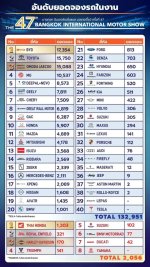
At the 47th Bangkok International Motor Show, Chinese brands surpassed Japanese brands in pre-orders for the first time, becoming the new market dominator. BYD led with 17,354 units, ahead of Toyota's 15,750 units.

The market share of Japanese brands is rapidly declining, with sales in Thailand projected to drop 68% by 2025 compared to 2019. Chinese brands have already captured a 47.34% market share in Thailand and hold an 80% share in the electric vehicle sector, demonstrating strong competitiveness.

The 47th Bangkok International Motor Show has concluded, with organizers releasing the total pre-order volume for the show: 132,951 vehicles.

While this number might seem ordinary, it has kept Japanese brands awake at night: For the first time in Thailand, the total pre-orders for Chinese brands have surpassed those of Japanese brands.

 
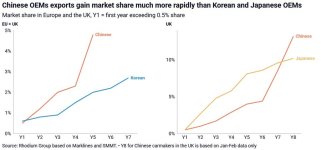
The speed at which Chinese carmakers, particularly BYD, Chery, and SAIC, are gaining market share in Europe is unprecedented. It differs markedly from the experience with Japanese and Korean automakers, which entered the market in the 1970s and 1990s, respectively.

1775849669341
 
China's new energy vehicle industry is surging ahead, backed by China's robust industrial strength.Jinan No. 2 Machine Tool's stamping machines hold a 90% market share in new energy vehicle stamping lines, and 100% in China's OEM market.In 2011, it boldly challenged Germany's Schuler and won Ford's U.S. order; since then, Ford's global stamping lines only choose Ji. German and Japanese machine tools iterate every decade, while Jinan No. 2 disrupts every three years, with technology, capacity, and solutions advancing month by month
To view this content we will need your consent to set third party cookies.
For more detailed information, see our cookies page.
 

China's car exports surge, EV expectations grow amid Iran crisis

2026-04-13 06:08:54

China’s exports of passenger cars accelerated in March, says an industry association, as Chinese automakers stepped up their push to grow overseas markets.

Passenger car exports jumped 82.4% year-on-year last month to around 748,000 vehicles, according to the China Association of Automobile Manufacturers, up from the 586,000 vehicles exported in February.

Exports of new energy passenger vehicles — including battery electric vehicles and plug-in hybrids — surged more than 140% in March from a year ago to 363,000 units.

That’s also up 31% from about 276,000 units of such vehicles exported in February.

A model poses near the BYD Song L EV car during Auto China 2024 held in Beijing

A model poses near the BYD Song L EV car during Auto China 2024 held in Beijing (Source: Associated Press)

The biggest Chinese automakers, including BYD and Geely Auto, have been increasing their efforts in boosting sales abroad, including expanding production facilities outside China.

There have also been growing expectations that the global energy shock and higher fuel prices due to the Iran war could prompt more drivers to want to switch to EVs.

In New Zealand, figures show electric vehicle sales have skyrocketed in just a month, with electrified cars now making up nearly half of all new vehicles sold in the country.

Overseas, Chinese car brands have made inroads over the past months in regions such as Europe, Latin America and Southeast Asia.

“The impact of the Iran conflict hasn’t fully shown up in March data yet, but it can act as a trigger,” said Chris Liu, a Shanghai-based senior analyst at advisory group Omdia.

Chinese customers around a Xiaomi SU7.

Chinese customers around a Xiaomi SU7. (Source: istock.com)

“In many markets that are structurally well suited for EVs, adoption has been slow simply because consumers lacked urgency," he said.

“A sharp rise in fuel prices changes that.”

The Chinese carmakers’ strong overseas push also came at a time when domestic vehicle sales in China have come under pressure from scaled-back government support this year to encourage drivers to switch to new energy vehicles.

Fierce competition in China among car brands and a prolonged property sector slump that has weighed on consumers' desire for big purchases also impacted Chinese automakers.

BYD's electric vehicle ATTO2 is on display during the Bangkok Motor Show in Nonthaburi, Thailand

BYD's electric vehicle ATTO2 is on display during the Bangkok Motor Show in Nonthaburi, Thailand (Source: Associated Press)

Domestic passenger car sales fell 19.2% last month from a year earlier to nearly 1.7 million units. It was the fifth consecutive month of year-on-year declines for passenger car sales at home, based on data from the China Association of Automobile Manufacturers.

UBS auto analyst Paul Gong believes that the domestic sales weakness will not be too long-lasting and that the surge in overseas sales among Chinese carmakers could help with the weaker demand at home.

“For the overall industry, the overseas market’s sales volume growth is more than enough to offset domestic decline on a full-year basis,” said Gong, head of China autos research at UBS investment bank.


China's passenger vehicle export overview (Jan.-Feb. 2026): Russia leads overall丨Gasgoo Automotive Research Institute​

Bohao From Gasgoo|April 13 , 2026 16:36 BJT

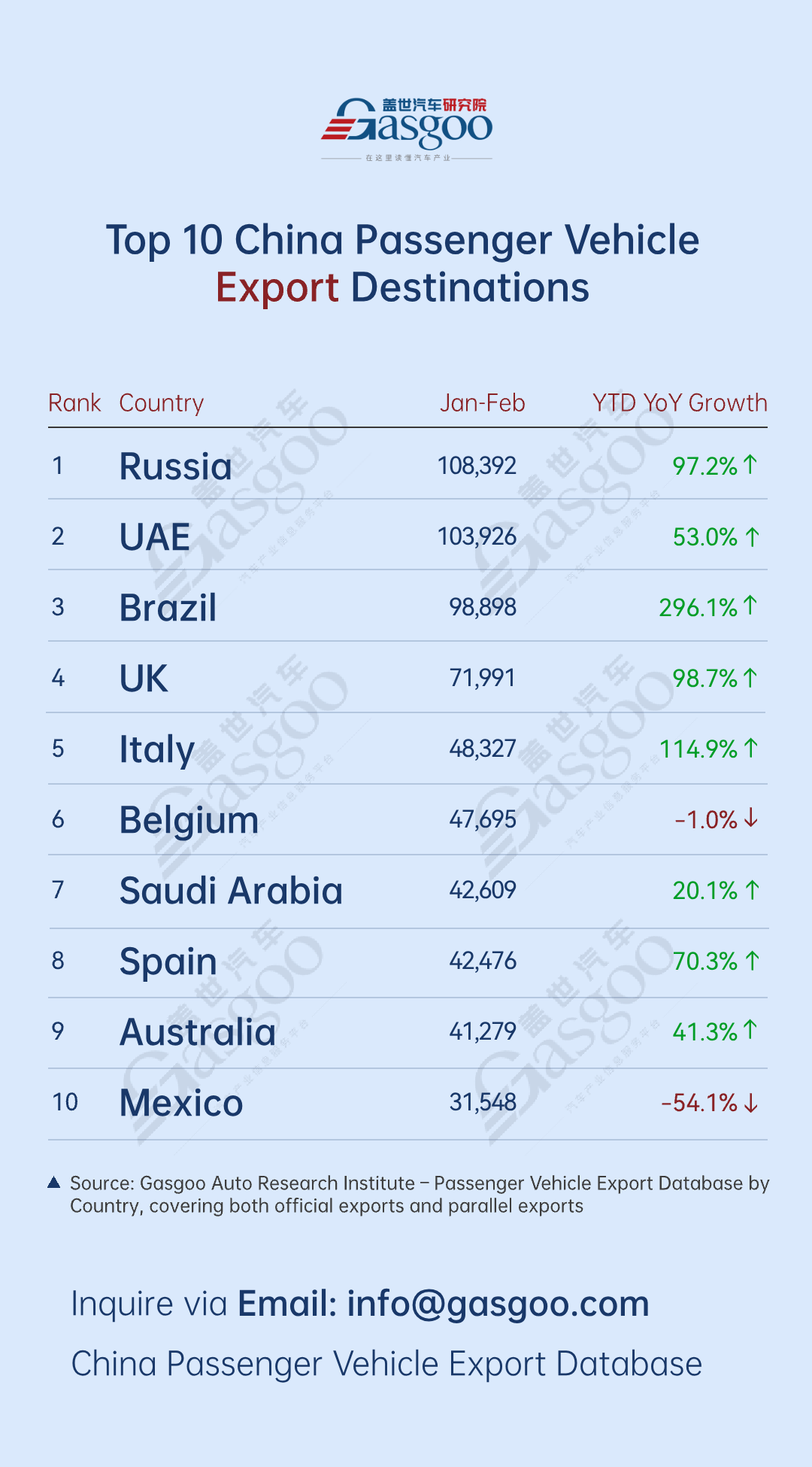
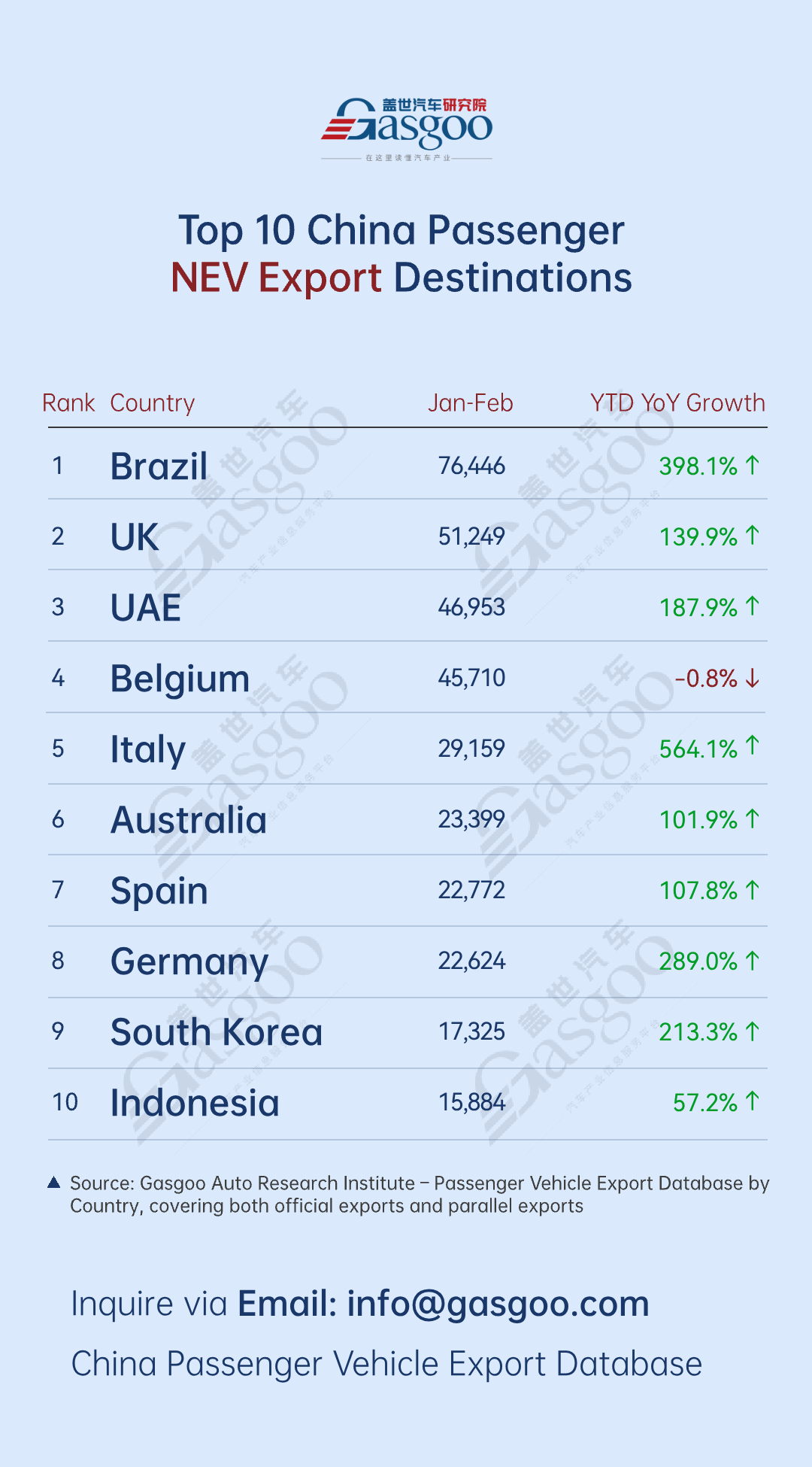
According to Gasgoo Automotive Research Institute, China's passenger vehicle and new energy passenger vehicle exports continued to expand in scale while showing clearer structural divergence for the Jan. - Feb. 2026 period. Passenger vehicle exports remained driven by key markets such as Russia, the UAE, and Brazil, supported by price and channel advantages. Meanwhile, new energy vehicle (NEV) exports saw broader penetration across Europe and other regions, with Brazil, the UK, and several European countries among the top destinations, reflecting a more diversified market mix.

Top 10 destination countries by China's passenger vehicle exports

8e2f5027-6f69-4cd5-b68c-50c3a54e8ac9-1775745230.png


Top 10 destination countries by China's new energy passenger vehicle exports
cc7076ef-eaa3-4b1a-a262-e5552b7c822c-1775745260.png
 
To view this content we will need your consent to set third party cookies.
For more detailed information, see our cookies page.
 

Global EV Shift 2026: Western Automakers Partner with BYD & Chinese Tech Firms for Affordable Electric Future​

April 14 , 2026

Global EV Industry Transformation: Western Automakers Turn to Chinese Technology​

The global electric vehicle (EV) industry is entering a transformative phase in 2026, marked by increasing collaboration between Western automakers and Chinese EV technology companies. As competition intensifies and cost pressures rise, manufacturers across Europe and North America are turning to China’s advanced EV ecosystem to remain competitive.

Chinese companies have rapidly established themselves as leaders in battery technology, EV platforms, and autonomous driving systems. Their innovations are now being adopted by global automakers seeking to produce affordable and scalable electric vehicles.

Why Western Automakers Are Partnering with Chinese Firms​

The shift toward partnerships with Chinese EV firms is driven by several strategic factors:

  • Lower production costs due to advanced manufacturing capabilities
  • Access to cutting-edge battery technology
  • Faster development timelines
  • Scalable EV platforms for mass production
These advantages enable Western automakers to compete in a rapidly evolving market where affordability and efficiency are key.

China’s Dominance in Battery Technology​

China has become the global leader in battery production, controlling a significant portion of the supply chain. Companies like BYD have pioneered innovations in battery design, including high-density and fast-charging solutions.

These advancements are critical for improving EV performance, reducing costs, and enhancing consumer adoption.

EV Platforms: The Backbone of Modern Electric Vehicles​

Chinese EV platforms are designed for flexibility and scalability, allowing automakers to produce multiple models using a single architecture. This approach reduces development costs and speeds up production.

Western automakers are increasingly adopting these platforms to streamline their operations and expand their EV offerings.

Autonomous Driving and Smart Technology​

In addition to hardware, Chinese companies are also leading in software innovation, particularly in autonomous driving systems and smart vehicle technology.

These technologies enhance safety, convenience, and user experience, making EVs more attractive to consumers.

Consumer Demand Rebounds Globally​

After a period of uncertainty, consumer interest in electric vehicles is rebounding in key markets. In North America, rising fuel prices are prompting more consumers to consider EVs as a cost-effective alternative.

In Asia, aggressive marketing strategies, including ultra-fast charging promotions, are driving adoption.

Affordable EVs: The Next Frontier​

One of the biggest challenges in the EV market has been affordability. By leveraging Chinese technology, automakers can significantly reduce costs and offer competitively priced vehicles.

This shift is expected to accelerate the adoption of EVs among mainstream consumers.

Impact on Global Competition​

The collaboration between Western and Chinese companies is reshaping the competitive landscape. Traditional automakers must adapt quickly to stay relevant in an industry dominated by innovation.

At the same time, Chinese firms are expanding their global presence, increasing competition in international markets.

Challenges and Risks​

Despite the benefits, these partnerships come with challenges:

  • Geopolitical tensions and trade restrictions
  • Dependence on foreign technology
  • Intellectual property concerns
Managing these risks will be crucial for the success of these collaborations.

Future Outlook​

The trend of adopting Chinese EV technology is expected to continue as the industry evolves. With ongoing advancements in battery efficiency and autonomous driving, the future of electric mobility looks promising.

These partnerships could play a key role in achieving global sustainability goals and reducing carbon emissions.

Conclusion​

The adoption of Chinese EV technology by Western automakers represents a significant shift in the global automotive industry. By combining innovation with cost efficiency, these collaborations are paving the way for a more accessible and sustainable electric future.

As the EV market continues to grow, the integration of global expertise will be essential in driving progress and meeting consumer demands.

Chinese EV technology adoption 2026, Western automakers EV partnerships, BYD battery technology global EV, affordable electric vehicles 2026, EV platform partnerships China USA Europe, global EV market trends 2026, EV battery innovation China, electric vehicle cost reduction strategies, EV demand rebound North America, ultra fast charging EV Asia, autonomous driving EV technology China, EV industry collaboration global, electric vehicle manufacturing partnerships, future of affordable EVs worldwide

Frequently Asked Questions (FAQs) – Global EV Technology Shift 2026​

1. Why are Western automakers partnering with Chinese EV companies?​

They aim to reduce costs, access advanced battery technology, and speed up EV development.

2. What role does China play in the EV industry?​

China leads in battery production, EV platforms, and technological innovation.

3. How do these partnerships benefit consumers?​

They result in more affordable EVs with better features and performance.

4. Is EV demand increasing globally?​

Yes, demand is rebounding due to rising fuel prices and improved technology.

5. What are the risks of relying on Chinese technology?​

Risks include geopolitical tensions and dependency on foreign supply chains.

6. What is the future of affordable EVs?​

Affordable EVs are expected to grow rapidly as costs decrease and technology improves.

7. Are Chinese EV companies expanding globally?​

Yes, they are entering international markets and increasing competition.

8. How does battery technology impact EV growth?​

Better batteries improve range, reduce costs, and enhance adoption.

9. What is the impact on traditional automakers?​

They must innovate and adapt quickly to remain competitive.

10. Will EVs dominate the future of transportation?​

Yes, EVs are expected to play a major role in sustainable mobility.


Users who are viewing this thread

Pakistan Defence Latest

Country Watch Latest

Back
Top