Chinese Economy: General News, Updates and Discussions

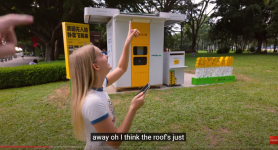
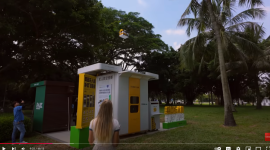
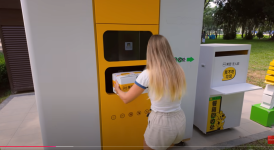
Amazing Shenzhen's food and drink drone delivery system😍

微信图片_20241109172254.png微信图片_20241109172323.png微信图片_20241109172436.png微信图片_20241109172626.png微信图片_20241109172718.png微信图片_20241109172737.png
 

Our FIRST TIME In Shenzhen 🇨🇳 CHINA IS THE FUTURE​

To view this content we will need your consent to set third party cookies.
For more detailed information, see our cookies page.
 
A lot of western farmers visit Chinese cities taking the advantage of recent China visa free program and post videos all across the internet. it's like a massive revelation which totally blows their minds :ROFLMAO:
 

China unveils $1.4 trillion stimulus in effort to boost flailing economy​

China on Friday announced a $1.4 trillion stimulus program to help local governments deal with debt, as Beijing grapples with a struggling economy and the possibility of a new trade war with the United States after Donald Trump’s election victory this week.

The highly anticipated announcement — the second stimulus package in six weeks — is an effort to bolster cash-strapped local governments, including those of cities and towns, but economists say the initiative will not be enough to address underlying issues and inject real momentum.
 
Amazon is the newest discount Chinese retailer

Amazon took a page out of Temu and Shein’s book: cheap shipping from China to US consumers.

11/14/24 4:02PM

On Wednesday, AmazonAMZN $202.80 (-4.20%) launched its new discount storefront, Amazon Haul, to compete with Chinese low-cost e-retailers like Temu and Shein. According to Amazon, all items are priced below $20, with “majority priced $10 and under, and some items as low as $1.”

(I don’t know if I would buy $1 eyelash curlers or oven gloves from Amazon Haul, but I digress.)

As my colleagues David and Hyunsoo noted earlier today, Amazon still dwarfs Temu and Shein’s US shipment volume (Amazon has a 41% share in the US e-commerce market compared to 1% each for the other two) and web traffic (22 billion hits vs. under 1 billion for both combined in 2024). However, thanks to a tax and tariff loophole known as “de minimis,” which makes imported goods under $800 duty-free, DTC Chinese e-commerce companies have exploded since 2016. A congressional investigation from last year showed that in 2022, 30% of all de minimis imports came from Temu and Shein, and 60% came from China.

Ironically, the key to Amazon’s sub-$20 service is simply copying Temu and Shein’s strategy of shipping directly from China. Amazon noted that the typical delivery time for items on its “Amazon Haul” store is “one to two weeks.” The reason for that is because Amazon will be shipping directly from Guangdong, China, according to The Information, and it will charge sellers “significantly lower fulfillment fees” for items sold through its Haul store than it does for domestically shipped items.

While the Biden administration is currently reviewing proposals to end the de minimis loophole, a move that would impact Amazon as much as Shein and Temu, it looks like, for now, the retail giant is taking advantage of one of the Chinese e-commerce companies’ best trade practice.
 
Temu beated them in their own game, this is admission of defeat.
 
Amazon invites Chinese sellers to new bargain marketplace Haul

The US e-commerce giant is aggressively promoting its new budget-shopping platform this holiday season to take on Temu and Shein

Published: 6:30pm, 22 Nov 2024

Amazon is inviting select Chinese merchants to join its newly launched “crazy low prices” platform, Haul, as the leading US online shopping platform competes with Temu and Shein to woo budget-conscious consumers.

Recruitment is by invitation only for now, but the Chinese vendor community already appears excited about this new channel. A factory owner surnamed Wu, who operates an Amazon store selling nail clippers and other goods, said he has yet to receive an invitation to join Haul and was told to wait until at least year-end, but he is keen to get his products listed there.

At a recent event in Foshan in southern Guangdong province, dozens of cross-border merchants, including Wu, listened to tips from “Amazon business development delegates” – agents who are tasked with teaching Chinese vendors how to target overseas shoppers on the platform. Launched on November 13, Haul has started sending invitations to select “high performers” who already run stores on Amazon, one manager said.

On the other side of the Pacific, Amazon is aggressively promoting Haul to US consumers with steep discounts and guaranteed seven-day delivery for 75 per cent of the orders. As the holiday season kicks off, the site has introduced a 50 per cent discount for all purchases made by US customers through Haul.

Amazon has launched Haul, a new budget-shopping platform competing with Temu and Shein. Photo: Screenshot

Amazon has launched Haul, a new budget-shopping platform competing with Temu and Shein. Photo: Screenshot

Amazon is trying to fend off the likes of Temu and Shein, which ship low-cost products directly from China to online shoppers around the world. Their offerings, ranging from US$10 sweatshirts to US$15 boots, have won the hearts, minds and dollars of US consumers.

All products on Haul are capped at US$20, with the great majority priced under US$10. Some products are sold at lower prices than other platforms. One iPhone 15 case with Christmas design costs US$2.99 on Haul, while a similar one is priced at US$3.28 on Temu.
 
Chinese economy is not dependent on stock market paper pushing unlike the US. Stock price crash is actually ok unless it is too low. Remember, the most profitable companies are mostly owned by the government, money gets recycled back to the government. If you check historical data, stock prices for blue chip companies are mostly stable. speculative companies will undergo profit taking and etc. Most Chinese DO NOT play the stock market, they buy properties hence the property price hike. Chinese government is now trying to pop this bubble and persuade them to invest in consuming. Most Chinese don't live paycheck to paycheck, they have savings. I think US economy is in a worst shape than China, it is only supported by more money printing.
It has been that way since the Ming Dynasty, Chinese as savers, not spenders.

Not much has changed. Watch:

To view this content we will need your consent to set third party cookies.
For more detailed information, see our cookies page.


To view this content we will need your consent to set third party cookies.
For more detailed information, see our cookies page.


A present day global shortage of silver money with China holding the most silver as happened during the Ming Dynasty, would mean silver prices would go through the roof and China would be exceedingly rich, holding most of the money globally as silver prices rise to make silver money shortages end with silver valued at many thousands of dollars per ounce. China can once again control the global monetary economy with silver as money.

To view this content we will need your consent to set third party cookies.
For more detailed information, see our cookies page.


Today, shortages of global silver would be corrected by the market with exponentially rises in silver prices until supply meets demands. So a silver economy today would not have caused the collapse of the Ming Dynasty. Silver would shoot up in price and money would be worth more, doubling and doubling in value, until demand for silver settles at a price that is good for the economy. Meaning savers in silver money would have their wealth grow with silver shortages.

To view this content we will need your consent to set third party cookies.
For more detailed information, see our cookies page.


China's economy was an export economy during the Ming Dynasty and still is today.

Please share the above CGTN videos with family and friends.
 
It has been that way since the Ming Dynasty, Chinese as savers, not spenders.

Not much has changed. Watch:

To view this content we will need your consent to set third party cookies.
For more detailed information, see our cookies page.


To view this content we will need your consent to set third party cookies.
For more detailed information, see our cookies page.


A present day global shortage of silver money with China holding the most silver as happened during the Ming Dynasty, would mean silver prices would go through the roof and China would be exceedingly rich, holding most of the money globally as silver prices rise to make silver money shortages end with silver valued at many thousands of dollars per ounce. China can once again control the global monetary economy with silver as money.

To view this content we will need your consent to set third party cookies.
For more detailed information, see our cookies page.


Today, shortages of global silver would be corrected by the market with exponentially rises in silver prices until supply meets demands. So a silver economy today would not have caused the collapse of the Ming Dynasty. Silver would shoot up in price and money would be worth more, doubling and doubling in value, until demand for silver settles at a price that is good for the economy. Meaning savers in silver money would have their wealth grow with silver shortages.

To view this content we will need your consent to set third party cookies.
For more detailed information, see our cookies page.


China's economy was an export economy during the Ming Dynasty and still is today.

Please share the above CGTN videos with family and friends.

Silver standard was in force in China until KMT period, after WW2, they started printing money and caused hyperinflation. China had been a gold and silver standard economy since Qin dynasty.
 
Countries with the highest outbound tourism expenditure worldwide from 2019 to 2023
(in billion U.S. dollars)

View attachment 46900

in the above picture, we see India's data rising from 22.9 to 33.3 during 5 years time..... here, Russia is able to maintain its level nearing India....

China's data is fantastic. Chinese growth were mainly driven from demands from OECD markets. during fall of developed/'saturated' economies, in between 2019 upto now, China could stand by with little fall from 254.6 to 196.5 :)
 
Singapore spends as much as South Korea?

During my recent trips to Taiwan, Japan and Vietnam, Koreans are everywhere. I felt they are even more prevalent than the Chinese.
 
21a5cfb4-84e0-466b-bbb9-dbe5e87454b1-porsche-repeat-21836e4e-2e2c-11ed-89cd-2be47fbf36ce.jpg


Volkswagen CEO Blume touts cost cuts, new strategy for China
Bloomberg
December 10, 2024 at 5:07 AM EST

Volkswagen AG Chief Executive Officer Oliver Blume vowed to continue cutting costs as the German automaker charts a new course for China, where it is struggling with poor demand and waning relevance.

Blume appeared at Shanghai’s Tongji University on Tuesday to mark the 40th anniversary of VW’s presence in the country. He told a group of students that the carmaker will push ahead with its “in China, for China” strategy, which prioritizes local technology and cost competitiveness.

“This year has been a very challenging year for the Volkswagen group,” Blume said. “Our plan is to bring more than 30 new models to our markets until 2030. We will use a strong product portfolio to let our customers see the Volkswagen brand’s charm again.”

China’s ultra-competitive autos market and the rapid transition to electric vehicles have caught foreign carmakers such as VW and General Motors Co. flat-footed. The rise of local champions like BYD Co. and an ongoing price war have meant the end of years of healthy sales and profits that legacy manufacturers came to enjoy in China. Elsewhere, slowing demand is forcing VW to consider closing factories in its home market of Germany for the first time.

With VW China Technology Co., VW’s wholly owned division based in Anhui province, the group is aiming to develop a compact automotive platform for the Chinese market that costs 40% less, Blume said. VW is also hoping to speed up the time it takes for new products to come to market by 30% from 2026.

“We’ve realized that in such a price sensitive market as China, you must cut costs,” he said. “This poses a big challenge to our engineering technology development, as well as manufacturing.”

Through VW’s investments in and partnerships with companies like battery maker Gotion High-Tech Co., autonomous driving solutions firm Horizon Robotics Inc. and EV maker Xpeng Inc., the group can innovate its vehicle platforms and brand faster and more effectively, Blume added.

The automaker last month renewed its joint venture contract with state-owned manufacturer SAIC Motor Corp., and Blume said he looked forward to a new beginning. VW will become more nimble and turn to newer drivetrains that are popular with Chinese consumers, including plug-in hybrids and range-extended EVs, both of which are powered by batteries and conventional internal combustion engines.

China remains a key market for VW and the group aims to generate €3 billion ($3.2 billion) in operating profit there by 2030 as well as maintain its position as the No. 1 foreign auto brand, Blume said.
 
that’s pure fantasy.

new strategy? what strategy?

VW has no future in China. the market is dead for VW. same for all other foreign brands. time to go home.
 
VW is bland and way behind in tech compared to Chinese auto companies.
 
  • Like
Reactions: FHN

Users who are viewing this thread

Pakistan Defence Latest

Country Watch Latest

Back
Top