A Chinese article reveals the situation and China's shift to Egypt in cooperation programs to protect its investments. It also reveals China's role in manufacturing weapons in Egypt for export to Africa. This is the same policy Egypt announced to the Koreans and French. The Chinese explain that they have established a drone factory that produces 12 drones per week. It is believed to be responsible for supplying Wing Loong 1/2/3 WJ-700 drones, for which Egypt has contracted large quantities, as well as for supplying them to African countries. Egypt has military ties with 25 African countries and is rebuilding some African armies. The article also clarifies an unspoken point: European plans to invest $300 billion in Africa, in which Egypt was supposed to play an active role, were not implemented. China chose Egypt as an alternative to Iran and to protect its trade, which passes through the Suez Canal. This is similar to how the Russians supplied fighter jets to Egypt to protect the Dabaa nuclear facilities previously. The Chinese article indicates growing military relations, or that there are already deals. A deal worth $3.5 billion has already been signed.
China prefers to support Egypt and ignores the "admiration" of Iran? It turned out to be right.
Early Morning Observation2025-05-22 15:28Shandong
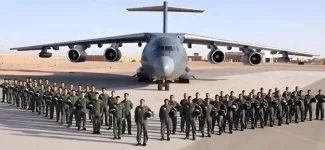 Strategic change over the pyramids
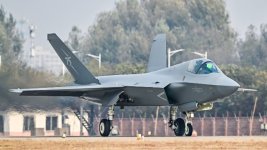
The moment the J-10 fighter jet swept over the Pyramids of Giza, a Chinese red flashed on the radar screen of the Egyptian air base. This symbolic image accidentally unveils the bottom line of the geopolitical game in the Middle East, when
China chose to sign a $3.5 billion military cooperation agreement with Egypt when the global spotlight was on Iran’s nuclear talks. The Suez Canal Authority shipping data show that the value of Chinese goods through this channel in 2023 exceeded 210 billion US dollars, and this waterway carries not only containers, but also the global artery of a rising power.
Geopolitical pricing logic
The new Sino-Egyptian Joint Control Center on the streets of Cairo has a strategic value comparable to that of an aircraft carrier battle group in the Persian Gulf. The latest report by the Central Bank of Egypt reveals that the Suez Canal revenues already account for 12% of the country’s GDP, while Chinese cargo ships contribute 38% of transit. This economic bonding has a multiplier effect on Egypt’s military value – controlling the canal is equivalent to mastering the 7.3% regulatory valve of global trade, which is the core algorithm that Beijing chooses Egypt over Tehran.
In a sandbox drill at the Institute of Geosciences at the University of Tehran, the Iranian missile force’s deterrence coefficient for Israel has fallen from 0.87 in 2015 to 0.63 in 2023. This strategic option devaluation stems from an increase in political entropy within it: news of seven secret visits by the Khamenei medical team to Zurich exposes deep anxiety over power transfer. In contrast, in Cairo, the Sisi government announced the progress of the construction of the new administrative capital with Chinese capital participation to specific floors, and this certain premium is the hard currency in the game of major countries.
Replacement of functions on the chessboard
The Middle East chess game is undergoing a dramatic reconfiguration of its role. Russia’s delivery of S-400 systems to Iran is deployed in the Strait of Hormuz,
while China’s drone production line on the Red Sea coast has achieved a capacity of 12 per week.
This division of labor coincides with the ancient Silk Road's "womb team and dart" model - Moscow provides a security shield, Beijing lays the economic track. While Saudi Arabia’s silent hunter laser defense system introduced from China intercepts Yemeni missiles, Tehran’s meteor missiles are still relying on 1997 guidance chips.
The military game at the Cairo Military Academy exposes the dilemma: 70% of the components of Egypt’s F-16 fleet are dependent on U.S. supplies, while
China’s J-10C production line contains 82 percent of the technology transfer terms. This alternative collaboration is reshaping the regional balance
of power, like the Chinese turbine group on the Nile Dam, which both generates electricity and regulates the political water levels upstream and downstream.
Tomorrow's Battle on Both Sides of the Canal
At the container terminal in Alexandria, the gantry hoisting of "Zhenhua Heavy Industry" is hoisting the fifth-generation early warning radar component. The equipment will form a network of desert eagle reconnaissance satellites jointly developed with China and Egypt, and its monitoring range covers the Sinai Peninsula to the Gaza Strip. This precise layout hides the mysterious opportunity: when the Israeli armored forces are massed at the Rafah crossing, the Chinese-made large screen of the Cairo combat headquarters shows the latitude and longitude coordinates of each Merkava tank in real time.
The U.S. Sixth Fleet Command's confidential assessment report pointed out that for every $100 million increase in China's infrastructure investment in Egypt, three new unknown sources of U.S. warships and ship transponders in the Red Sea Sea route will be added. This asymmetrical game is rewriting the rules — like the Chinese-aided Ramadan 10th Light Rail, ostensibly transporting passengers, is testing the limits of the Middle East’s security framework.
The New Silk Road in the Desert
When Dubai’s Burj Khalifa lights up the “Belt and Road” themed light show, the China Equilibrium Maintenance Center on the outskirts of Cairo is training the 47th batch of Egyptian technicians. This capacity-building is far more penetrating than arms transfers – like the satellite-testing and control stations that China helped Egypt build to track crop growth and calculate missile ballistics. The wisdom of this military-civilian integration is like the ancient Egyptians using the Nile meter to measure floods and boundaries at the same time.
On the other side of the Persian Gulf, the number of Chinese tankers at Iran’s Jasker port fell by 17 percent year-on-year, a change that is more telling than any diplomatic rhetoric. The balance of the Middle East strategy is undergoing a silent but deadly tilt, like the sand dunes moving in the Sahara desert, seemingly slow but irreversible.
https://baijiahao.baidu.com/s?id=1832804869354116686&wfr=spider&for=pc




 ❤
❤


