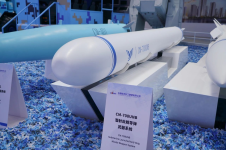
CM-708UNB FOR EGYPTIAN SUBMARINE 400 KM RANGE
Regarding Chinese websites, the degree of credibility regarding Chinese deals may be high, as the Chinese are unable to speak without explicit statements. Regarding Chinese opinions on Western weapons, polishing their image and the superiority of their weapons, this is common practice for every arms manufacturer who attempts to position their product as the best and most suitable, and that competing products or other parties offer inferior deals. They often lie, for example, about matters that no one in the West has publicly stated. For example, France offered the MICA-NG missile with a range of 150 kilometers, even though Egypt had already requested the METEOR missile, and approval for it was linked to the contract being implemented from the outset. In general, if the Chinese deals signed in the previous report were worth $3.5 billion, then the two deals for submarines and HQ-9BE batteries were worth $2.7 billion.
All of this is in the following report from a Chinese website. A Chinese website states that Egypt purchased two battalions of HQ-9BE missiles, each battalion including 576 missiles, i.e. 1,152 missiles for six batteries. It also states that Egypt purchased four submarines. The Type-39A is priced at $380 million per submarine, equipped with CM-708UNB missiles with a range of 400 kilometers. Partial Egyptian manufacturing of the Type-39A submarine and assembly of its lithium batteries are also underway. The Alexandria Shipyard (ASY) renovation project is expected to be completed in 2026, by which time the shipyard will be able to produce one Type-39A hull part per year.
The Egyptian Ministry of Military Industries intends to establish a missile maintenance center to provide technical support to North African countries for the CM-708UNB anti-ship missiles. The value of the first-year service contract is estimated at $230 million.
This means that contracts for the Chinese HQ-9BE air defense batteries have been confirmed at a value of $1.2 billion, and the submarine contract is valued at $1.52 billion.
"
Just bought the HQ-9 air defense missile? On April 29, Egypt received another good news
Thousand Qi2025-04-29 14:32Hebei
The two sides have made simultaneous progress in the areas of joint exercises, equipment procurement and technology transfer, forming a strategic cooperation framework covering the three dimensions of air, air defense and underwater.
This process not only reflects Egypt's need for national defense modernization, but also marks a substantial breakthrough for China's military-industrial complex in the North African high-end defense market.
The "Civilized Eagle" joint air exercise held in April set many records in China-Africa military cooperation.
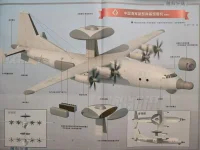
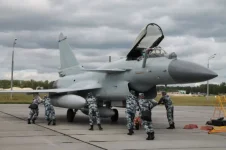
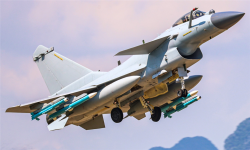
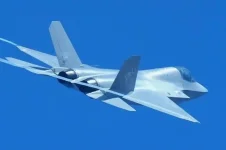
For the first time, the Chinese Air Force deployed a complete combat unit to Africa, including four Y-20 aerial refueling aircraft, six Y-20 strategic transport aircraft, eight J-10C/S multi-role fighters and two KJ-500 early warning aircraft.
The fleet took off from a base in Xinjiang, passed through the airspace of Kazakhstan and Iran, and arrived at the Faid base in Egypt after flying continuously for 14 hours.
During the exercise, the J-10C/S carried out precision strikes on the ground after completing aerial refueling, and the KJ-500 and the Egyptian E-2D early warning aircraft achieved data link interoperability, verifying the cross-system coordination capability.
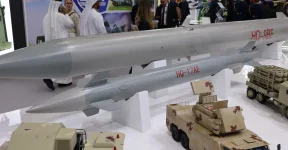
The procurement of air defense systems has become a breakthrough point in equipment cooperation.
The Egyptian Ministry of Defense signed an agreement in February 2025 to introduce two battalions of Hongqi-9BE air defense systems for US$1.2 billion, including eight launch vehicles, one radar system and 64 interceptor missiles.
The system will be deployed around Cairo and on the west bank of the Suez Canal, forming a double-layer defense at high and low altitudes with Egypt's existing S-300VM.
The radar detection range of the Hongqi-9BE reaches 300 kilometers, and it can track 100 air targets simultaneously. The anti-missile interception altitude covers a range of 50 meters to 30 kilometers.
Negotiations on upgrading underwater forces have entered a critical stage.
The Egyptian Navy plans to purchase four Type 039A conventional submarines, requiring two of them to be assembled at the Alexandria Shipyard.
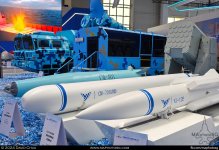
This type of submarine is equipped with a Stirling engine AIP system, with its underwater endurance increased to 20 days, and is equipped with CM-708UNB anti-ship missiles with a range of 400 kilometers.
Egypt's current submarines include four Type 033 (copies of the Soviet R-class) and four German Type 209/1400. The addition of the 039A will triple its underwater combat capability.
The decline in Russia's weapons supply capacity creates opportunities for Chinese equipment.
The Russia-Ukraine conflict has extended the delivery cycle of the S-400 system to more than five years, and the attendance rate of the 46 MiG-29Ms purchased by Egypt in 2014 was less than 60% due to a shortage of parts.
Western weapons restrictions on Egypt continue: the United States refuses to unlock the AIM-120 medium-range missile for Egypt's F-16C/D fighters, and France bans the Meteor long-range air-to-air missile when exporting Rafale fighters.
Chinese equipment fills the market gap with "zero political strings attached". The PL-15E air-to-air missile equipped with the J-10CE has a range of 145 kilometers, surpassing all air combat weapons currently in service in Egypt.
Cost performance and technical indicators form dual advantages.
The unit price of HQ-9BE is 60 million US dollars, which is only 65% of that of Patriot-3, but its anti-missile performance reaches 85% of its level.
The Type 039A submarine is priced at US$380 million, 30% lower than the German Type 214, but has a 40% higher endurance.
During the Suez Canal anti-submarine exercise, the 039A achieved an exchange ratio of 7:3 in a simulated confrontation with the US "Arleigh Burke" class destroyer, and its silent performance and weapon load were verified in actual combat.
Innovation in cooperation models strengthens long-term binding.
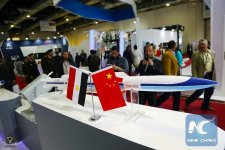
Unlike the simple equipment export of Thailand's S26T submarine, the Egyptian project includes technology transfer terms: China will transfer submarine section manufacturing and lithium battery pack assembly technology to the Alexandria Shipyard, and assist in the establishment of a maintenance center.
The replication of this "Pakistan model" has made Egypt the second country after North Africa to have the ability to localize maintenance of Chinese equipment.
The Egyptian Air Force faces a generational gap crisis.
Of its 220 F-16C/D and 24 Rafale fighters currently in service, only AIM-7P (with a range of 50 kilometers) and Mica infrared missiles (with a range of 25 kilometers) can be used.
The 2024 joint exercise with Israel showed that Egyptian fighter jets were completely defeated by the F-16I equipped with AIM-120D in beyond-visual-range confrontation.
FAKE NEWS
The introduction of the J-10CE will expand its air combat radius to 300 kilometers, and cooperate with the PL-15E missile to form regional air control capability.
Geopolitical security pressure drives equipment upgrades.
Israel's 11 F-35 squadrons are regularly deployed at the Negev base, capable of carrying out stealth raids on Cairo.
The Houthi armed forces have launched more than 400 suicide drones in the Red Sea region, and the interception success rate of Egypt's existing "Pantsir-S1" close-in defense system is only 72%.
The phased array radar of the Hongqi-9BE can guide 16 missiles to intercept different targets at the same time, increasing the interception efficiency of drone swarms to 94%.
The defense needs of the economic corridor are upgraded.
The Suez Canal's toll revenue reached US$9.5 billion in 2024, but there were 14 attacks on merchant ships in the Red Sea waters throughout the year.
The wire-guided torpedoes and intelligent mine systems equipped on the 039A submarine can expand the control range of key waterways from 30 nautical miles to 200 nautical miles, countering Türkiye's "island and reef strategy" and Iran's speedboat harassment tactics.
Russia continues to lose market share in North Africa.
Algeria announced in 2025 that it would suspend the purchase of S-400 and instead evaluate the feasibility of purchasing HQ-9BE.
The "Beech-M3" system that Morocco originally planned to introduce was replaced by FD-2000 (Hongqi-9 foreign trade version), with a contract value of US$720 million.
The number of Chinese air defense equipment deployed in Africa increased from 3 sets in 2020 to 17 sets in 2025.
There are signs of loosening in Western arms sales policies.
In June 2025, France's Dassault company was approved to export the "Mica" NG missile to Egypt's "Rafale" fighter jets, with a range increased from 80 kilometers to 150 kilometers, but still lower than the performance parameters of the PL-15E.
The U.S. State Department proposed lifting weapons restrictions on Egypt's F-16s, but Congress required Egypt to commit to reducing military cooperation with China in exchange.
There have been structural changes in the regional security architecture.
Saudi Arabia launched the "China Air Defense System Evaluation Program" in 2025, considering replacing some "Patriot-2" positions with Hongqi-9BE.
The UAE and China have reached an agreement to establish the Middle East's first Chinese equipment maintenance center in Abu Dhabi to provide technical support to neighboring countries.
Military cooperation is penetrating into the economic field.
The Central Bank of Egypt announced in March 2025 that 30% of trade settlements in the Suez Canal Economic Zone would be settled in RMB.
Chinese companies have invested US$1.2 billion to build a comprehensive support base on the east bank of the canal, which will include ship repair, logistics warehousing and new energy facilities, and is expected to create 8,000 jobs.
The role of geopolitical fulcrum is gradually emerging.
The 45th escort fleet of the Chinese Navy docked at the Port of Alexandria in May 2025 and completed its first comprehensive replenishment at an overseas base.
The base can accommodate two destroyers and one supply ship, extending China's military presence in the Mediterranean from 15 days to 90 days.
Technology exports form a new industrial chain.
The renovation project of the Alexandria Shipyard is expected to be completed in 2026, by which time it will be able to produce one 039A submarine hull section annually.
Egypt's Ministry of Military Industries plans to establish a missile maintenance center to provide North African countries with technical support for CM-708UNB anti-ship missiles, with the first-year service contract value reaching US$230 million.
The current China-Egypt military cooperation has gone beyond the scope of simple arms trade and has formed a new model of equipment export, technology transfer and regional security cooperation.
This cooperation has not only changed the historical pattern in which Africa's high-end defense market was monopolized by Europe, the United States and Russia, but also opened up a new path for China's military-industrial system to participate in international security governance.
As Egypt's "Look East" strategy continues to advance, the international arms trade rules and technological power system are facing a profound reconstruction."
https://baijiahao-baidu-com.transla...&for=pc&_x_tr_sl=auto&_x_tr_tl=ar&_x_tr_hl=ar