Egyptian Armed Forces

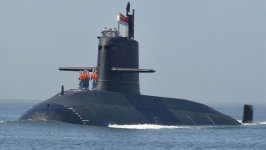
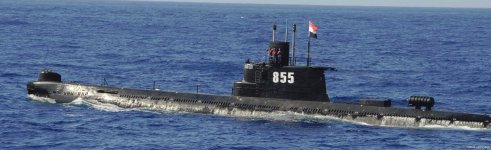
Type-033-Romeo-SSK-03.jpg

For me, why does Chinese news gain some credibility? This is due to historical reasons, including the monitoring of news related to military cooperation since the 1970s.

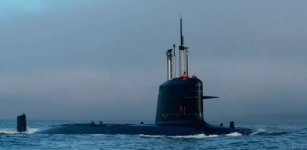
In 1984, Egypt acquired four Chinese Type-33 Ramio submarines. At the same time, it acquired two H3 frigates, a number of missile boats, and HY-2 missiles. It then obtained licenses to produce HY-2/4 missiles, with a total of at least 200 missiles. China also provided Egypt with HT-200 radars to upgrade the previous Russian SA-2 systems.

We are now in 2025, and therefore, the replacement of the old submarines with Type-39 submarines is expected, regardless of the actual specifications of the Type-39A/C and the capabilities of the AIP system, especially since this matter has been within the scope of leaks and mock-ups for the past two years.

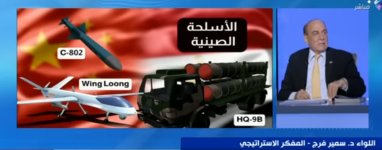
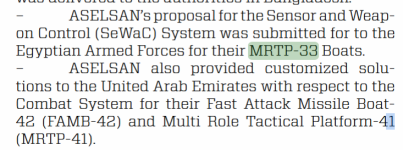
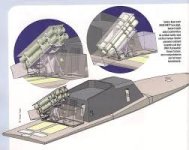
Regarding the CM-302, C-705, and C-802 missiles, various reports have emerged indicating that Egypt has been using Turkish MRTP-33 missile boats to integrate the C-705 since 2015. 2011, and Egypt leaked the C-802 missile two months ago. This missile complements the existing Exceot missiles and the CM-302 missile to replace the HY-4 missile, especially since Egypt recently displayed the Russian and Serbian P-15 Rubezh missile in Egyptian ports. This is due to Egypt possessing a large number of ports protected by old and new Russian and Chinese systems to provide increased firepower. Therefore, providing more Chinese systems to Egypt is related to economic factors, firepower, and the provision of multiple systems to cover all Egyptian ports and coastal areas, replacing more than 20 coastal batteries, especially since Western systems are limited and costly. Egypt obtained the CM-708UNB missile, an upgraded version of the C-802 missile, with a range of 400 kilometers, parallel to the Israeli missiles, which have a range of 400 kilometers, and the Turkish missiles, which have a range of 280 kilometers, instead of the unfortunate French Exceot, which has a range of 200 kilometers. This is especially true since the Chinese missiles have proven effective in a number of engagements. And experiments, therefore, benefit from an acceptable price.
1748968429076.png
Regarding Egypt's requests for technology transfer in submarines, Egypt may in the future assist China in installing the AIP system on German TYPE-1400 MOD-2 submarines using advanced Chinese technology after the completion of the program to acquire Chinese TYPE-39 submarines.Perhaps some did not understand the news elsewhere that Egypt wants to acquire the J-20 aircraft, and whether the aircraft's radar will be integrated into other models, such as the MIG-29 or SU-35, to enhance their efficiency.Egypt will become a manufacturing base for Chinese military products for sale to African and Arab countries. Therefore, Egypt will not only acquire Chinese equipment but also use Chinese technology to develop Egypt's stock of military platforms in general, to ensure economic feasibility and the continued operation of Egyptian factories.

The same applies to some naval vessels. Egypt is not awaiting approval from Europe or the United States to arm it. Therefore, the entry of Chinese and Russian combat naval vessels is expected, especially since the Egyptian media leaks such matters.
1748974902219.png
ASELSAN report on its delivery of MRTP-33 missile boats armed with Chinese C-705 missiles in 2010.
images333.jpg
https://wwwcdn.aselsan.com/api/file/2010_ASELSAN_Annual_Report_8662.pdf

Regarding fighter jets, Egypt has 58 MIG-21 aircraft in storage, as well as more than 60 Chinese F-7s and 25 F-4Es. Egypt is replacing its MIRAGE-5 fighters with Rafale fighters. The old Russian MiG fighters, while the Chinese are replacing them in inventory with F-16 Block-15/32 and MIRAGE-2000s. Therefore, Egypt is compensating from Russian and Chinese sources, especially since the Russians are militarily committed to providing protection for the El Dabaa nuclear reactors with advanced air defense systems. The Chinese are also protecting the Suez Canal Economic Zone and the logistics and industrial cities with Chinese fighters. Therefore, matters are not at the stage of debate, but rather merely a process of replacement and renewal with outdated systems, and the West is forced to accept Egypt's choices. The same thing happened in The eighties and the decline of the West in technology and the imposition of restrictions caused Egypt to choose what was appropriate for it militarily, even though Egypt brought in the Soviets in the fifties and the Americans in the late seventies, everything was within the framework of Egyptian interests, and when they conflicted, Egypt got rid of them. Therefore, the Americans wanted to change the leadership of the Middle East and small countries like Saudi Arabia to implement America’s desires, and as long as it is not acceptable, the Americans will fail as usual.

To view this content we will need your consent to set third party cookies.
For more detailed information, see our cookies page.
 
  • Like
Reactions: ENS
Chinese submarines and French -Leclerc tanks..Foreign news sources confirm the stealth combat deal J-35a

To view this content we will need your consent to set third party cookies.
For more detailed information, see our cookies page.
 

Egypt’s Navy targets China’s deadly Type 039A submarine arsenal​

In the waning months of 2024, Egypt and China entered advanced negotiations for the procurement of the Type 039A submarine, a diesel-electric vessel renowned for its stealth and cutting-edge air-independent propulsion system.​


1749490676882.jpeg

According to a report by Tactical Report, these talks, which also explore technology transfer and localization agreements, signal Egypt’s ambition to bolster its naval capabilities with one of the world’s most advanced conventional submarines.

The Type 039A, known in NATO circles as the Yuan class, represents a technological leap for China’s defense industry and a potential game-changer for Egypt’s maritime strategy. Why is Cairo drawn to this silent predator of the seas, and what makes this submarine stand out in modern naval warfare?

The Type 039A submarine is no ordinary vessel. Designed by the China Shipbuilding Industry Corporation and first commissioned in 2006, it is the People’s Liberation Army Navy’s first submarine equipped with an air-independent propulsion system, a technology that allows it to remain submerged for weeks without surfacing.

This capability, combined with its low acoustic signature, makes the Type 039A one of the quietest diesel-electric submarines in operation, a critical advantage in evading enemy sonar. Measuring approximately 77.6 meters in length with a beam of 8.4 meters, the submarine displaces around 3,600 tons when submerged, according to data from Naval News.

Its teardrop-shaped, double-hulled design, inspired by Russia’s Kilo-class submarines but refined with indigenous innovations, enhances its hydrodynamic performance and stealth. The hull is coated with anechoic tiles, which absorb sonar waves, further reducing its detectability.

A single seven-blade skewed propeller, designed to minimize cavitation noise, propels the vessel to speeds of up to 20 knots, with a range of approximately 12,000 kilometers, as noted by The National Interest.

At the heart of the Type 039A’s prowess is its air-independent propulsion system, a Stirling engine-based technology developed by China’s 711 Research Institute after decades of research.

Unlike traditional diesel-electric submarines, which must surface or use a snorkel to recharge batteries, AIP allows the Type 039A to operate underwater for extended periods, typically up to two weeks, without needing atmospheric oxygen. This endurance is a significant advantage in contested waters, where surfacing can expose a submarine to detection by aircraft or surface ships.

The system, rated at approximately 100 kilowatts per unit with two units likely installed, provides a quieter alternative to nuclear propulsion, making the Type 039A comparable to advanced Western designs like Sweden’s Gotland class or Japan’s Soryu class, both of which also employ AIP.

The Gotland, for instance, uses similar Stirling engines, but the Type 039A’s larger displacement allows for greater weapons capacity, while the Soryu’s lithium-ion batteries offer different trade-offs in endurance and cost.

The Type 039A’s armament is equally formidable, designed for versatility in both coastal and open-ocean operations. Its six 533mm bow-mounted torpedo tubes can launch a range of weapons, including the Yu-6 wire-guided torpedo, a heavyweight weapon optimized for anti-submarine warfare with a range of up to 45 kilometers, and the Yu-4, a passive homing torpedo for surface targets.

The submarine is also equipped to fire the YJ-18 anti-ship cruise missile, a supersonic weapon with a range exceeding 200 kilometers, capable of delivering a 165-kilogram warhead to surface vessels. Additionally, the Type 039A can deploy naval mines, with a capacity to carry 24 to 36 mines through its torpedo tubes, making it a potent tool for denying access to strategic waterways.

The integration of these weapons is managed by an advanced battlefield management system, which enhances targeting accuracy and operational efficiency. According to a 2015 USNI News essay, early assessments viewed the Type 039A as primarily an anti-ship cruise missile platform optimized for shallow littorals, but its capabilities have since evolved to include open-ocean missions, reflecting its adaptability.

Egypt’s interest in the Type 039A comes as no surprise given the country’s strategic imperatives. Cairo operates a modest but capable submarine fleet, including four German-built Type 209/1400 submarines and four Russian Kilo-class submarines, the latter acquired in the 1980s and 1990s.

The Type 209, a compact diesel-electric design, is renowned for its reliability and export success, with over 60 units sold worldwide. However, its conventional propulsion limits its submerged endurance to days rather than weeks, and its armament, while effective, lacks the advanced missile capabilities of the Type 039A.

The Kilo-class submarines, particularly the Project 636 variant, share similarities with the Type 039A, including a teardrop hull and low acoustic signature, but they rely on older technology and lack AIP. The Type 039A’s ability to remain submerged longer, coupled with its modern sensors and missiles, fills critical gaps in Egypt’s naval arsenal, offering enhanced deterrence and reconnaissance capabilities in the Mediterranean and Red Seas.

The operational needs of Egypt’s navy are closely tied to its economic and security interests. The Suez Canal, a vital artery for global trade, generates billions in annual revenue, while offshore gas fields in the Mediterranean, such as the Zohr field, are central to Egypt’s energy ambitions.

Protecting these assets requires a robust naval presence, capable of monitoring maritime traffic and deterring potential threats. The Type 039A’s stealth and endurance make it ideal for covert patrols, intelligence gathering, and rapid response to maritime incidents.

For instance, its ability to loiter undetected near key shipping lanes or gas platforms could provide Egypt with a strategic edge in safeguarding its economic lifelines. Moreover, the submarine’s missile capabilities enable it to engage surface threats at significant distances, a marked improvement over the torpedo-centric armament of Egypt’s current fleet.

Integrating a Chinese submarine into Egypt’s navy, however, presents logistical and training challenges. The Type 209 and Kilo-class submarines rely on Western and Russian systems, respectively, with established maintenance protocols and training pipelines.

Adopting the Type 039A would require Egyptian crews to master new technologies, likely necessitating extensive training in China. According to a March 2025 Tactical Report update, the negotiations include discussions on technology transfer, which could involve local assembly or maintenance of the submarines in Egypt, potentially at facilities under the Egyptian Ministry of Military Production.

Such an arrangement would reduce dependence on foreign support and create jobs, but it would demand significant investment in infrastructure and expertise. The complexity of the AIP system, for example, requires specialized maintenance to ensure reliability, a challenge that even advanced navies face when adopting new platforms.

The human element behind the Type 039A is as compelling as its technology. Operating a submarine of this sophistication demands highly skilled crews, trained to navigate the intricacies of AIP propulsion and advanced sonar systems.

Egyptian sailors would likely undergo rigorous training programs in China, learning to manage the submarine’s low-noise operations and coordinate missile launches. These programs, often conducted at facilities like the PLAN’s submarine training bases, emphasize stealth tactics, such as exploiting thermoclines to evade sonar.

On the Chinese side, the engineers who developed the Type 039A deserve equal credit. The 711 Research Institute, responsible for the AIP system, overcame decades of technological hurdles, drawing on lessons from Russian Kilo-class designs and Western innovations. Their success has positioned China as a leader in conventional submarine design, a feat underscored by the Type 039A’s export potential.

China’s pursuit of the Egyptian deal reflects its broader ambitions in the global arms market. The Type 039A, already selected by Pakistan and Thailand in modified export variants known as the S20 and S26T, is a cornerstone of China’s strategy to compete with traditional arms exporters like Russia and Germany.

Pakistan’s order for eight S20 submarines, announced in 2015, includes local construction at Karachi Shipyard, a model Egypt may seek to emulate. Thailand’s selection of the S26T in 2017, despite initial budgetary concerns, highlights the Type 039A’s affordability and performance, making it an attractive option for middle-income navies.

China’s ability to produce these submarines in large numbers for its own fleet—21 Type 039A/B units are in service, per a 2024 Business Standard report—enables economies of scale, allowing competitive pricing for export customers. The Wuhan and Jiangnan shipyards, where the Type 039A is built, are among the world’s most prolific submarine construction facilities, underscoring China’s industrial capacity.

Historically, Egypt has diversified its arms suppliers to maintain strategic autonomy, a practice rooted in its Cold War-era balancing act between the United States, the Soviet Union, and other powers.

The acquisition of French Mistral-class amphibious assault ships in 2015 and Russian Su-35 fighters in 2020 reflects this approach. The potential Type 039A deal continues this trend, signaling Cairo’s willingness to deepen ties with Beijing while leveraging Chinese technology to modernize its forces.

Unlike nuclear-powered submarines, which dominate U.S. and Russian fleets, diesel-electric submarines like the Type 039A are ideal for regional powers operating in confined waters. Their lower cost—estimated at $400-500 million per unit compared to over $2 billion for a Virginia-class SSN—makes them accessible for nations like Egypt, which prioritize capability over global power projection.

To illustrate the Type 039A’s potential role, consider a realistic scenario: an Egyptian submarine deployed to the eastern Mediterranean, tasked with monitoring maritime traffic near the Zohr gas field. Submerged for days, it uses its advanced sonar, likely derived from Russian MGK-500 systems or French Thales designs acquired in the 1980s, to track vessels without detection.

If a hostile ship approaches, the submarine could launch a YJ-18 missile from 200 kilometers away, striking with precision before slipping back into the depths. Such capabilities would enhance Egypt’s ability to protect its economic interests and project power in its maritime domain, all while maintaining a low profile.

The Type 039A’s design also invites comparison with other modern submarines. The German Type 212A, used by Germany and Italy, shares the AIP advantage but is smaller, with a displacement of 1,800 tons and a focus on coastal operations. Its non-magnetic steel hull offers unique stealth, but its armament is less diverse, relying primarily on torpedoes.

France’s Scorpene class, exported to Chile and India, lacks AIP in most variants, limiting its submerged endurance compared to the Type 039A. Russia’s improved Kilo-class, while stealthy and heavily armed, depends on conventional propulsion, making it less suited for prolonged covert missions. The Type 039A’s blend of endurance, firepower, and affordability positions it as a formidable contender in the global submarine market.

The negotiations between Egypt and China, as reported by the Tactical Report in November 2024, remain ongoing, with no final agreement confirmed. The inclusion of technology transfer suggests Egypt is seeking more than just hardware—it wants the know-how to sustain and potentially build these submarines domestically.

This ambition aligns with Cairo’s broader push for industrial self-sufficiency, seen in its co-production of T-90 tanks with Russia and licensed assembly of French Gowind corvettes. For China, the deal would cement its status as a major arms supplier in the Middle East, a region traditionally dominated by Western and Russian vendors. The Type 039A’s success in Egypt could pave the way for further exports, challenging the market share of established players.

From a broader perspective, the potential acquisition of the Type 039A underscores the evolving dynamics of naval warfare, where conventional submarines play a critical role in regional security. For Egypt, the submarine offers a chance to modernize its navy, enhance its maritime sovereignty, and protect its economic lifeline.

For China, it represents a triumph of engineering and a stepping stone to global influence in defense markets. Yet questions linger: Can Egypt overcome the logistical hurdles of integrating a Chinese platform, and will the Type 039A perform as promised in the Mediterranean’s complex waters? Only time will tell whether this silent predator will reshape Cairo’s naval ambitions.


https://bulgarianmilitary.com/amp/2...ts-chinas-deadly-type-039a-submarine-arsenal/

To view this content we will need your consent to set third party cookies.
For more detailed information, see our cookies page.


To view this content we will need your consent to set third party cookies.
For more detailed information, see our cookies page.
 
"Scorpene-2000" deal: French submarines enhance Egyptian maritime superiority and worry Israel

1749583300371.jpeg

Cairo is moving at a confident pace towards strengthening its maritime capabilities, amid confirmed reports that the Egyptian navy is close to contracting the advanced French "Scorpion-20" submarines, as part of a huge defensive deal with the French company "Naval Group", which predicts a qualitative shift in the scales of the maritime forces in the eastern Mediterranean region.

Israeli anxious about Egyptian superiority

News about the deal ignited a remarkable concern in the Israeli security and media circles. The Israeli "Nazeev Net" website reported that negotiations between Paris and Cairo have been taking place since 2021, and that French President Emmanuel Macron's recent visit to Cairo has restored the momentum to the talks.

The report highlighted fears of a possible transfer of technology, allowing Egypt to establish an industrial base for building and maintaining submarines, which Israel considers a direct threat to its technological excellence in the region.
 
To view this content we will need your consent to set third party cookies.
For more detailed information, see our cookies page.


An interesting video about the J-10 fighter jet market discusses the Egyptian deal, but without much credibility in the absence of reliable sources. However, it is logically acceptable to share it with friends regarding the deal and Egypt's trends in the aviation industry. It also links between August 19, 2024, and subsequent developments, such as the Eagles of Civilizations maneuver and related objectives, including assessing the capabilities of Chinese and Egyptian weapons, including the participant's assessment of the impressive Chinese warning and speculation, as well as exploring the capabilities of the issued MIG-29M aircraft and what China can offer to update its reports, especially in the south. Another video, also in Arabic, discusses the development of the Egyptian and visiting MIG-29M aircraft with Chinese cooperation since then. However, it is considered a truly effective scenario.

The first video directly addressed Egypt and agreed to purchase 40 J-10C aircraft and KJ-700 aircraft. It also agreed to a 25 billion Chinese yuan deal for J-10C aircraft for Egypt in batches.
The first 12 aircraft will be delivered from Chinese Air Force stockpiles within three months of the resumption. The fighter jets are currently being rehabilitated, and 16 are currently being manufactured at the Shandong plant. The final batch of the entire line will be in Egypt, with 12 to be assembled in Egypt by 2027. Of course, as long as the aircraft assembly program is in place, there will be another batch of the aircraft. One of the details of the Chinese deal is the modifications Egypt is requesting, including the inclusion of triple weapon mounts similar to those found on the Egyptian F-16 and Rafale fighters. China also has an improved version of the AESA radar previously delivered for the previous deal. The video also mentions that the fighter jet market is expected to be 300 aircraft, including 60 for Saudi Arabia and 100 for Iran. A deal is also expected for Indonesia, equipped with J-10A versions equipped with Russian AL-31FN engines, similar to the Russian engines on Indonesia's Sukhoi 27/30 fighters. This is to ensure technical security, especially with the postponement of the delivery of the Rafale aircraft until the end of 2026 for the first batch, with an offset of 60%. The deal is valued at $21 billion, and includes the integration of Russian munitions such as the R-77 and the PL-15 into the aircraft. A new AESA radar with local insurance for the operator, 70% of the spare parts are locally provided, in addition to Indonesia paying 60% through exporting Indonesian nickel. China is targeting sales of the aircraft worth $24 billion to Asian and African countries. China has 386 that it can sell at a price starting from $28 million. In the event that the engine is replaced with a WS-10B engine and the provision of an RWR, the price will rise to $31 million, which provides a market for China worth $11 billion.

To view this content we will need your consent to set third party cookies.
For more detailed information, see our cookies page.


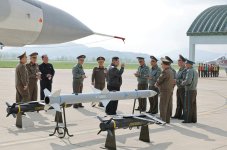
The other video related to the Algerian and Egyptian MiG-29s is divided into two parts: The Egyptian and Algerian MiG-29M aircraft are being developed with Chinese assistance, and most of it will be in Egypt for Egypt and Algeria. The Algerian MiG-29S/UB versions will either be replaced by the JF-17 or developed with North Korean munitions and its new air-to-air missile. China hopes to replace the aging MiG-29S with the JF-17 OR J-10C

1747468811703.jpeg


Egypt will be responsible for the The MiG-29 development program is replacing Ukraine's existing MiG-29S/UB aircraft, and the program to replace aging MiG-29S/UB aircraft is estimated at 1,000 aircraft in favor of Chinese fighter products, both of which are older aircraft.

Azerbaijan may upgrade 12 MiG-29s as part of the Azerbaijani Air Force's development program, using older aircraft and upgraded MIG-29 aircraft.

GXzbG2OW4AA7BtV.jpg
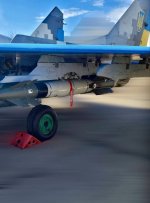
MIG-29 with AASM
 
229fd36e787f00aa4c25a60f9ef6de85.jpg


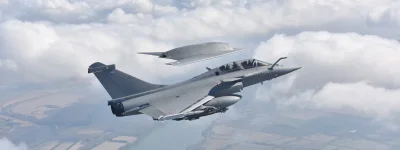
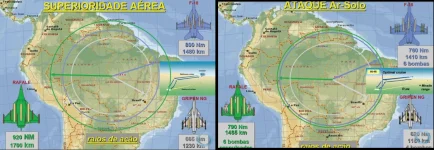
France is trying to market the Rafale with the integration of NEURON aircraft. The integration of CFT defense tanker aircraft has become necessary today with the development of creative innovative ability to extend the scope of work, which is vital. In the past, the Rafale range was presented for the Brazilian offer as an operating radius of 920 nautical miles to 1700 kilometers. Three fuel tanks of 2000 liters and two CFT tanks with a load of 1155 liters with a load of 6 wasting air to air, but air-to-ground ammunition range to 790 nautical miles 1450 kilometers. These indicators believe that it has been improved a few minutes 5%. These tanks have become even a meter in depth. For example, Egypt is very good. Ethiopia is one of the southern indicators in Egypt. Also, driving Rafale aircraft for UCAV aircraft requires better air survival, especially since countries like Egypt have selected 26 famous companies. Manned-unmanned aircraft MUM-T, which makes adding CFT tanks to half the length of the new magazine 30, which is controlled by a major task to penetrate Privacy, large-scale attack, and UCAV piloting are the Rafale's primary missions, and it's superior compared to the F-18E/F, which carries over 2 tons more internal fuel and larger external fuel tanks.
nEUROn-Rafale.webp
In case you're wondering if this range is with CFTs, besides the obvious (proximity to the range on the wiki with CFTs), we also have the F-18 Super Hornet's range for reference. The Rafale carries 4,750 kg internal fuel, i.e., 2,000 kg less than the F-18E (6,780 kg). Both carry three EFTs. The Super Hornet has three 480-gallon (1,817 L) EFTs. So the only way for the Rafale to compensate for its smaller internal fuel load, let alone have greater range, is to carry two CFTs (about 2,000 kg fuel).
main-qimg-17b6a156c8cf7343518f4e4eb9816bb4.webp
This allows Egyptian aircraft to carry out long-range strikes without the need for air refueling. Of course, in the case of air refueling, the range will increase even more. All modern conflicts now require a longer air presence, especially since all of Egypt's borders are inflamed in Libya and Sudan, and Ethiopia's ambitions and the protection of economic zones in the northern Mediterranean.
 
The Iran-Israel war demonstrated Egypt's weakness, with 15 million refugees, a fifth column during the war against the Egyptian state.
Corruption remains the most important reason for the weakness of the Egyptian state. We have seen dreams among some of the corrupt leaders, similar to what happened to the Iranian military leadership. This is a dream for some for an Egyptian state exhausted by corruption and the cliques that rule it.

Of course, there is a difference between Egypt and Iran militarily.
Whether it's more advanced air defense systems,
an acceptable air force, though not at the required level, is sufficient for deterrence.
Also, Israel's proximity to Egypt.
Presumably, there should be plans in place to create a firewall in the first hours of the war to destroy Israeli ports and airports and impose an embargo on them, as any Egyptian-Israeli war requires the implementation of real, violent strikes that would make even an American attempt to rescue it impossible, but Egypt must also invade Israel immediately.
War from October 7, 2023 It was a gift to Egypt to accelerate the development of the military system, and Egypt may have several months ahead of it for a military conflict with Israel expected in 2026, which requires a lot of effort and preparation for it economically and militarily, as the new war must be violent and fast so that attempts to save Israel are useless, which requires purging Egypt from within, whether traitors, the fifth column, or the corrupt who destroyed the Egyptian economy over the past 12 years.
 
The true power of the Egyptian army ... which no none is talking about!

To view this content we will need your consent to set third party cookies.
For more detailed information, see our cookies page.
 
1750051415476.png

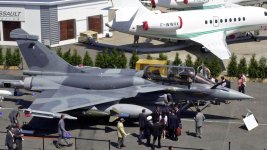
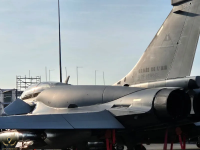
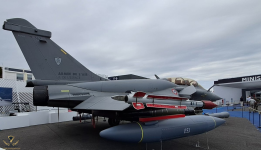
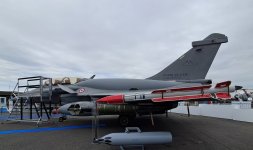
The "matching tanks" of the body of the plane were installed on the Rafale Air Force and Space Airplane, which carries the colors of fighter and experiments (ECE 1/30) of the Military Air Experience Center (CEAM) in Monte de Marsan

The Rafale plane will be shown, produced by Daso Airlines, on the army platform during the Paris Air Show with "matching fuselage tanks".

CFTS (CFTS) allows to increase the total amount of fuel that the plane carries or free the solid points below the wing and the body of the plane.

Additional fuel also helps reduce the need to refuel during flying, which may be very important in some tactical scenarios. It is a regularly used capacity in F-15 and F-16 aircraft, and has been proposed by Daso on the Rafale plane in 2001.

CFT aircraft was then displayed during the 2001 Paris Air Show on the initial B01 in the Dassault Aviation suite.

Here they are highlighted again, but this time by the Air Force and Space!

1750051916523.png
 
GtfDCl4aUAAek_4.jpg

The announcement that shoulder magazines will increase the range by 25% is less than hoped for. It was supposed to be a comprehensive update with more internal fuel as well and further reduction of fuel consumption to reach a 40% range increase to achieve an acceptable DEEPSTRIK. France compensates for this by increasing the range of cruise missiles to 1000 kilometers, which is not available for export, which limited development. The French may have done this deliberately to reduce the capabilities of export aircraft in general.
 
Not an inch in Sina ... Sina with our blood is irrigated

Egyptian naval units: training activity "deterrent 2024" using live ammunition in the Mediterranean operations theater.
Our great army is the shield of the homeland and its sword

To view this content we will need your consent to set third party cookies.
For more detailed information, see our cookies page.
 
Aaron Awakening ".. Israel's plan for" Paralyzing Egypt's military"

To view this content we will need your consent to set third party cookies.
For more detailed information, see our cookies page.
 
To view this content we will need your consent to set third party cookies.
For more detailed information, see our cookies page.
 
To view this content we will need your consent to set third party cookies.
For more detailed information, see our cookies page.
 

Users who are viewing this thread

Pakistan Defence Latest

Back
Top