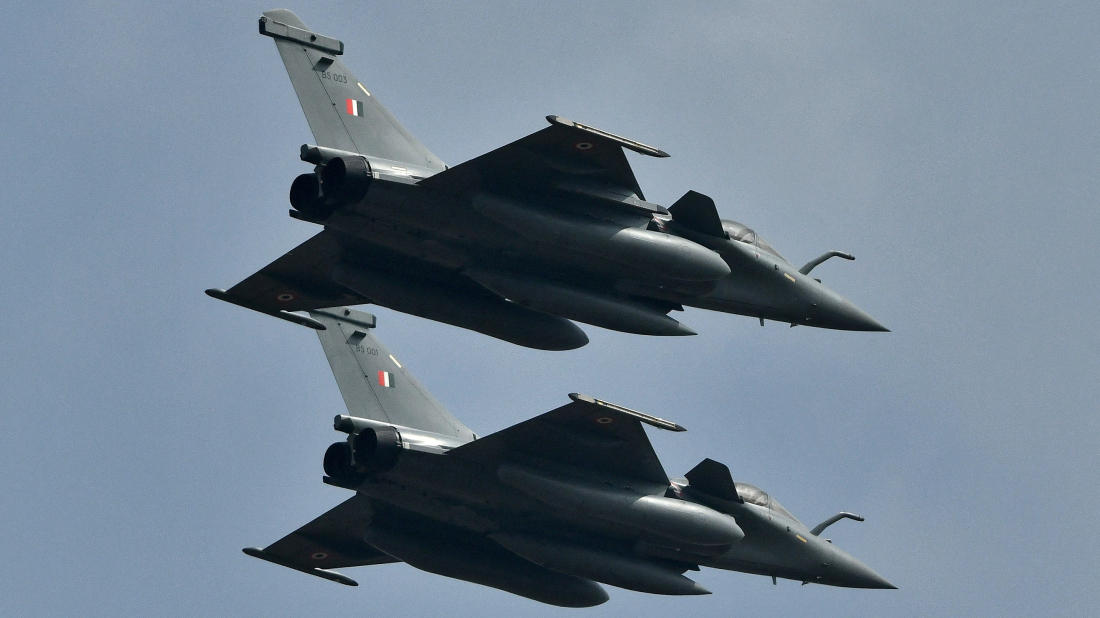
Interesting, though I do wonder how much is just 'window shopping', or hustling for better negotiations elsewhere in terms of price and capability. In terms of stealth, the recent purchase of the KAI T-50 to me points to the KF-21 being more of a front runner for Egypt's stealth requirements than the J-35 as large portions of the tooling, infrastructure and training for the KAI T-50 can be reused for the KF-21 I assume. However Korea may be quite far from having an integrated kill-chain that China offers as a capability between the IADS, AEW&C and Jets as it is a all in one integrated solution, with the possibility of the use of Chinese satellites as part of the chain.
However, Egypt's procurement decisions have their 'own logic' that many of us here on the forum don't understand despite the war and piece articles written by sami_1 etc ! So, lets see how this plays out for China and Egypt.
( the J-35 is a nice looking bird though, looks right, will fly right for sure. )
The issue is easier than many expect. Egypt is a large country, but its air force is supposed to be large because it has deep interests in Africa and the Middle East. It faces many challenges that put everyone in a state of intense competition to obtain the best available. Egypt cannot rely on a single source, no matter who it is. Egypt targets technology transfer from South Korea, and the same applies to France and China. Neither offers everything, but rather allows something. Therefore, Egypt deals with everyone and pressures everyone to obtain what meets its needs.
The available and mature fifth-generation fighters are Chinese. The Chinese J-35 fighter jet relies on technology previously developed for the J-20 fighter jet.
Apart from that, Egypt has another approach: to be a weapons factory for export to Africa. That is, the Eastern Aircraft Factory in western Egypt is dedicated to Eastern fighters. Therefore, negotiations with China and the Russians are ongoing.
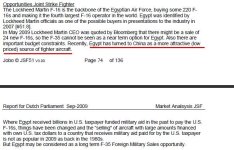 Egypt decision Made since 2009
The South Korean side is a state subordinate to America, so America can exert pressure on South Korea to prevent technical cooperation, even if Egypt plays the North Korea card to pressure South Korea. However, Egypt is trying to obtain the greatest possible benefits. The goal is not the FA-50, but rather The independence of developing the F-16 fighter jet and manufacturing its spare parts in the event of tense relations with the United States and an American arms embargo. Korean aircraft rely on GE engines, which the United States can ban. The Koreans rely on the American Rafale Phantom Strike. Egypt requested a Korean ESR-500 radar and transferred the technology to develop a later, larger version for integration into part of the F-16 fleet.
The Turks and Egypt do not consider the KAAN project a quick entry into service because the Turks do not possess a real engine for a fifth-generation fighter. Therefore, cooperation with them on fighter aircraft will be subsidiary and partial.
The Chief of Staff's visit was related to discussing cooperation in the Egyptian production of special, upgraded versions of the T-129, provided that the engine is developed with a thrust capacity of 1,740 hp, simply to match the capabilities of the AH-64, and as a pressure tool on the Chinese.
The Turks also offered the KIZILEMA UCAV, which will be locally produced according to the required Egyptian specifications. However, the aircraft will also be produced in Türkiye by 2026. Any upgraded version for Egypt would require years, so Egypt quickly turned to the WJ-700, manufacturing it in cooperation with China in large numbers. This was a temporary and highly concentrated replacement for the existing UCAV drones. The Turks are also offering IFVs manufactured in the massive Egyptian Military Factory 200, as well as air defense systems. Egypt has an F-16 fighter development program, with approximately 140 upgradeable aircraft, and is seeking multiple sources. On the French side, the fall of the Rafale has put significant pressure on France.
The French are now cornered, especially with customers hesitant to purchase the Rafale, and some even want to reduce deals. According to some YouTube sources, an Egyptian military delegation visited Paris and discussed with the French the development and modernization of the Rafale to ensure its continued effective presence in theaters of operations. Egypt also wants to manufacture Rafale parts and spare parts locally and rebuild them locally, especially since the latest maintenance contract costs between $190 and $300 million.
Egypt is requesting higher technology transfer rates from the French. Egypt may even receive the payment from Indonesia if Indonesia rejects it, provided technical facilitations are provided and the integration of more non-European munitions is opened up. France is forced to agree.
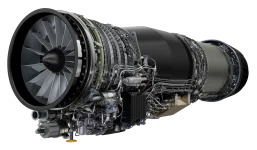
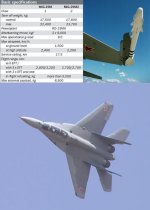
The French will now announce a modernization program for the Rafale at their upcoming air show. What was revealed is that the current engine's capacity has reached 10 tons, and that India has signed a contract for it. The French will also offer a new version of the Snecma M88 engine with a thrust of 115 kilonewtons. The Rafale's airframe requires a 3 cm increase in the air intake capacity for each engine. The French are also offering to upgrade the MiG-29 by integrating the new Snecma M88 engine. This will provide significantly greater thrust and a smaller weight and size than the RD-33 engine, increasing the MiG-29's fuel capacity. The MiG-29's development program also includes an additional 1,800-2,000 liters of fuel for the MiG-29. Furthermore, the Snecma M88 engine consumes 6% less fuel, whether dry or afterburning, and 20% less fuel in afterburning. This will increase the MiG-29's performance by 30%. Egypt has proposed to France the development of advanced trainer aircraft using the M88 engine for the Egyptian Air Force, especially since American components are an obstacle to the South Korean FA-50 contract, whether the GE F-404 engine. France's provision of the M88 version with a thrust capacity of 25,800 lbs for an advanced light fighter trainer will unify the engine used in the Rafale, MIG-29, and ATF fighters simultaneously, allowing Egypt to produce the engine. The M88 is locally licensed and manufactured by a limited company to develop the engine factory.
Egypt will attempt to take advantage of the severely damaged reputation of French fighter aircraft to develop its own industry, especially as the truth about what happened on May 7, 2025, and China's excellent support for Pakistan are gradually being revealed.
On the other hand, Egypt has begun selecting specific technologies to revolutionize its armament. For example, the manufacture of the PL-15 missile, with its ongoing development, is being implemented to integrate it into the Egyptian fighter fleet, regardless of the so-called restrictions, especially since many of these restrictions are actually based on social media, which always views matters from the perspective of a lack of dynamics in the global arms market. When we mentioned two years ago that China's sale of the PL-15 missile to Pakistan was a response to India's acquisition of the METEOR missile, and that export restrictions are being bypassed to higher versions, as long as the METEOR missile has a range of 200 kilometers. Indeed, even the MICA-NG missile has a range of 160 kilometers, not 100-120 kilometers, this has created flexibility for all air-to-air missile suppliers. The supply of missiles with a longer range than permitted in 2015, especially from Russia, as a result of international competition and the impact of the India-Pakistan conflict, is forcing countries importing fighter jets to tighten their fighter equipment. Egypt is also moving toward producing a hypersonic missile domestically for integration into Egyptian fighter jets. Most likely, Egypt will move toward a missile weighing no more than 1 ton to integrate into the various Egyptian fighter jets, instead of producing a conventional subsonic missile with a range of 300-500 kilometers. Egypt is pursuing a policy of gradual reaping benefits and higher-impact weapons without spending huge sums on a wide range of weapons development to achieve the same effect. No one can take American and Israeli pressure seriously, as long as the United States itself considers Israel its most important asset. Egypt sees itself as more important than any American desires or even its restrictions. In the past, Egypt appeared to care about pleasing America, but secretly, Egypt does not trust America and does not care. Rather, it follows a policy of obtaining the greatest possible benefits in exchange for apparent acceptance. Claiming to pursue American interests, this is evident in Egypt's relationship with countries that the US views as being against its interests, such as China and Russia, in terms of military and economic cooperation, and even North Korea, with which it is currently clear that Egypt has not severed its military ties.
Since 2014, Egypt has been exploiting every available opportunity.
The deterioration of relations with the Russians led to Egypt quickly acquiring Mistral LHD warships at a low price.
Egypt took advantage of the near bankruptcy of German shipyards to sign contracts for submarines and MEKO-A200 frigates. When a new government came to power, it restricted cooperation with Egypt. Egypt subsequently reduced its military cooperation with Germany. The Germans are now having problems obtaining ammunition and weapon components due to their current limited production capacity and are seeking cooperation with Egypt. Egypt is requesting technology transfer.
Similarly, Egypt exploited the blockade on the Russians to obtain technology transfer for numerous Russian weapons, including UAV engines manufactured in Egypt with Russian support. Russian offers also included assistance in the local production of the SCLAP missile and the KH-69 missile, supplying it in large quantities. The Egyptian request was for technology transfer to produce an Egyptian hypersonic missile, just as South Korea obtained technology to produce Russian air defense systems and even armored vehicles using basic Russian technologies.
Egypt Arms producers exploit any crises to maximize their profits.
The Chinese seek economic expansion and the establishment of five industrial centers close to markets that could be subject to sanctions in the United States and Europe. They chose Egypt, and Egypt wants to cooperate with China through technology transfer. The Chinese have known Egypt's demand for many years. Accepting cooperation would be beneficial for both parties, but Egypt cannot trust any party, so it cooperates with everyone based on a win-win logic.


 , they did not gived acces for ther own missiles to be used on Rafale and he same goes for you. Coming back to data link, this is a Nato system so what Egypt did to communicate with other weapons what do not excist from a Nato data link you do have good stories