ghazi52
THINK TANK: CONSULTANT


- Thread starter
- #16
From old PDF ....
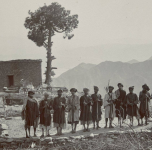
Salt Custom House And Levies Post At Bahadarkhel Village Situated On Old Kohat Bannu Road, Teri Tehsil Of Kohat, 1920's (c).

These Salt Mines Of Kohat Are Situated In What Was Then Teri Tehsil (Present Day District Karak) - Bahadurkhel Salt Mine, Jatta Ismail Khel Salt Mine, Nari Panos Salt Mine, And Karak Salt Mine. Revenue From These Salt Mines Was Received By Nawab Of Teri (Chief Of Western Khattak's).
Another Salt Mine Of Khattak Area Is At Malgin (Present Day District Kohat) Revenue From This Salt Mine Was Received By Naib Of Gumbat.
Note - The Durrani State (Afghanistan) Was Not The First State Formation Among Afghans (Pashtuns). In The 16th Century, Two Feudal Principalities (Akora Present Day Akora Khattak District Nowshera & Teri Present Day District Karak) Had Emerged In The Territory Populated By An East Afghan Tribe - The Khattak's. Teri Khanete Was The First Oldest Principality Of The Pashtuns, By The Pashtuns In The Land Of Pashtuns. Founded In 1540 By The Cheif Of Khattak's Malik Akor Khan (Great Grandfather Of Pashto-language Poet Khuhsal Khan Khattak).
The Khanete Of Teri (1550 - 1956), Present Day District Karak (Banda Daudshah, Karak, And Takht-e-Nasrati Tehsils) Half Of Present Day District Kohat (Lachi Tehsil And Gumbat Area).
Picture Courtesy - Muhammad Khattak
.............
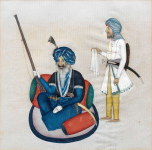
Portrait of Ahmad Khan Bangash, the ruler of Farrukhabad

. https://libwww.freelibrary.org/digital/item/67355…
The grandfather of Ahmad Khan Bangash migrated from Pakhtunkhwa to India during the reign of Aurangzeb and settled at Mau Rashidabad (a Pashtun town in India founded by a grandson of Pir Roshan).
Khuttuk Horsemen "Western Khattak's" In Armour, 1860's (c).

Notes After The Picture "Over his turban he wears a cap of light steel chain mail, part of which, thickly quilted with cotton or wool, and fastened across his chest by straps, descends as far as his waist, and, when mounted, protects his back and arms.
He has bright steel gauntlets reaching to the elbow, the leather covering for the hands being studded with bosses of steel or brass. His tunic is of quilted cotton, thick enough to turn a sabre cut, and with strong jack boots reaching to the knee, completes the costume. His arms are a light matchlock and sword, and his powder horns and bullet bag hang at his waist and on his right side.
The Khattak's cannot, however, bring many horsemen into the field, and their strength lies in their foot soldiers, who are formidable in mountain warfare."
Published by India Museum in London - 1872.
Salt Custom House And Levies Post At Bahadarkhel Village Situated On Old Kohat Bannu Road, Teri Tehsil Of Kohat, 1920's (c).
These Salt Mines Of Kohat Are Situated In What Was Then Teri Tehsil (Present Day District Karak) - Bahadurkhel Salt Mine, Jatta Ismail Khel Salt Mine, Nari Panos Salt Mine, And Karak Salt Mine. Revenue From These Salt Mines Was Received By Nawab Of Teri (Chief Of Western Khattak's).
Another Salt Mine Of Khattak Area Is At Malgin (Present Day District Kohat) Revenue From This Salt Mine Was Received By Naib Of Gumbat.
Note - The Durrani State (Afghanistan) Was Not The First State Formation Among Afghans (Pashtuns). In The 16th Century, Two Feudal Principalities (Akora Present Day Akora Khattak District Nowshera & Teri Present Day District Karak) Had Emerged In The Territory Populated By An East Afghan Tribe - The Khattak's. Teri Khanete Was The First Oldest Principality Of The Pashtuns, By The Pashtuns In The Land Of Pashtuns. Founded In 1540 By The Cheif Of Khattak's Malik Akor Khan (Great Grandfather Of Pashto-language Poet Khuhsal Khan Khattak).
The Khanete Of Teri (1550 - 1956), Present Day District Karak (Banda Daudshah, Karak, And Takht-e-Nasrati Tehsils) Half Of Present Day District Kohat (Lachi Tehsil And Gumbat Area).
Picture Courtesy - Muhammad Khattak
.............
Portrait of Ahmad Khan Bangash, the ruler of Farrukhabad
. https://libwww.freelibrary.org/digital/item/67355…
The grandfather of Ahmad Khan Bangash migrated from Pakhtunkhwa to India during the reign of Aurangzeb and settled at Mau Rashidabad (a Pashtun town in India founded by a grandson of Pir Roshan).
Khuttuk Horsemen "Western Khattak's" In Armour, 1860's (c).
Notes After The Picture "Over his turban he wears a cap of light steel chain mail, part of which, thickly quilted with cotton or wool, and fastened across his chest by straps, descends as far as his waist, and, when mounted, protects his back and arms.
He has bright steel gauntlets reaching to the elbow, the leather covering for the hands being studded with bosses of steel or brass. His tunic is of quilted cotton, thick enough to turn a sabre cut, and with strong jack boots reaching to the knee, completes the costume. His arms are a light matchlock and sword, and his powder horns and bullet bag hang at his waist and on his right side.
The Khattak's cannot, however, bring many horsemen into the field, and their strength lies in their foot soldiers, who are formidable in mountain warfare."
Published by India Museum in London - 1872.




%20(1).webp)