Navigation
Install the app
How to install the app on iOS
Follow along with the video below to see how to install our site as a web app on your home screen.
Note: This feature may not be available in some browsers.
More options
Style variation
You are using an out of date browser. It may not display this or other websites correctly.
You should upgrade or use an alternative browser.
You should upgrade or use an alternative browser.
IMF - International Monetary Fund Program Updates
- Thread starter ghazi52
- Start date
More options
Who Replied?


Fatman17
THINK TANK: CONSULTANT
- Business
IMF report in nutshell: Pakistan follows statist model
Statist economy, by restricting competition or picking up specific areas, allocates resources to protected sectorsDr Ali SalmanDecember 01, 20254 min read

ISLAMABAD:
By this time, many articles and commentaries have been published on the IMF report "Pakistan Governance and Corruption Diagnostic Assessment". As already well understood before this report was issued, we do have systemic corruption and governance weaknesses that suppress investment, distort markets, undermine revenue collection, and perpetuate economic fragility.


ghazi52
THINK TANK: CONSULTANT
- Thread starter
- #230
IMF’s Executive Board to meet on Dec 8 to approve disbursement of $1.2bn to Pakistan
Anwar Iqbal
December 6, 2025
The International Monetary Fund’s (IMF) Executive Board will meet on December 8 (Monday) to approve $1.2 billion in loans to Pakistan.
The IMF had reached a staff-level agreement with Pakistan on its loan programmes in October after extensive talks were held in Karachi, Islamabad and Washington from September 24 to October 8.
The agreement still requires approval from IMF’s Executive Board before funds can be released.
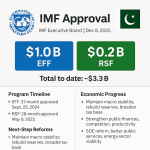
If approved, it would unlock about $1.2bn in fresh financing for the country; roughly $1 billion under the Extended Fund Facility (EFF) and another $200 million under the Resilience and Sustainability Facility (RSF).
The IMF confirmed the date of the meeting in a brief announcement on Friday. The official calendar posted on the IMF website also showed the Executive Board would review Pakistan’s loan programmes.
Negotiations between Islamabad and the lending agency, led by IMF mission chief Iva Petrova, had focused on Pakistan’s fiscal performance, monetary stance, structural reforms and progress on climate-related commitments.
In its earlier assessment, the IMF noted that Pakistan had made “strong progress” in fiscal consolidation, reducing inflation and strengthening external buffers. It also acknowledged the State Bank of Pakistan’s (SBP) continued tight monetary policy, which has played a key role in anchoring inflation expectations.
Structural reforms — especially those related to state-owned enterprises, energy-sector viability, competition and public-service delivery — were cited as areas where the authorities had demonstrated continued commitment.
The Fund also pointed to advances under the RSF-supported climate agenda, including efforts to enhance resilience to natural disasters, strengthen water-resource management and improve the country’s climate-information systems.
These reforms have taken on greater urgency following recent floods that caused widespread damage to agriculture, infrastructure and livelihoods.
ghazi52
THINK TANK: CONSULTANT
- Thread starter
- #231
Approval of the reviews is widely expected to bolster investor confidence at a critical moment, as Pakistan continues to stabilise its economy amid external pressures and the lingering effects of flood damage.
Islamabad has been under sustained pressure to maintain fiscal discipline, accelerate energy-sector reforms and continue revenue-mobilisation measures to ensure longer-term stability.
The IMF has warned, however, that risks remain elevated. The economic outlook has been tempered by flood-related losses, and the Fund has emphasised that monetary policy must remain “appropriately tight and data-dependent” to keep inflation within the SBP’s target range.
It has also stressed the need for steady implementation of reforms to strengthen competition, enhance productivity, improve public services and reduce persistent vulnerabilities in the energy sector.
If the Board grants its approval on December 8, Pakistan could receive the disbursement as early as the following day.
Officials in Islamabad hope the inflow will reinforce external buffers, support economic recovery and signal continued international confidence in the government’s reform agenda.
Islamabad has been under sustained pressure to maintain fiscal discipline, accelerate energy-sector reforms and continue revenue-mobilisation measures to ensure longer-term stability.
The IMF has warned, however, that risks remain elevated. The economic outlook has been tempered by flood-related losses, and the Fund has emphasised that monetary policy must remain “appropriately tight and data-dependent” to keep inflation within the SBP’s target range.
It has also stressed the need for steady implementation of reforms to strengthen competition, enhance productivity, improve public services and reduce persistent vulnerabilities in the energy sector.
If the Board grants its approval on December 8, Pakistan could receive the disbursement as early as the following day.
Officials in Islamabad hope the inflow will reinforce external buffers, support economic recovery and signal continued international confidence in the government’s reform agenda.
ghazi52
THINK TANK: CONSULTANT
- Thread starter
- #232
Key report released ahead of meeting
Ahead of the meeting, the IMF had released its long-awaited Governance and Corruption Diagnostic Assessment (GCDA), in which it highlighted persistent corruption challenges in Pakistan driven by systemic weaknesses across state institutions and demanded immediate initiation of a 15-point reform agenda to improve transparency, fairness and integrity.The report, publication of which is a precondition for the IMF Executive Board’s approval of the loan programmes, estimated that Pakistan could boost economic growth by about 5 to 6.5 per cent over five years if it implements a package of governance reforms beginning within the next three to six months.
The report led to criticism of the government, and opposition parties called for a probe into the “worst financial scandal of Pakistan’s history”.
However, Finance Minister Muhammad Aurangzeb stated last week that the report was “not criticism” but a “catalyst for accelerating long-overdue reforms”.
He maintained that the report acknowledged significant progress in sectors including taxation and governance, and that many of its priority recommendations were “already work in progress”.
The finance minister further said the government was committed to implementing the remaining recommendations as part of broader institutional reforms essential to sustaining Pakistan’s economic turnaround.
ghazi52
THINK TANK: CONSULTANT
- Thread starter
- #233
IMF official praised Pakistan as ‘very good example of reform, resilience’: finance ministry
- Finance minister Aurangzeb meets Deputy Managing Director of IMF in Doha
December 6, 2025
Mr Bo Li, Deputy Managing Director of the International Monetary Fund (IMF), has commended Pakistan’s ongoing reform trajectory, describing the country as “a very good example of embarking on the right path of reform and resilience”, according to a Finance Division statement on Saturday.
The official highlighted that in addition to the $7 billion stabilisation programme, the IMF was extending $1.3 billion to Pakistan under the Resilience and Sustainability Facility (RSF), aimed at strengthening fiscal, financial, and physical resilience to climate-related risks.
He elaborated that the programme would support Pakistan in advancing green budgeting, integrating climate-risk assessments into financial regulation, improving climate-related data disclosure, and enhancing climate-resilient infrastructure planning.
“Li reiterated the IMF’s strong commitment to supporting Pakistan in its efforts to manage climate vulnerabilities and build long-term resilience,” the Finance Division said.
The development came as Finance minister Muhammad Aurangzeb participated as a distinguished speaker on a high-level panel at the 23rd edition of the Doha Forum, held on December 6–7, 2025, at the Sheraton Grand, Doha.
ghazi52
THINK TANK: CONSULTANT
- Thread starter
- #234
IMF board to meet tomorrow to approve disbursement of $1.2bn to Pakistan
- Pakistan and the IMF reached a staff-level agreement in October after negotiations in Karachi, Islamabad, and Washington
December 7, 2025
The International Monetary Fund’s Executive Board will meet on Dec 8 to review Pakistan’s request for a $1.2 billion disbursement under the Extended Fund Facility (EFF) and the Resilience and Sustainability Facility (RSF), according to the Fund’s updated schedule.
Pakistan and the IMF reached a staff-level agreement in October after negotiations in Karachi, Islamabad, and Washington. The deal, covering reviews of both the EFF and RSF, requires board approval before funds can be released.
Clearance would unlock about $1.2 billion, roughly $1 billion under the EFF and $200 million through the RSF.
Separately, IMF Deputy Managing Director Bo Li praised Pakistan’s reform trajectory, calling the country “on the right path of reform and resilience,” the Finance Division said.
He noted that, alongside the $7 billion stabilisation programme, the RSF would provide $1.3 billion to strengthen Pakistan’s fiscal and financial resilience to climate risks.
The Fund has earlier said Pakistan has made progress in fiscal consolidation, reducing inflation and rebuilding external buffers, but warned that risks remain elevated due to flood-related losses and stressed the need for tight, data-driven monetary policy.
The upcoming board meeting follows the release of the IMF’s Governance and Corruption Diagnostic Assessment, a mandatory condition for approval, which identified systemic governance gaps and said Pakistan could raise growth by up to 6.5% over five years if it implements a 15-point reform plan.
The findings prompted opposition calls for investigations into alleged governance failures. Khyber Pakhtunkhwa Chief Minister Mohammad Sohail Afridi also sought accountability, saying the report raised “grave questions” about the use of public resources and the diversion of funds abroad.
Finance Minister Muhammad Aurangzeb said the diagnostic should accelerate long-overdue reforms, adding that several recommendations were already being implemented.
If approved on Monday, the $1.2 billion disbursement could be released as early as the next day, supporting Pakistan’s external buffers and broader reform agenda.
ghazi52
THINK TANK: CONSULTANT
- Thread starter
- #235
IMF approves $1.3b loan for Pakistan
Global lender okays nearly $1.1b under extended fund facility and $220m under resilience and sustainability facilityShahbaz Rana
December 09, 2025
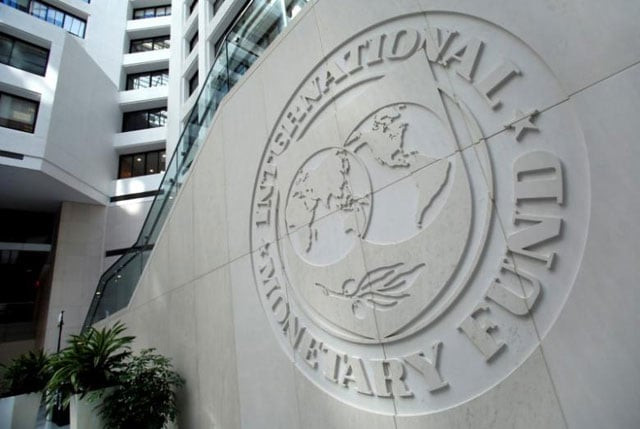
PHOTO: Reuters
The International Monetary Fund board on Monday approved a $1.3 billion loan by granting waivers for missing a few core conditions and securing a fresh commitment from Pakistan to introduce new tax measures to offset the impact of a huge revenue shortfall.
To secure the IMF board meeting date, the Pakistani authorities had agreed to fulfill two prior actions – a guarantee to issue an order to restructure an undercapitalised bank and the publication of the Governance and Corruption Diagnostic Assessment report – the latter costing the government political capital.
The global lender approved nearly $1.1 billion under the Extended Fund Facility (EFF) and another $220 million under the Resilience and Sustainability Facility (RSF), according to the decision that would keep the two loan programmes worth $8.4 billion on track.
The Ministry of Finance had to face criticism from within, as it remained glued to the conditions agreed with the IMF. The bureaucracy of the Finance Ministry played a key role in keeping the programme on track.
The IMF’s programme has stabilised the economy, and the Finance Ministry showed the first primary budget surplus in years and halted the exponential increase in public debt. The prime minister has praised the performance of the economic team, particularly Finance Secretary Imdad Ullah Bosal.
The $1.1 billion is the third tranche under the $7 billion economic stabilisation package, approved on the basis of Pakistan’s economic performance for the January–June period of the last fiscal year.
But to pave the path for approval and continuation of the programme, the board accepted Pakistan’s request for waivers on missing some conditions for the end-June period and also relaxed at least three conditions for the next review.
The IMF programme has brought economic stabilisation, but the structural reforms have yet to take root, even as the national coordinator of the Special Investment Facilitation Council calls for a growth plan.
ghazi52
THINK TANK: CONSULTANT
- Thread starter
- #236
Government sources said the IMF board waived the quantitative performance criterion of spending Rs599 billion under the Benazir Income Support Programme, as the spending remained below target. However, the central bank overperformed on another condition of building net international reserves after buying $8.4 billion from the local market.
The sources added that the IMF also relaxed the end-December condition on the primary budget surplus due to the impact of the floods and adjusted the target for the filing of new income tax returns and for BISP spending.
The government also missed the conditions on achieving the tax target and on provincial spending for health and education. But it met the conditions on restricting power sector circular debt and on enhancing the maturity of domestic debt to reduce refinancing risks.
Read More: Bringing $3b investment back to PSX
The government managed to meet eight structural benchmarks related to improving areas critical for addressing economic vulnerabilities.
However, it could not achieve a few other structural conditions related to amending state-owned enterprises laws, imposing federal excise duty on fertilizer and pesticides, and timely publishing the Governance and Corruption Diagnostic Assessment report.
The corruption assessment report was published with a lag, which the chairman of the National Assembly Standing Committee on Finance described as an “indictment of the government and the Parliament.”
The IMF board was told that the report’s publication was delayed due to needed consultations with government agencies. The Board on Monday also relaxed the deadline for publishing the action plan by the end of this month to address corruption- and governance-related weaknesses.
The government has assured the IMF that it will amend the SOEs laws by August next year and stands ready to impose the federal excise duty on fertilizer and pesticides as part of contingency measures to offset the revenue shortfall.
The Federal Board of Revenue missed its first five months’ tax collection target by Rs413 billion and has promised to impose a mini-budget from January. However, FBR Chairman Rashid Langrial said last month that although the contingency measures had been agreed with the IMF, there would be no need to trigger them.
Sources said the government also missed the condition of not granting any new tax exemption, as it gave an exemption on the import of sugar, which had first been exported, creating a shortfall in the local market.
The sources added that the IMF also relaxed the end-December condition on the primary budget surplus due to the impact of the floods and adjusted the target for the filing of new income tax returns and for BISP spending.
The government also missed the conditions on achieving the tax target and on provincial spending for health and education. But it met the conditions on restricting power sector circular debt and on enhancing the maturity of domestic debt to reduce refinancing risks.
Read More: Bringing $3b investment back to PSX
The government managed to meet eight structural benchmarks related to improving areas critical for addressing economic vulnerabilities.
However, it could not achieve a few other structural conditions related to amending state-owned enterprises laws, imposing federal excise duty on fertilizer and pesticides, and timely publishing the Governance and Corruption Diagnostic Assessment report.
The corruption assessment report was published with a lag, which the chairman of the National Assembly Standing Committee on Finance described as an “indictment of the government and the Parliament.”
The IMF board was told that the report’s publication was delayed due to needed consultations with government agencies. The Board on Monday also relaxed the deadline for publishing the action plan by the end of this month to address corruption- and governance-related weaknesses.
The government has assured the IMF that it will amend the SOEs laws by August next year and stands ready to impose the federal excise duty on fertilizer and pesticides as part of contingency measures to offset the revenue shortfall.
The Federal Board of Revenue missed its first five months’ tax collection target by Rs413 billion and has promised to impose a mini-budget from January. However, FBR Chairman Rashid Langrial said last month that although the contingency measures had been agreed with the IMF, there would be no need to trigger them.
Sources said the government also missed the condition of not granting any new tax exemption, as it gave an exemption on the import of sugar, which had first been exported, creating a shortfall in the local market.
ghazi52
THINK TANK: CONSULTANT
- Thread starter
- #237
The central bank told the IMF board that it exercised its right under the Banking Companies Ordinance to restructure and wind up an undercapitalised bank as part of the IMF prior actions.
The board has been assured that, for the completion of the next review of the $7 billion deal, the government will introduce new tax policy measures, if needed, to offset the revenue shortfall. It has also assured that appropriate monetary policy will continue to keep inflation in check.
However, Lt General Sarfraz Ahmad, the national coordinator of the SIFC, recently urged the central bank to cut interest rates to reflect the groundrealities of low inflation of around 6%.
The federal government has promised the IMF that it will regularly adjust electricity and gas prices and reduce the footprint of the state. The central bank also assured the IMF board that it would maintain a flexible exchange rate.
The board has been assured that, for the completion of the next review of the $7 billion deal, the government will introduce new tax policy measures, if needed, to offset the revenue shortfall. It has also assured that appropriate monetary policy will continue to keep inflation in check.
However, Lt General Sarfraz Ahmad, the national coordinator of the SIFC, recently urged the central bank to cut interest rates to reflect the groundrealities of low inflation of around 6%.
The federal government has promised the IMF that it will regularly adjust electricity and gas prices and reduce the footprint of the state. The central bank also assured the IMF board that it would maintain a flexible exchange rate.
Users who are viewing this thread
Total: 4 (members: 0, guests: 4)
Pakistan Defence Latest
-
 Oman examines JF-17 fighter jet purchase with Pakistan and China while operating F-16s and Eurofighters (23 Viewers)
- Latest: Trailer23
-
 Federal cabinet gives nod to imposition of emergency in KP; summary sent to president (56 Viewers)
- Latest: Forsvaret
-

-
-
 Pakistan Deploys Chinese SH-15 155mm howitzers Near India Border Against a Backdrop of Regional Tensions. (1 Viewer)
- Latest: Signalian
Country Watch Latest

Latest Posts
-

-

-
Oman examines JF-17 fighter jet purchase with Pakistan and China while operating F-16s and Eurofighters (23 Viewers)
- Latest: Trailer23
-

-