Indonesian Defense Industry

Indonesian Defense Minister Witnesses KSOT Firing Test at Fleet Command II

October 31, 2025
1761889584230.jpeg

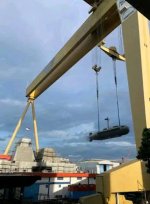
The Indonesian defense industry has once again achieved a major milestone in the maritime defense sector with the successful firing test of the Autonomous Submarine (KSOT), witnessed directly by Minister of Defense General (Ret.) Sjafrie Sjamsoeddin aboard the hospital ship KRI dr. Soeharso-990, docked at the Madura Pier, Fleet Command II Headquarters (Koarmada II) in Ujung, Surabaya, on Thursday (October 30).


KSOT Firing Test Observed by Top Military Officials


Present at the event were TNI Commander General Agus Subiyanto, Navy Chief of Staff Admiral Dr. Muhammad Ali, Fleet Commander Admiral Dr. Denih Hendrata, Fleet Command II Commander Rear Admiral I G.P. Alit Jaya, and PT PAL CEO Kaharuddin Djenod.


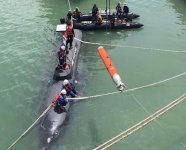
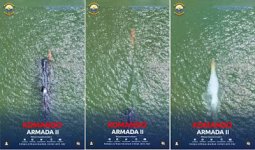
From the deck of KRI dr. Soeharso, Minister Sjafrie and the top military brass closely observed the firing test process — from the loading of the torpedo into the unmanned submarine, its launch into the waters of the Madura Strait, to the successful execution of the live-fire test.
1761890038939.jpeg


Refinements and Mass Production Plan


Minister Sjafrie stated that TNI AL (the Indonesian Navy) and PT PAL will continue evaluating and refining the KSOT’s performance to enhance its operational capability and reliability.


He added that in 2026, the Ministry of Defense, through PT PAL and under Navy supervision, will produce 30 KSOT units, each equipped with indigenously made torpedoes.


“These 30 KSOTs will be deployed across strategic choke points in Indonesia’s territorial waters to strengthen maritime security,”
said Minister Sjafrie, noting that the autonomous submarines will provide efficiency in personnel, materials, and operational time.

1761890070665.jpeg

Technical Success and National Pride


Following the test, the Navy Chief of Staff noted that the torpedo firing system performed as intended:


“It’s already functioning well — the torpedo can exit the launcher successfully. This is a fire-and-forget torpedo: once launched, it autonomously follows its programmed course to locate its target using onboard sensors.”

Minister Sjafrie emphasized Indonesia’s growing technological capability:


“We are the fourth country in the world to produce an autonomous submarine, after the United States, Russia, and China. This is a source of national pride — proof that Indonesians can build defense systems on par with the world’s leading military technologies.”

To view this content we will need your consent to set third party cookies.
For more detailed information, see our cookies page.
 

Indonesia Successfully Tests Its First Indigenous Unmanned Submarine​


Agung Dharma Putra
October 30, 2025 | 9:15 pm

To view this content we will need your consent to set third party cookies.
For more detailed information, see our cookies page.

The Indonesian Military trials an unmanned submarine in the waters off Surabaya, East Java, Thursday, Oct. 30, 2025. (PT PAL Indonesia)


Surabaya. Indonesia on Thursday achieved a major defense milestone after successfully testing its first domestically built unmanned autonomous submarine at the Indonesian Navy base in Surabaya.


Defense Minister Sjafrie Sjamsoeddin said the autonomous underwater vehicle (AUV), developed by state-owned shipbuilder PAL Indonesia, will undergo further evaluation and refinement, particularly in its torpedo-launching systems.


Following the successful prototype test, the government plans to produce at least 30 locally built unmanned submarines to strengthen the nation’s maritime defense network, Sjafrie said.


“We need 30 autonomous submarines to secure Indonesia’s key maritime chokepoints,” he said. “This is a proud achievement -- proof that our engineers can develop military technology on par with advanced nations. Strong support from the people and the government is essential for continued innovation in our defense industry.”

The successful trial places Indonesia among a select group of nations -- including the United States, Russia, and China -- that have advanced indigenous unmanned submarine programs, Sjafrie added.


The test was also attended by Armed Forces Commander General Agus Subiyanto and Navy Chief of Staff Admiral Muhammad Ali.

 
AHY: Kertajati Ready to Become Indonesia’s Aerospace Industry Hub


By Teuku Muhammad Valdy Arief | ~3 minutes | Kompas.com
30/10/2025, 15:40 WIB


1761890994343.jpeg

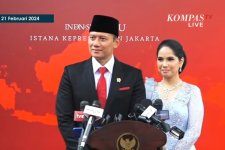
AHY and wife


KOMPAS.com —
The West Java International Airport (BIJB) Kertajati is being prepared to become Indonesia’s national center for aircraft Maintenance, Repair, and Overhaul (MRO).


The initiative begins through a collaboration between BIJB Kertajati and Garuda Maintenance Facility (GMF).


Coordinating Minister for Infrastructure and Regional Development, Agus Harimurti Yudhoyono (AHY), said this partnership marks the starting point for developing Kertajati as the national aerospace industry hub.


“We don’t stop at identifying problems. We continue to simulate possible solutions, including how Kertajati can be developed into an aerospace industry hub. It begins with the collaboration between West Java International Airport (BIJB Kertajati) and GMF (Garuda Maintenance Facility),”
AHY said in Jakarta, Thursday (October 30, 2025).

To view this content we will need your consent to set third party cookies.
For more detailed information, see our cookies page.

Kertajati, Majalengka, West Java


National MRO Vision


AHY explained that his ministry is coordinating with the National Development Planning Ministry (Bappenas) and the Ministry of Transportation to strengthen the plan for MRO development at Kertajati.


The goal is to establish an aircraft maintenance service center in Indonesia that can compete regionally.


“Recently, together with Bappenas and several other stakeholders, including the Ministry of Transportation, we have been working to create strong cooperation for MRO development. Initially, it may start with helicopter maintenance — hopefully, it will then expand to fixed-wing aircraft,”
AHY said.


Boosting Regional Economic Growth


According to AHY, developing Kertajati as an MRO hub will have a multiplier effect on the surrounding economy, particularly in the Rebana Metropolitan area, which includes Majalengka, Cirebon, and Subang.


“Kertajati and Rebana are concrete examples of how infrastructure can end isolation, stimulate regional economies, and enhance competitiveness. It’s not about a remote location, but about how we create connectivity and vibrant economic activity around it,”
AHY emphasized.

He added that the integration between the airport, industrial zones, and infrastructure in Rebana will strengthen the region’s economic competitiveness and position Kertajati as a key hub in Indonesia’s aerospace industry ecosystem.

 
1761896688787.jpeg
1761896912983.jpeg
1761899177964.webp
1761899215234.jpeg

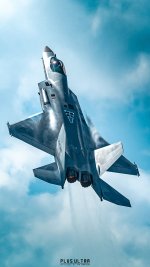
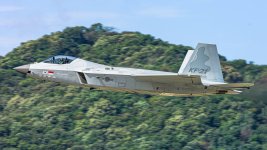
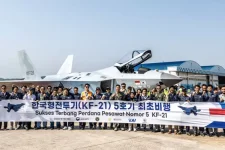
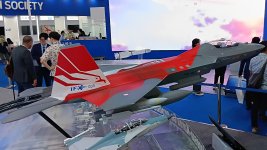
KF21 5th prototype intended for Indonesian Aerospace to be flying test bed plane for development of IF21 variants

To view this content we will need your consent to set third party cookies.
For more detailed information, see our cookies page.


To view this content we will need your consent to set third party cookies.
For more detailed information, see our cookies page.


Refined Executive Summary – KF-21 Prototype No. 5 and Indonesia​


To view this content we will need your consent to set third party cookies.
For more detailed information, see our cookies page.


  1. Delivery Plan: South Korea’s KF-21 prototype No. 5 is slated for delivery to Indonesia’s PTDI in 2026, where it will be converted into the IF-21 prototype for airworthiness certification.
  2. Beyond License Production: Unlike simple license manufacturing, PTDI is expected to co-develop the IF-21 variant, meaning Indonesia plays a role in adapting, certifying, and potentially evolving the KF-21 design — not just assembling jets.
  3. Cost Sharing & Disputes: Indonesia committed ₩1.6 trillion (20% of development) but has paid only ₩400 billion, leading Korea to forgive ₩1 trillion. This has raised doubts about how much real development work can be sustained.
  4. Strategic Motives: For Indonesia, co-development of IF-21 secures long-term fighter design know-how and guarantees aerospace workloads at PTDI, while for Korea, Indonesia provides economies of scale (48 aircraft) and a Southeast Asian MRO hub.
  5. Geopolitical Context: Turkey’s Kaan, France’s Rafale, and China’s J-10 offer limited or no development involvement. The KF-21/IF-21 program remains Indonesia’s only realistic path to gain indigenous fighter development experience.
 
Indonesia and France Collaboration

To view this content we will need your consent to set third party cookies.
For more detailed information, see our cookies page.


PT SSE's P2 Tiger passed all road tests with flying colors. A testament to the quality of PT SSE's design and the hard work of all the partners involved.

--------------

The P2 tiger is tested in Proving Ground Facility in Bekasi, West Java, Indonesia which is known as Indonesia detroit
 
Yudi Supriono post (he is a credible defense related writer, he has made several books talking about aerospace and avionics industry in Indonesia)


-------------

Republicorp’s Expansion Accelerates: Acquisitions and Turkish Defense Partnerships


To view this content we will need your consent to set third party cookies.
For more detailed information, see our cookies page.


Republicorp’s expansion has become remarkably aggressive.
After acquiring PT Palindo, the company has also taken over PT Aeroterra.


Within this year alone, Republicorp has signed Joint Venture Agreements (JVA) with several leading Turkish defense industries, including:


  1. Baykar Makina – signed on February 12, 2025, for the production (or assembly) of TB-3 drones.
  2. Roketsan – signed on July 23, 2025, for the production (or assembly) of missiles.
  3. Aselsan – signed on September 11, 2025, for the production of tactical communication systems.

Interestingly, PT Aeroterra brings significant experience in drone technology and has also been involved in the development of a national turbojet engine for missiles, making Republicorp’s decision and timing strategically sound.


The advantage of this acquisition-driven business model is its rapid growth potential. By acquiring other firms, the parent company gains direct access to markets, customers, and resources of the acquired businesses. Moreover, such acquisitions reduce competition by absorbing key rivals from the market.
 
Regarding PT Palindo capability


Indonesian Navy’s New Hydro-Oceanographic Vessel Floats Out in Germany​


Published on 01/11/2025

1762073075782.webp

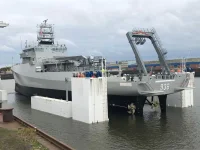
The Indonesian Navy’s (TNI AL) new 105-metre ocean-going hydro-oceanographic support vessel, KRI Canopus (936), has successfully floated out at Neustädter Hafen in Bremen, Germany. The construction project brings together several companies, with PT Palindo Marine, Abeking & Rasmussen, and Fassmer serving as the main contractors.

1762073099153.webp


Indonesia fires torpedo from autonomous submarine​


By Ridzwan Rahmat
31 October 2025


To view this content we will need your consent to set third party cookies.
For more detailed information, see our cookies page.

Training conducted using a 324mm exercise torpedo


The Indonesian Ministry of Defense (Kemenhan) and state-owned shipbuilder PT PAL announced on October 30 that Indonesia has successfully fired a torpedo from an indigenously developed autonomous submarine for the first time.


This historic milestone was achieved by the Autonomous Submarine (KSOT) in the waters of the Indonesian Navy Base (Koarmada II) in Surabaya, on the same day as the announcement.


The event was witnessed by Defense Minister Sjafrie Sjamsoeddin, TNI Commander General Agus Subiyanto, Navy Chief of Staff Admiral Muhammad Ali, and several senior officials from the Ministry of Defense.


They observed the torpedo test from the deck of the Indonesian Navy hospital ship KRI dr. Soeharso (990).


Neither the Ministry of Defense nor PT PAL provided detailed technical information about the test, but images released from the event showed that the KSOT launched a 324mm training torpedo, recognizable by its orange markings.


One of the images revealed a distinct burst of bubbles and surface froth, suggesting that the torpedo was launched using compressed gas or air, confirming that KSOT employs a dry-launch system for its torpedo deployment.


During the test, the submarine was seen using a retractable optronic mast, equipped with electro-optical sensors, radio antennas, and what appeared to be a multi-input multi-output (MIMO) antenna array.


In his remarks commemorating the milestone, Defense Minister Sjafrie Sjamsoeddin described the KSOT program as a strategic step toward achieving maritime defense self-reliance, laying the foundation for future domestically developed underwater systems, including unmanned underwater vehicles (UUVs) and autonomous underwater vehicles (AUVs).

 
Infoglobal’s Avionics Products for the KT-1B Trainer Aircraft

To view this content we will need your consent to set third party cookies.
For more detailed information, see our cookies page.


Indonesia’s skies are safeguarded by homegrown technology. The avionics systems developed by Infoglobal for the KT-1B Wong Bee trainer aircraft stand as proof that Indonesia is capable of achieving self-reliance in aerospace defense technology.


The KT-1B is a two-seat turboprop basic trainer aircraft used by the Indonesian Air Force (TNI AU) since 2003, including by its elite Jupiter Aerobatic Team. The aircraft also has light combat (COIN – Counter-Insurgency) mission capabilities and, according to reports, will soon be fully produced in Bandung.

To view this content we will need your consent to set third party cookies.
For more detailed information, see our cookies page.


According to indonesianaerospace.com, the cooperation agreement signed between PT Dirgantara Indonesia (PTDI) and Korea Aerospace Industries (KAI) enables Indonesia to resume full-scale production of the aircraft, while also providing maintenance services and potential exports to existing users such as South Korea, Turkey, and Peru.
 
To view this content we will need your consent to set third party cookies.
For more detailed information, see our cookies page.


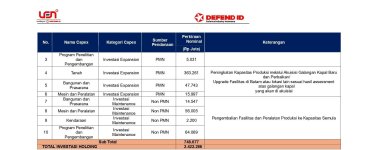
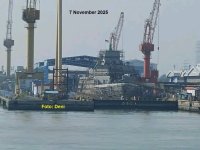
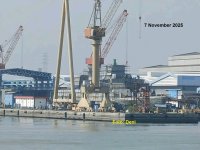
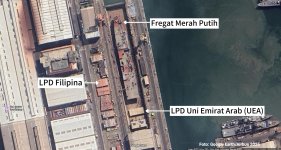
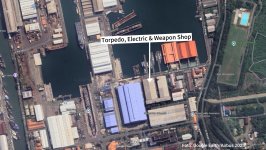
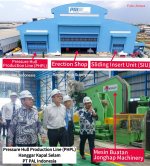
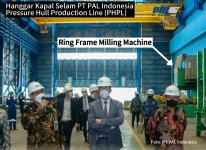
PT PAL Expansion Plan, Adding new Shipyard

1762623994463.jpeg
 
The Philippines could be the first country to operate the KF-21 Boramae.

Indonesia was very successful in this project, not only by participating in the development but also by acquiring technologies to develop its own variant.

When this happens, the entire technological industry of the country receives a boost, from radars to engines and space programs, all of it gains new momentum.

To view this content we will need your consent to set third party cookies.
For more detailed information, see our cookies page.
 
Update on Merah Putih Frigates construction in PT PAL Indonesia facility

1762622998374.jpeg
1762623012431.jpeg

Other ships being constructed

1762623076329.jpeg
1762623306545.jpeg

Submarine Construction Facilities

1762623131762.jpeg
1762623177016.jpeg
 
1763524232971.jpeg
1763524248789.jpeg
1763524266368.jpeg
To view this content we will need your consent to set third party cookies.
For more detailed information, see our cookies page.

To view this content we will need your consent to set third party cookies.
For more detailed information, see our cookies page.
 
MLRS Arjuna.

The rocket uses Rhan 122B developed and produced by Pindad, Dahana (propellan and explosive), and Indonesian Aerospace.

To view this content we will need your consent to set third party cookies.
For more detailed information, see our cookies page.
 
1763636773739.jpeg
1763637061006.jpeg

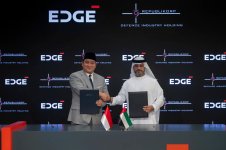
EDGE and Republikorp Announce USD 7 Billion Partnership to Build Local Defense Manufacturing in Indonesia

Thursday, 20 November 2025


TSM-EDGE, one of the world’s leading advanced technology and defense groups, has signed a major cooperation agreement with Republikorp, Indonesia’s prominent defense holding company, at the Dubai Airshow 2025 (DAS 2025).


The agreement covers technology transfer, local production, co-development initiatives, and a comprehensive modernization program for the Indonesian Armed Forces. As EDGE Group’s largest international program to date, the total financing and procurement package amounts to USD 7 billion, provided through the UAE to advance Indonesia’s defense modernization, technological capabilities, and industrial autonomy.


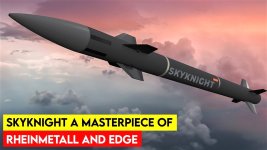
The collaboration spans a broad portfolio of advanced defense systems, particularly the SKYKNIGHT air defense missile system, next-generation infantry fighting vehicles (IFVs), stealth unmanned missile craft, cyber defense, and small-caliber ammunition production capabilities—all of which form the foundation for Indonesia’s path toward defense self-reliance and integration into the UAE’s global supply chain network.


Hamad Al Marar, Managing Director and CEO of EDGE, said:

“This critical defense initiative marks a significant milestone in EDGE’s international growth. By partnering with Republikorp, we are helping build a modern and self-sufficient defense ecosystem that strengthens Indonesia’s national security and industrial capabilities. This program demonstrates our commitment to long-term collaboration, technology transfer, and the delivery of integrated advanced systems.”


Norman Joesoef, Chairman of Republikorp Group, stated:

“This USD 7 billion partnership represents a major leap toward Indonesia’s long-term defense autonomy, industrial independence, and international credibility. By joining forces with EDGE, we are investing in systems and human capital for the strategic interests of both the UAE and Indonesia in advanced defense manufacturing. This is more than cooperation between two companies; it is a bond between two brotherly nations.”
 

Users who are viewing this thread

Pakistan Defence Latest

Back
Top